Emerald Bibliography

Emerald Bibliography

Explore books, articles and historical sources on emerald in Four Treasures, the Lotus Gemology reference database. This bibliography brings together matching records from the collection, with publication details, abstracts and cover images where available.

Emerald References

The list below matches the terms emerald or emeralds in the database's searchable fields. Some references discuss emeralds as part of a broader subject.

821–840 of 844 matching references
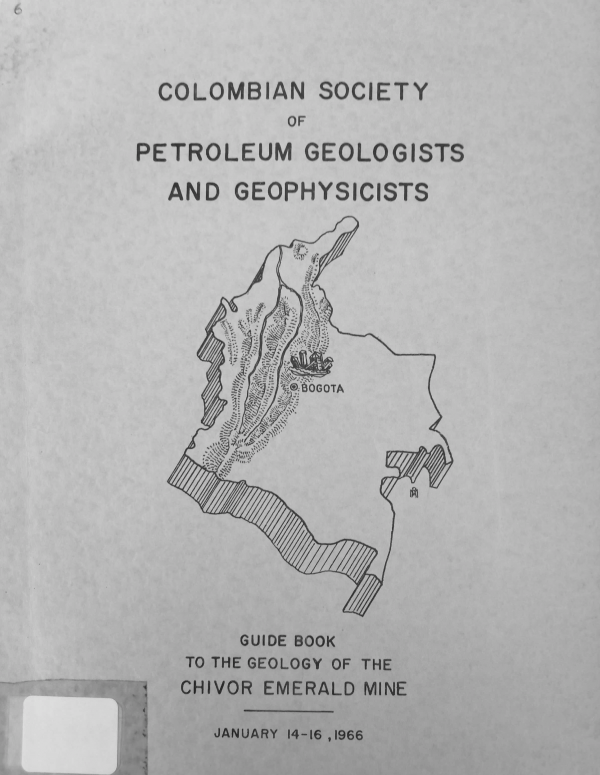
Guidebook to the Geology of the Chivor Emerald Mine | January 14–16

Guidebook to the Geology of the Chivor Emerald Mine | January 14–16

Colombian Society of Petroleum Geologists and Geophyicists (1966)

Report · Publisher: Colombian Society of Petroleum Geologists and Geophyicists · Pages: 62 pp.; unpublished report

Abstract
Guide book for a field trip to Colombia’ Chivor emerald mines. This unpublished company report and subsequent articles have been obtained from various sources. These works are considered relevant not only to the current operations of the mine to be visited, but also to the mining of emeralds in general. They are expected to provide background and answer some of the many questions that will undoubtedly arise after visiting the Chivor emerald mine.
Keywords
gems, beryl, emerald, Colombia, Chivor
Zwei neue synthetische Smaragde

Zwei neue synthetische Smaragde

Two new synthetic emeralds

Gübelin, E.J. (1964)

Journal Article · Source: Zeitschrift der Deutschen Gesellschaft für Edelsteinkunde · Issue: Spring, No. 47 · Language: In German

Keywords
synthetic beryl, emerald, gems
Das neue Smaragdvorkommen in Rhodesien

Das neue Smaragdvorkommen in Rhodesien

The new emerald deposit in Rhodesia

Gübelin, E.J. (1958)

Journal Article · Source: Zeitschrift der Deutschen Gesellschaft für Edelsteinkunde · Issue: No. 26 · Pages: pp. 4–15 · Language: in German

Keywords
beryl, emerald, Sandawana, Rhodesia, Zimbabwe, gems
Arms and Jewellery of the Indian Mughuls

Arms and Jewellery of the Indian Mughuls

Aziz, A. (1947)

Book · Source: The Mughul Indian Court and its Institutions · Publisher: Ripon Press · Pages: 159 pp.

Abstract
Aziz’s Arms and Jewellery of the Indian Mughuls is a study of the weapons, personal ornaments and jewelled objects associated with the Mughal court in India. Drawing on contemporary chronicles, travellers’ accounts, paintings and surviving objects, the work describes swords, daggers, shields and other arms, many richly decorated with gold, enamel and precious stones, alongside the elaborate jewellery worn by the emperors, members of the court and royal women. Particular attention is given to the forms, materials, craftsmanship and terminology of Mughal ornaments and to the use of diamonds, rubies, emeralds, pearls and other gems. The book illustrates the close relationship between arms, jewellery, court ceremony and social rank, showing how richly ornamented objects functioned not only as personal possessions but also as expressions of wealth, status and imperial authority.
Keywords
corundum, history.1, quality.10, Tajikistan.12, spinel, gems, Indian lapidary
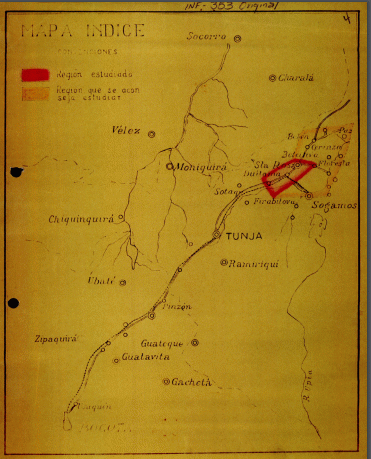
Geologia económica de la región Paipa-Duitama-Santa Rosa de Viterbo, en el Departamento de Boyacá

Geologia económica de la región Paipa-Duitama-Santa Rosa de Viterbo, en el Departamento de Boyacá

Economic geology of the Paipa-Duitama-Santa Rosa de Viterbo region, in the department of Boyacá

Saramiento Soto, R. (1942)

Book Section · Source: Compilación de los Estudios Geológicos Oficiales en Colombia · Volume: Vol. 5 · Pages: pp. 1–43 · Language: in Spanish

Abstract
Sarmiento Soto presents an economic-geological study of the Paipa–Duitama–Santa Rosa de Viterbo region of Boyacá, Colombia, describing the geology and mineral resources of the area. The study treats the stratigraphy and structure of the region and examines resources of potential economic importance. It also discusses the thermal springs of Paipa, considering both the geological and structural setting in which the springs occur and available chemical analyses of their waters and gases in assessing their origin. The work was originally prepared for Colombia’s Servicio Geológico Nacional in 1941 and subsequently published in the Compilación de los Estudios Geológicos Oficiales en Colombia.
Keywords
gems, beryl, emerald, Colombia, Muzo
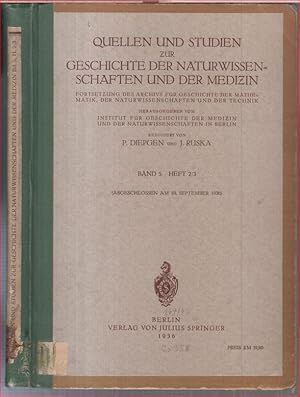
Über Nachahmung von Edelsteinen

Über Nachahmung von Edelsteinen

About the imitation of precious stones

Ruska, J. (1933)

Journal Article · Source: Quellen und Studien zur Geschichte der Naturwissenschaften und der Medizin · Volume: Vol. 3 · Pages: pp. 108–119 · Language: in German

Abstract
Ruska examines the history of artificial gemstones and gemstone imitation in Arabic and medieval technical literature, presenting and interpreting recipes for producing materials intended to resemble precious stones. He discusses methods involving colored glass and other artificial compounds designed to imitate ruby, emerald, sapphire, and related gems, with attention to the ingredients, coloring agents, heating procedures, and terminology found in the surviving texts. Particular emphasis is placed on the transmission of this technical knowledge from Greek and Hellenistic traditions into Arabic literature and subsequently into medieval European works. Ruska compares different textual versions and investigates their relationships, using the recipes as evidence for both the practical knowledge of early craftsmen and the literary transmission of alchemical and mineralogical traditions. The study demonstrates that the imitation of gemstones formed an established branch of early chemical technology and that recipes appearing in later European lapidaries and technical manuscripts frequently had much older antecedents in Greek and Arabic sources.
Keywords
gems, imitation gems, Arabic mineralogy, early lapidaries
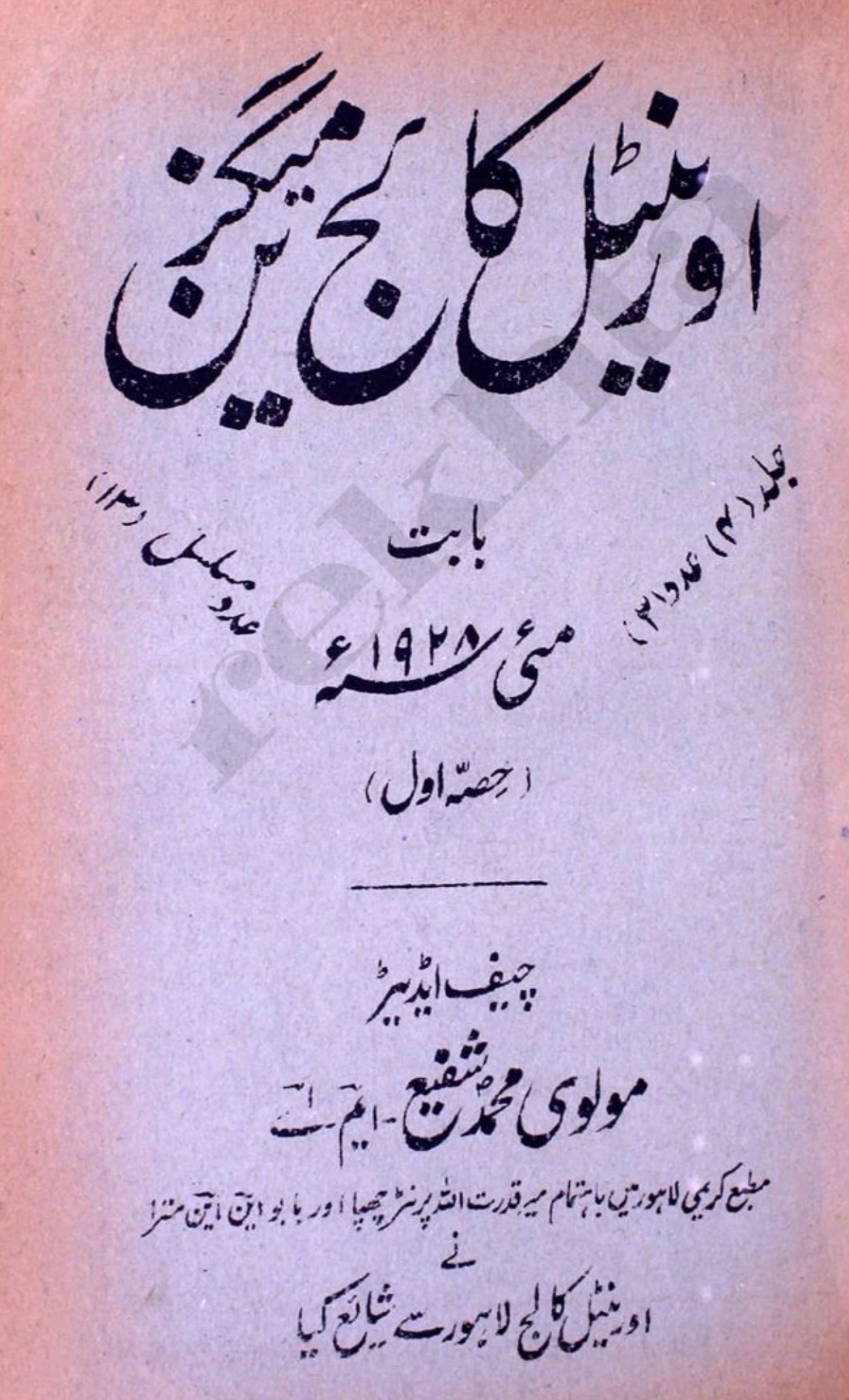
Book of Precious Stones

Book of Precious Stones

Jawāhir-nāmah [جواهرنامه

Shafīʿ, M. (1928)

Journal Article · Source: Oriental College Magazine · Volume: Vol. 4 · Issue: No. 4, August · Pages: pp. 112–132 · Language: in Persian

Abstract
Edition of the Kapurthala Jawāhir-nāmah, based on a manuscript dated 1160 AH/1747. It treats diamond, yāqūt, ruby, emerald, pearl, turquoise, bezoar, amber, lapis lazuli, coral, carnelian, and jasper in that order and adds musk and rock crystal at the end. The entries describe such matters as the mines, properties, and values of the stones.
Keywords
gems, Arabic lore, history, Arabic mineralogy,
Los Minerales de Colombia

Los Minerales de Colombia

The Minerals of Colombia

Lleras Codazzi, R. (1927)

Book · Publisher: Imprenta Nacional, Biblioteca del Museo Nacional · Pages: 150 pp. · Language: in Spanish

Abstract
Lleras Codazzi provides an early systematic account of the minerals known from Colombia, combining mineralogical descriptions with information on their Colombian occurrences and localities. Produced as part of the Biblioteca del Museo Nacional, a series intended to document the museum’s collections scientifically while making them accessible to a wider readership, the work forms one of the foundational publications of modern Colombian mineralogy. It covers both common and economically significant mineral species and records occurrences of particular interest to mining and economic geology; later geological literature, for example, cites its discussion of pitchblende and other uranium minerals from Norte de Santander. For gemological research the book is particularly relevant because Lleras Codazzi had already studied the mineralogy of Muzo and its emerald deposits in his 1925 Catálogo descriptivo de los minerales de Muzo, and Los minerales de Colombia places such Colombian mineral occurrences within a broader national mineralogical survey.
Keywords
corundum, Colombia.12, gems, beryl, emerald
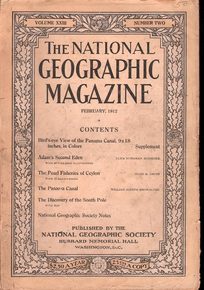
The pearl fisheries of Ceylon

The pearl fisheries of Ceylon

Smith, H.M. (1912)

Journal Article · Source: National Geographic · Volume: Vol. 23 · Issue: February · Pages: pp. 173–194

Abstract
AS SOON as a traveler sets foot on the shores of Ceylon he comes under the subtle charm of the land, and is quickly imbued with the feeling that it would be most incongruous if such a climate did not produce the most luxuriant foliage, the most beautiful flowers, the most luscious fruits; if such a soil did not give forth the most wonderful profusion and variety of precious stones; if such surrounding waters did not yield the most resplendent pearls. Ceylon has long been celebrated for its sapphires, rubies, cat’s-eyes, moonstones, opals, amethysts, carbuncles, and emeralds; but none of these, nor all of them combined, have given to the island the fame and the romantic setting that have been conferred on it by the product of the limpid waters that bathe its coral strands and sandy beaches. The poetic name of Ceylon today is “The Pearl on India’s Brow.” Colombo, the principal city of modern Ceylon, is a stopping place for all the steamers plying between Europe and Asia and Australia, and is therefore visited by thousands of tourists and travelers each year. But the pearl fishery is so remote from Colombo that not one visitor in ten thousand ever goes there. In Colombo a person sees only a fraction of the great pearl crop, of which more than 90 per cent—99 per cent in some years—goes to India; but this fraction is sufficiently seductive to the transient visitor to render uncertain the time and manner of his arrival home, for the pearl shops in Colombo are veritable magnets that irresistibly attract the contents of purse and wallet. The pearl fishery of Ceylon and of India and the Persian Gulf is of very great antiquity, and is thought to be the oldest established fishery now in existence. The Sinhalese records, going back to about 550 B.C., indicate that the fisheries were then well developed, and there is reason to believe that they flourished at least 500 years before. At a very early period the pearls brought the island into prominence abroad, and were in great repute in Rome at the time of Pliny, who, referring to Ceylon under the name of Taprobane, wrote that it was “the most productive of pearls of all parts of the world.” From the most remote period of which there is any record, it would appear that the pearl fishery played a very important part in the history of Ceylon, having had more or less direct and intimate relations with every important aspect of the civilization of the island. The information available clearly suggests that from the earliest times the fishery was conducted in much the same way as in our own day—the same methods of obtaining the pearl oysters, of handling the catch on shore, and of extracting the pearls. In the words of a local writer, “Ceylon is a place with a glorious past. Its once magnificent cities are now but a mass of crumbled and half-buried ruins; its native dynasty has passed away forever;”
Keywords
corundum, Sri Lanka.12, gems

The Tourmaline King – Announcement special to the colored people

Braye, J.G. (1911)

Journal Article · Source: The Liberator · Volume: Vol. 9 · Issue: No. 39, November 10 · Pages: p. 2

Abstract
Having been employed by the Himalaya Mining Co. at their celebrated mines in California for the past ten (10) years, I have made Mineralogy a study. I have produced for the above Company the most wonderful gems ever known. In order to give my race the benefit of my knowledge and experience, I will save them 100 per cent, on all handsome pieces of jewelry they wish to purchase, small or large, for the holidays or hereafter. The above Company produces the most wonderful Tourmalines, Chrysoprase and Turquoise, and handles all kinds of precious and semiprecious stones. I can furnish the most beautiful stone from $1.00 up. All mail orders promptly filled accompanied with money orders. If articles are not satisfactory, money will be cheerfully refunded. I will give with each sale, one (1) piece of rough Tourmaline as it comes from the mine, as a specimen. These tourmalines can be had in all colors, shapes and sizes, and are brilliant as any diamond. The Chrysoprase we have in all shades of green, almost like the emerald in color, and the turquoise are simply beautiful blue, and the matrix exquisitely marked. No need of wearing an imitation stone. Call and see my display. All mail orders are solicited. 640 Chamber of Commerce Bldg. Phone Main 1044. We have personally inspected Brave’s stock of gem’s and find them as stated and our people can safely patronize Mr. Braye. He has these gems in the rough as taken from the mines. Mr. Braye is a mineralogist of 23 years experience and is employed by a big New York firm as an expert. He has secured a big block of real estate at Alamitos beach and has lots there at reasonable prices. One fourth down and balance to suit.
Keywords
gems, USA, Pala, San Diego County, tourmaline, California, Himalaya Mine, Braye
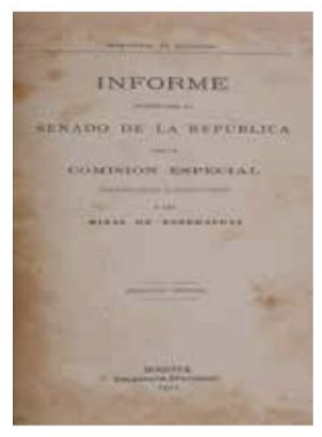
Informe presentado al Senado de la República por la comisión especial encargada de estudiar los asuntos referentes a las Minas de Esmeraldas

Informe presentado al Senado de la República por la comisión especial encargada de estudiar los asuntos referentes a las Minas de Esmeraldas

Report presented to the Senate of the Republic by the special commission in charge of studying matters related to the Emerald mines

República de Colombia (1911)

Book · Publisher: Imprenta Nacional · Pages: 169 pp. · Language: in Spanish

Abstract
This official report to the Colombian Senate records the findings of a special commission appointed to investigate matters concerning the nation’s emerald mines, particularly the important deposits of Muzo and Coscuez. It examines the administration and exploitation of the government-owned mines, their economic importance, production and sale of emeralds, revenues and expenses, and problems associated with illicit extraction and trafficking. The report provides contemporary evidence for Colombian government policy toward the emerald industry at a time when the state was attempting to regulate production and protect the value of its emeralds, and is an important primary source for the history of the Muzo and Coscuez mines.
Keywords
gems, beryl, emerald, Colombia
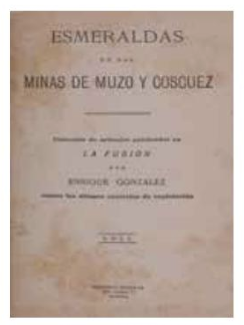
Esmeraldas de las minas de Muzo y Coscuez. Colección de artículos publicados en La Fusión por Enrique González, contra los últimos contratos de explotación

Esmeraldas de las minas de Muzo y Coscuez. Colección de artículos publicados en La Fusión por Enrique González, contra los últimos contratos de explotación

Emeralds from the mines of Muzo and Coscuez. Collection of articles published in La Fución

González, E. (1911)

Book Section · Publisher: Imprenta Moderna · Pages: 72 pp. · Language: in Spanish

Abstract
González discusses the emerald mines of Muzo and Coscuez in Colombia and the controversies surrounding their exploitation, drawing upon his extensive practical experience with the deposits. The work brings together articles originally published in La Fusión concerning the administration and contractual arrangements governing the mines, their production and economic importance, and the conditions under which they should be worked. Particular attention is given to questions of government control, concessions, mining operations, and the commercial value of Colombia’s emerald resources. Written by a former director of operations at Muzo and Coscuez, the work provides a contemporary account of the Colombian emerald industry at the beginning of the twentieth century and is of particular historical value for the development and administration of these two major emerald deposits.
Keywords
gems, beryl, emerald, Colombia, Muzo, Cosquez
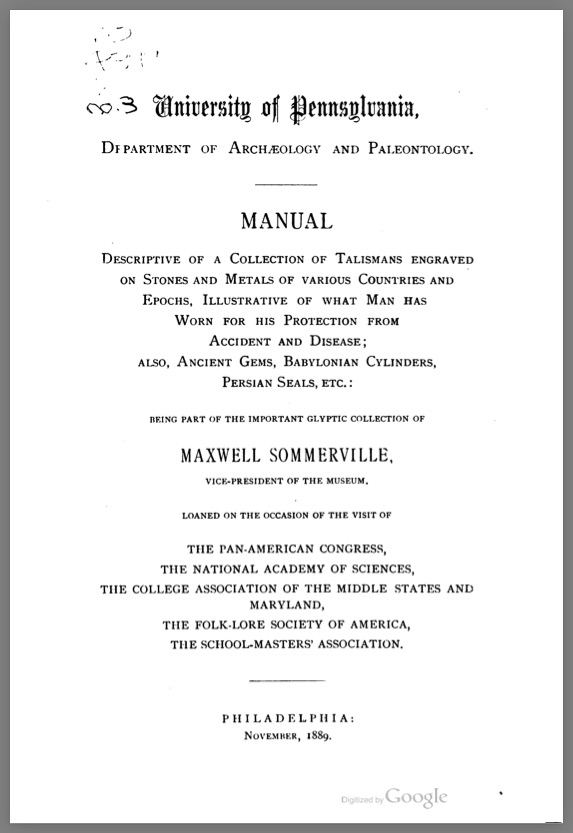
Manual Descriptive of a Collection of Talismans Engraved on Stones and and metals of Various countries and Epocks, Illustrative of What Man Has Worn for his Protection from Accident and Disease; also, Ancient Gems, Babylonian Cylinders, Persian Seals, Etc.:  being part of the important glyptic collection of Maxwell Sommerville

Manual Descriptive of a Collection of Talismans Engraved on Stones and and metals of Various countries and Epocks, Illustrative of What Man Has Worn for his Protection from Accident and Disease; also, Ancient Gems, Babylonian Cylinders, Persian Seals, Etc.: being part of the important glyptic collection of Maxwell Sommerville

Sommerville, M. (1889)

Book · Publisher: Dept. of Archaeology and Paleontology, University of Pennsylvania · Pages: 41 pp.

Abstract
Sinkankas: The objects exhibited are numbered 1497 to 1893, and include numerous cut gemstones with others that are made from base or precious metals, and a series of engraved “gems” cut upon ostrich shell, also seals, abraxoid gems, a suite of classical engraved gems. Some are briefly described but no dimensions are given.
Keywords
gems, glyptic, engraved gems, agate, cameo, intaglio, jade, chrysoprase, plasma of emerald
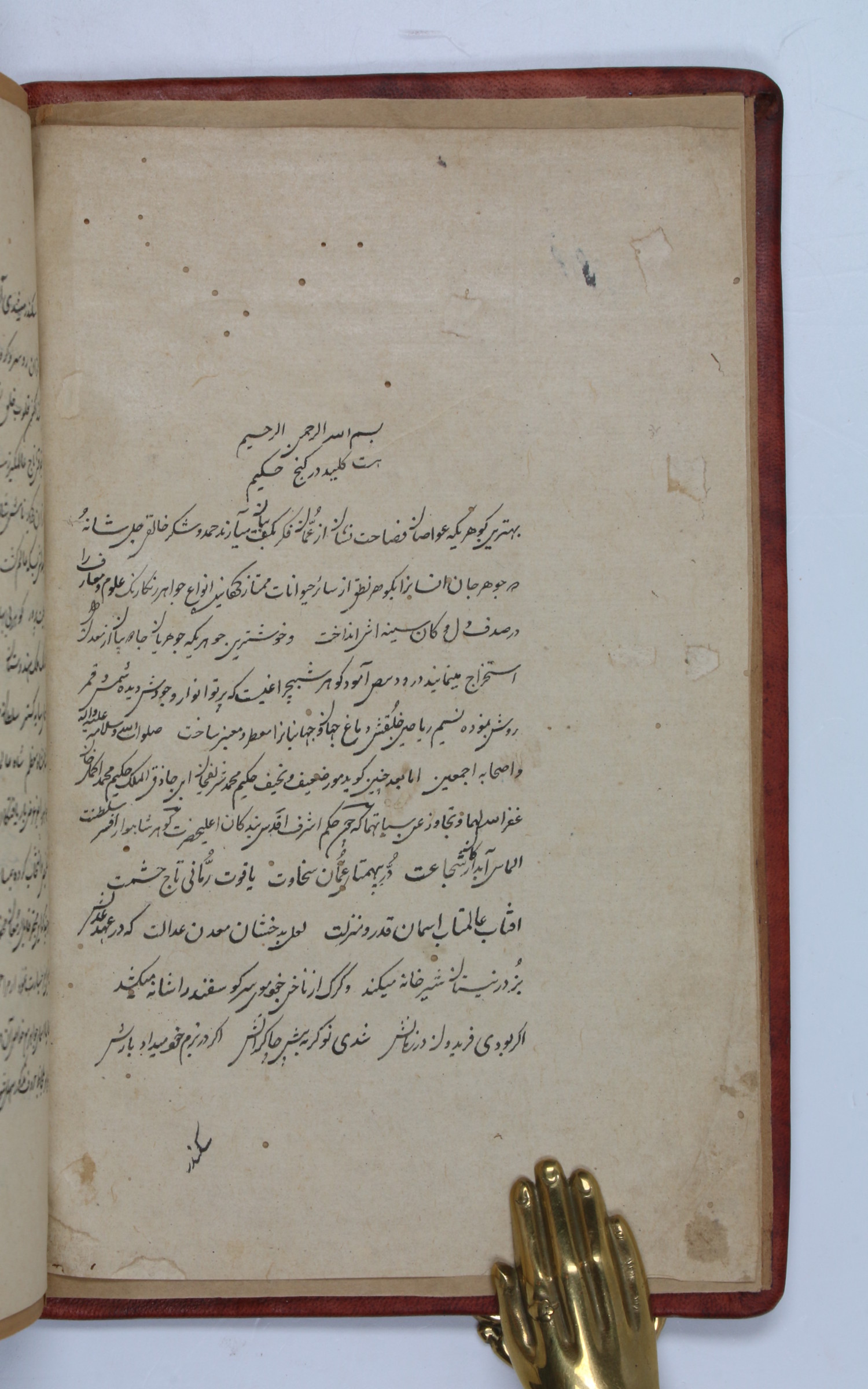
Khawas al-Jawahir

Khawas al-Jawahir

The properties of gemstones

Sharifi, H.M. (1845)

Manuscript · Pages: 12 folio Persian manuscript · Language: in Persian

Abstract
A treatise on the properties of popular gemstones, including diamonds, rubies, emeralds, aqeeq (a stone of particular importance to Islam), and several others, attributed to a famous Muslim physician in the Mughal court, Hakim Muhammad Sharifi (1722–1807). The author details the physical attributes of each gem, then goes on to describe their spiritual properties and how each affect health and mood, can work to cure disease, and how one might use gemstones in alchemy. Works on the properties of gemstones were quite popular across the Muslim world as an offshoot of both science and folk medicine; their use in alchemy, the precursor to modern chemistry, was popular. Here, gemstones can guard against miscarriage, prevent internal pain, bad luck, or a fearful disposition.
Keywords
gems, Arabic mineralogy
Ratna Pariksha

Ratna Pariksha

Gem Testing

Pheru, T. (1316)

Book · Publisher: Institute of Oriental Research · Language: in Sanskrit

Abstract
Ratna Pariksha [रत्नपरीक्षा; Gem Testing], composed in 1316 by the Jain scholar and administrator Thakkura Pheru, is a medieval Indian treatise devoted to the identification, classification, evaluation, and valuation of precious stones. Written in Apabhraṃśa, it discusses important gems encountered in the Indian trade, including diamonds, pearls, rubies, sapphires, emeralds, and other precious materials, describing their varieties, desirable and undesirable qualities, defects, weights, and commercial values. The work is particularly important to the history of gemology because Pheru drew upon practical experience with gems, weights, measures, and monetary calculations rather than treating precious stones solely within the religious and astrological traditions characteristic of many earlier Indian lapidaries. It consequently provides valuable evidence for the terminology, testing practices, grading criteria, and economics of the gem trade in early 14th-century India.
Keywords
corundum, history.1, India.12, gems, Indian lapidary

Exploring the Literature of Emerald

Emerald literature spans gemology, mineralogy, deposits, identification, treatments, synthesis, history and the gem trade, with important sources covering deposits around the world.

For a curated guide to this subject, read Green Fire — Lotus Gemology's Guide to the Literature of Emerald.

About Four Treasures

Four Treasures is Lotus Gemology's freely accessible gemological reference database. Use the full database to search by author, title or keyword and explore literature on gemology, mineralogy, jewelry and related fields. Where available, hyperlinks on titles may lead directly to the full publication.

Search the Complete Four Treasures Database