Explore books on gems, gemology, jewelry and mineralogy in Four Treasures, the Lotus Gemology reference database. This bibliography brings together matching book records from the collection, with publication details, abstracts and cover images where available.
Gemology Book References
The list below matches books concerning gemology and related subjects in the database's searchable fields. Some works cover several branches of gems, jewelry or mineralogy.
2,521–2,540 of 3,527 matching references
Epiphanius on gemstones
Journal Article
Maxwell-Stuart, P.G. (1977) Epiphanius on gemstones.Journal of Gemmology, Vol. 15, No. 8, October, pp. 435–443.
Mauskopf, S.H. (1976) Crystals and compounds: Molecular structure and composition in nineteenth-century French science.Transactions of the American Philosophical Society, Vol. 66, No. 3, pp. 1–82.
gems, history of gemology, history of mineralogy, Arabic mineralogy, history of science, crystallography
Recent scholarship has greatly extended our understanding of the history of theories concerning the ultimate nature and structure of matter. This is particularly true for the period preceding the emergence of Dalton’s atomic theory. We now know something of the hierarchical theories of material structure prevalent in the seventeenth century, in the thought of Robert Boyle and Isaac Newton, for example. We have begun to perceive how important Newton’s ideas concerning the structure of matter and the forces that bound substances together or pulled them apart were for the physical and chemical philosophers of the eighteenth century. Dalton’s chemical atomic theory no longer appears quite so lacking in background as it did twenty-five years ago. At the same time, Dalton’s true innovation in turning from consideration of force to consideration of atomic weight has likewise been clarified.
The tourmaline is one of the most interesting species in the mineral kingdom”—so The Popular Encyclopedia assured its readers almost a century ago. As with Abraham Trembley’s polyp, however, the tourmaline enjoyed its greatest renown during the eighteenth rather than the nineteenth century, and by the time the above remark was published, it had long since ceased to occupy the centre of the scientific stage in the way it once had done. In this paper I intend to look briefly at some of the circumstances surrounding the initial upsurge of interest in the stone in the middle years of the eighteenth century. As we shall see, important developments in the theories of electrical and especially magnetic action flowed from this first detailed investigation of its properties. I shall not extend the discussion, though, to the later years of the century, when the general recognition that the electricity acquired by a heated tourmaline was constantly associated with a particular axial direction in the crystals gave the stone a renewed importance, this time in the rapidly developing science of crystallography.
Glass made imitation jade and its inclusions
Journal Article
Fujisaki, Y. (1976) Glass made imitation jade and its inclusions.Journal of The Gemmological Society of Japan [宝石学会誌], Vol. 3, No. 3, pp. 99–105.
Record No. 6407 | Sinkankas/Born No.: NIS/NIB | Language: in Japanese with English abstract | RWHL
Reference copied to clipboard!
gems, jade, jade imitations, glass
Imitation jades currently circulating in jewellers market under the name of Syberian jade or Reformed jade were investigated by both non-destructive and destructive methods, with special attention to the inclusions. The imitation jades are made of sophisticatedly produced glass, and are dark green, translucent to opaque with glassy, somewhat greasy, luster, have Mohs' hardness of 5-5.5, sp. gr. 2.67 ± 0.02 at 20℃, refractive index 1.523 ± 0.005, and broad absorption spectrum at 4000-4600Å and 6300-7000Å. They contain characteristic inclusions of the following three types; 1) Needle-like inclusions which are identified to be hydroxyl apatite by optical and X-ray investigations, have hexagonal section, and are uniaxial negative, with no pleochroism, higher refractive index than the matrix. These are grouped into three by their length. 2) Dendrite inclusions with 90° braches are identified to be either vapour or liquid phase inclusions, and have lower refractive index than the matrix. 3) Four other types of inclusions, which are not identified. These imitation jades exhibit psudo-optical anisotropy due to apatite inclusions and are easily identified by their inclusions.
Notes on mono- and bi-phase inclusions in amethyst
Journal Article
Gübelin, E.J. (1976) Notes on mono- and bi-phase inclusions in amethyst.Journal of Gemmology, Vol. 15, No. 4, October, pp. 165–171.
The Lewis Collection Of Engraved Gemstones In Corpus Christi College, Cambridge
Book
Henig, M. (1975)The Lewis Collection Of Engraved Gemstones In Corpus Christi College, Cambridge. Oxford, British Archaeological Reports, 94 pp., 29 plates
gems, glyptic, engraved gems, agate, cameo, intaglio, Rome, Roman gems, history of gemology, Greek, Greece, Egypt
Sinkankas notes that this catalogue is intended to replace the list compiled by J. H. Middleton some eighty years ago, when Lewis bequeathed his collection to Corpus Christi College, Cambridge, where it still resides. As Henig observes, scholars have too often overlooked what is undoubtedly one of the finest collections of Graeco-Roman intaglios in Britain, largely because Middleton illustrated very few pieces and none by photography. A short appendix lists a cache of glass intaglios and cameos, evidently discovered together, likely in the Eastern Mediterranean, and sheds light on the manufacturing techniques used for the glass gems in the Lewis Collection. While several direct photographs of the gems are included, most illustrations are taken from impressions. See Middleton, J. H., 1891.
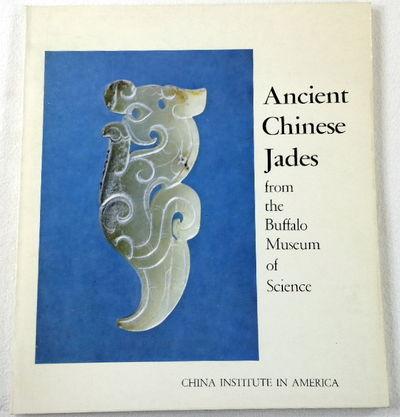
Ancient Chinese Jades from the Buffalo Museum of Science
Book
Hartman, J.M. (1975)Ancient Chinese Jades from the Buffalo Museum of Science. New York, China Institute in America, 80 pp., 118 photos
Record No. 7432 | Sinkankas/Born No.: 2779; Born: pp. 161–162 | RWHL
Reference copied to clipboard!
gems, jade, nephrite, jadeite, fei cui, Chinese jade carving
Sinkankas: Handsome, well illustrated catalog of jades in the Chauncey J. Hamlin Collection. Remarks on formation of the collection, materials in the pieces, artistry, etc., followed by the catalog proper briefly describing 118 pieces. Comment by G. M. Born, 161–2; Yang, Ancient Chinese, 1483.
Developments and highlights at GIA’s lab in Los Angeles: Large Montana sapphire
Journal Article
Liddicoat, R.T. (1975) Developments and highlights at GIA’s lab in Los Angeles: Large Montana sapphire.Gems & Gemology, Vol. 15, No. 1, Spring, p. 27.
gems, corundum, history.1, Ceylon.12, history of gemology, Pliny, early gemology, Ceylon
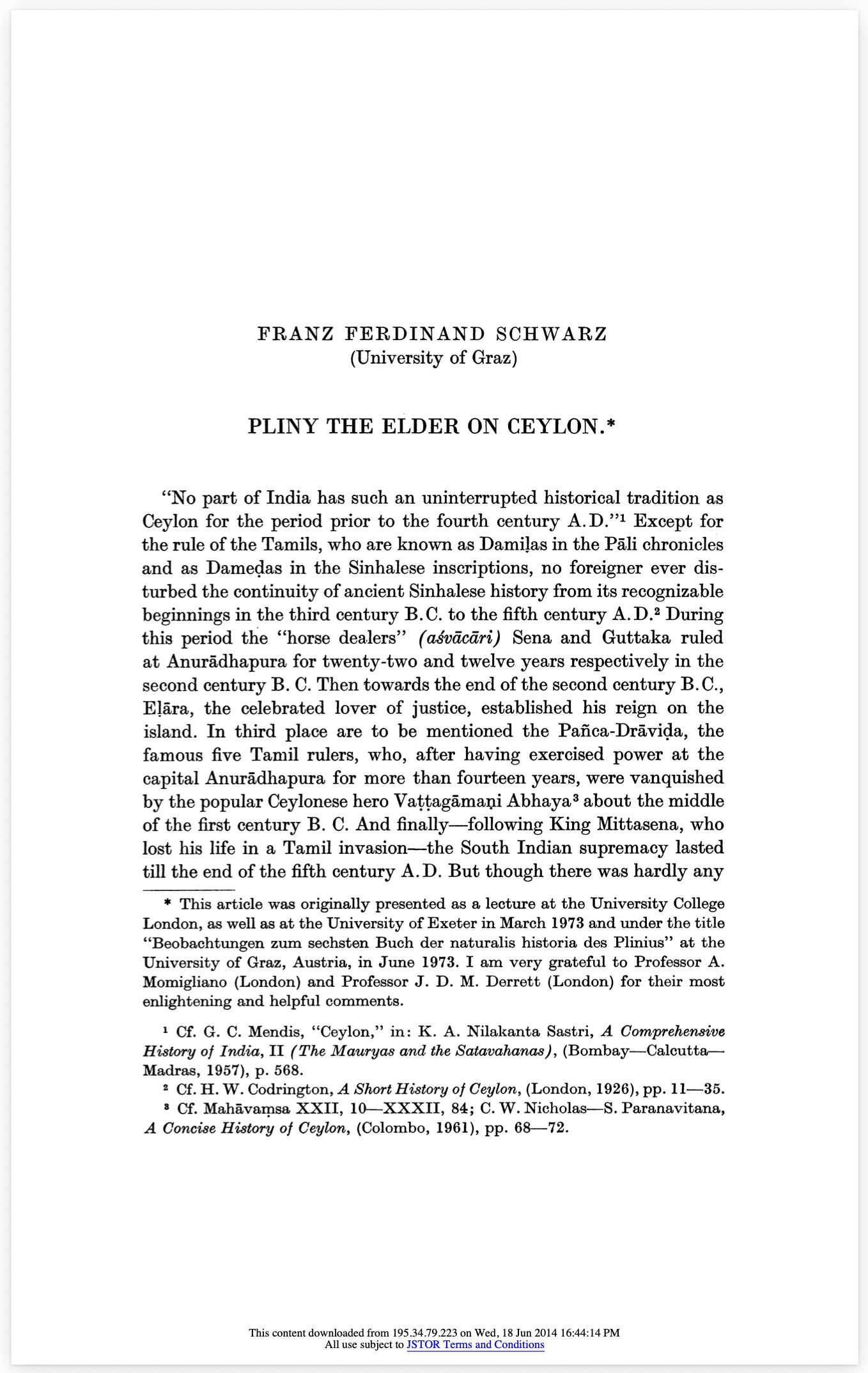
No part of India has such an uninterrupted historical tradition as Ceylon for the period prior to the fourth century A.D. Except for the rule of the Tamils, who are known as Damiḷas in the Pāli chronicles and as Damedas in the Sinhalese inscriptions, no foreigner ever disturbed the continuity of ancient Sinhalese history from its recognizable beginnings in the third century B.C. to the fifth century A.D. During this period the “horse dealers” (assavācāri) Sena and Guttaka ruled at Anurādhapura for twenty-two and twelve years respectively in the second century B.C. Then, towards the end of the second century B.C., Eḷāra, the celebrated lover of justice, established his reign on the island. In third place are to be mentioned the Pañca-Dravida, the famous five Tamil rulers, who, after having exercised power at the capital Anurādhapura for more than fourteen years, were vanquished by the popular Ceylonese hero Vaṭṭagāmaṇi Abhaya about the middle of the first century B.C. And finally—following King Mittasena, who lost his life in a Tamil invasion—the South Indian supremacy lasted till the end of the fifth century A.D. But though there was hardly any break in the steady development of early Ceylonese history, we are far from able to give a reliable chronology. In order to demonstrate the many difficulties and uncertainties that arise in a quest for well-grounded criteria for a better knowledge of Ceylon’s history, we will give a short survey of the sources relevant to the history of ancient Ceylon.
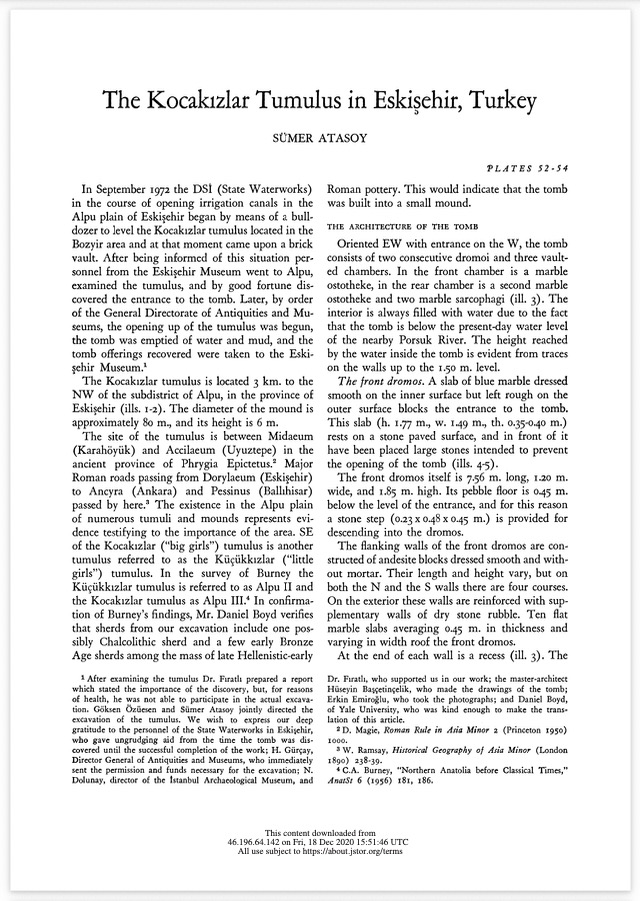
The Kocakizlar Tumulus in Eskisehir, Turkey, is an important archaeological site excavated in 1972 during irrigation canal construction. The site features a brick vault tomb with significant findings including various gold, gem and ivory artifacts, underscoring the historical significance of the area known for its ancient tumuli and Roman roads. The excavated items provide insights into the cultural practices and craftsmanship of the period.
Building a Gemological Library
Gemological books range from general identification manuals and textbooks to specialized works on individual gems, mineralogy, jewelry, treatments, synthesis, history and gem-producing regions.
Four Treasures is Lotus Gemology's freely accessible gemological reference database. Use the full database to search by author, title or keyword and explore literature on gemology, mineralogy, jewelry and related fields. Where available, hyperlinks on titles may lead directly to the full publication.