Gemology Books Bibliography

Gemology Books Bibliography

Explore books on gems, gemology, jewelry and mineralogy in Four Treasures, the Lotus Gemology reference database. This bibliography brings together matching book records from the collection, with publication details, abstracts and cover images where available.

Gemology Book References

The list below matches books concerning gemology and related subjects in the database's searchable fields. Some works cover several branches of gems, jewelry or mineralogy.
2,681–2,700 of 3,502 matching references

Application of phase contrast microscopy in gemmology
Journal Article
Gübelin, E.J. (1957) Application of phase contrast microscopy in gemmology. Journal of Gemmology, Vol. 6, No. 4, October, pp. 151–165.
Record No. 2051  |  ISBN/ISSN: 221252  |  Sinkankas/Born No.: NIS/NIB  |  RWHL

The phase-contrast method

Journal Article
Gübelin, E.J. (1957) The phase-contrast method. Gems & Gemology, Vol. 9, No. 3, Fall, pp. 67–79.
Record No. 2050  |  ISBN/ISSN: 0016626X  |  Sinkankas/Born No.: NIS/NIB  |  RWHL

Gem mining in Burma

Journal Article
Ehrmann, M.L. (1957) Gem mining in Burma. Gems & Gemology, Vol. 9, No. 1, Spring, pp. 3–30.
Record No. 694  |  ISBN/ISSN: 0016626X  |  Sinkankas/Born No.: 1870  |  RWHL
Sinkankas: Both articles based on author’s many gem-buying trips and with photos taken by himself; describes geography, transport, the people, mining of gemstones, geology of deposits, mineralogy, history, recovery of jade and amber, mines, and gem trading. Obit. American Mineralogist, 59, 1974, p. 1870. Mining. [414].

Structure & inclusions of synthetic star-stones
Journal Article
Breebaart, A.J. (1957) Structure & inclusions of synthetic star-stones. Journal of Gemmology, Vol. 6, No. 2, April, pp. 72–74.
Record No. 489  |  ISBN/ISSN: 221252  |  Sinkankas/Born No.: NIS/NIB  |  RWHL

Echt oder synthetisch?

Genuine or Synthetic?
Book
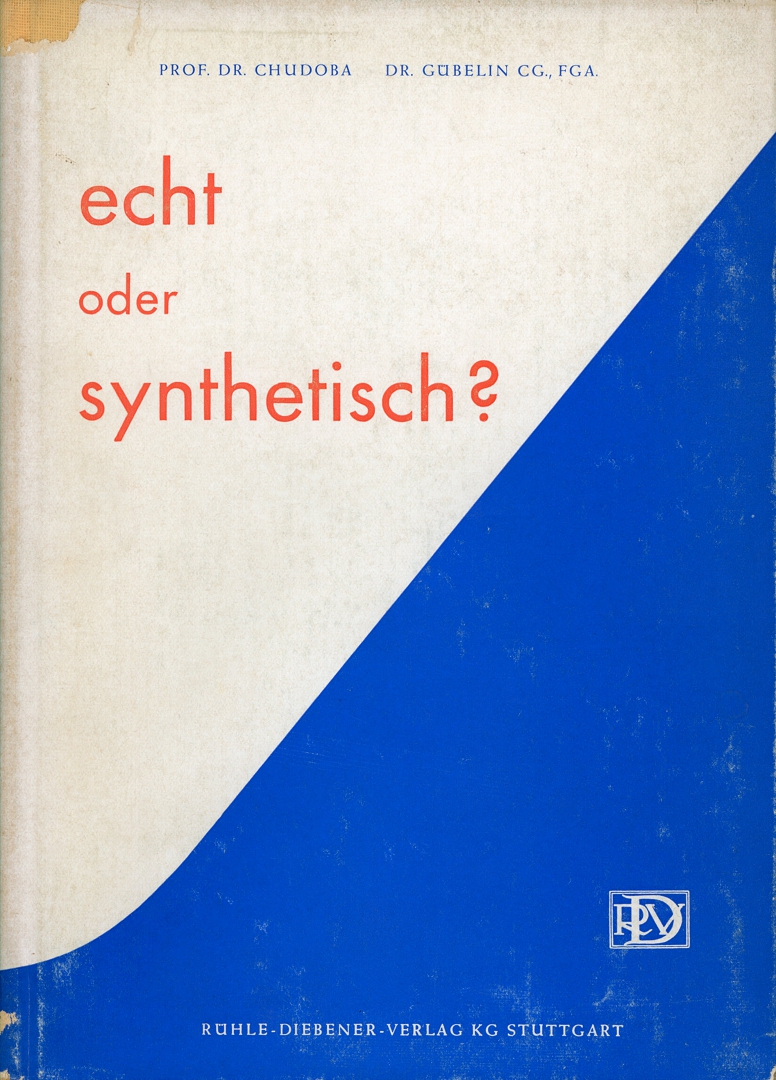
Chudoba, K. and Gübelin, E. (1956) Echt oder synthetisch? [Genuine or Synthetic?] Stuttgart, Rühle-Diebener-Verlag, 156 pp.
Record No. 4735  |  Sinkankas/Born No.: 1349; NIB  |  Language: in German  |  RWHL
Chudoba and Gübelin provide a practical guide to distinguishing natural gemstones from synthetic counterparts, combining a short history of artificial gem production with detailed discussion of the principal manufacturing methods and their diagnostic consequences. The Verneuil flame-fusion process, flux growth, and hydrothermal synthesis are described, together with the characteristic structures and inclusions they produce. Particular attention is given to synthetic ruby and sapphire, spinel, emerald, and other important gem materials, with comparisons between natural and laboratory-grown stones based on growth zoning, curved striae, gas bubbles, mineral inclusions, refractive properties, fluorescence, and other microscopic and physical features. The authors emphasize examination with the gemological microscope as one of the most powerful means of separation, supported by numerous photomicrographs illustrating inclusions and growth phenomena in both natural and synthetic gems. Conceived as a concise working manual for gemologists and jewelers, the book brought together the principal identification criteria then available at a time when synthetic gemstones were becoming increasingly sophisticated and commercially important.

L’Empire des Perles et des Pierres Précieuses
The Empire of Pearls and Gemstones
Book
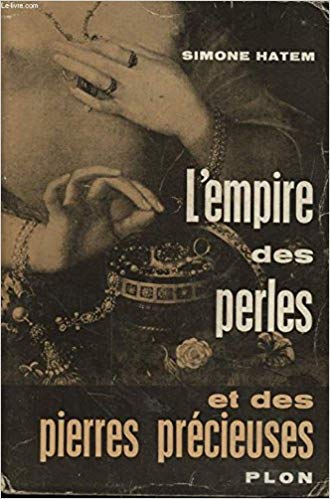
Hatem, S. (1956) L’Empire des Perles et des Pierres Précieuses. [The Empire of Pearls and Gemstones] Paris, Librairie Plon, 260 pp.
Record No. 4052  |  Sinkankas/Born No.: 2801; NIB  |  Language: in French  |  RWHL
Hatem presents a popular but substantial survey of pearls and precious stones, combining gemological information with history, geography, mining, trade, and famous gems. She discusses the principal gemstones, including diamond, ruby, sapphire, emerald, and pearl, describing their formation, physical characteristics, important producing regions, methods of recovery and cutting, and their place in commerce and jewelry. Historical accounts and anecdotes trace the fascination with precious stones from antiquity to the modern period, including celebrated jewels, royal treasures, discoveries, and the development of major gem-producing districts. Synthetic gemstones and attempts to manufacture diamond are also treated, including Moissan’s experiments. Pearls receive extensive attention, with discussion of natural pearl fisheries, cultured pearls, mollusks, formation, grading, and important producing regions. Written for the general reader rather than as a technical gemological manual, the volume brings together scientific explanations and historical material and is extensively illustrated, with 78 figures and a map in the text and 103 illustrations on plates.

Jadeite from San Benito County, California
Journal Article
Coleman, R.G. (1956) Jadeite from San Benito County, California. Gems & Gemology, Vol. 8, No. 11, Fall, pp. 331–334.
Record No. 3639  |  ISBN/ISSN: 0016626X  |  Sinkankas/Born No.: NIS/NIB  |  RWHL

Emerald from Habachtal

Journal Article
Gübelin, E.J. (1956) Emerald from Habachtal. Journal of Gemmology, Vol. 5, No. 7, July, pp. 342–361.
Record No. 2046  |  ISBN/ISSN: 221252  |  Sinkankas/Born No.: 2564  |  RWHL

The ruby mines of Mogok, Burma

Journal Article
Spaulding, D.L. (1956) The ruby mines of Mogok, Burma. Gems & Gemology, Vol. 8, No. 11, Fall, pp. 335–342.
Record No. 1634  |  ISBN/ISSN: 0016626X  |  Sinkankas/Born No.: NIS/NIB  |  RWHL
Reports on a visit to Mogok and its surrounding gem fields in autumn 1955, describing travel conditions, mining and the local gemstone industry. Lists the gem minerals recovered and explains traditional cutting practices and bargaining by concealed hand signals beneath a cloth. Also warns of synthetic corundum tumbled to resemble natural ruby rough.

The Yogo sapphire mine

Journal Article
Crocker, R.C. (1956) The Yogo sapphire mine. Gems & Gemology, Vol. 8, No. 11, Fall, pp. 323–330.
Record No. 622  |  ISBN/ISSN: 0016626X  |  Sinkankas/Born No.: NIS/NIB  |  RWHL

Gemstones of New South Wales

Journal Article
Chalmers, R.O. (1956) Gemstones of New South Wales. Gems & Gemology, Vol. 8, No. 11, Fall, pp. 343–349.
Record No. 494  |  ISBN/ISSN: 0016626X  |  Sinkankas/Born No.: NIS/NIB  |  RWHL

Star spinel showing four six-rayed stars
Journal Article
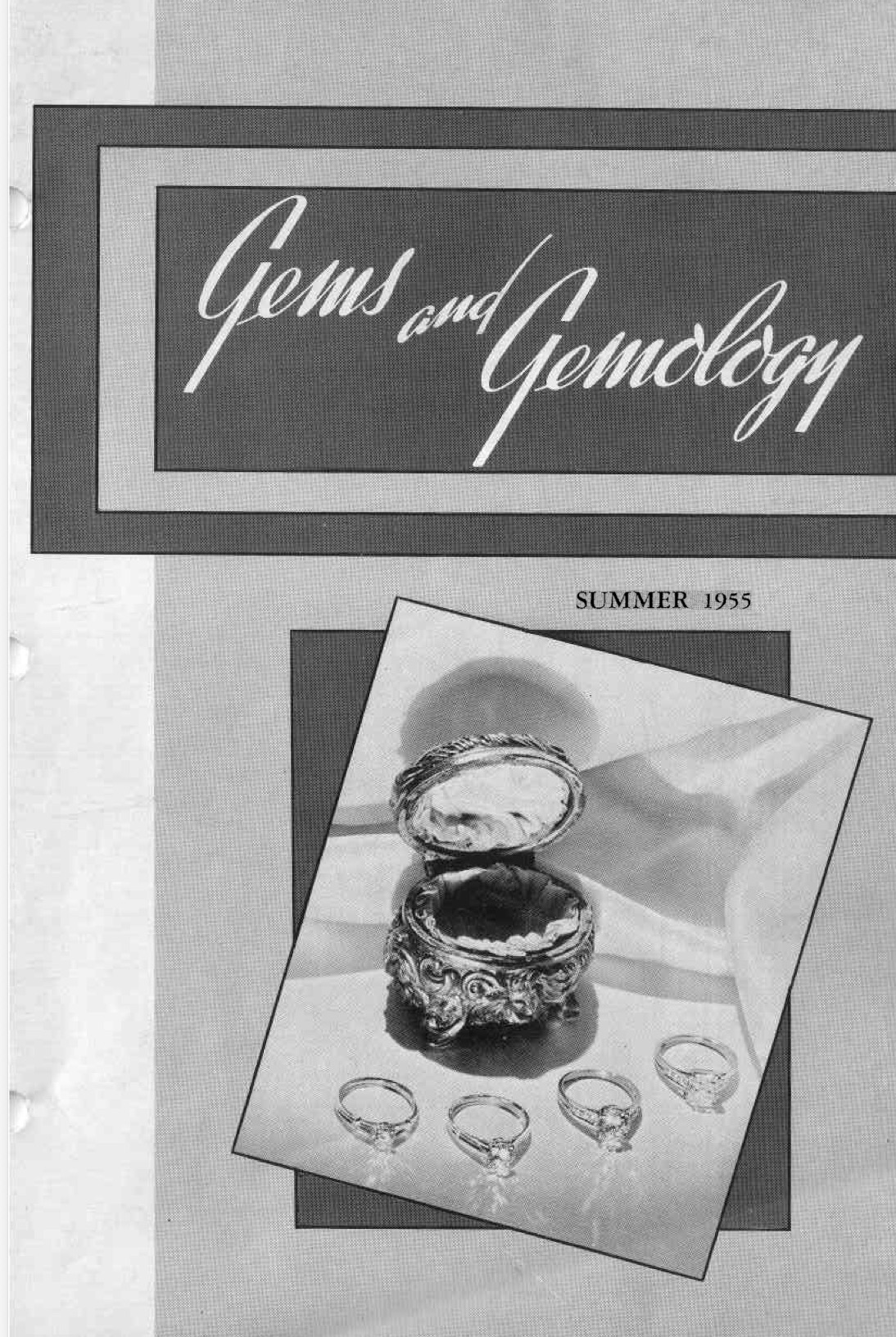
Switzer, G.S. (1955) Star spinel showing four six-rayed stars. Gems & Gemology, Vol. 8, No. 6, Summer, pp. 163–164, 190.
Record No. 29916  |  Sinkankas/Born No.: NIS/NIB  |  RWHL
Switzer describes an 11.80 ct black oval cabochon from the Ratnapura District displaying four separate six-rayed stars. X-ray diffraction confirmed spinel; the stone had a specific gravity of 3.550, and its unusual multiple asterism is the central subject of the report.

Jade and string sawing in Northeastern Costa Rica

Journal Article
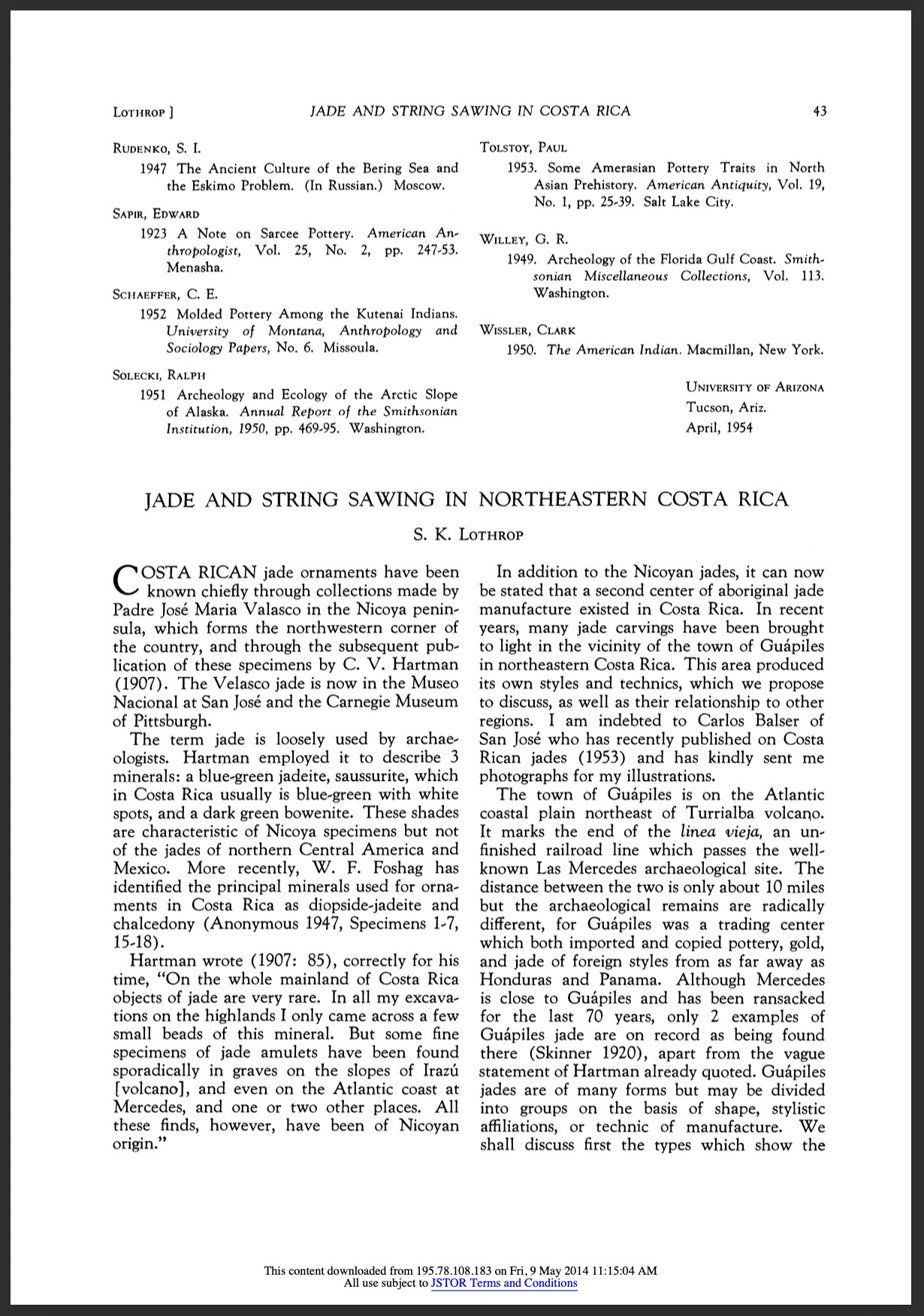
Lothrop, S.K. (1955) Jade and string sawing in Northeastern Costa Rica. American Antiquity, Vol. 21, No. 1, pp. 43–51.
Record No. 28406  |  ISBN/ISSN: 0002-7316  |  DOI: https://doi.org/10.2307/276107  |  Sinkankas/Born No.: NIS/NIB  |  RWHL
Costa Rican jade ornaments have been known chiefly through collections made by Padre José Maria Valasco in the Nicoya peninsula, which forms the northwestern corner of the country, and through the subsequent publication of these specimens by C. V. Hartman (1907). The Velasco jade is now in the Museo Nacional at San José and the Carnegie Museum of Pittsburgh.The term jade is loosely used by archaeologists. Hartman employed it to describe 3 minerals: a blue-green jadeite, saussurite, which in Costa Rica usually is blue-green with white spots, and a dark green bowenite. These shades are characteristic of Nicoya specimens but not of the jades of northern Central America and Mexico. More recently, W. F. Foshag has identified the principal minerals used for ornaments in Costa Rica as diopside-jadeite and chalcedony (Anonymous 1947, Specimens 1-7, 15-18).

The Road to Samarcand

Book
O’Brien, P. (1955) The Road to Samarcand. London, Rupert Hart-Davis, 255 pp.
Record No. 7415  |  Sinkankas/Born No.: NIS/NIB  |  RWHL

Amblygonite: Old mineral—new gem

Journal Article
Gübelin, E.J. (1955) Amblygonite: Old mineral—new gem. Gems & Gemology, Vol. 8, No. 7, Fall, pp. 208–214.
Record No. 2043  |  ISBN/ISSN: 0016626X  |  Sinkankas/Born No.: NIS/NIB  |  RWHL

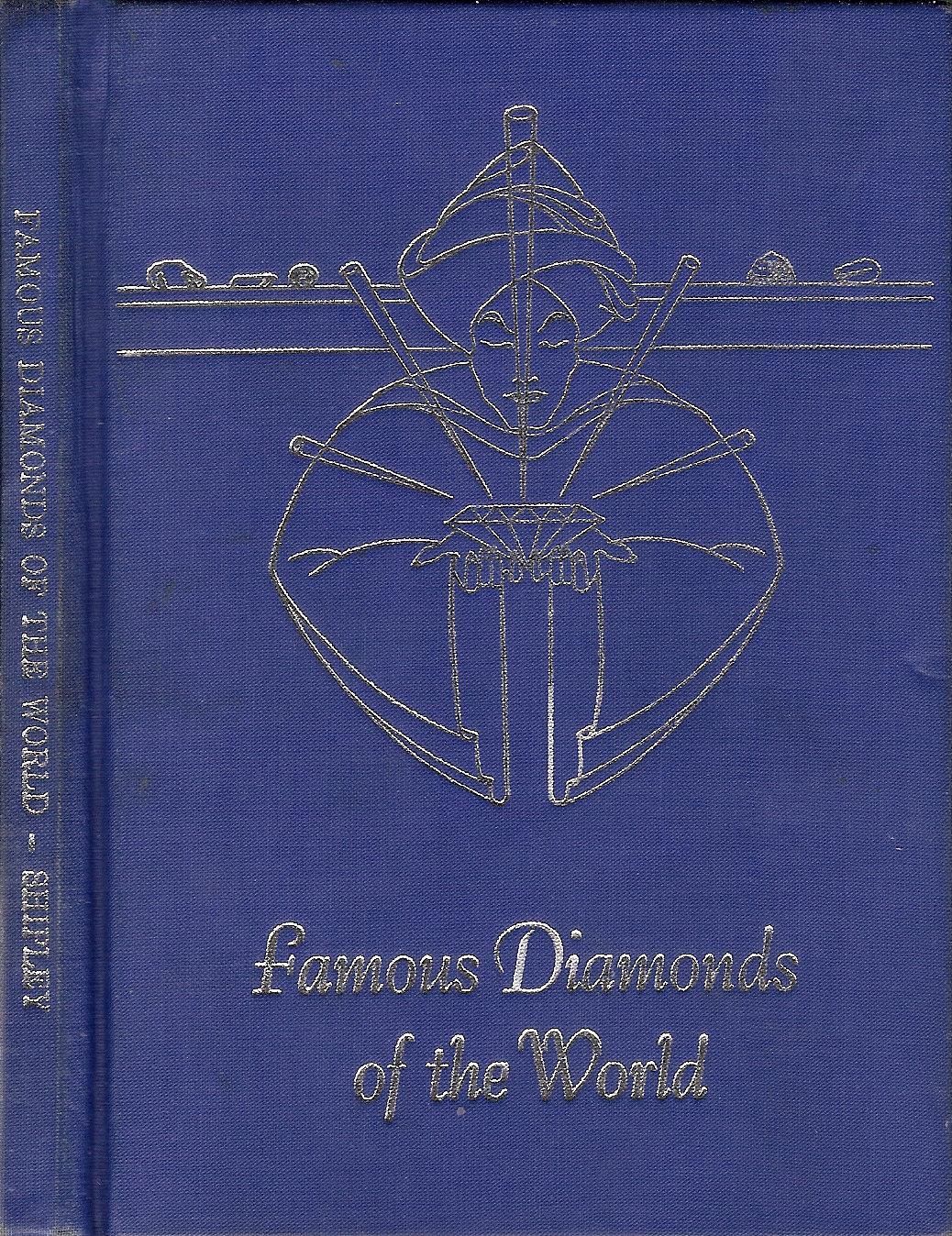
Famous Diamonds of the World

Book
Shipley, R.M. (1955) Famous Diamonds of the World. Los Angeles, Gemological Institute of America, 62 pp.
Record No. 1946  |  Sinkankas/Born No.: 6024  |  RWHL

Asterism in corundum

Journal Article
Tait, A.S. (1955) Asterism in corundum. Journal of Gemmology, Vol. 5, No. 2, April, pp. 65–72.
Record No. 1674  |  ISBN/ISSN: 221252  |  Sinkankas/Born No.: NIS/NIB  |  RWHL

The nature of jade

Journal Article
Barber, R.J. (1954) The nature of jade. Gems & Gemology, Vol. 8, No. 2, Summer, pp. 38–46.
Record No. 3638  |  ISBN/ISSN: 0016626X  |  Sinkankas/Born No.: 376  |  RWHL

Apuntes sobre la tecnica de taller jade en Mesoamerica
Notes on Jade Workshop Techniques in Mesoamerica
Journal Article
Easby, E.K. and Easby, D., T. (1953) Apuntes sobre la tecnica de taller jade en Mesoamerica. [Notes on Jade Workshop Techniques in Mesoamerica] Anales del Instituto de Arte Americano e Investigaciones Esteticas, Vol. 6, pp. 9–38.
Record No. 28756  |  Sinkankas/Born No.: 1840A; NIB  |  Language: in Spanish  |  RWHL
Studied numerous smaller jade carvings in order to establish lapidary methods, as illustrated by the pen-and-ink drawings. Discusses the jades of the Maya culture and those of the Valley of Mexico and Oaxaca, together with excellent Olmec objects from the La Venta culture. Features excellent drawings; photographic plates consist mainly of jade carvings.

Jade: A problem in nomenclature

Journal Article
Hardinge, C.E. (1953) Jade: A problem in nomenclature. Journal of Gemmology, Vol. 4, No. 3, July, pp. 112–117.
Record No. 6751  |  ISBN/ISSN: 221252  |  Sinkankas/Born No.: NIS/NIB  |  RWHL
IN the Journal" for April, 1952, I described an easy photo-Igraphic method whereby the refractive index of faceted gemstones could b e closely estimated and their size, shape, and facet distribution permanently recorded, without the use of a camera. Briefly, the process consisted in immersing the stones in a glass cell containing a suitable liquid, then, in the dark, sliding under the cell a sheet of printing paper or flat film, and exposing for a few seconds to light from a n overhead lamp. After development, the contact print so produced showed very clear, indeed one might say spectacular, differences in the appearance of the stones according to their refractive indices in relation to that of the liquid."

Building a Gemological Library

Gemological books range from general identification manuals and textbooks to specialized works on individual gems, mineralogy, jewelry, treatments, synthesis, history and gem-producing regions.

For a curated selection of particularly useful books, read The Gemologist's Core Library — Classic Books on Gemology, Jewelry and Mineralogy.

About Four Treasures

Four Treasures is Lotus Gemology's freely accessible gemological reference database. Use the full database to search by author, title or keyword and explore literature on gemology, mineralogy, jewelry and related fields. Where available, hyperlinks on titles may lead directly to the full publication.

Search the Complete Four Treasures Database