Explore books on gems, gemology, jewelry and mineralogy in Four Treasures, the Lotus Gemology reference database. This bibliography brings together matching book records from the collection, with publication details, abstracts and cover images where available.
Gemology Book References
The list below matches books concerning gemology and related subjects in the database's searchable fields. Some works cover several branches of gems, jewelry or mineralogy.
2,701–2,720 of 3,502 matching references
“Reconstructed rubies” found to be synthetic corundum
Journal Article
Benson, L.B. (1953) “Reconstructed rubies” found to be synthetic corundum.Journal of Gemmology, Vol. 4, No. 1, January, pp. 1–10.
Recently a number of stones have appeared on the market that were thought to be reconstructed ruby. Although the exact process used for the commercial production of synthetic corundum has been known for many years, the degree to which synthetic material may overlap in appearance the reconstructed stone is given little attention in present text books. In fact, little information has been published concerning the exact method used to produce reconstructed ruby.
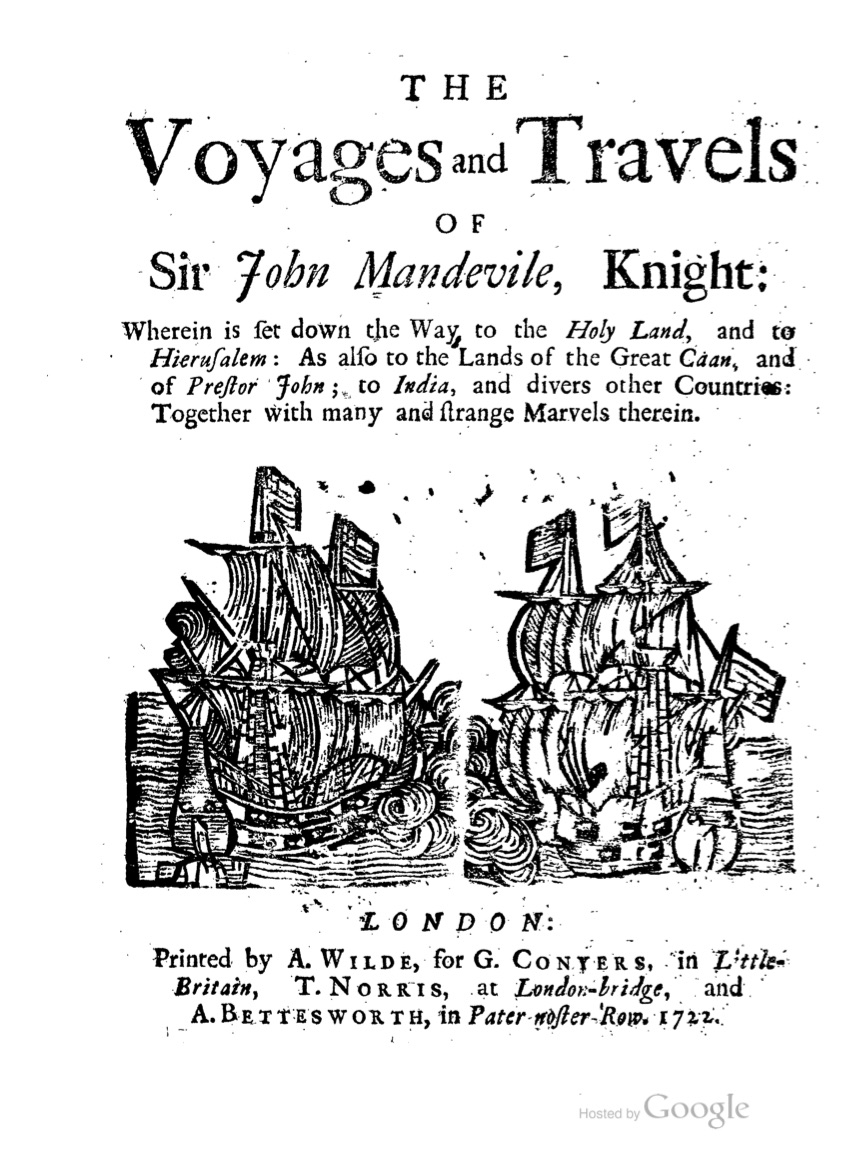
Letts, M. (1953)Mandeville’s Travels. London, Hakluyt Society, 2 Vols., 554 pp.
Record No. 37 | Sinkankas/Born No.: NIS/NIB | RWHL
Reference copied to clipboard!
travel & exploration, Asia, India, gems
A scholarly edition of the medieval travel narrative attributed to Sir John Mandeville, bringing together several textual versions for comparison. Volume I presents the Egerton text in modernized English, preceded by Letts’s introduction and an essay by E.G.R.Taylor on medieval cosmographical ideas. Volume II contains the French Paris text with an English translation, the shorter Bodleian version, and supplementary passages from German and Latin versions and related sources. The narrative moves from pilgrimage routes and sacred sites in the Holy Land to accounts of distant Asian kingdoms, combining geographical information, descriptions of customs and religions, and fabulous peoples and natural wonders. For gemological history, it preserves influential traditions concerning precious stones, notably diamonds said to grow, reproduce, and derive nourishment from heavenly dew, together with beliefs in their protective powers. Such passages document medieval lapidary lore and European perceptions of Asian wealth. The edition’s comparative texts and historical apparatus make it useful for studying how geographical knowledge, borrowed accounts, religious traditions, and marvels were assembled and transmitted.
Augustine to Galileo | The History of Science | A.D. 400–1650
Book
Crombie, A.C. (1952)Augustine to Galileo | The History of Science | A.D. 400–1650. London, Heinemann, 2 Vols.
gems, history of gemology, history of mineralogy, Arabic mineralogy, history of science, Egypt, Rome, Greek science, astronomy
On its first publication in 1952, Augustine to Galileo was widely welcomed as having ‘removed for ever any excuse there may have been for ignorance of medieval scientific thought’. The book has since become a standard work, and the second (revised and enlarged) edition is now reissued with further corrections. Medieval scientific thought is deceptive both in its similarities to and in its differences from modern science. It was a series of actions in the great adventure of philosophical reformation that separates the classical world from our own. In the course of that adventure, as at all times in the history of science, one system of scientific thought gave place to another not merely because new facts were discovered, but more significantly because men began to ask new questions, to look at long-familiar evidence in a new way. Not only the origins but the nature of modern science can scarcely be understood without a knowledge of the period covered by this book. Dr. Crombie begins with an account of the remains of those Greek scientific conceptions found in the West after the fall of Rome, and of the new ideas about the natural world introduced with Christianity. He then traces the process of the recovery of Greek science from Byzantium and Islam, the assimilation of the new knowledge in the Latin West, the parallel development of technology, and the new conception of experimental science that was formed in the thirteenth and fourteenth centuries. The shifts in scientific thinking in the later Middle Ages emerge as a product of the empiricism of technology married to the methods of rational abstraction of mathematics and philosophy. These shifts prepared the ground for the final revolution brought about by Galileo and his contemporaries. A consideration of their work brings the author to his conclusion. Dr. Crombie is one of the most outstanding historians of science, and is University Lecturer in the History of Science at Oxford.
Jade in Mexico
Journal Article
Barber, R.J. (1952) Jade in Mexico.Gems & Gemology, Vol. 7, No. 5, Spring, pp. 147–150.
At a meeting of the Mineralogical Society held on 24ᵗʰ January, 1952, for the second time within a year a new gem mineral was described. On the former occasion only two small cut specimens of the mineral (taaffeite) were on view, these representing the whole of the world’s known supply; whereas in describing sinhalite Dr. G. F. Claringbull was able to produce a score of cut examples, some of them of considerable size. There was also one small pebble of rough, recovered by Dr. E. H. Rutland from samples of illam held by the lapidaries, Charles Mathews & Son.
Many reconstructed rubies found to be synthetic corundum
Journal Article
Benson, L.B. (1952) Many reconstructed rubies found to be synthetic corundum.Gems & Gemology, Vol. 7, No. 5, Spring, pp. 139–145.
Two important studies in Maya archaeology form the foundation of this book: A Study of Maya Art: Its Subject Matter and Development, by Herbert J. Spinden (1913); and The Inscriptions of Peten, by Sylvanus G. Morley (1937–38). The first established, with notable success, a series of stylistic changes in sculpture at a number of the larger Maya sites; the second provided epigraphic decipherments which permitted the dating of many more monuments in the Peten than was formerly possible. With this much more substantial body of dated material than was available at the time of Spinden’s study, we are now able to confirm many of his findings and to elaborate the basis of stylistic appraisal, extending it to all Classic Maya sites. It is because so much reliance has been placed on Morley’s epigraphic work that disagreements between his stylistic appraisals and mine have been stressed in this book. This, however, should not be construed as a derogation of his conclusions, which rest primarily on epigraphic sources. Our differences serve only to indicate the need to establish definite and significant style characteristics on which future discussion can be based. This is the principal aim of this study; it would have been futile to pursue it without the collection of epigraphic data and interpretation which Morley’s work makes available.
Iyer, L.A.N. (1948)A Handbook of Precious Stones. Calcutta, Baptist Mission Press, 188 pp.
Record No. 3184 | Sinkankas/Born No.: 3151; NIB | RWHL
Reference copied to clipboard!
corundum, India.12, Burma.12, Sri Lanka.12, quality.10, gems, Indian lapidary
Sinkankas: A fairly complete general treatment of gemology written in popular terms and presumably meant to replace or supplant the somewhat similar publications above, especially insofar as Iyer emphasizes the gemstones that occur in India, Burma, and Ceylon. The first part treats principles and is followed by a second part on descriptions. Because of the author’s familiarity with native gemstones, this work remains a valuable reference. Commendable features include descriptions of native mining methods used, histories of previous mining attempts in the countries named, and a bibliography that is large, detailed, and paginated! This work is scarce.
Die diagnostische Bedeutung der Einschlüsse in Edelsteinen
The diagnostic significance of the inclusions in gemstones
Journal Article
Gübelin, E.J. (1948) Die diagnostische Bedeutung der Einschlüsse in Edelsteinen. [The diagnostic significance of the inclusions in gemstones]Schweizerische Mineralogische und Petrographische Mitteilungen, Vol. 28, No. 1, pp. 146–156.
Record No. 2033 | Sinkankas/Born No.: NIS/NIB | Language: in German | RWHL
Gübelin reviews the diagnostic value of gemstone inclusions and their significance for understanding mineral formation. Improved dark-field binocular microscopy permits examination of inclusions throughout a faceted stone, revealing characteristic differences in their composition, form, orientation, and distribution. Inclusions are classified both by their timing relative to host-crystal growth and as solid, liquid, or gaseous components. Examples from diamond, corundum, beryl, garnet, tourmaline, spinel, moonstone, and fluorite illustrate their use in gemstone identification and, in some cases, determining geographical origin. Particular attention is given to locality-specific inclusion assemblages in rubies and sapphires, three-phase inclusions in emeralds, and characteristic mineral inclusions in garnets. The paper emphasizes that diagnostic value frequently resides in the overall inclusion pattern and its relationship to crystal structure, rather than in an isolated inclusion. Five plates illustrate representative features. Gübelin advocates closer collaboration between gemmology and mineralogy to advance both practical identification and interpretation of crystal growth.
The diagnostic importance of inclusions in gemstones
Journal Article
Gübelin, E.J. (1948) The diagnostic importance of inclusions in gemstones.Journal of Gemmology, Vol. 1, No. 7, July, pp. 1–23.
COULD they do it again? It was with this thought in m y mind that I walked into It was with this thought in my mind that I walked into the Goldsmiths' Hall on May 4th ,the opening day of the the Goldsmiths' Hall on May 4th, the opening day of the second exhibition by the Gemmological Association. I was second exhibition by the Gemmological Association. I was wondering if the Association could repeat t h e success of their first wondering if the Association could repeat the success of their first big exhibition. Had that been partially obtained because it had big exhibition. Had that been partially obtained because it had never been done on that scale before? After alll,, there wass little fresh that could be shown in gems. No startling discovery of a new variety could be expected, no novelty for the next season. In a few moments I realised that the Association had done it again and better. An exhibition of gemstones had been presented which was not only fresh butt lovelier, more interesting than the previous one. A year ago I had been fascinated by the beauty off many of the exhibits. Now I was fascinated by the beauty of thee whole exhibition. Queen Mary was an early visitor and the officers of the Association were presented to her. It was no wonder that she, with her expert knowledge of jewels and antiques, spent almost an hour looking at the exhibits. Or that she wanted to handle and feel the perfection of some of the delicate pieces of carved jade.
Building a Gemological Library
Gemological books range from general identification manuals and textbooks to specialized works on individual gems, mineralogy, jewelry, treatments, synthesis, history and gem-producing regions.
Four Treasures is Lotus Gemology's freely accessible gemological reference database. Use the full database to search by author, title or keyword and explore literature on gemology, mineralogy, jewelry and related fields. Where available, hyperlinks on titles may lead directly to the full publication.