Gemology Books Bibliography

Gemology Books Bibliography

Explore books on gems, gemology, jewelry and mineralogy in Four Treasures, the Lotus Gemology reference database. This bibliography brings together matching book records from the collection, with publication details, abstracts and cover images where available.

Gemology Book References

The list below matches books concerning gemology and related subjects in the database's searchable fields. Some works cover several branches of gems, jewelry or mineralogy.
2,861–2,880 of 3,464 matching references

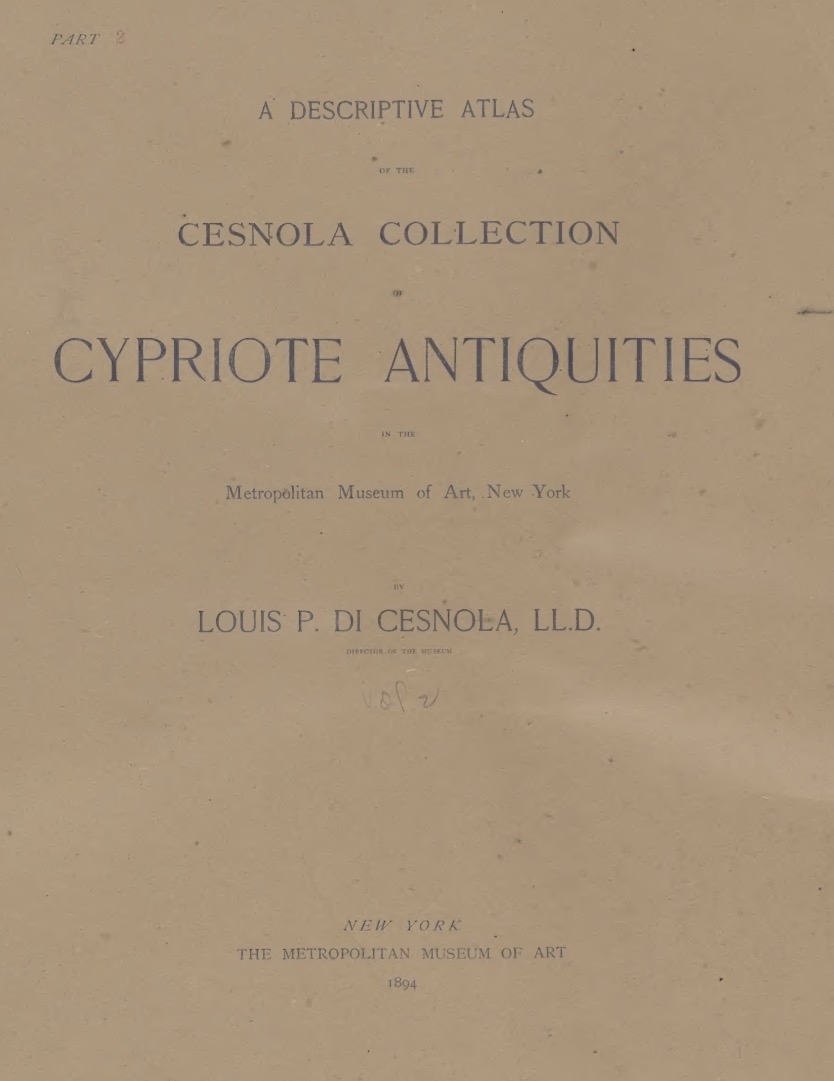
A Descriptive Atlas of the Cesnola Collection of Cypriote Antiquities in the Metropolitan Museum of Art, New York
Book
di Cesnola, L.P. (1885–1903) A Descriptive Atlas of the Cesnola Collection of Cypriote Antiquities in the Metropolitan Museum of Art, New York. Boston, New York, J.R. Osgood, Metropolitan Museum of Art, 3 Vols.
Record No. 27072  |  Sinkankas/Born No.: NIS/NIB  |  RWHL
An illustrated catalogue of the Cesnola collection of Cypriote antiquities, presenting objects through plates and accompanying descriptions intended to support comparative archaeological study. Of particular gemological interest is the third volume (1903), which includes objects in gold and precious stones, rock crystal and glass, together with engraved cylinders and inscribed stones. The descriptions record materials, physical characteristics, decorative details, and reported findspots, including features discernible under magnification but not clearly reproduced photographically. Dating is generally confined to broad periods. The atlas provides an early documentary source for the study of ancient lapidary work, ornament, and the use of gemstones in objects collected in Cyprus.

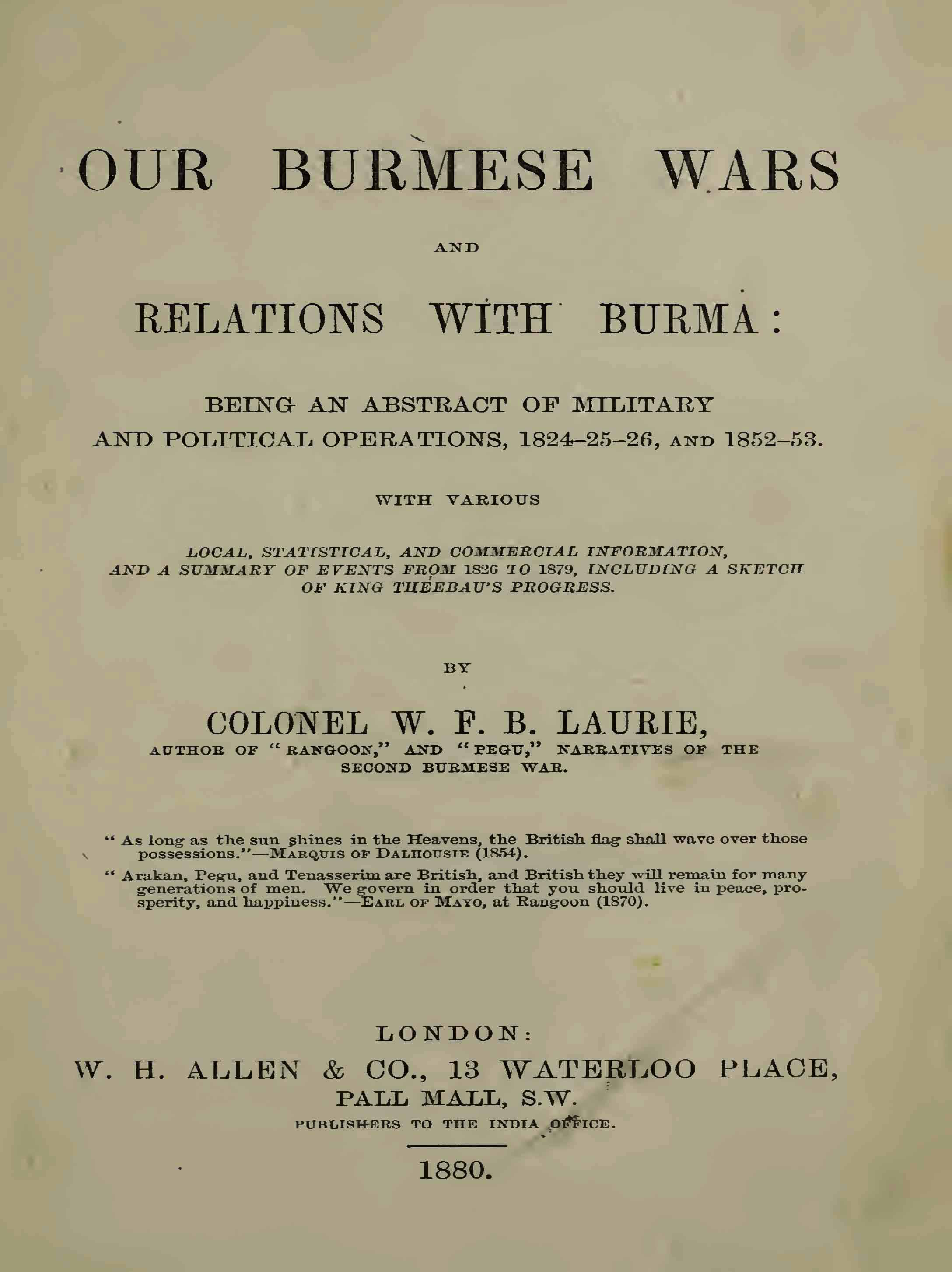
Our Burmese Wars and Relations with Burma

Book
Laurie, W.F.B. (1885) Our Burmese Wars and Relations with Burma. London, W.H. Allen, 487 pp.
Record No. 2818  |  Sinkankas/Born No.: NIS/NIB  |  RWHL
Laurie provides a historical account of British military and political relations with Burma, concentrating on the First Burmese War of 1824–1826 and the Second Burmese War of 1852–1853, while extending the narrative through subsequent events to 1879 and the early reign of King Theebaw. Drawing on official dispatches, military narratives, and contemporary accounts, he describes campaigns, battles, diplomacy, annexations, and the development of British administration in Arakan, Tenasserim, and Pegu. The later sections broaden the work beyond military history to include information on population, revenue, commerce, communications, and the trade routes linking Mandalay, Bhamo, Yunnan, and China, as well as an assessment of the economic and strategic value of Upper Burma. Although not principally a gemological work, it provides useful historical and commercial background for understanding Burma immediately before the British annexation of Upper Burma and the subsequent opening of the country’s important ruby and jade-producing regions to intensified European investigation and trade.

Afghan [and Persian] field notes

Journal Article
Griesbach, C.L. (1885–1887) Afghan [and Persian] field notes. Records, Geological Survey of India, 1885: Vol. 18, Pt. 1: pp. 57–64; 1886, Vol. 19, No. 1, Afghan and Persian Field notes, 48–65; No. 4, Field–Notes from Afghanistan: Turkistan, 235–267; 1887: Vol. 20, No. 1, From Túrkestán to India, pp. 17–26; No. 2, To accompany a geological sketch map of Afghanistán and North–Eastern Khorassan, pp. 93–103.
Record No. 850  |  Sinkankas/Born No.: NIS/NIB  |  RWHL
Griesbach’s five-part series presents geological observations made during service with the Afghan Boundary Commission, covering Afghanistan and eastern Khorassan, including the Herat region, Afghan Turkistan, and the return journey across the Hindu Kush to India. The reports describe stratigraphy, fossil assemblages, mountain structure, igneous intrusions, coal-bearing formations, and glacial and alluvial deposits, concluding with a regional synthesis and geological sketch map. Of particular gemological interest is the account of the Nishapur turquoise mines in the second installment (1886, p. 62). Griesbach associates turquoise with contact rock in volcanic ash at Madan hill, reports approximately 1,000 workings of which about 100 were active, and notes that the best stones were recovered from decomposed talus, where extraction was easier than from solid matrix. The series provides an early geological framework for the region, with many correlations explicitly regarded as provisional. The 1887 installments also describe rocks around Jagdalak, although there is no explicit mention of ruby or spinel.

Leisure Hours Among the Gems

Book
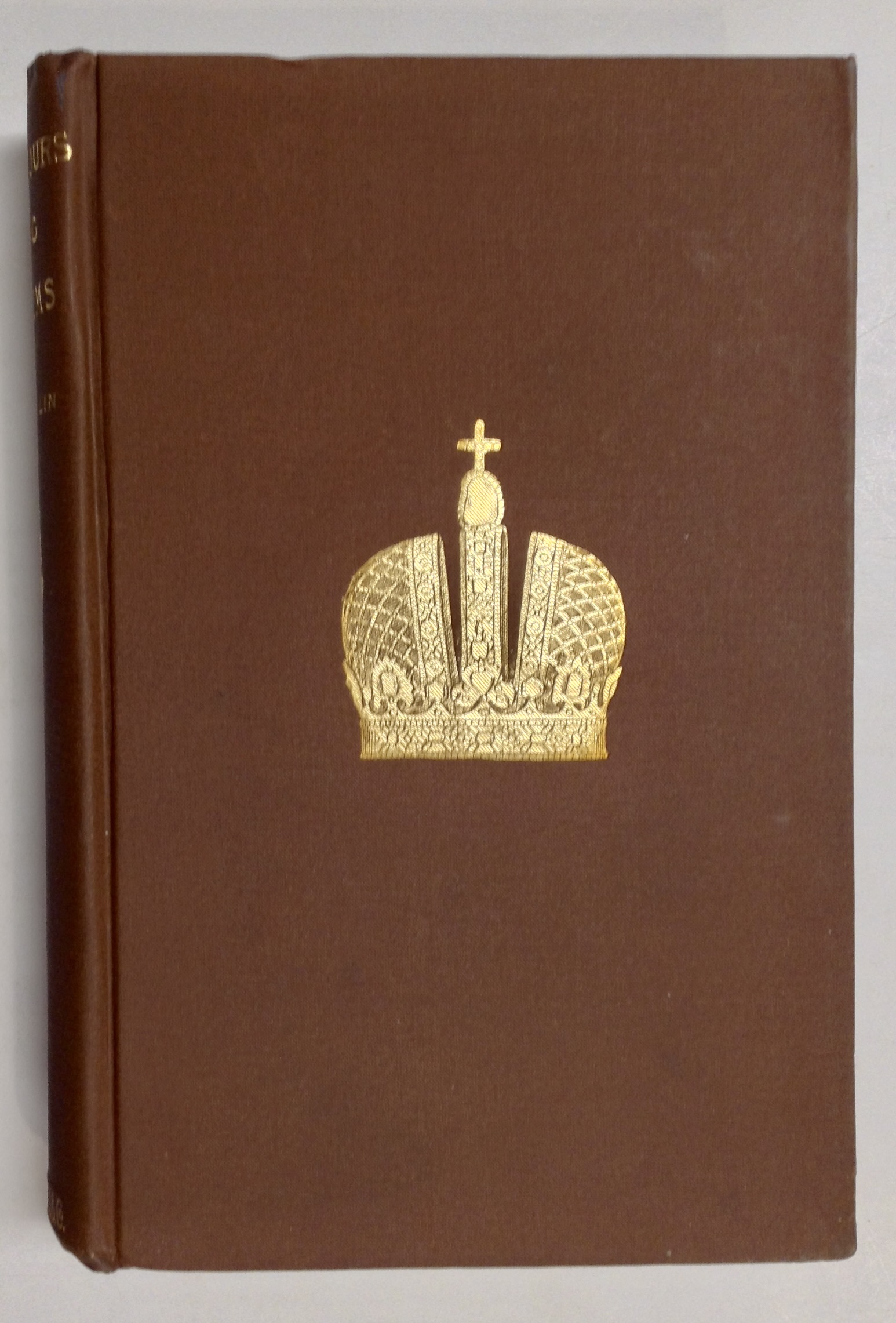
Hamlin, A.C. (1884) Leisure Hours Among the Gems. Boston, James R. Good, 439 pp.
Record No. 29488  |  Sinkankas/Born No.: 2695: NIB  |  RWHL
Hamlin presents a broad popular survey of gemstones, combining mineralogical information with historical accounts, legends, famous specimens, mining localities, cutting, valuation, and use in jewelry. He discusses diamonds, rubies, sapphires, emeralds, tourmalines, topaz, garnets, opals, turquoise, pearls, and numerous other ornamental materials, describing their physical properties, colors, geographical sources, and notable examples. Particular attention is given to American gemstones and mineral localities, including the tourmalines of Maine, a subject on which Hamlin had previously written extensively. The work blends contemporary gemological knowledge with anecdotes and historical lore and provides a useful late-nineteenth-century account of popular and commercial attitudes toward precious stones in the United States.

Über Euklas, Topas, Diamant und Pyrrhotin aus Brasilien
On euclase, topaz, diamond and pyrrhotite from Brazil
Journal Article
Kenngott, A. (1884) Über Euklas, Topas, Diamant und Pyrrhotin aus Brasilien. [On euclase, topaz, diamond and pyrrhotite from Brazil] Neues Jahrbuch für Mineralogie, Geologie und Paläontologie, Pt. 1, pp. 187–191.
Record No. 29374  |  Sinkankas/Born No.: NIS/NIB  |  Language: in German  |  RWHL
Kenngott discusses specimens of euclase, topaz, diamond, and pyrrhotite from Brazil, describing their mineralogical and crystallographic characteristics. He records observations on crystal form, physical properties, and associations, with particular attention to features useful in characterizing the Brazilian specimens. The paper contributes to nineteenth-century knowledge of Brazil’s rich mineral resources and is of gemological interest for its treatment of three important Brazilian gem minerals—euclase, topaz, and diamond.

The Catechism of John Hamilton, Archbishop of St. Andrews, 1552
Book
Hamilton, J. and Law, T.G. (1884) The Catechism of John Hamilton, Archbishop of St. Andrews, 1552. Oxford, Clarendon Press, 312 pp.
Record No. 5232  |  Sinkankas/Born No.: NIS/NIB  |  RWHL
Hamilton’s Catechism, originally printed in 1552 and here reprinted with an introduction by Thomas Graves Law, is a vernacular exposition of Roman Catholic doctrine prepared for the instruction of clergy and laity in Scotland immediately before the Reformation. It explains the Creed, sacraments, Ten Commandments, prayer, Christian conduct, and related matters of faith and practice. The work is primarily theological rather than mineralogical or gemological; its relevance to gemstone research lies in a passing reference on p. 28, preserved within a valuable sixteenth-century Scottish text and made accessible through Law’s nineteenth-century scholarly edition.

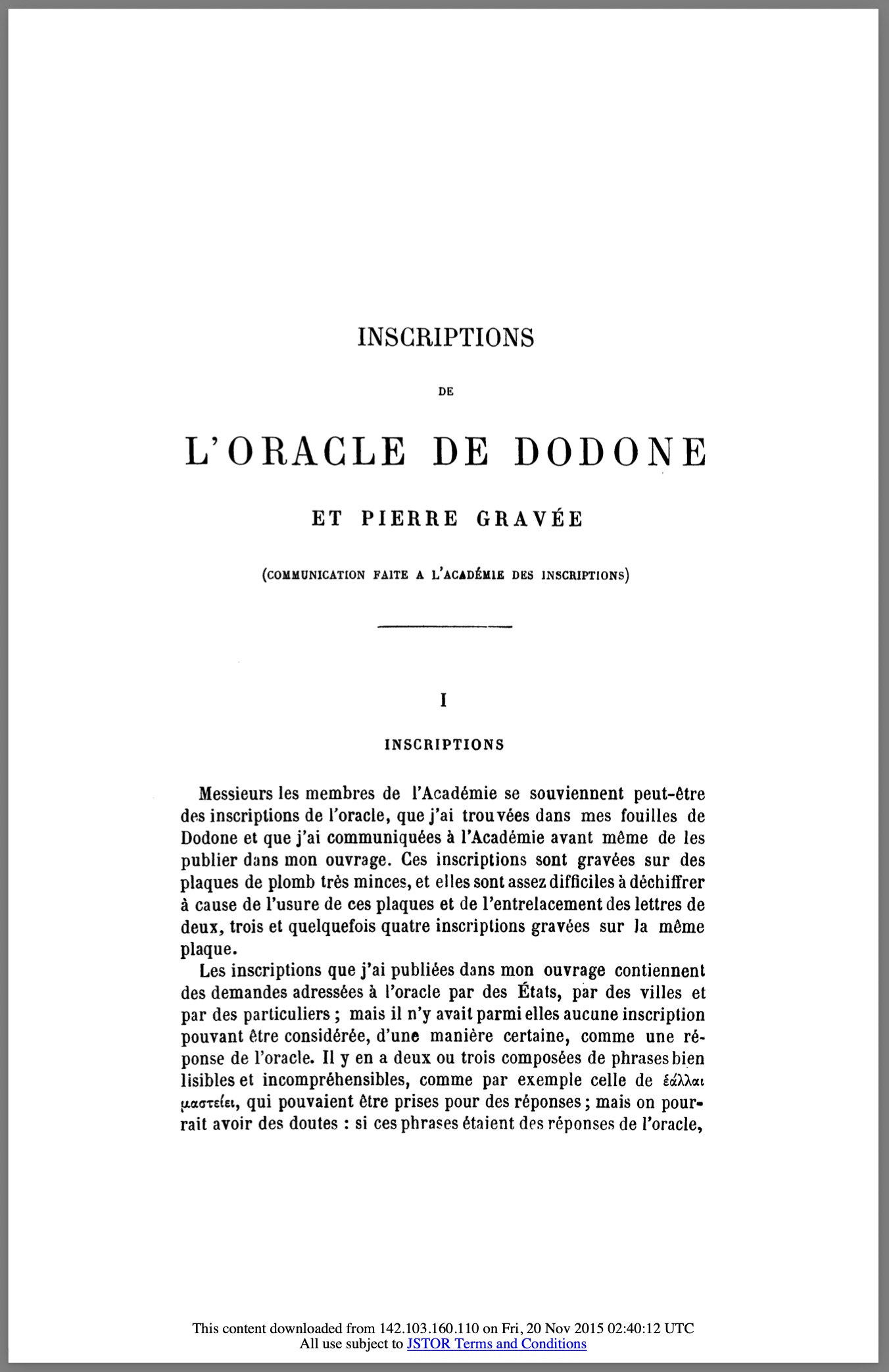
Inscriptions de l'oracle de dodone et pierre gravée (communication faite a l'académie des inscriptions)
Journal Article
Carapanos, C. (1883) Inscriptions de l'oracle de dodone et pierre gravée (communication faite a l'académie des inscriptions). Revue Archéologique, Vol. 2, July–December, pp. 354–358.
Record No. 28874  |  ISBN/ISSN: 00350737, 21043868  |  Sinkankas/Born No.: NIS/NIB  |  RWHL
Carapanos discusses inscriptions associated with the ancient oracle of Dodona and an engraved stone, in a communication presented to the Académie des Inscriptions. He describes and interprets the inscriptions and considers their archaeological and historical significance in relation to the sanctuary and its practices. The engraved stone is examined as part of this material, with attention to its inscription and iconography. The paper contributes to the documentation and interpretation of finds from Dodona and is of gemological interest for its treatment of an ancient engraved gem.

Brockhaus' conversations-lexikon. Allgemeine deutsche real-encyklopädie
Brockhaus' conversation dictionary. General German real encyclopedia
Book
Brockhaus, F.A. (1883) Brockhaus' conversations-lexikon. Allgemeine deutsche real-encyklopädie. [Brockhaus' conversation dictionary. General German real encyclopedia] Leipzig, F.A. Brockhaus, 948 pp.
Record No. 8080  |  Sinkankas/Born No.: NIS/NIB  |  Language: in German  |  RWHL
Brockhaus’ Conversations-Lexikon is a general German-language encyclopedia covering geography, history, biography, science, technology, literature, art, politics, and other fields of contemporary knowledge. Its mineralogical entries include descriptions of minerals and gemstones, their physical properties, composition, occurrence, uses, and terminology, reflecting late nineteenth-century scientific understanding. Entries relating to precious stones and ornamental materials provide a useful contemporary reference for German gemological and mineralogical nomenclature and for prevailing knowledge of their sources and characteristics.

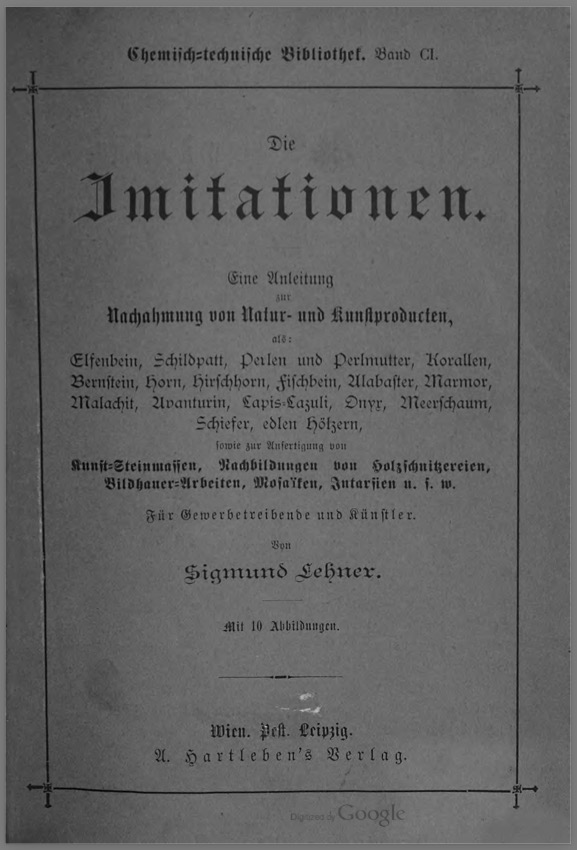
Die Imitationen

The Imitations
Book
Lebner, S. (1883) Die Imitationen. [The Imitations] Leipzig, A. Hartleben's Verlag, 256 pp.
Record No. 3281  |  Sinkankas/Born No.: NIS/NIB  |  Language: in German  |  RWHL
Lebner discusses the manufacture of imitations and substitutes for natural and manufactured products, including materials intended to resemble precious stones and other ornamental substances. The work describes contemporary methods, materials, and recipes used to reproduce the appearance of valuable natural products, with attention to coloring, transparency, surface treatment, and other techniques employed in imitation. Of gemological interest are the sections dealing with artificial and imitation gemstones, which provide evidence for the materials and manufacturing practices available in the late nineteenth century and for the contemporary problems of distinguishing such products from natural gems.

Arabische specifische Gewichtsbestimmungen
Arabic specific gravity measurements
Journal Article
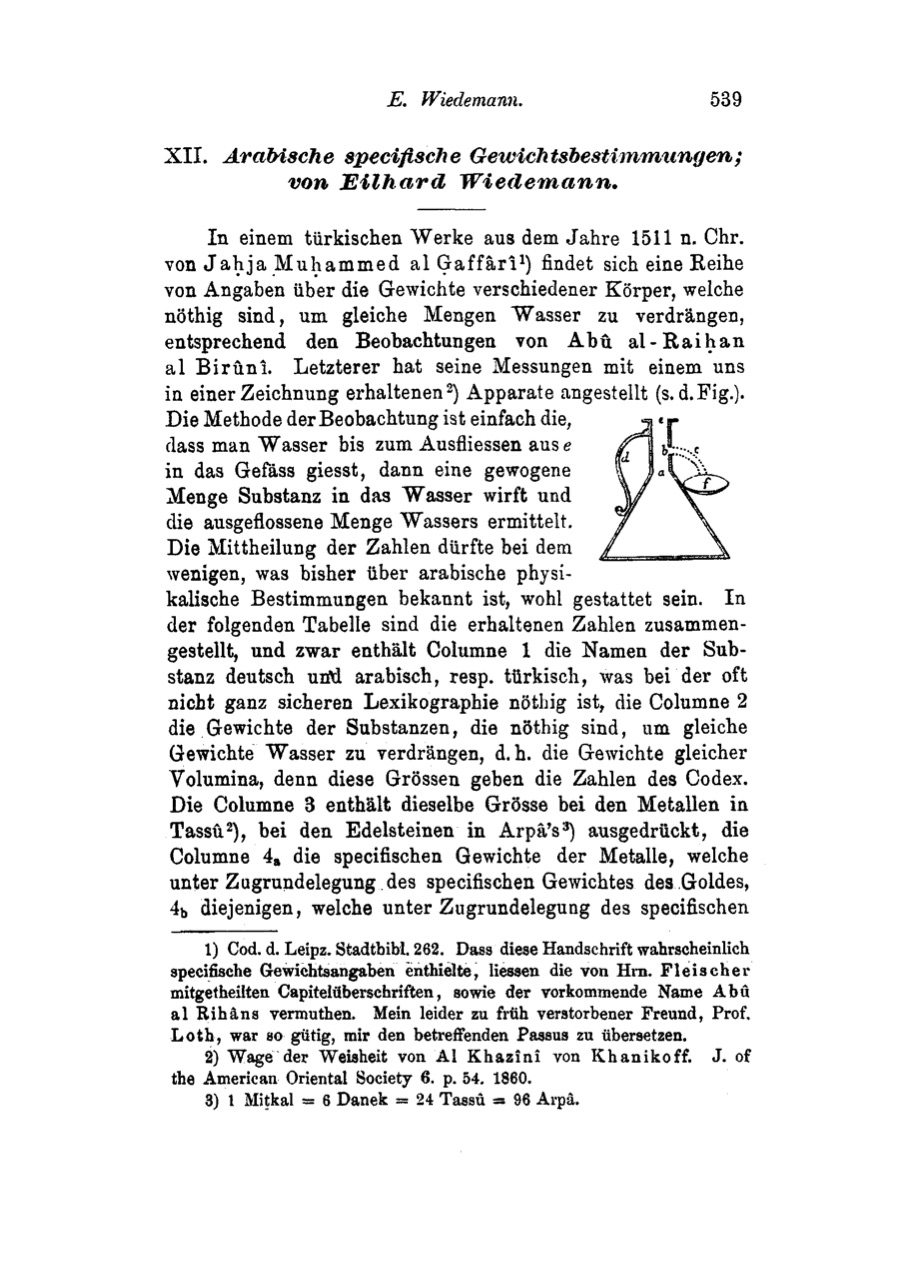
Wiedemann, E. (1883) Arabische specifische Gewichtsbestimmungen. [Arabic specific gravity measurements] Annalen der Physik und Chemie, Vol. 20, pp. 539–541.
Record No. 1850  |  Sinkankas/Born No.: NIS/NIB  |  Language: in German  |  RWHL
Wiedemann discusses Arabic determinations of specific gravity, drawing attention to measurements made by medieval Islamic scholars and comparing their results with modern values. He describes the methods used for determining the specific gravities of various substances, including minerals and precious stones, and demonstrates the considerable accuracy achieved by Arabic investigators. The paper is of particular interest to the history of gemology because specific gravity was employed to distinguish and characterize gemstones and other mineral substances, illustrating the sophistication of quantitative physical measurements in medieval Islamic science.

The geology of the Kashmir and Chamba territories, and the British district of Khagan
Journal Article
Lydekker, R. (1883) The geology of the Kashmir and Chamba territories, and the British district of Khagan. Memoirs, Geological Survey of India, Vol. 22, 336 pp. (sapphire, see pp. 330–336).
Record No. 1202  |  Sinkankas/Born No.: NIS/NIB  |  RWHL
Lydekker presents a comprehensive geological survey of Kashmir, Chamba, and the British district of Khagan, describing their stratigraphy, structure, rock formations, and mineral resources. Of particular gemological importance is his account of the recently discovered sapphire deposits of Kashmir, which includes their geographical and geological setting, mode of occurrence, associated minerals, and the circumstances of their discovery and exploitation. He describes the sapphires as occurring in a matrix within the high Himalayan terrain and discusses the workings and quality of the material obtained. The concluding section provides one of the earliest detailed geological accounts of the famous Kashmir sapphire deposit and is an important primary source for the early history and geology of sapphire mining in the region.

Burma, its People and Productions; or Notes on the Fauna, Flora, and Minerals of Tenasserim, Pegu, and Burma
Book
Mason, F. and Theobald, W. (1882) Burma, its People and Productions; or Notes on the Fauna, Flora, and Minerals of Tenasserim, Pegu, and Burma. Hetford, 2 Vols.
Record No. 5240  |  Sinkankas/Born No.: NIS/NIB  |  RWHL
Mason and Theobald present an extensive natural history of Burma, with accounts of the peoples, fauna, flora, and mineral resources of Tenasserim, Pegu, and other parts of the country. Of particular gemological interest are the sections dealing with Burmese minerals and precious stones, including ruby, sapphire, spinel, jade, amber, and other materials, with notes on their occurrence, localities, mining, trade, and indigenous names and uses. The work brings together observations accumulated during the nineteenth century and provides valuable contemporary evidence on Burma’s mineral resources and gem-producing regions. Its descriptions of precious stones and their sources make it an important early reference for the history of Burmese gemology and mining.

Les Lapidaires Français de Moyen Age des XIIe, XIIIeet XIVe Siècles
The French Lapidaries of the Middle Ages from the 12th, 13th, and 14th Centuries
Journal Article
Pannier, L.C.A. (1882) Les Lapidaires Français de Moyen Age des XIIe, XIIIeet XIVe Siècles. [The French Lapidaries of the Middle Ages from the 12th, 13th, and 14th Centuries] 340 pp..
Record No. 2843  |  Sinkankas/Born No.: 4191 (not seen); NIB  |  Language: in French  |  RWHL
Pannier presents a scholarly collection and study of medieval French lapidaries dating from the twelfth, thirteenth, and fourteenth centuries. Drawing upon manuscript sources, the work publishes and compares texts concerned with precious stones and other minerals, their names, physical characteristics, supposed origins, medicinal uses, and magical or supernatural virtues. The lapidaries reflect traditions inherited from classical and medieval authorities and illustrate how knowledge and beliefs concerning gems were transmitted and transformed in medieval France. The volume is particularly valuable for the history of gemology, mineral nomenclature, and medieval beliefs about the properties and symbolism of precious stones.

Die Indischen Mineralien, Ihre Namen und die Ihnen Zugeschriebenen Kräfte
The Indian Minerals, Their Names and the Powers Attributed to Them
Book
Narahari (or Naraharipandita) and Garbe, R. (1882) Die Indischen Mineralien, Ihre Namen und die Ihnen Zugeschriebenen Kräfte. [The Indian Minerals, Their Names and the Powers Attributed to Them] Leipzig, Verlag Von S. Hirzel, 104 pp.
Record No. 2835  |  Sinkankas/Born No.: 4691; NIB  |  Language: in German  |  RWHL
Sinkankas: Richard von Garbe’s complete work is reproduced in facsimile, including the original title page, and centers on his discovery and translation of a significant Sanskrit treatise on minerals by the Kashmiri physician Narahari. Despite the general absence of Sanskrit monographs on minerals, Garbe uncovered Narahari’s work, a section of the larger encyclopedic text King of Dictionaries, written between 1235 and 1250 AD. The translated extracts are organized into three categories: metals, non-metals, and precious stones, the last of which spans pages 70 to 91 in the German edition. This section includes discussions on the nine classical gemstones of Indian tradition—ruby, pearl, coral, emerald, topaz, diamond, sapphire, hyacinth, and cat’s-eye—as well as other stones like rock crystal, sunstone, moonstone, lapis lazuli, and turquoise. Each entry provides Indian synonyms, medicinal uses, and notes on color and quality, along with astrological associations. Garbe relied extensively on Tagore’s Mani Mala, though he acknowledged its shortcomings and urged cautious use. His translation remains a valuable contribution to early Indian gemological literature and a crucial supplement to Tagore’s work.

Mr. Isaacs

Book
Crawford, F.M. (1882) Mr. Isaacs. Norwood, MA, Norwood Press, 320 pp.
Record No. 2742  |  Sinkankas/Born No.: NIS/NIB  |  RWHL
Crawford’s first novel, originally published in 1882, is set largely in British India and centers on Mr. Isaacs, a wealthy Persian gem dealer in Simla. The story combines romance and adventure with descriptions of Anglo-Indian society, Himalayan travel, and the trade in precious stones. Gemologically, it is of interest for its portrayal of a nineteenth-century Oriental gemstone merchant and contemporary attitudes toward diamonds, precious stones, their value, and commerce.

Neue Angaben über die Mineralreichthümer Persiens und Notizen über die Gegend westlich von Zendjan
New details on the mineral resources of Persia and notes on the area west of Zendjan
Journal Article
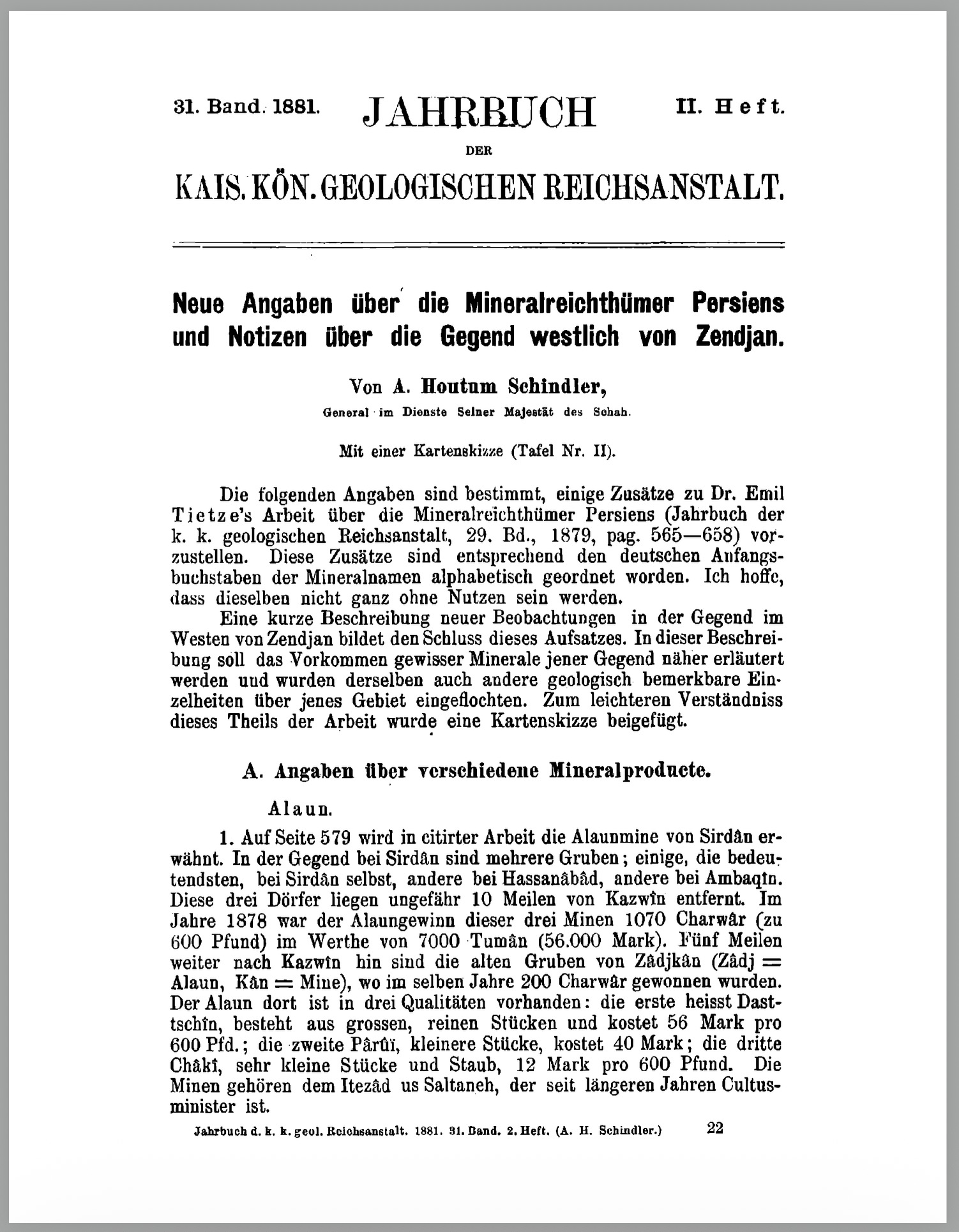
Houtum-Schindler, A. (1881) Neue Angaben über die Mineralreichthümer Persiens und Notizen über die Gegend westlich von Zendjan. [New details on the mineral resources of Persia and notes on the area west of Zendjan] Jahrbuch der Kaiserlich-Königlichen Geologischen Reichsanstalt, Vol. 31, No. 2, pp. 169–190.
Record No. 29084  |  Sinkankas/Born No.: NIS/NIB  |  Language: in German  |  RWHL
Houtum-Schindler supplements Emil Tietze’s earlier survey of the mineral resources of Persia with observations gathered largely from his own travels, first treating individual mineral products and then giving a more detailed geological account of the country west of Zendjan. He records occurrences and, where available, mining methods, production, prices, trade, and local uses of alum, lead, borax, iron ores, edible and refractory clays, gold, gypsum, coal, kaolin, copper, magnesia, manganese, marble, naphtha, porphyry, mercury, rock salt, turquoise, silver, surmeh, and emery. Of particular gemological importance is his account of turquoise. In Kerman Province he notes several occurrences in northwest–southeast-trending volcanic ranges, including abandoned mines near Mo Aspan and Shehr-i Babek and recently discovered pale turquoise veins on the Cheheltan Mountains. At Nishapur he states that turquoise occurs in an iron-rich clay silicate containing microscopic grains of free quartz; the host rock changes from pale yellow near the surface to dark brown or blackish with depth. In 1876, 266 shafts were operating there, and production remained substantial: according to a Meshed turquoise merchant, material worth 240,000 marks annually went to Russia, 80,000 marks to Tehran, and another 80,000 marks was sold in Meshed, with additional exports to Constantinople, Baghdad, and the Persian Gulf. Houtum-Schindler also describes important gold occurrences, distinguishing gold-bearing iron-rich limestone at Kavend from barren quartz veins and documenting ancient workings and auriferous alluvium. His account west of Zendjan examines the relationships among limestones, green schists, granites, gneisses, volcanic rocks, conglomerates, gypsum, and mineralized veins, with observations on gold, silver, copper, lead, iron, alum, kaolin, mercury, and other resources. The paper combines economic mineralogy with field geology and provides unusually detailed evidence for the location, condition, exploitation, and commerce of Persian mineral deposits in the late nineteenth century.

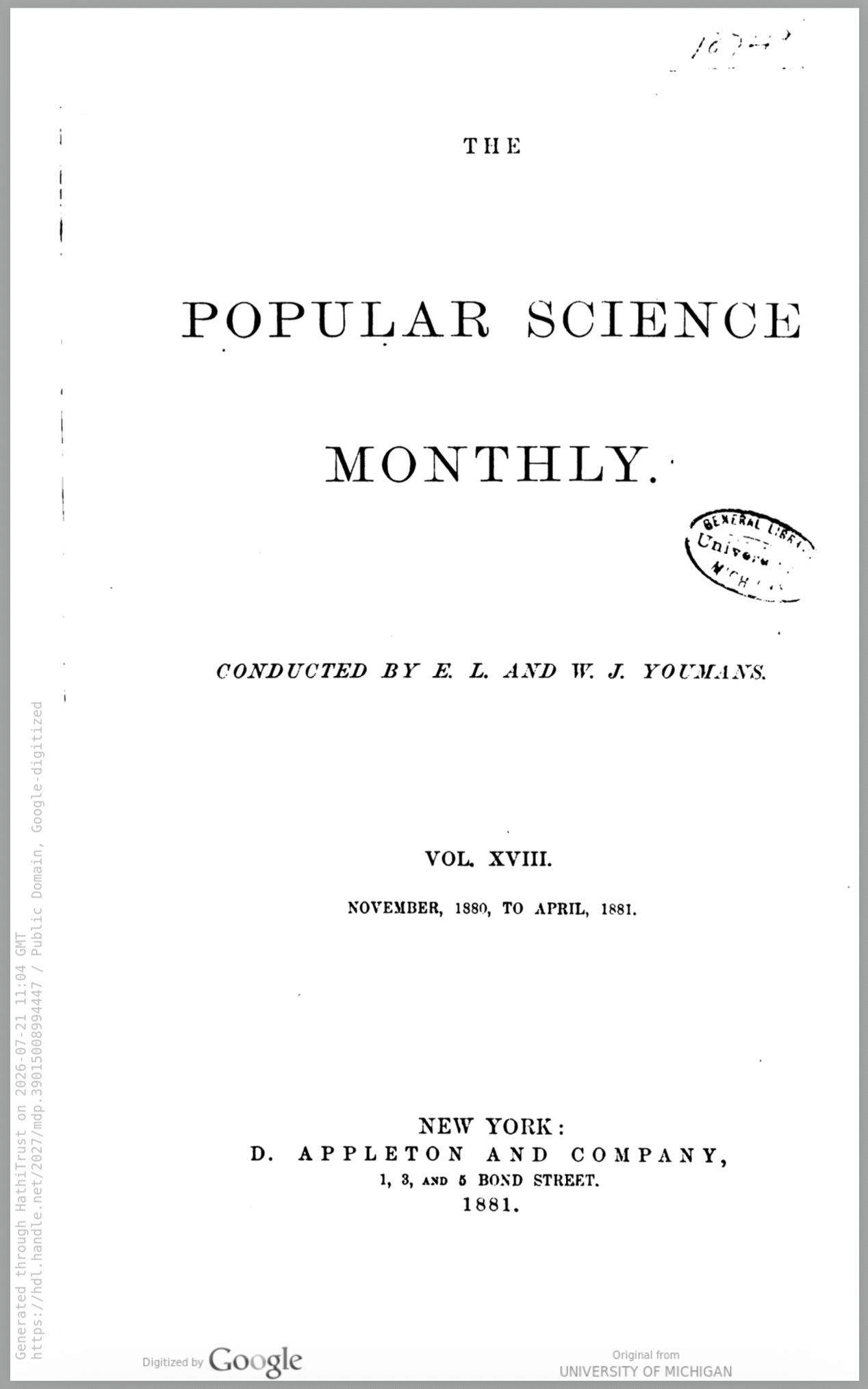
Turquoise

Journal Article
Anonymous (1881) Turquoise. Popular Science Monthly, Vol. 18, No. 3, pp. 712–713.
Record No. 29073  |  Sinkankas/Born No.: NIS/NIB  |  RWHL
This brief article discusses turquoise, including its characteristic color, composition, physical properties, and principal sources. It describes the occurrence and mining of turquoise in Persia, historically the source of particularly prized material, and notes other known localities. The article also considers the use and appreciation of turquoise as a gemstone, providing a concise nineteenth-century popular account of its mineralogical and gemological characteristics.

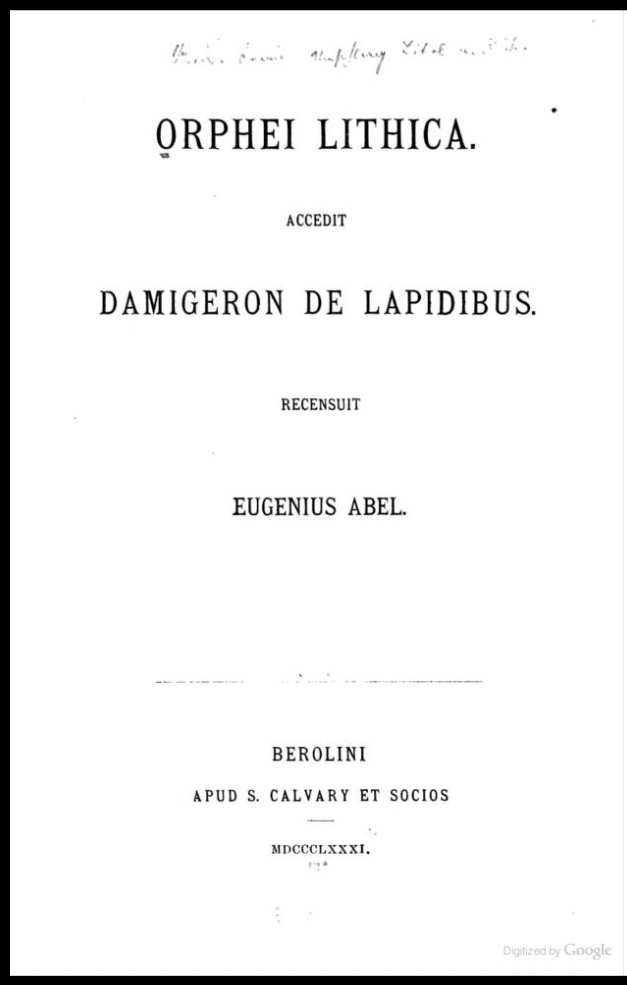
Orphei Lithica accedit Damigeron De Lapidus
Orpheus’ Lithica with Damigeron on Stones.
Book
Orpheus, Damigeron and Abel, E. (1881) Orphei Lithica accedit Damigeron De Lapidus. [Orpheus’ Lithica with Damigeron on Stones.] Berolini, S. Calvary, 198 pp.
Record No. 27915  |  Sinkankas/Born No.: NIS/NIB  |  Language: in Greek and Latin  |  RWHL
A Greek poem about stones, which is now at last published in a recension based on the best manuscripts, has long raised great doubts as to which author and period it should be attributed. That Orpheus was the author of our poem—no one now believes this after the excellent studies of Thomas Tyrwhitt. Indeed, Gesner claimed that both Proclus and Stobaeus had attributed the Lithica to Orpheus and often cited it in their works; but Tyrwhitt, referring to the Fabrician index of authors cited by Proclus, showed that Proclus never once mentions the Lithica, a point confirmed by Lobeck after repeated readings of Proclus’s commentaries (Aglaophamus vol. I, p. 377). As for Stobaeus, Tyrwhitt also rightly observed that the passages from the Lithica cited in his name were in fact added much later by Conrad Gesner, and today this is no longer in doubt. Since we do not know when the Greek compiler of the prose epitome of the Lithica lived, and since the author of the Compendium of Rhetoric (last edited by Walz in the sixth volume of Rhetores Graeci) did not flourish before the 15th century, we can name no one before John Tzetzes who attributed the Lithica to Orpheus. Yet Tyrwhitt rightly argued that a writer who assigned astrological, magical, epodic, and hymnic works all to one and the same poet—and who also frequently cited under Orpheus’s name the poem “On the Sacred Laws” by Maximus—was completely lacking in critical judgment. Once we recognize Tzetzes’s ignorance, Tyrwhitt’s suspicion seems unnecessary: that Tzetzes may have come across a book containing all these poems (Lithica, Dodecaeterides, Georgica) together, and, seeing the Epitymnidia—which, being inscribed to Musaeus, seemed attributable by convention to Orpheus—occupying first place, rashly and carelessly assumed that all the poems in the volume were by Orpheus. Slightly more plausible is Lobeck’s view (expressed in Aglaophamus II) that Tzetzes had heard of the Orphic poem On the Use of Stones, which is also mentioned by Suidas, and for that reason attributed the Lithica, included in the same volume as the Argonautica, to Orpheus. But however the matter stands, it is certain that there is nothing in the whole poem that tastes of the muse of that ancient Orpheus. Therefore, setting aside the fancies of Tzetzes and his pre-Tyrwhitt editors, let us proceed to determine more accurately the date of the anonymous author. In this effort, we will follow Tyrwhitt and begin with verses 67–74 of the Lithica, in which it is beyond doubt that the persecution of magical arts and their practitioners is being described. In the year 357, the first law of Constantius appeared: “He shall be punished with death who refuses obedience to our commands”—that is, “Chaldeans and Magi and others whom the common people call sorcerers because of the magnitude of their crimes.” A few years later (in 371), under Valens, the Christian rage against magicians flared even more violently. According to Ammianus Marcellinus (XXIX), their homes were marked, and often…

Ein spanisches Steinbuch mit Einleitung und Anmerkungen
A Spanish lapidary with introduction and notes
Edited Book
Marbode of Rennes and Vollmöller, K.G., editor (1880) Ein spanisches Steinbuch mit Einleitung und Anmerkungen. [A Spanish lapidary with introduction and notes]. Heilbronn, Gebr. Henninger, vi + 34 pp..
Record No. 27984  |  Sinkankas/Born No.: NIS/NIB  |  Language: in German  |  RWHL
An edition by Karl Vollmöller of a medieval Spanish lapidary text, here published for the first time with an introduction and notes. The Spanish work is chiefly a translation or adaptation of Marbode of Rennes’ De gemmis (Liber lapidum), with additional material derived from Isidore of Seville’s Origines/Etymologiae. It treats precious stones individually, preserving medieval traditions concerning their names, appearance, origins, medicinal virtues and supposed magical or talismanic powers. The work is important for tracing the transmission of classical and medieval lapidary knowledge into the Spanish vernacular and for showing the influence of Marbode and Isidore on later European gemstone literature.

L’ile de Ceylan et ses curiosités naturelles

The Island of Ceylon and Its Natural Curiosities
Book
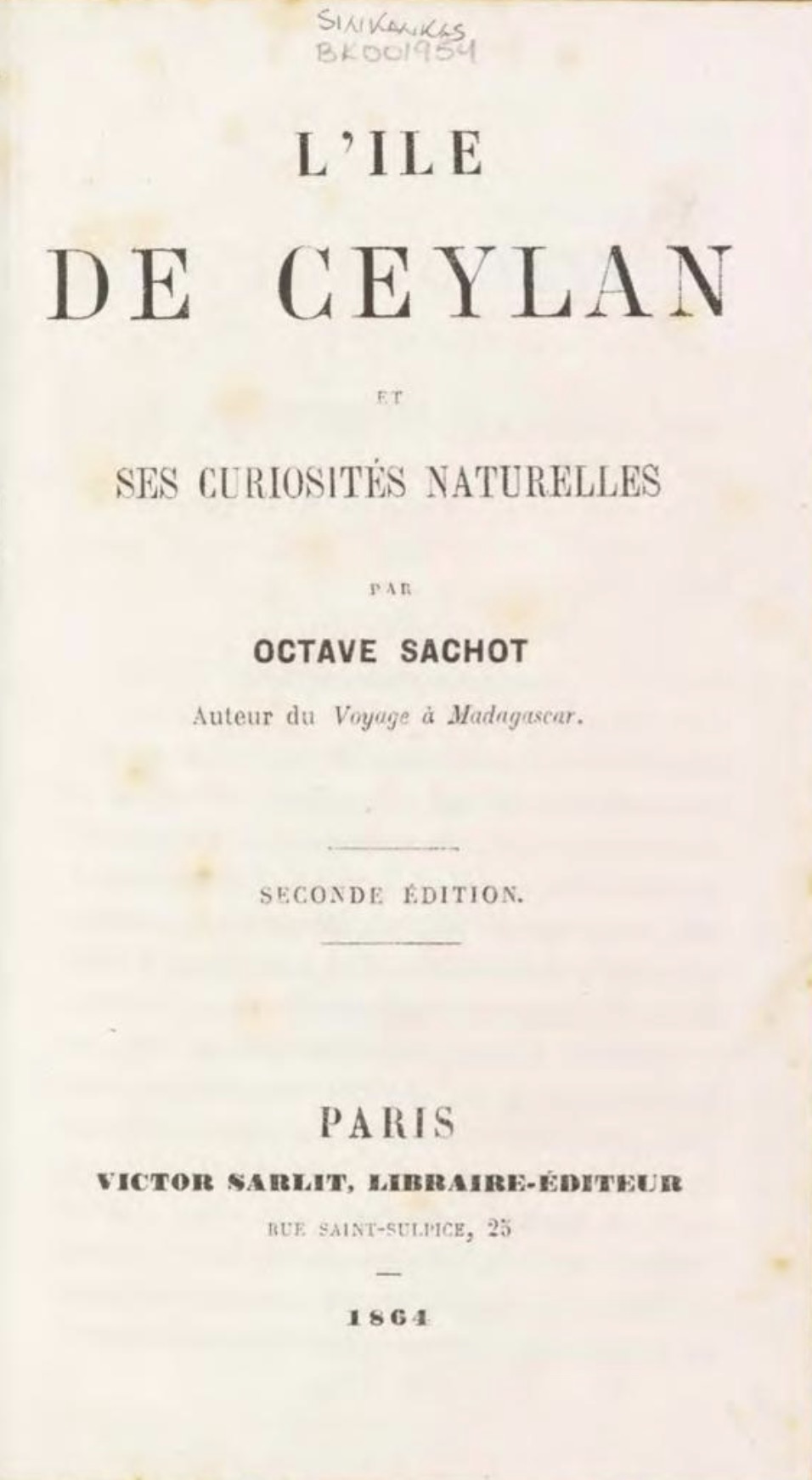
Sachot, O.L.M. (1879) L’ile de Ceylan et ses curiosités naturelles. [The Island of Ceylon and Its Natural Curiosities] Paris, V. Sarlit and Sons, 364 pp.
Record No. 29896  |  Sinkankas/Born No.: NIS/NIB  |  Language: in French  |  RWHL
A broad descriptive account of Ceylon, treating its geography, people, customs, history, and natural productions. Of gemological interest, the book includes chapters devoted to colored gemstones, pearls, and diamonds. Sachot discusses Ceylon’s mineral riches and the precious stones for which the island was long celebrated, while his treatment of the pearl fisheries describes the important banks off the northwest coast near Condatchy (Kondachchi), including the seasonal gathering of divers, merchants, and traders and the recovery and marketing of the pearls.

Building a Gemological Library

Gemological books range from general identification manuals and textbooks to specialized works on individual gems, mineralogy, jewelry, treatments, synthesis, history and gem-producing regions.

For a curated selection of particularly useful books, read The Gemologist's Core Library — Classic Books on Gemology, Jewelry and Mineralogy.

About Four Treasures

Four Treasures is Lotus Gemology's freely accessible gemological reference database. Use the full database to search by author, title or keyword and explore literature on gemology, mineralogy, jewelry and related fields. Where available, hyperlinks on titles may lead directly to the full publication.

Search the Complete Four Treasures Database