Gemology Books Bibliography

Gemology Books Bibliography

Explore books on gems, gemology, jewelry and mineralogy in Four Treasures, the Lotus Gemology reference database. This bibliography brings together matching book records from the collection, with publication details, abstracts and cover images where available.

Gemology Book References

The list below matches books concerning gemology and related subjects in the database's searchable fields. Some works cover several branches of gems, jewelry or mineralogy.
2,941–2,960 of 3,454 matching references

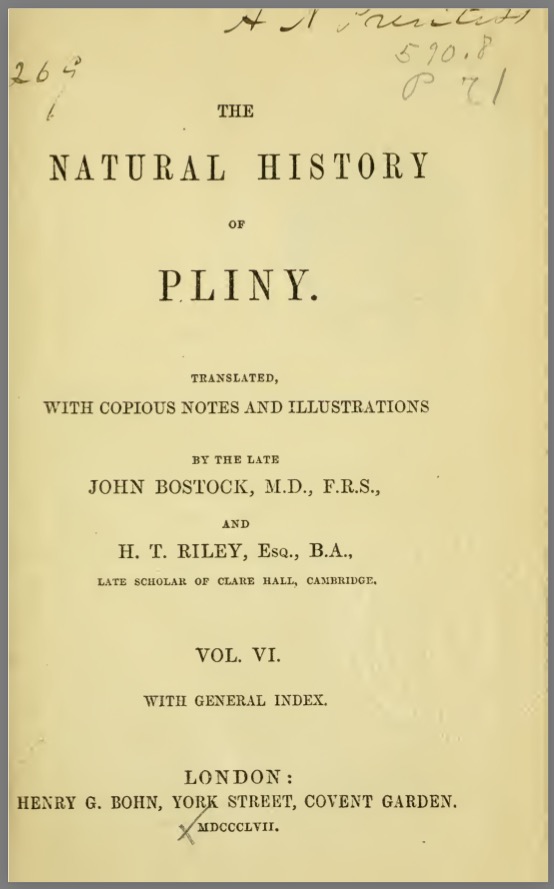
The Natural History of Pliny

Book
Pliny the Elder, Bostock, J. and Riley, H.T. (1855–1857) The Natural History of Pliny. London, Henry G. Bohn, 6 Vols., xxviii + 499; xii + 555; xiv + 536; xix + 523; xxii + 523; xiv + 529 pp.
Record No. 2847  |  Sinkankas/Born No.: 5168; NIB  |  RWHL
Sinkankas: The translation is generally conceded to be superior to Holland’s and is further enriched by abundant, discerning, and helpful footnotes. This edition was kept in print in various bindings as late as 1893, with full sets dated from 1856 to 1893. Primarily of interest to the gemologist are pages 305–85 and 386–468, which treat building stones and gemstones, respectively, in the sixth volume (Books XXXVI and XXXVII). The first book deals with building stones and other matters, sometimes classed with gemstones, while gemstones proper are fully treated in the last book, the contents of which are analyzed and explained in detail by Sidney Henry Ball in his A Roman Book on Precious Stones (1950), which see. However, Ball’s work is based on the Holland translation rather than the present one, and the reader desiring to explore more fully the material presented in Pliny’s gemological dissertations should compare both. Here, as in his other books, Pliny accumulated all he could find about the nature, sources, attributes, and uses of gemstones, with data and tales ranging from fabulous anecdotes and superstitions to the cold, hard facts of science. It is also here that one finds the curious names for many gemstones, borrowed more or less from earlier writers and repeated by writers after Pliny well into the seventeenth century. The legacy of such names in the post-Plinian lapidaries is usefully discussed by Frank Dawson Adams in his Birth and Development of the Geological Sciences (1938, pp. 143ff), who also attempts to group and correlate the names with known gemstones or other mineral and non-mineral substances classed as gemstones by earlier writers. The problem of such identification is also addressed by Dorothy Wyckoff in her Albertus Magnus: Book of Minerals (1967, esp. pp. 286–92), which see. Neither Philemon Holland nor John Bostock and Henry Thomas Riley were trained in the earth sciences, and for this reason the interpretations of gemstones and minerals provided by them should be compared to those of Ball, Adams, and Wyckoff, all trained in the earth sciences. See also the commentaries in Rackham’s edition of Pliny in a later English translation below.

Travels in Peru, during the years 1838–1842
Book
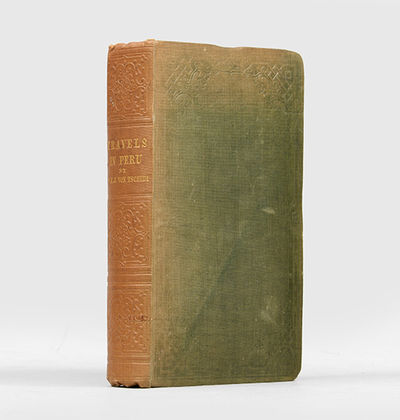
Tschudi, J.J., von (1854) Travels in Peru, during the years 1838–1842. New York, A.S. Barnes & Co., 354 pp.
Record No. 3206  |  Sinkankas/Born No.: NIS/NIB  |  RWHL
Johann Jakob von Tschudi’s account of his travels in Peru between 1838 and 1842 combines observations on the country’s geography, natural history, peoples, customs, economy, and antiquities. A Swiss naturalist and physician, Tschudi travelled extensively along the Pacific coast and through the Andes, recording information on indigenous communities, animals and plants, mining, agriculture, and the physical environment. Of mineralogical and gemological interest are his observations on Peru’s mineral wealth and mining districts, while his descriptions of pre-Columbian antiquities and indigenous material culture provide useful contemporary evidence for the use of stone and other ornamental materials. The book offers an important mid-nineteenth-century naturalist’s perspective on Peru and complements Tschudi’s more specialized scientific and ethnographic publications on the country.

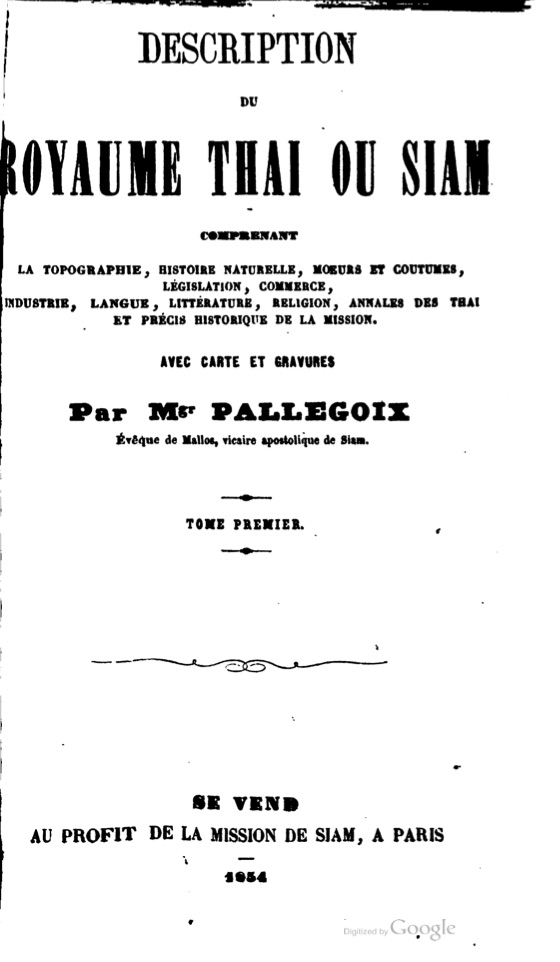
Description du Royaume Thai ou Siam

Description of the Thai or Siamese Kingdom
Book
Pallegoix, M. (1854) Description du Royaume Thai ou Siam. [Description of the Thai or Siamese Kingdom] Paris, Se Vende, 488 pp.
Record No. 2842  |  Sinkankas/Born No.: NIS/NIB  |  Language: in French  |  RWHL
Pallegoix’s Description du Royaume Thai ou Siam is a wide-ranging account of Siam by the French missionary Jean-Baptiste Pallegoix, covering its geography, population, government, religion, customs, commerce, agriculture, and natural products. Drawing on his long residence in the country and knowledge of the Thai language, Pallegoix provides one of the more substantial European descriptions of mid-nineteenth-century Siam. Of particular gemological interest, pp. 117–121 treat the kingdom’s mineral resources and precious stones, including accounts of gemstones obtained in Siam and the localities or regions associated with them. These passages are useful early evidence for European knowledge of the Siamese gem trade and mineral resources before the major development of the ruby and sapphire deposits of eastern Siam later in the nineteenth century.

Historiadores Primitivos de Indias

Early Historians of the Indies
Edited Book
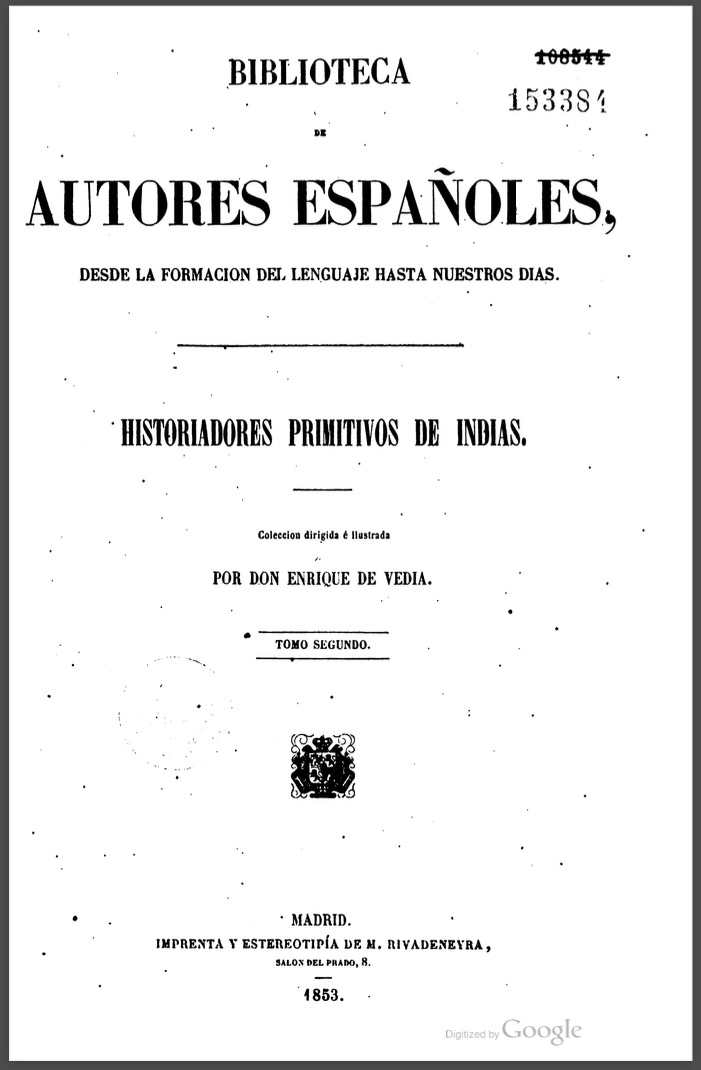
Vedia, E., de, editor (1853) Historiadores Primitivos de Indias. [Early Historians of the Indies]. Madrid, M. Rivadeneyra, 574 pp..
Record No. 8168  |  Sinkankas/Born No.: NIS/NIB  |  Language: in Spanish  |  RWHL
Edited by Enrique de Vedia, this volume brings together Spanish accounts of the discovery, conquest, and early colonial history of the Americas, reprinting works by several of the principal sixteenth-century chroniclers of the Indies. Published as part of the Biblioteca de Autores Españoles, it preserves important early descriptions of the peoples, geography, natural resources, customs, and material culture encountered by the Spaniards in the New World. Of particular relevance to gemological and historical research are references in the collected chronicles to indigenous goldwork, pearls, emeralds, precious and ornamental stones, and the valuables obtained through trade, tribute, and conquest. As a nineteenth-century compilation of otherwise difficult-to-consult early texts, the volume became a useful source for the study of Spanish-American history and early European accounts of New World mineral and gem resources.

An Elementary Introduction to Mineralogy
Book
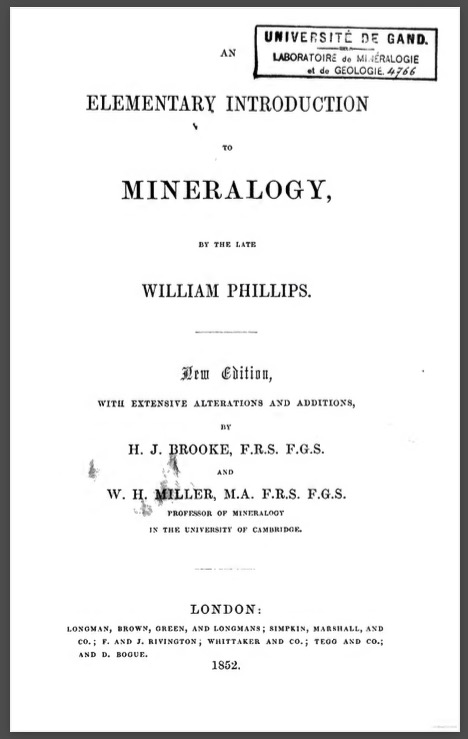
Phillips, W., Brooke, H.J. and Miller, W.H. (1852) An Elementary Introduction to Mineralogy. London, Longman, Brown, Green, and Longmans, 700 pp.
Record No. 7468  |  Sinkankas/Born No.: NIS/NIB  |  RWHL
This substantially revised edition of William Phillips’s classic mineralogical textbook presents a systematic introduction to mineralogy based principally on crystallographic form, physical properties, chemical composition, and geological occurrence. Revised and enlarged by Henry James Brooke and William Hallowes Miller, it incorporates the major advances in crystallography and mineral chemistry made since Phillips’s earlier editions, with Miller’s crystallographic expertise giving the work particular scientific importance. Individual mineral species are described with their characteristic crystal forms, cleavage, hardness, specific gravity, lustre, colour, composition, localities, and varieties, including numerous minerals of gemological interest such as diamond, corundum (ruby and sapphire), spinel, beryl (emerald), topaz, tourmaline, garnet, quartz, zircon, and feldspar. The volume provides a useful mid-nineteenth-century record of mineral classification and nomenclature at a period when crystallography and chemical analysis were becoming firmly established as the foundations of systematic mineralogy.

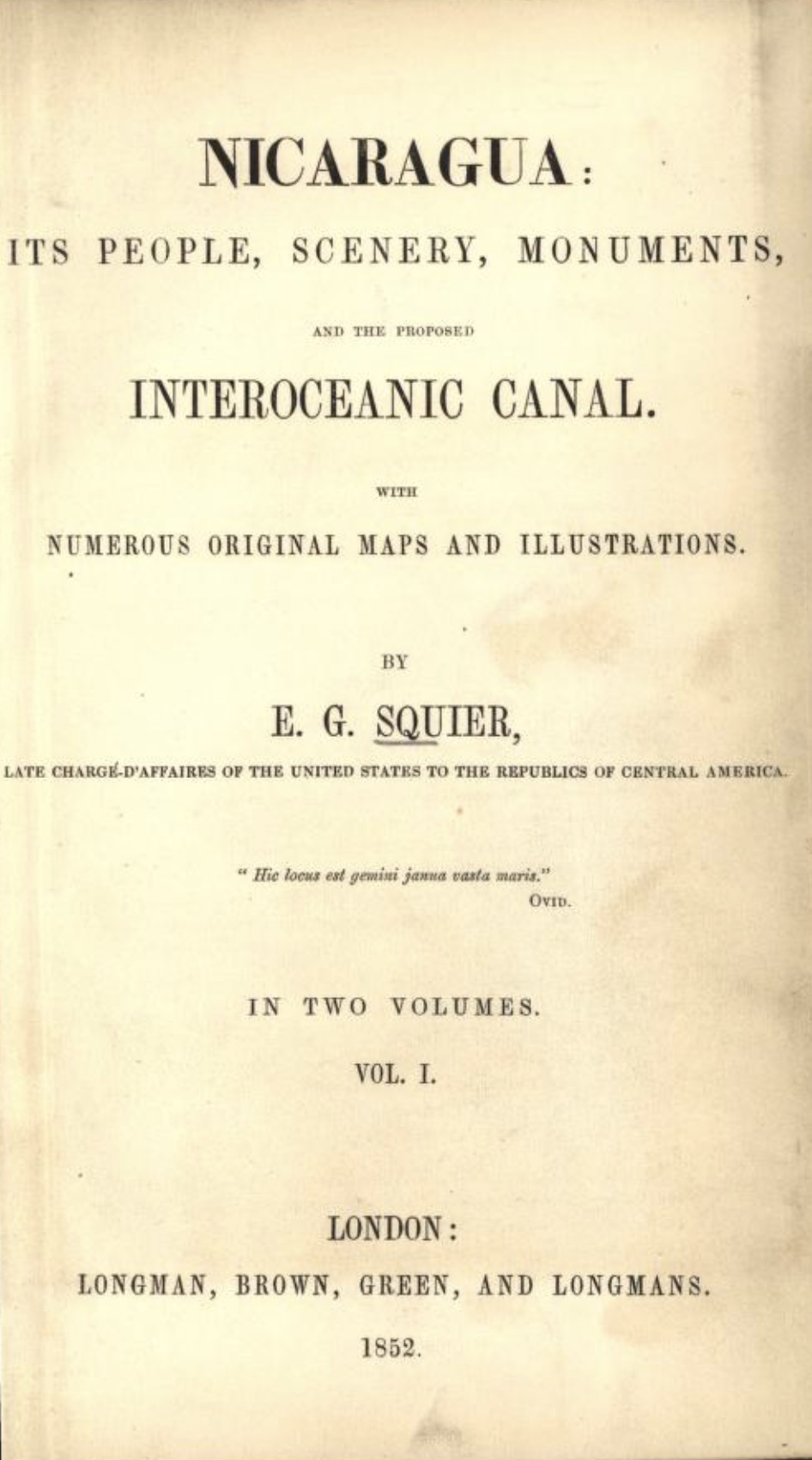
Nicaragua: Its People, Scenery, Monuments, and the Proposed Inter-oceanic Canal
Book
Squirer, E.G. (1852) Nicaragua: Its People, Scenery, Monuments, and the Proposed Inter-oceanic Canal. New York, D. Appleton & Co., 2 Vols., 504, 452 pp.
Record No. 6903  |  Sinkankas/Born No.: NIS/NIB  |  RWHL
This two-volume work by American diplomat and archaeologist Ephraim George Squier describes Nicaragua’s geography, peoples, natural history, antiquities, economy, and transportation routes, based largely on observations made while he served as U.S. chargé d’affaires in Central America. Particular attention is given to the proposed inter-oceanic canal across Nicaragua, including the country’s rivers, lakes, volcanoes, and possible routes between the Atlantic and Pacific. Of gemological and archaeological interest are Squier’s discussions and illustrations of pre-Columbian antiquities, including carved stone objects and ornaments, and his observations on indigenous materials and mineral resources. The work is an important early source for the archaeology and ethnography of Nicaragua and for nineteenth-century Western understanding of the material cultures of Central America.

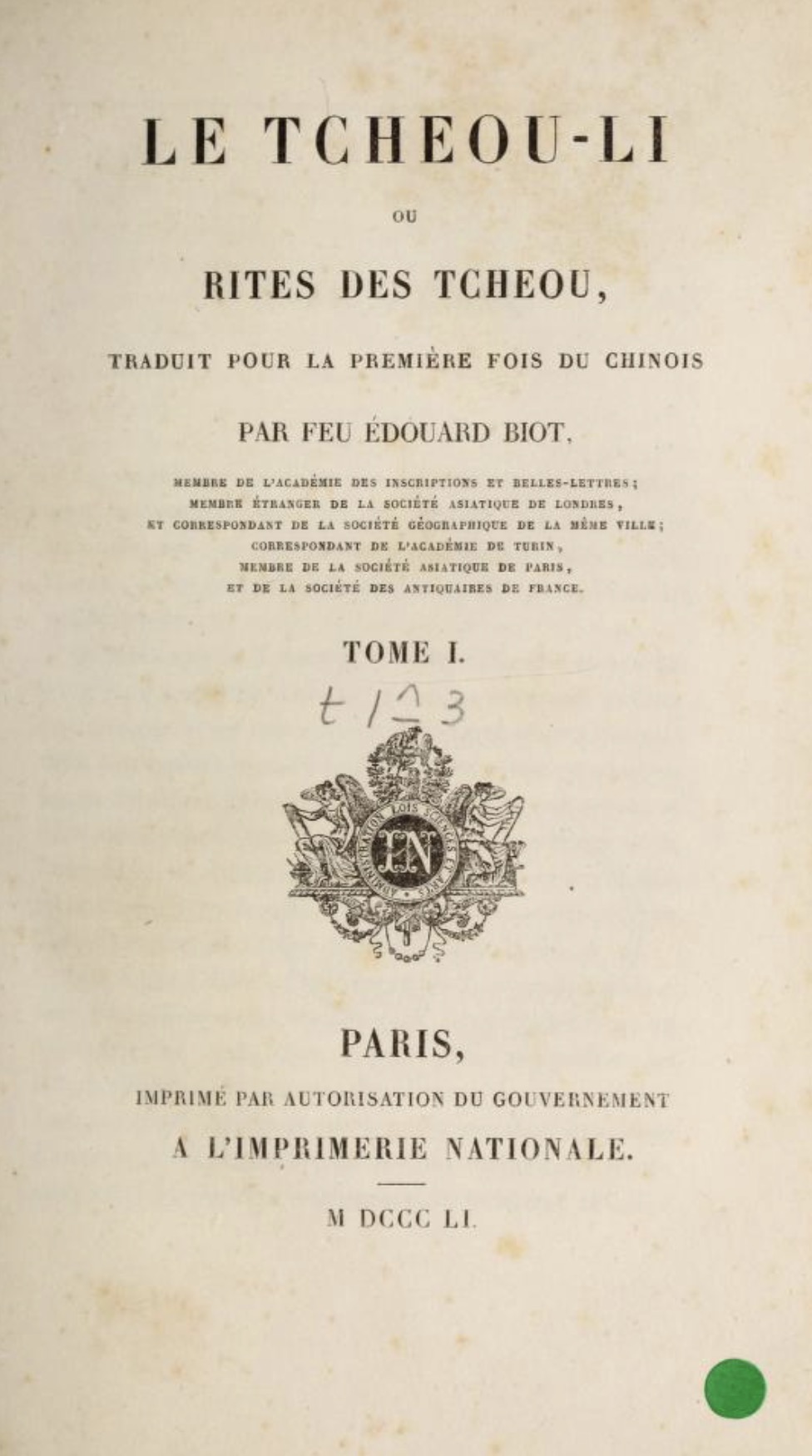
Le Tcheou-li, ou Rites des Tcheou, traduit pour la première fois du chinois
The Zhouli, or Rites of the Zhou
Book
Biot, É. (1851) Le Tcheou-li, ou Rites des Tcheou, traduit pour la première fois du chinois. [The Zhouli, or Rites of the Zhou] Paris, Imprimerie Nationale, 2 Vols., 500, 620 pp.
Record No. 17065  |  Sinkankas/Born No.: NIS/NIB  |  Language: in French  |  RWHL
The first complete European translation of the Zhouli (Rites of Zhou), one of the major classical Chinese texts concerning the organization and institutions of the Zhou state. Biot’s two-volume French translation describes an elaborate administrative system, including government offices, court ceremonies, crafts, commerce, taxation, ritual, and the management of natural resources. Of particular gemological interest are numerous references to jade and other valued stones, their classification, working, official control, ritual functions, and prescribed use in insignia, ceremonial objects, and ornaments, making the work an important source for understanding the institutional and symbolic role of jade in ancient China.

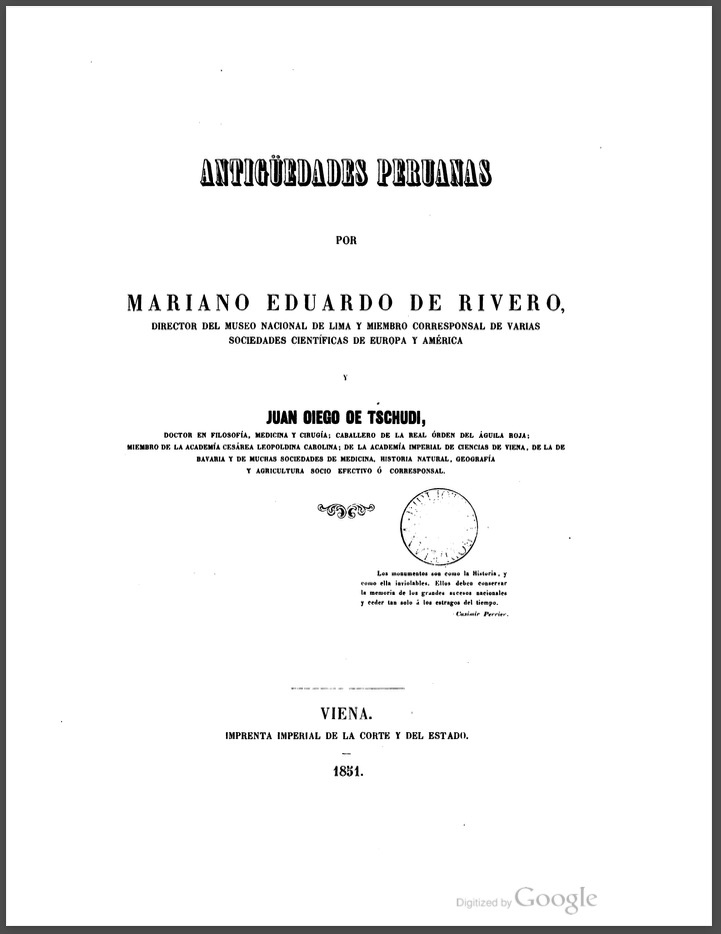
Antigüedades Peruanas

Peruvian Antiquities
Book
Rivero, M.E., de, Ustariz, J. and Tschudi, J.D., de (1851) Antigüedades Peruanas. [Peruvian Antiquities] Vienna, Imprenta Imperial de la Corte y del Estado, 328 pp.
Record No. 7476  |  Sinkankas/Born No.: NIS/NIB  |  Language: in Spanish  |  RWHL
A major early study of the archaeology and antiquities of Peru, describing the monuments, burials, artifacts, customs, religion, and material culture of the pre-Columbian peoples of the Andes. Rivero and Tschudi draw upon archaeological remains, historical sources, and collections of artifacts to discuss Inca and earlier Peruvian civilizations, with illustrations of monuments and objects. Of particular gemological interest are discussions of objects fashioned from stone and precious materials, personal ornaments, and the working and cultural use of minerals and metals in ancient Peru.

Minerals and Their Uses in a Series of Letters to a Lady
Book
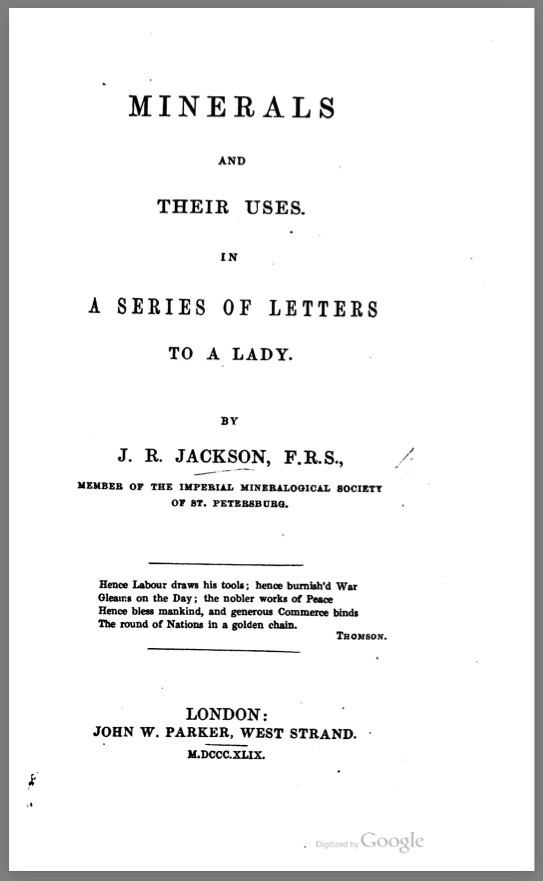
Jackson, J.R. (1849) Minerals and Their Uses in a Series of Letters to a Lady. London, John W. Parker, West Strand, 464 pp.
Record No. 27479  |  Sinkankas/Born No.: 3160  |  RWHL
Sinkankas: A charming melange of interesting facts, fancies, and anecdotes, in popular style, using the device of letters to an unnamed lady, and treating most of the mineral productions of importance, but with major emphasis laid upon gemstones. The latter, mineral and organic, are to be found in letters 1 to 17, 20, and in 32, with letter 35 treating talismans, hieroglyphic rings, and the stones that used in them. The appendix contains an identification table for minerals, arranged according to distinctive properties. An excellent work that provides instructive reading, although copies are now rarely obtainable.

Mineralogia polyglotta

Polyglot Mineralogy.
Book
Keferstein, C. (1849) Mineralogia polyglotta. [Polyglot Mineralogy.] Halle, Gebauersche Buchdruckelrei, 248 pp.
Record No. 3038  |  Language: in Latin  |  RWHL
A multilingual mineralogical dictionary intended to correlate mineral names across different European and other languages. Keferstein arranges mineral terminology comparatively, providing equivalent names and synonyms used by different authors and linguistic traditions, thereby helping readers navigate the often inconsistent nomenclature of nineteenth-century mineralogy. The work is particularly useful for historical gemological research because it preserves variant names for gemstones, ornamental stones, and related minerals and helps trace how mineral terms were translated and understood across languages.

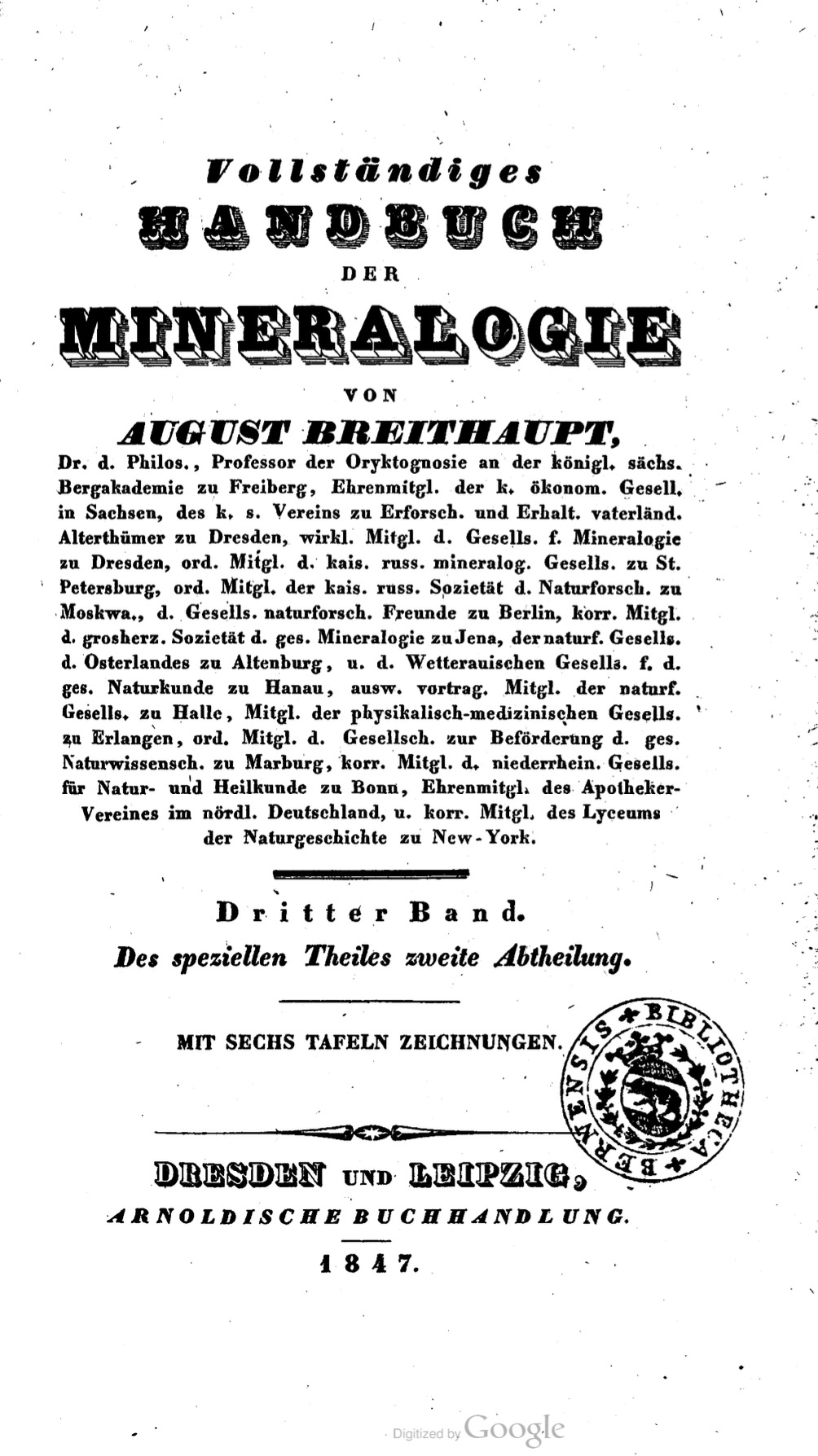
Vollstandiges Handbuch der Mineralogie
Handbook of Mineralogy
Book
Breithaupt, A. (1847) Vollstandiges Handbuch der Mineralogie. [Handbook of Mineralogy] Dresden, Arnoldische Buchhandlung, 902 pp.
Record No. 8148  |  Sinkankas/Born No.: NIS/NIB  |  Language: in German  |  RWHL
A comprehensive mineralogical handbook presenting Breithaupt’s classification and description of minerals according to their physical properties, crystallography, composition, and occurrence. The work reflects the mid-nineteenth-century development of systematic mineralogy and provides descriptions of numerous mineral species and varieties, including many materials of gemological interest. It is particularly useful for tracing historical mineral names, classifications, physical-property data, and the changing distinction between mineral species and ornamental stones.

Mineral resources of southern India

Journal Article
Newbold, T.J. (1846) Mineral resources of southern India. Journal of the Royal Asiatic Society, Vol. 8, pp. 138–171, 213–270 (see pp. 153–154).
Record No. 1358  |  Sinkankas/Born No.: NIS/NIB  |  RWHL
Surveys the mineral resources of southern India, describing the occurrence, geological setting, working, and economic importance of a wide range of ores and minerals. Newbold discusses metals, industrial minerals, and precious materials from several districts, drawing on field observations and contemporary mining information. Of particular gemological interest are pp. 153–154, where he treats corundum and related occurrences, contributing to the early documentation of southern India’s gem and abrasive mineral resources.

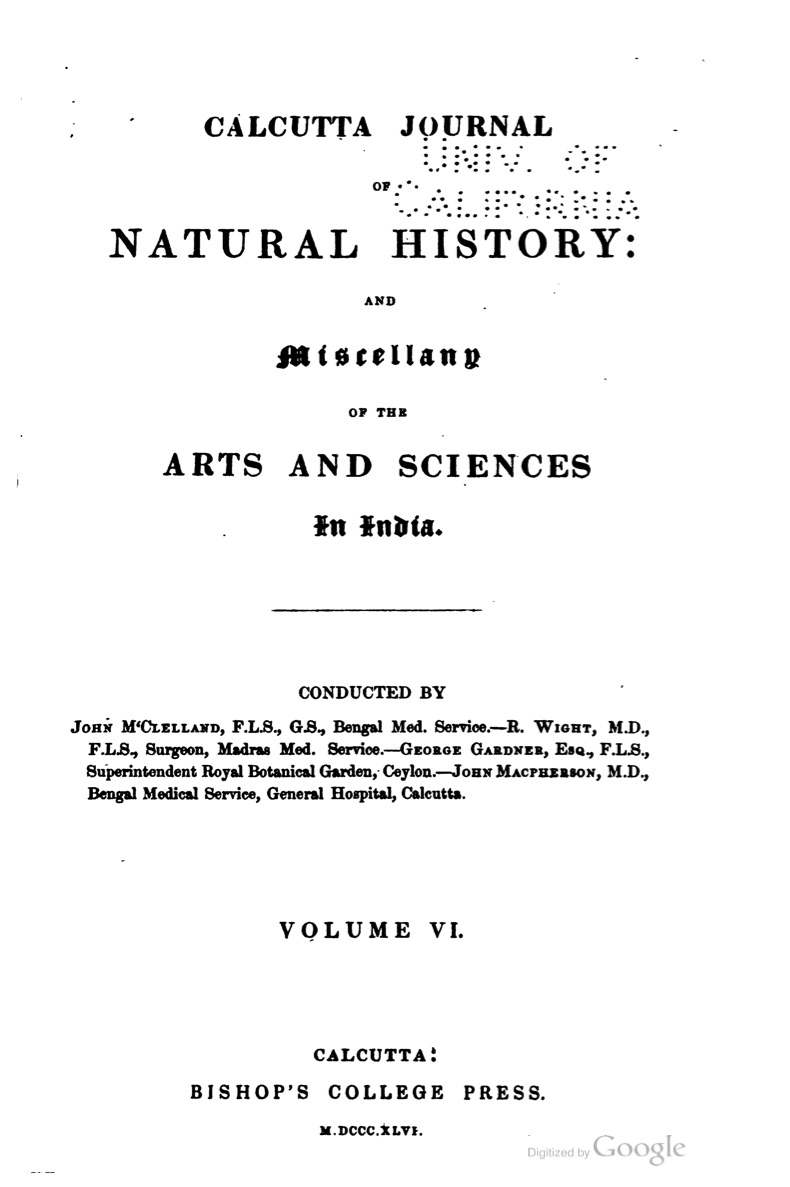
Notes on the geology and mineralogy of Affghanistan
Journal Article
Hutton, T. (1846) Notes on the geology and mineralogy of Affghanistan. Calcutta Journal of Natural History, Vol. 6, pp. 562–611.
Record No. 1029  |  Sinkankas/Born No.: NIS/NIB  |  RWHL
A substantial account of the geology and mineralogy of Afghanistan, describing its mountain ranges, rock formations, mineral occurrences, and economically important deposits. Hutton draws upon observations and information gathered in the region to discuss metals, ores, salts, coal, and precious and ornamental stones. Of particular gemological interest are his descriptions of Afghanistan’s and neighboring Badakhshan’s gem resources, including lapis lazuli and the celebrated ruby spinel deposits, making the paper an important early geological account of the mineral resources of the region.

Über die Zusammensetzung des orientalischen Türkises
On the composition of oriental turquoise
Journal Article
Hermann, R. (1844) Über die Zusammensetzung des orientalischen Türkises. [On the composition of oriental turquoise] Journal für Praktische Chemie, Vol. 33, No. 5, pp. 282–285.
Record No. 29078  |  Sinkankas/Born No.: NIS/NIB  |  Language: in German  |  RWHL
Reports a chemical analysis of oriental turquoise undertaken to determine its composition and clarify its mineralogical character. Hermann examines the proportions of its principal constituents and discusses the relationship between its chemical composition and that of other phosphatic minerals. The paper is of particular gemological interest as an early quantitative chemical investigation of turquoise and part of the nineteenth-century effort to establish the true chemical nature of this important ornamental gemstone.

Real-Encyclopädie der Classischen Alterthumswissenschaft in alphabetischer Ordnung
Real Encyclopedia of Classical Antiquity in Alphabetical Order
Book
Pauly, A.F., von (1844) Real-Encyclopädie der Classischen Alterthumswissenschaft in alphabetischer Ordnung. [Real Encyclopedia of Classical Antiquity in Alphabetical Order] Stuttgart, J.B. Metzler, 1572 pp.
Record No. 8113  |  Sinkankas/Born No.: NIS/NIB  |  Language: in German  |  RWHL
A major nineteenth-century encyclopedia of classical antiquity, arranged alphabetically and covering the history, geography, religion, mythology, literature, institutions, material culture, and daily life of the ancient Greek and Roman worlds. Edited by August Friedrich Pauly, it brought together detailed scholarly articles based on ancient literary sources and contemporary classical research. Of gemological interest are entries relating to precious stones, minerals, jewelry, engraved gems, mining, and the terminology and uses of such materials in antiquity.

Analyse des Nephrits aus der Türkei: Repertorium des chemischen Teils der Mineralkunde
Analysis of the nephrite from Turkey: Report of the chemical part of mineral science
Journal Article
Rammelsberg, C.F. (1844) Analyse des Nephrits aus der Türkei: Repertorium des chemischen Teils der Mineralkunde. [Analysis of the nephrite from Turkey: Report of the chemical part of mineral science] Neues Jahrbuch für Mineralogie, Geognosie, Geologie und Petrefaktenkunde, 1st Issue, p. 208.
Record No. 8085  |  Sinkankas/Born No.: NIS/NIB  |  Language: in German  |  RWHL
Reports Rammelsberg’s chemical analysis of nephrite from Turkey, presented in his review of the chemical aspects of mineralogy. The analysis concerns the composition of the material then identified as nephrite and its relationship to other mineral species with similar physical properties. The brief notice is of particular gemological interest as an early chemical investigation of nephrite from a locality outside the better-known Asian sources and as part of nineteenth-century efforts to establish the mineralogical identity and composition of jade materials.

Ueber die geognostischen Verhältnisse von Nord- Asien in Beziehung auf das Gold-Vorkommen in diesem Erdtheile. II. Die trans-uralischen Gebirge
About the geognostic conditions of North Asia in relation to the gold deposit in this part of the earth. II. The transural mountains
Journal Article
Erman, A. (1843) Ueber die geognostischen Verhältnisse von Nord- Asien in Beziehung auf das Gold-Vorkommen in diesem Erdtheile. II. Die trans-uralischen Gebirge. [About the geognostic conditions of North Asia in relation to the gold deposit in this part of the earth. II. The transural mountains] Archiv für wissenschaftliche Kunde von Russland, Vol. 3, pp. 121–177, map (see pp. 154–155).
Record No. 8149  |  Sinkankas/Born No.: NIS/NIB  |  Language: in German  |  RWHL
Examines the geological structure of the Trans-Ural region of northern Asia in relation to its extensive gold deposits. Erman discusses the mountain systems, rock formations, alluvial deposits, and geological circumstances associated with the occurrence of gold, drawing on observations made during his travels across Siberia. Of particular gemological interest are pp. 154–155, where he discusses gemstones occurring in association with the gold-bearing deposits, including their localities and geological setting.

On the geology, zoology, etc. of the Punjaub, and of a part of Affghanistan
Journal Article
Jameson, W. (1843) On the geology, zoology, etc. of the Punjaub, and of a part of Affghanistan. Journal of the Asiatic Society of Bengal, Vol. 12, Part 1, pp. 192–226.
Record No. 1049  |  Sinkankas/Born No.: NIS/NIB  |  RWHL
Examines the geology and natural history of the Punjab and adjoining parts of Afghanistan, based on Jameson’s travels through the region. The paper describes the physical geography, rock formations, minerals, fossils, animals, and other natural-history observations made along his route, with particular attention to the mountainous districts toward Afghanistan. Little of gemological interest.

El-Mas'údí's Historical Encyclopædia, entitled Meadows of Gold and Mines of Gems""
Book
Mas'údí, e.-. (1841) El-Mas'údí's Historical Encyclopædia, entitled Meadows of Gold and Mines of Gems"". London, Oriental Translation Fund, Vol. 1
Record No. 3262  |  Sinkankas/Born No.: NIS/NIB  |  RWHL
An English translation of selected portions of al-Masʿūdī’s tenth-century historical and geographical work Murūj al-dhahab wa-maʿādin al-jawhar (Meadows of Gold and Mines of Gems). The work ranges widely over history, geography, peoples, religions, natural history, trade, and the marvels of different regions of the known world, drawing upon both written authorities and al-Masʿūdī’s extensive travels. Of particular interest to gemology are references to mines, precious metals, pearls, gemstones, their geographic sources, and the commerce through which valuable materials circulated between India, the Middle East, Africa, and the Mediterranean world.

A Journey to the Source of River Oxus

Book
Wood, J. (1841) A Journey to the Source of River Oxus. London, John Murray, 280 pp.
Record No. 1882  |  Sinkankas/Born No.: NIS/NIB  |  RWHL
An account of Wood’s expedition through Afghanistan and Central Asia in search of the source of the River Oxus (Amu Darya), culminating in his journey to Lake Zorkul in the Pamirs. The work describes the geography, peoples, political conditions, trade, and natural resources of Afghanistan, Badakhshan, and the upper Oxus region. Of particular gemological interest are Wood’s observations on Badakhshan and its mineral resources, including the celebrated ruby spinel mines and lapis lazuli deposits, together with information on their locations, working, and trade. The author, a Scottish explorer of Central Asia, visited the lazurite mines in the 1830s and described their condition (pp. 263-266). He also mentions balas ruby (spinel).

Building a Gemological Library

Gemological books range from general identification manuals and textbooks to specialized works on individual gems, mineralogy, jewelry, treatments, synthesis, history and gem-producing regions.

For a curated selection of particularly useful books, read The Gemologist's Core Library — Classic Books on Gemology, Jewelry and Mineralogy.

About Four Treasures

Four Treasures is Lotus Gemology's freely accessible gemological reference database. Use the full database to search by author, title or keyword and explore literature on gemology, mineralogy, jewelry and related fields. Where available, hyperlinks on titles may lead directly to the full publication.

Search the Complete Four Treasures Database