Gemology Books Bibliography

Gemology Books Bibliography

Explore books on gems, gemology, jewelry and mineralogy in Four Treasures, the Lotus Gemology reference database. This bibliography brings together matching book records from the collection, with publication details, abstracts and cover images where available.

Gemology Book References

The list below matches books concerning gemology and related subjects in the database's searchable fields. Some works cover several branches of gems, jewelry or mineralogy.
3,141–3,160 of 3,451 matching references

Le lapidaire en francoys coittpose par messire Jehan de mandeville chevalier
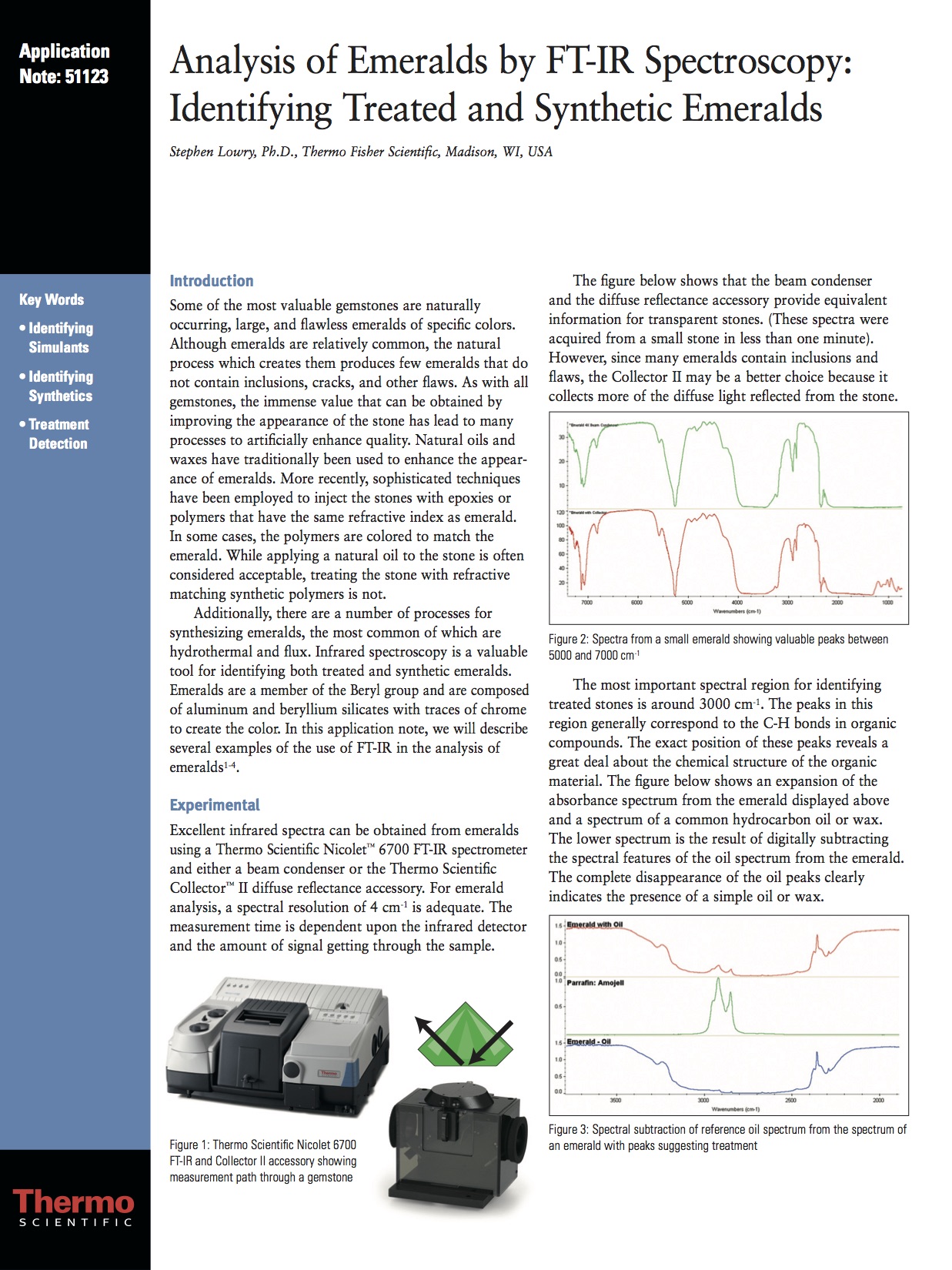
The Lapidary in French, composed by Sir Jehan de Mandeville, Knight
Book
Mandeville, J. (n.d., ca. 1495) Le lapidaire en francoys coittpose par messire Jehan de mandeville chevalier. [The Lapidary in French, composed by Sir Jehan de Mandeville, Knight] Lyon, Bernardus de Gordonio, 18 leaves
Record No. 6809  |  Sinkankas/Born No.: NIS/NIB  |  Language: in French  |  RWHL
Schuh: Extremely rare. Editio Princeps. Attributed to Mandeville this lapidary written in the French language first appeared in manuscripts that date from the middle 14th century. Pannier (1882) describes and compares several such manuscripts that had come under his inspection, and concludes that the text was probably not an authentic work of Mandeville. Instead, Pannier believes it to be the work of an unnamed jeweler. The text describes the most important precious stones and many others of a fantastic nature. It begins by coping from Marbode, the leading lapidary of the period, descriptions of about two dozen stones. Then are given descriptions of other stones and minerals both imaginary and real including pumice, mica, alabaster, and lapis lazuli. Stones formed in the human body or the bodies of animals are very prominent, as these bezoar and eaglestones were believed to bestow on their owner marvelous or supernatural power. Due to the extreme rarity of all of the early editions the printing history of this work is a difficult bibliographical problem. The widely unknown incunabula edition described above was first noticed and examined in detail by David J. Shaw, whose information is copied (person communication). This is most probably the first printing of Mandeville's Lapidaire, although Klebs (1938) who copies Claudin (1900) briefly describes a tantalizing Lapidaire written in French and published at Lyon in 1477 that is perhaps a still earlier printing. The difficult to read manuscript description of this 1477 book published in Pellechet (1970) does not mention Mandeville's name, but the work deserves closer examination.

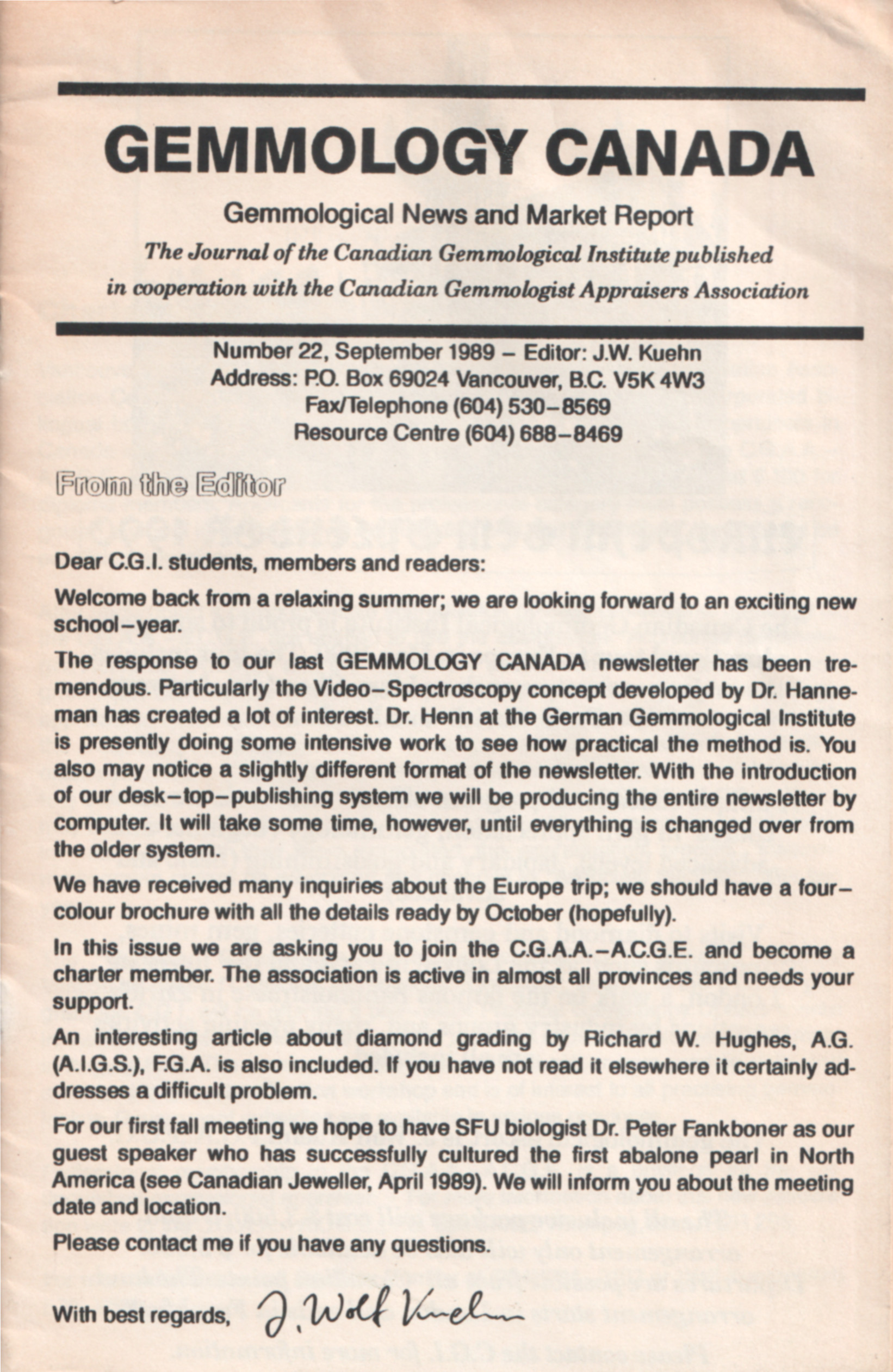
Analysis of emeralds by FT-IR spectroscopy: Identifying treated and synthetic emeralds
Report
Lowry, S. (n.d.) Analysis of emeralds by FT-IR spectroscopy: Identifying treated and synthetic emeralds. 2 pp.
Record No. 3131  |  RWHL

Sri Lanka—A gemstone buyer’s dream

Journal Article
Coughlin, D.G. (n.d.) Sri Lanka—A gemstone buyer’s dream. Gemmology Canada, Special Edition, pp. 1–16.
Record No. 614  |  RWHL

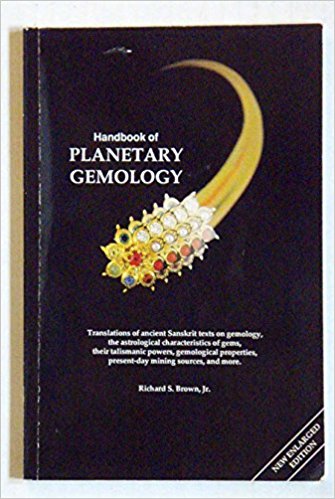
Handbook of Planetary Gemology

Book
Brown, R.S. (n.d., ca. 1988) Handbook of Planetary Gemology. Hong Kong, McKinney International (Publication Concepts), 88 pp.
Record No. 537  |  Sinkankas/Born No.: 969; NIB  |  RWHL
Sinkankas: This work presents translations of chapters 68–80 of the Sanskrit Garuḍa Purāṇa, which “elaborately describes the supernatural origin of gems and their mineralogical properties,” along with the Graha-cocāra Jyautiṣa, a text that “gives complete information on the astrological characteristics and effects of the principal gemstones” and “explains how auspicious gems help remove obstructions in various areas of life by appeasing planets that are having unfavorable effects.” The first thirteen chapters focus on planetary gemstones, offering summary translations of relevant Garuḍa Purāṇa passages concerning ruby, pearl, yellow sapphire, hessonite, emerald, diamond, cat’s-eye chrysoberyl, blue sapphire, coral, red garnet, jade (including jadeite), rock crystal, and bloodstone. Secondary planetary gemstones, or uparatnas, such as red spinel, moonstone, yellow topaz, citrine, hyacinth, peridot, tsavorite, green tourmaline, white zircon, turquoise, goshenite, amethyst, apatite cat’s-eye, blue spinel, tanzanite, lapis lazuli, and carnelian, are not directly traced to specific textual sources, and some—like tsavorite, goshenite, and tanzanite—were unknown to the ancients, suggesting these may have been included at the authors’ discretion. Each gemstone description includes its properties and modern sources, and although there is no bibliography, a valuable feature of the work is its inclusion of alternative Sanskrit names for the gemstones.
Kashmir ruby and tourmaline to debut at Tucson

Kashmir ruby and tourmaline to debut at Tucson

Report
American Gemological Laboratories (n.d., ca. 1992) Kashmir ruby and tourmaline to debut at Tucson. American Gemological Laboratories,
Record No. 232  |  RWHL
Defects associated with Sn (±Ti) and H in corundum (Al₂O₃)
Defects associated with Sn (±Ti) and H in corundum (Al₂O₃)

Journal Article
Jollands, M.C., Bishop, K., Smith, T., Jin, S. and Balan, E. (2025) Defects associated with Sn (±Ti) and H in corundum (Al₂O₃). Materialia, Vol. 41,
Record No. 28636  |  ISBN/ISSN: ISSN 2589-1529  |  DOI: https://doi.org/10.1016/j.mtla.2025.102434  |  Sinkankas/Born No.: NIS/NIB  |  not seen
The mechanisms by which H is incorporated into corundum crystals containing elevated concentrations of Sn is studied using a combination of experimental infrared spectra and density functional theory (DFT) calculations. The spectra (both bulk and spatially resolved), along with trace element concentrations, were recorded from samples passing through the laboratories of the Gemological Institute of America. We propose that bands in the FTIR spectra of corundum at 3197, 3235, 3249, 3262 and 3285 cm-1 can all be attributed to OH stretching associated with defects including one or two Sn4+, H+ and Al-site vacancies. Some of the defects also include Ti4+, i.e. are mixed Sn-Ti defects. Specifically, we attribute the following bands to these defects: 3197 and 3235 cm-1: (SnAl•VAl″′OHo•)′ (two configurations); 3249 cm-1: (SnAl•SnAl•VAl″′OHo•)×; 3262 and 3285 cm-1: (SnAl•TiAl•VAl″′OHo•)× (two configurations). All bands show similar polarization behavior, with the strongest absorption when the electric vector is perpendicular to the c-axis.

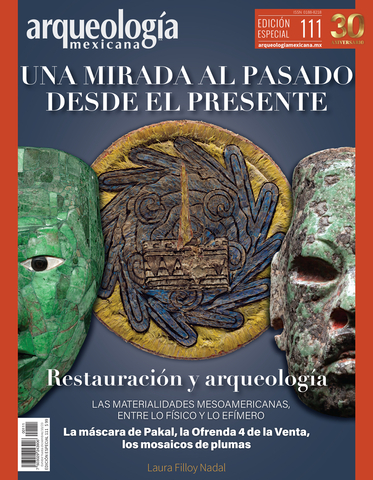
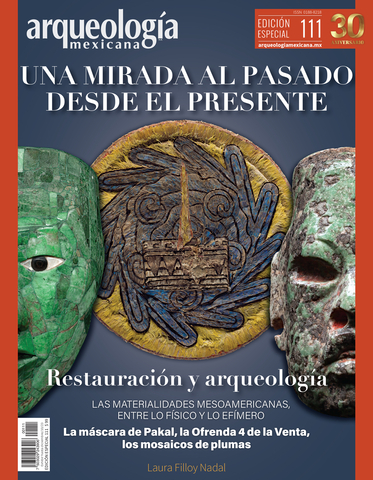
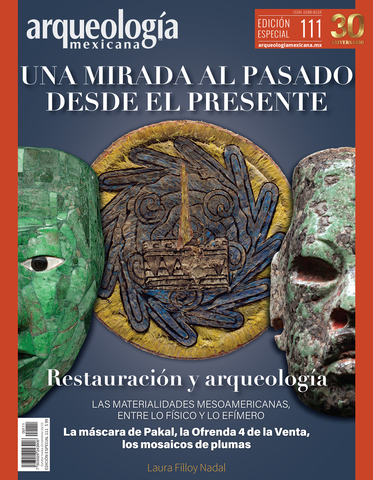
Conclusiones (Mosaicos de plumas)

Conclusions
Journal Article
Filloy Nadal, L. (2023) Conclusiones (Mosaicos de plumas). [Conclusions] Arqueología Mexicana, edición especial, Dedicado a: Una mirada al pasado desde el presente. Restauración y arqueología, No. 111, October, pp. 76–81.
Record No. 28280  |  Sinkankas/Born No.: NIS/NIB  |  Language: in Spanish  |  not seen
The physical properties of materials contribute to the aesthetic and symbolic qualities of an object, but they are also powerful instruments for triggering emotional responses. It is precisely the aesthetic response that amplifies the material ability of objects to communicate and to determine their role in communal social life (Filloy Nadal, 2017). Reflecting on the intangible elements that gave rise to the different artefacts is not a simple task. Nor is it easy to imagine these objects in use, in situations where, for example, the attire and the wearer had to be seen as a unity, and the material components had to distinguish the bearer and project sumptuousness. During religious rituals, visual effects were surely of primary importance. However, one must also consider the elements that distinguished the individual himself, his personhood, such as the intentional modification of the skull, the manner in which he moved, the gestures he performed, or the sounds that accompanied him. The manufacture of the objects studied reflects complex production processes involving multiple participants and materials originating from different places. It is possible to reconstruct these processes, and this will lead us to appreciate their social significance. However, to understand the effect of their use, imagination is required.

La Ofrenda 4 de La Venta, Tabasco

Offering 4 from La Venta, Tabasco
Journal Article
Filloy Nadal, L. (2023) La Ofrenda 4 de La Venta, Tabasco. [Offering 4 from La Venta, Tabasco] Arqueología Mexicana, edición especial, Dedicado a: Una mirada al pasado desde el presente. Restauración y arqueología, No. 111, October, pp. 34–47.
Record No. 28279  |  Sinkankas/Born No.: NIS/NIB  |  Language: in Spanish  |  not seen
The analysis of the artefact assemblages, that of Pakal’s mask and Offering 4, allowed us to establish several aspects (Filloy Nadal, coord., 2010; Magaloni Kerpel and Filloy Nadal, coords., 2013) related to the specific use of green stones in the manufacture of offering objects in different regions of Mesoamerica. These two assemblages of artefacts are the result of complex processes in which lapidary artists from different periods and cultures must have made a series of decisions at each stage of production in order to transform different varieties of green stones into precious goods involved in communication with the divinities, upon which the continuity and balance of the cosmos depended (Filloy Nadal, 2016 and 2017). It is clear that each stage of the production process decisively influenced the final product and, therefore, the capacity of each artefact to fulfil the function for which it had been created. In both assemblages, the selection of raw material was based on well-established criteria associated with its purity, origin, and physical, optical and organoleptic properties. In the cases mentioned, the value of each artefact increased in parallel with the intensity of the green tone displayed by the raw material, which added significance to the assemblage. These gradations of value were also determined by factors such as the geographic origin of the stones, their rarity and the lustrous quality that each rock possessed, indicating the existence of a taxonomy in which not all green stones enjoyed the same status and, consequently, had different functions and meanings. Thanks to collaborative research and the work of different disciplines, each beginning with questions determined by its own field of inquiry, we have gradually uncovered fragments that help us recover the past. All contexts and objects excavated by archaeological projects conceal profound secrets. It is clear to us that both Pakal’s mask and Offering 4, which we have described here in particular, conceal fascinating histories that we as specialists have attempted to reconstruct, although we have not yet succeeded in deciphering them completely.

La máscara mortuoria de K’inich Jannab’ Pakal
The funerary mask of K’inich Janaab’ Pakal
Journal Article
Filloy Nadal, L. (2023) La máscara mortuoria de K’inich Jannab’ Pakal. [The funerary mask of K’inich Janaab’ Pakal] Arqueología Mexicana, edición especial, Dedicado a: Una mirada al pasado desde el presente. Restauración y arqueología, No. 111, October, pp. 20–33.
Record No. 28278  |  Sinkankas/Born No.: NIS/NIB  |  Language: in Spanish  |  not seen
To create Pakal’s mask, the artisans selected six shades of green stones. Each tone was used in a different area of the face to define an anatomical feature or an ornament, and even to draw the viewer’s attention toward the central part of the face. For example, three pieces of a light, intense green colour were used to represent the central jewel of a diadem, while several thinner emerald-coloured plaques were used for the ends of the diadem. The central area of the face was made with the greenest and most brilliant jade, also called “imperial jade,” while the hair was represented with a darker, mottled tone. It is evident that there is a kind of bilateral symmetry between the tesserae and that their forms are similar on both sides of the face, both in position and in shape or colour. The pieces fit together exactly because the tesserae have bevelled edges that were cut at 45 degrees; in addition, a wooden backing, which did not survive the passage of the centuries, and a lime paste as cement were used. During the restoration, we realised that there was a logical sequence for assembling the tesserae of the mosaic.

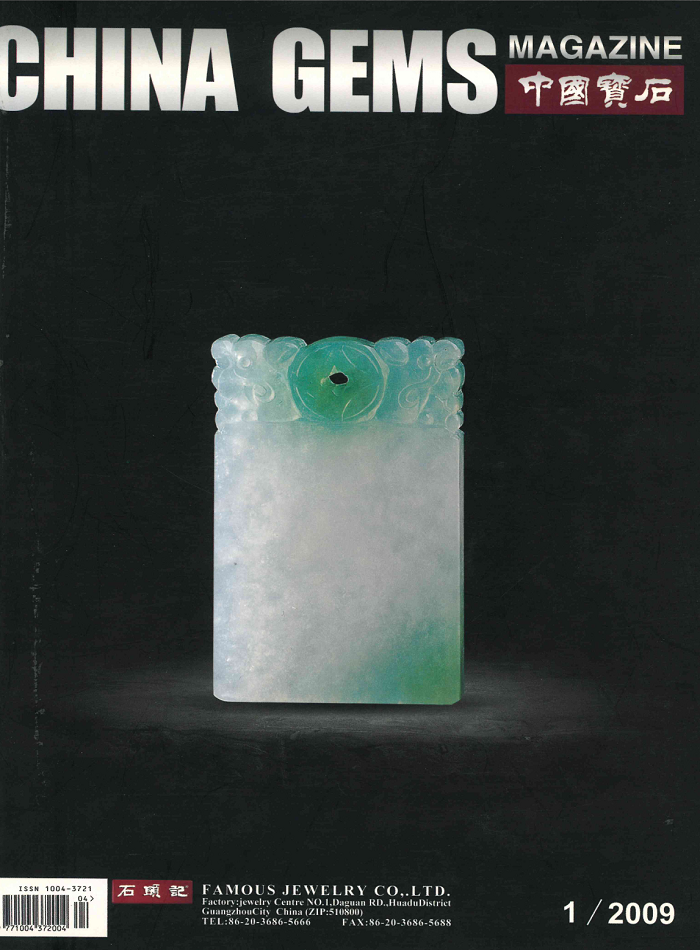
Study on gemological and mineralogical characteristics of Guatemala green jadeite jade
Journal Article
Chen, Y., Bi, X., Yu, J., Wu, J., Liu, T.L. and Zhang, C. (2023) Study on gemological and mineralogical characteristics of Guatemala green jadeite jade. China Gems & Jades, Vol. 181, No. 6, pp. 27–35.
Record No. 7850  |  Sinkankas/Born No.: NIS/NIB  |  Language: in Chinese with English abstract  |  not seen
Chen and colleagues investigate the gemological and mineralogical characteristics of green Fei Cui from Guatemala, using conventional gemological testing together with microscopic observation and instrumental analytical methods to characterize its appearance, structure, mineral assemblages, and composition. The study examines the variations found among green Guatemalan material and the relationships between its mineral constituents and observable gemological properties, with particular attention to jadeite- and omphacite-bearing material. Mineralogical and compositional differences within the samples are considered in relation to color and texture, and the authors discuss characteristics useful for understanding and identifying Guatemalan green Fei Cui and distinguishing it from comparable material of other origins.

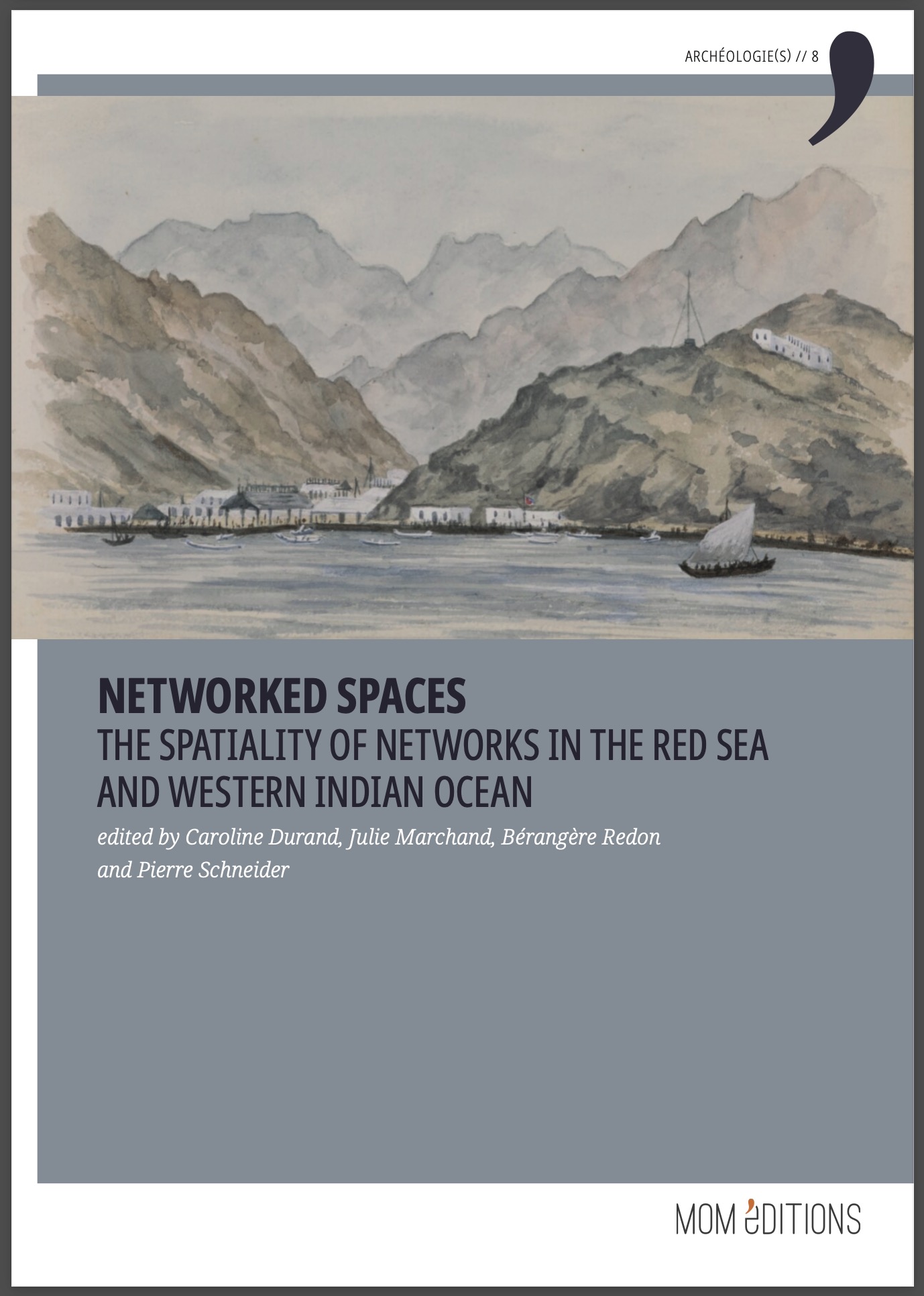
Des carrières au Nil: Halage des pierres et maillage territorial sur le plateau de Hatnoub (travaux préliminaires)
From quarries to the Nile: Hauling stones and territorial networks on the Hatnub plateau (preliminary work)
Conference Paper
Gourdon, Y. (2022) Des carrières au Nil: Halage des pierres et maillage territorial sur le plateau de Hatnoub (travaux préliminaires). [From quarries to the Nile: Hauling stones and territorial networks on the Hatnub plateau (preliminary work)] Networked Spaces: The spatiality of networks in the Red Sea and Western Indian Ocean. Proceedings of the Red Sea Conference IX, 2–5 July, Lyon: Maison de l’Orient et de la Méditerranée, pp. 437–450.
Record No. 17148  |  Sinkankas/Born No.: NIS/NIB  |  Language: in French  |  not seen
Located at the fringes of the Egyptian Eastern Desert, the quarries of Hatnub have remained famous, since the Pharaonic period, for the quality of their calcite alabaster and, since their discovery at the end of the 19th century, for their epigraphic richness. The work carried out in quarry P and its surroundings, since 2012, by the epigraphic and archaeological mission of Hatnub (Ifao, University of Liverpool), has allowed a better understanding of the functioning of this quarry and in particular the way in which the blocks were extracted from it. Preliminary studies were also carried out to understand how this quarry (and the others) was inserted on the Hatnub plateau, through a vast network of roads and installations essentially oriented towards the production and transport of alabaster and the administrative and logistical management of the quarries.

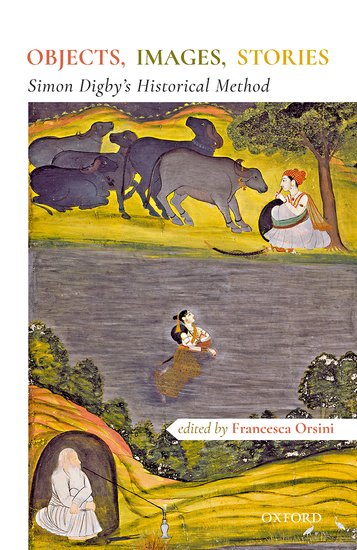
Two versions of a book of jewels in Persian
Book Section
Wannell, B. (2022) Two versions of a book of jewels in Persian. In: Objects, Images, Stories | Simon Digby's Historical Methods, Oxford: Oxford University Press, 496 pp.; see pp. 44–64.
Record No. 17080  |  not seen
In this volume prominent scholars of South Asia in the fields of economic, social, religious, literary, music, photography, and art history reflect on Simon Digby's method and contribution to their respective fields, and each offer an example of their method through the analysis of a painting, object, manuscript, literary text, or building from the Sultanate, Mughal, and colonial periods.

La luminescence orange des corindon, une origine pas classique pour les gemmologues – Partie II
Orange luminescence of corundum, an atypical origin for gemmologists – Part II
Journal Article
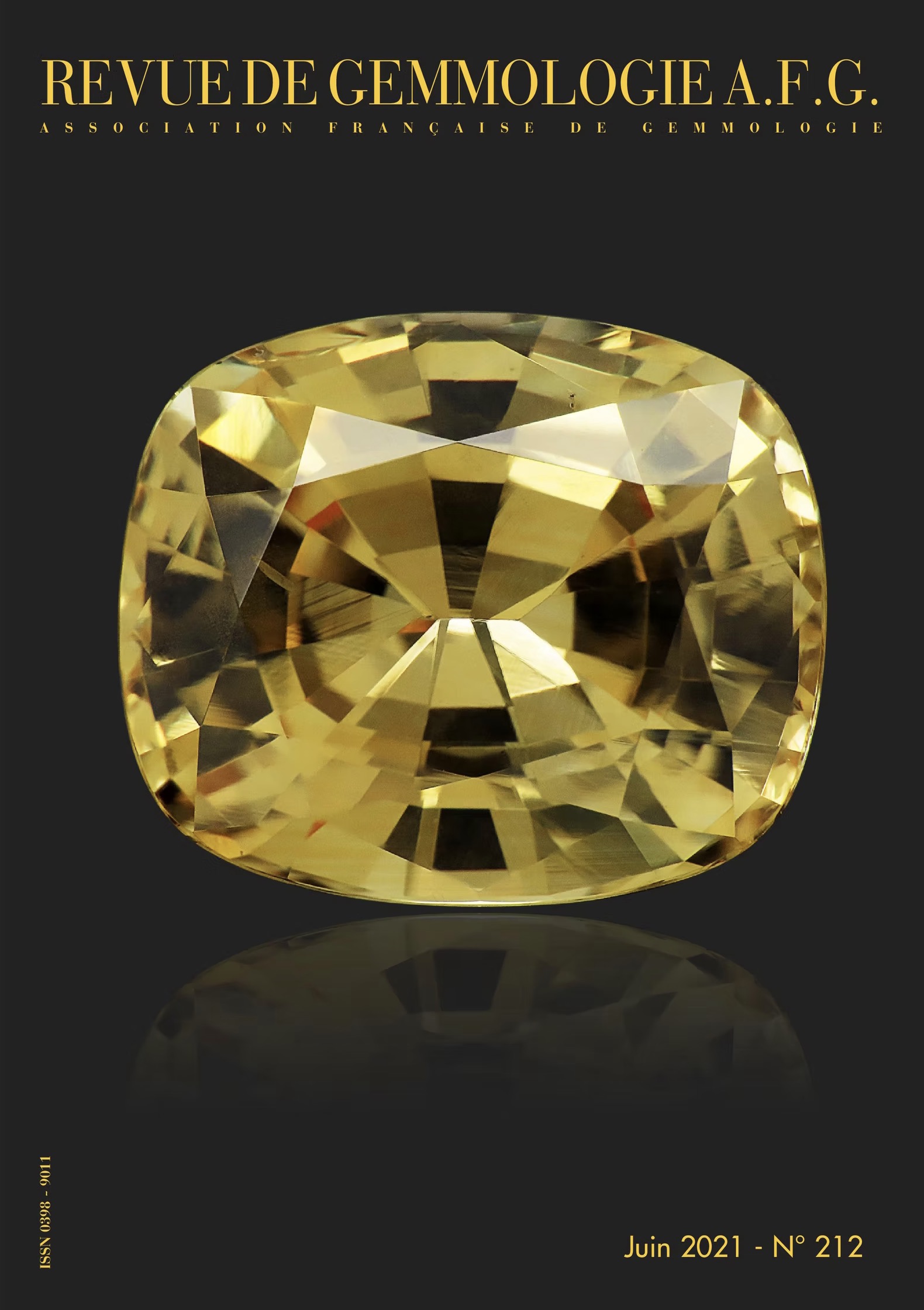
Vigier, M., Fritsch, E. and Segura, O. (2021) La luminescence orange des corindon, une origine pas classique pour les gemmologues – Partie II. [Orange luminescence of corundum, an atypical origin for gemmologists – Part II] Revue de Gemmologie A.F.G., No. 212, pp. 13–19.
Record No. 28183  |  Sinkankas/Born No.: NIS/NIB  |  Language: in French  |  not seen
The second part of a study of apricot" orange luminescence in corundum, examining a luminescence mechanism that differs from those more commonly encountered by gemologists. The authors discuss the origin of this unusual orange emission and its relationship to the chemical and spectroscopic characteristics of corundum, with implications for interpreting fluorescence and luminescence observations in gemological testing."

Le pouvoir des pierres, de la sphragis au médicament estampillé dans le monde gréco-romain
The power of stones, from the sphragis to the stamped medicine in the Greco-Roman world
Book Section
Dasen, V. (2021) Le pouvoir des pierres, de la sphragis au médicament estampillé dans le monde gréco-romain. [The power of stones, from the sphragis to the stamped medicine in the Greco-Roman world] In: Ce que peuvent les pierres, Liège: Presses universitaires de Liège, pp. 163–191.
Record No. 28018  |  ISBN/ISSN: 9782880000000  |  DOI: https://doi.org/10.4000/14ddg  |  Sinkankas/Born No.: NIS/NIB  |  Language: in French  |  not seen
The glyptic art of the Roman Imperial period (1st–4th centuries CE) harnesses the power that minerals were believed to exert on living beings with a remarkably coherent symbolic effectiveness, combining the virtues of stones, engraved images, and texts—particularly in the category of so-called “magical” stones. The combination of three elements defines a particular category of intaglios within Roman glyptic: the selection of a mineral with specific properties, the engraving in positive of inscriptions in Greek and/or “magical” signs or charaktêres, and images invoking a divine presence.

Middle and late Byzantine sigillographic evidence from western Anatolia: Eighth- to early twelfth-century lead seals from Bergama (ancient Pergamon)
Journal Article
Lafli, E., Seibt, W. and Çağlayan, D. (2021) Middle and late Byzantine sigillographic evidence from western Anatolia: Eighth- to early twelfth-century lead seals from Bergama (ancient Pergamon). Byzantine and Modern Greek Studies, Vol. 46, No. 1, April, pp. 41–63.
Record No. 27587  |  DOI: https://doi.org/10.1017/byz.2021.29  |  Sinkankas/Born No.: NIS/NIB  |  not seen
This article presents 19 lead seals from the Museum of Bergama (ancient Pergamon), dating from the early eighth to the early twelfth century. We offer a descriptive catalogue of these Middle and Late Byzantine seals preserved in a western Turkish museum. The owners of these seals were primarily ecclesiastical, legal or military dignitaries who were probably active in Pergamon, in southwestern Mysia, Aeolis or Lydia. The catalogue is followed by an appendix on a Byzantine magical amulet.

Greek and Roman Glyptic: Alibi ars, alibi materia
Book Section
Lapatin, K. (2021) Greek and Roman Glyptic: Alibi ars, alibi materia. In: The Value of Making: Theory and Practice in Ancient Craft Production, Studies in Classical Archaeology (SCA 13), Turnhout, Belgium: Brepols, pp. 189–231.
Record No. 26812  |  ISBN/ISSN: 9782500000000  |  Sinkankas/Born No.: NIS/NIB  |  not seen
This volume presents new scholarship on the value and valuing of craft production in ancient societies around the Mediterranean. Ancient economic history, especially when approached archaeologically, has typically — and with good reason — focused upon the objects that were produced by craftspeople, their form and style, and their distribution. Typological approaches necessary for sorting and analysing large bodies of material evidence have also prioritized the final form of artefacts. Yet it was first and foremost the craftspeople behind these items who were responsible for an item’s functionality, its purpose, and its value, and these roles have in recent years received fresh attention in anthropological and sociological studies. The contributions gathered in this volume revolve around the role of makers, their handling of materials, and their place in networks of production and consumption, whilst at the same time remembering that craftspeople were never lone forces but depended on wider networks of supplies, colleagues, and consumers, as well as more ephemeral considerations such as aesthetics and religious value. Through this approach, the volume sheds new light not only on a range of crafts and materials from the ancient world, but also on the value of making and the making of value in ancient Mediterranean societies.

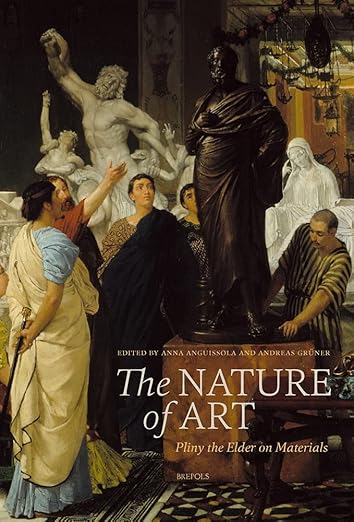
The Nature of Art: Pliny the Elder on Materials
Edited Book
Anguissola, A. and Grüner, A., editor (2020) The Nature of Art: Pliny the Elder on Materials.. Turnhout, Brepols, 372 pp..
Record No. 28381  |  ISBN/ISSN: 9782500000000  |  not seen
In his Natural History, Pliny the Elder organises his discussion of crafts according to the raw materials they utilize. However, scholarly literature has paid little attention to the aspect of materiality, preferring to focus on the biographies and achievements of ancient Greek artists. This collection instead addresses the presentation of artistic processes and their materials in the Natural History. This approach corresponds with current developments in the study of Greco-Roman art, wherein scientific analysis of artistic materials including stones, pigments, and metal alloys, as well as a deeper understanding of workshop practices, has imposed profound changes on the methods used in the study of ancient artefacts.

Gazetteer of sites

Book Section
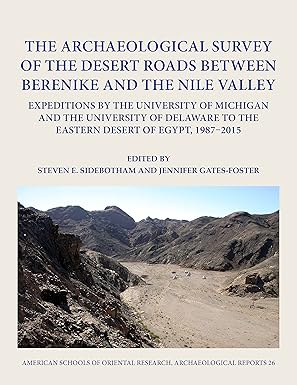
Sidebotham, S.E., Wright, H., Gates-Foster, J.E., Tomber, R. and Rivard, J.-L. (2019) Gazetteer of sites. In: The Archaeological Survey of the Desert Roads between Berenike and the Nile Valley: Expeditions by the University of Michigan and the University of Delaware to the Eastern Desert of Egypt, 1987–2015 (Archaeological Reports), Archaeological Report No. 26, Boston: American Schools of Oriental Research, pp. 73–285.
Record No. 17246  |  ISBN/ISSN: 9780900000000  |  Sinkankas/Born No.: NIS/NIB  |  not seen
The publication of the Eastern Desert Roads Surveys brings together the research of two survey projects, the Michigan-Assiut Koptos-Eastern Desert Project and the University of Delaware-Leiden University Eastern Desert Surveys. From 1987 to 2001 and intermittently thereafter until 2015, these two survey teams worked independently to explore and document the archaeological remains along the routes connecting the Nile Valley cities of Koptos (modern Qift) and Apollinopolis Magna (modern Edfu) to the Red Sea port city of Berenike in Egypt. The result of these surveys was the documentation of seventy discrete archaeological sites ranging in date from the late Dynastic to the Late Roman periods, with many sites demonstrating long-term, multi-period occupation. The survey also recorded road sections, route marking cairns and graves/cemeteries. This monograph brings together and integrates the discoveries of both teams, presenting a coherent analysis of the extensive surveys and the materials documented by each. Emphasis is placed on the physical setting of each site, its material remains--including preserved architecture, pottery and other surface finds--and relevant textual evidence, such as inscriptions, ostraka and related historical texts. A single chapter in gazetteer form is devoted to the sites themselves (excluding mines and quarries, which form a separate chapter), while other chapters present the geology of the region and ancient mines and quarries, which made use of the road network, the pottery evidence by phase, and specialist studies. An Introductory chapter offers historical and disciplinary context for the surveys and their subjects, tying the Berenike-Nile roads surveys into the corpus of archaeological surveys in Egypt and the wider Mediterranean world.

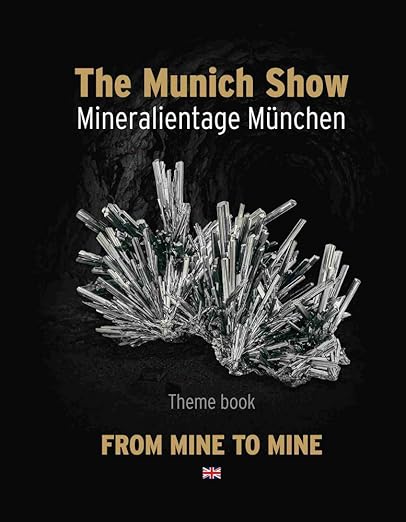
Theme Book: From Mine to Mine

Edited Book
Munich Show, editor (2018) Theme Book: From Mine to Mine.. Munich, Wachholtz Murmann, 216 pp..
Record No. 28192  |  ISBN/ISSN: 9783530000000  |  Sinkankas/Born No.: NIS/NIB  |  not seen
The theme book 2017 takes you on a journey to some of the most famous and extraordinary localities of these natural treasures, from antiquity until today. Did you know that as far back as the 14th century Central European merchants used a sophisticated communication system to find out early about yields and shipments of the Indian diamond mines? Or that the precious opals of the emperors and kings of the 17th century were mined not in Australia but in Opálbány, Hungary – and already on an industrial scale to boot? Would you have thought that an emerald from the Habach Valley in Austria adorns the English crown jewels? These and many other anecdotes are waiting for you in over 30 thrilling articles. They tell the stories of individuals on over 200 pages combining the history of the Earth, economy and world politics with the passion for minerals to weave a picture that will leave the viewer amazed.

Inclusions of spinel from Burma

Journal Article
Zhu, J. and Yu, X. (2018) Inclusions of spinel from Burma. Journal of Gems & Gemmology, Vol. 20 (Supp.), pp. 18–23.
Record No. 7796  |  Sinkankas/Born No.: NIS/NIB  |  Language: in Chinese with English abstract  |  not seen

Building a Gemological Library

Gemological books range from general identification manuals and textbooks to specialized works on individual gems, mineralogy, jewelry, treatments, synthesis, history and gem-producing regions.

For a curated selection of particularly useful books, read The Gemologist's Core Library — Classic Books on Gemology, Jewelry and Mineralogy.

About Four Treasures

Four Treasures is Lotus Gemology's freely accessible gemological reference database. Use the full database to search by author, title or keyword and explore literature on gemology, mineralogy, jewelry and related fields. Where available, hyperlinks on titles may lead directly to the full publication.

Search the Complete Four Treasures Database