Gemology Books Bibliography

Gemology Books Bibliography

Explore books on gems, gemology, jewelry and mineralogy in Four Treasures, the Lotus Gemology reference database. This bibliography brings together matching book records from the collection, with publication details, abstracts and cover images where available.

Gemology Book References

The list below matches books concerning gemology and related subjects in the database's searchable fields. Some works cover several branches of gems, jewelry or mineralogy.

3,161–3,180 of 3,451 matching references

Nachweis der Temperaturbehandlung von Korund [Identification of the heat treatment of corundum]

Identification of the heat treatment of corundum
Journal Article
Stephan, T. and Müller, S. (2018) Nachweis der Temperaturbehandlung von Korund [Identification of the heat treatment of corundum]. [Identification of the heat treatment of corundum] Gemmologie: Zeitschrift der Deutschen Gemmologischen Gesellschaft, Vol. 67, No. 3/4, pp. 21–36.
Record No. 6019  |  Sinkankas/Born No.: NIS/NIB  |  Language: in German with English abstract  |  not seen
Stephan and Müller examine methods for identifying heat treatment in corundum, with particular emphasis on ruby and sapphire. The article reviews the effects of heating on internal features and gemological properties and discusses the diagnostic evidence that can distinguish heated from unheated stones. Microscopic criteria include changes to mineral inclusions, healed fissures, altered growth structures, and other heat-related features, while spectroscopic and analytical methods provide additional evidence where microscopy alone is inconclusive. The authors consider the difficulties created by different heating temperatures, treatment conditions, and starting materials, since some treatments produce conspicuous alteration whereas others leave only subtle indications. The study emphasizes the need to combine microscopic observation with appropriate instrumental methods when determining whether a ruby or sapphire has undergone heat treatment.

Diffusions- und Oberflächenbehandlung bei Korunden [Diffusion and surface treatment of corundum]

Diffusion and surface treatment of corundum
Journal Article
Henn, U., Milisenda, C., Stephan, T. and Huaysan, B. (2018) Diffusions- und Oberflächenbehandlung bei Korunden [Diffusion and surface treatment of corundum]. [Diffusion and surface treatment of corundum] Gemmologie: Zeitschrift der Deutschen Gemmologischen Gesellschaft, Vol. 67, No. 3/4, pp. 47–60.
Record No. 6018  |  Sinkankas/Born No.: NIS/NIB  |  Language: in German with English abstract  |  not seen
Henn, Milisenda, Stephan, and Huaysan examine diffusion and surface treatments applied to gem corundum and the methods used to identify them. The article discusses treatments in which chemical elements are introduced at or near the surface of ruby and sapphire to modify their color, including diffusion processes capable of producing or enhancing particular color zones, as well as coatings and other surface modifications. Attention is given to the distribution and penetration depth of treatment-related color, the effects visible under magnification and immersion, and the analytical techniques used to detect artificially introduced elements or surface layers. The authors emphasize the importance of distinguishing these treatments from conventional heat treatment and naturally occurring color zoning and discuss the gemological implications of treatment depth, durability, recutting, and disclosure.

Behandelte Korunde - Einführung in die Thematik [Treated corundum - Introduction to the topic]
Treated corundum - Introduction to the topic
Journal Article
Lind, T. (2018) Behandelte Korunde - Einführung in die Thematik [Treated corundum - Introduction to the topic]. [Treated corundum - Introduction to the topic] Gemmologie: Zeitschrift der Deutschen Gemmologischen Gesellschaft, Vol. 67, No. 3/4, pp. 1–10.
Record No. 4167  |  Sinkankas/Born No.: NIS/NIB  |  Language: in German  |  not seen
Lind provides an introduction to the treatment of gem corundum, outlining the principal methods used to modify the appearance of ruby and sapphire and the gemological problems associated with their identification. Particular attention is given to heat treatment, which may alter color and clarity, as well as treatments involving the introduction of foreign substances into fissures and other procedures intended to improve a stone’s appearance. The article places these techniques in the broader context of the gem trade and laboratory examination, emphasizing the distinction between natural characteristics and treatment-induced changes. It also introduces the diagnostic approaches used to recognize treated corundum, including microscopic observation and instrumental analysis, and stresses the importance of correct identification and disclosure of treatments.

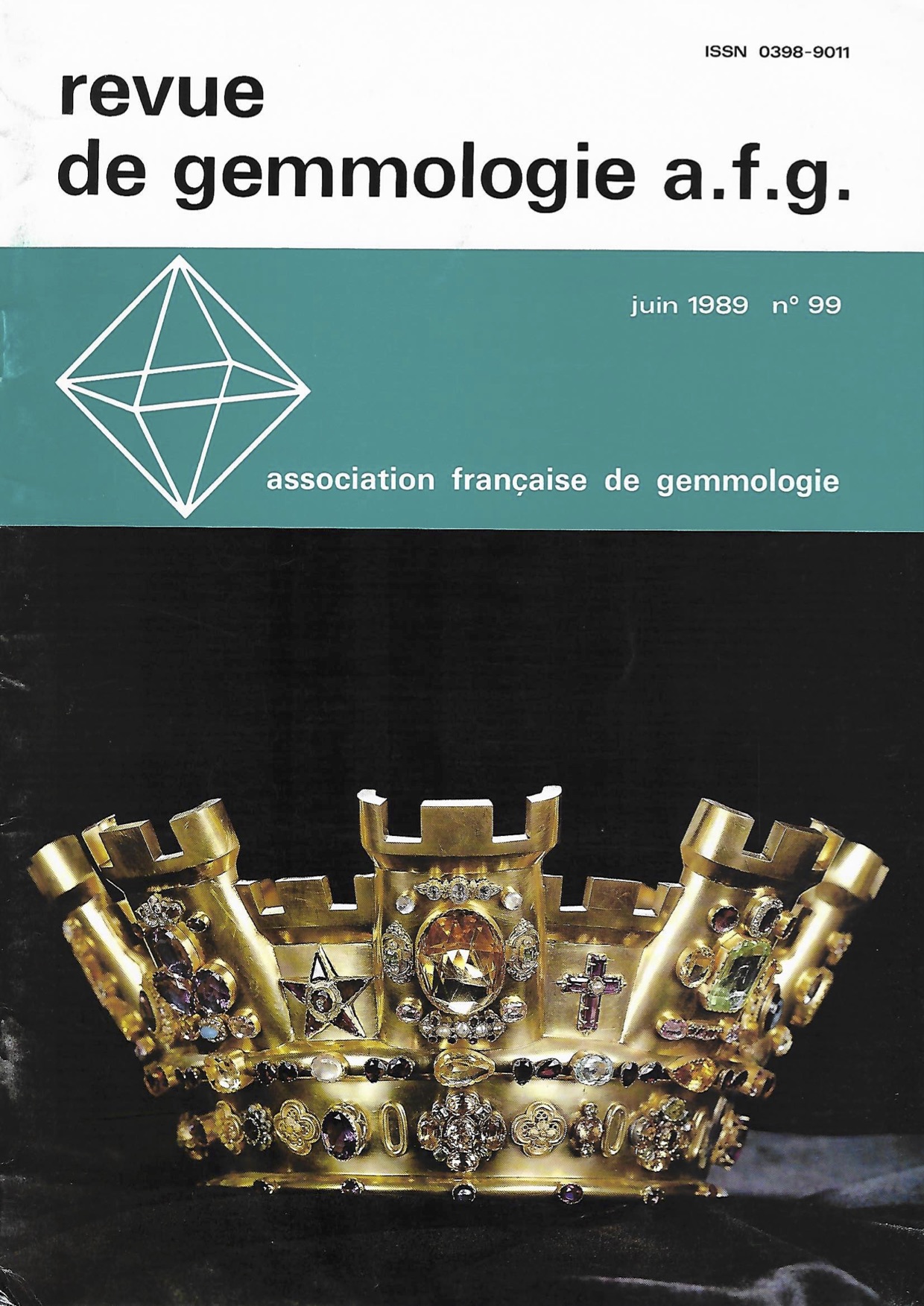
Les différentes facettes du jade

The different facets of jade
Journal Article
Tay, T.S. (2018) Les différentes facettes du jade. [The different facets of jade] Revue de Gemmologie A.F.G., No. 204–205, pp. 53–58.
Record No. 4165  |  Sinkankas/Born No.: NIS/NIB  |  Language: in French  |  not seen
Tay provides a broad overview of jade from mineralogical, gemological, historical, and cultural perspectives. The article discusses the materials encompassed by the traditional term “jade,” particularly nephrite and jadeite, and explains their differing mineralogical compositions and gemological properties. It considers jade’s colors, textures, durability, and other characteristics that have made it especially suitable for carving and jewelry, together with questions of identification and quality. Tay also surveys the exceptional cultural importance of jade, particularly in China, where it has been fashioned for millennia into ritual objects, ornaments, sculptures, and jewelry and endowed with powerful symbolic associations. The article thus introduces the principal scientific and cultural “facets” of jade and emphasizes the need to distinguish the various materials that have historically been described or marketed under that name.

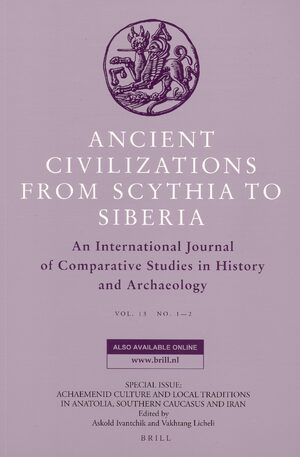
The aetiological myth of the Russian Empire and the study in Russia of cultural changes in the north Pontic region from the 3rd century BC to the 3rd century AD (prior to the 1920s)

Journal Article
Mordvintseva, V.I. (2017) The aetiological myth of the Russian Empire and the study in Russia of cultural changes in the north Pontic region from the 3rd century BC to the 3rd century AD (prior to the 1920s). Ancient Civilizations from Scythia to Siberia, Vol. 23, No. 2, pp. 225–249.
Record No. 27727  |  Language: English  |  not seen
Cultural change in the “barbarian” world of the North Pontic region from the 3rd century bc to the mid-3rd century ad was not a special field of interest for ancient authors. Classical narratives only contain information about certain manifestations of such processes. In Russia, interest in studying the cultural changes that took place in the steppes of Eastern Europe in Antiquity appeared in the early 18th century, in connection with the accession of new territories to the East and West. The core of the cultural-historical model, which took shape and then developed in Russian historical research, was the idea of a constantly changing succession of peoples in the North Pontic region and of the historical role of this region as a buffer zone between East and West. On this basis, an aetiological myth of the Russian Empire took root, justifying its impressive size, its length along the meta-geographical axis of Eurasia and its historic role in the destiny of Europe. This concept assumed its definitive form in the early 20th century in the works of Mikhail Rostovtsev.
Crystallochemical, mineralogical and gemological characterization of the beryl of the pegmatite mendonça, Berilandia District, Quixeramobim, Brazil
Crystallochemical, mineralogical and gemological characterization of the beryl of the pegmatite mendonça, Berilandia District, Quixeramobim, Brazil

Thesis
Cavalcanti, D. (2017) Crystallochemical, mineralogical and gemological characterization of the beryl of the pegmatite mendonça, Berilandia District, Quixeramobim, Brazil. University of Brasília
Record No. 26591  |  not seen
Beryl samples from Mendonça pegmatite, located in the district of Berilândia, Quixeramobim‐CE, were analyzed. This pegmatite, belonging to the Pegmatitic District of Solonópole‐Banabuiú (DPSB), is located in the center‐west portion of the State of Ceará, and embedded in the paragneiss basement of the Borborema Province, Ceará Central Domain. It is a pegmatite type mixed, differentiated, complexed, little fertile, and its mineralogy presents industrial and gem minerals composition variety, among which, aquamarine, a variety of the beryl group that occurs in blue and green colors, is the focus of this work. The highest concentrations of industrial beryl occur forming pockets. The aquamarine does not occur forming isolated crystals, but rather as dispersed cores and included in the crystals of industrial beryl. A crystallochemical, mineralogical and gemological characterization of blue and green beryls was carried out, where their intrinsic characteristics were analyzed, from the most basic, such as physical properties, to more advanced ones, such as crystalline structure, unit cell parameters, fluid components (H₂O types I, II and III, CO₂, CH₄), chromophore elements / color causes, chemical composition, as well as the presence and nature of impurities, and substitutions in its structure. The methodology used in its characterization was refractometer, hydrostatic balance, optical and gemological microscopes, single‐crystal and powder X‐ray diffraction (DRX), micro energy dispersive X‐ray fluorescence (EDXRF), molecular absorption spectroscopy in the infrared region by Fourier transform (FTIR), molecular absorption spectroscopy in the ultraviolet‐visible‐near infrared region (UV‐Vis‐NIR) and Raman spectroscopy. According to the substitutions in its crystalline structure, it was possible to verify the presence of fluid components of H₂O type I, II, III and CO₂, and the data necessary to determine the polytypes of beryl. Bands attributed to chromophores as well as their ionic charge and positions were also demonstrated. In the chemical compositional analysis, alkaline elements such as Cs, Rb and Na were detected in the channels. The presence of iron as a chromophore element in the beryl structure, resulting in its blue coloration, allows us to call blue beryl samples aquamarines, even if they do not present an ideal gemological quality for market standards.

Mineral chemistry composition and structural characteristics of jadeite from Burma, Kazakhstan and Russia
Journal Article
Zou, Y., Liang, Y., Liu, Y., Wang, D. and Yang, L. (2017) Mineral chemistry composition and structural characteristics of jadeite from Burma, Kazakhstan and Russia. Bulletin of the Chinese Ceramic Society, Vol. 36, Supplement S1, pp. 144–152.
Record No. 5903  |  Sinkankas/Born No.: NIS/NIB  |  Language: in Chinese with English abstract  |  not seen
The mineral chemistry composition and structural characteristics of jadeite from Burma, Kazakhstan, and Russia were studied by gemological methods, thin-section analysis, and electron probe analysis. The results on mineral chemical composition show that the contents of SiO₂, Al₂O₃, and Na₂O vary among samples: jadeite from Burma closely approaches the theoretical composition of pure jadeite, while samples from Kazakhstan and Russia deviate from this ideal. Burmese jadeite is characterized by the highest jadeite content and relatively lower amounts of albite and chromite. Jadeite from Kazakhstan contains a more balanced mixture of jadeite and omphacite, along with minor albite and chromite. Russian jadeite shows a chemical composition that transitions toward omphacite. Texturally, Burmese jadeite displays crystalloblastic texture along with partial metasomatic and dynamic metamorphic textures. The jadeite from Kazakhstan exhibits more complex textures, indicative of a strong geological overprint in a later phase. Russian jadeite shows crystalloblastic and partially crystalloblastic textures, reflecting a weaker degree of dynamic metamorphism. The jadeite deposits are multistage in nature: Burmese jadeite formed through two stages, omphacite in Kazakhstan formed through two stages, and Russian jadeite formed through three distinct stages. These metallogenic stages play a significant role in shaping the texture and structure of jadeite from each locality.

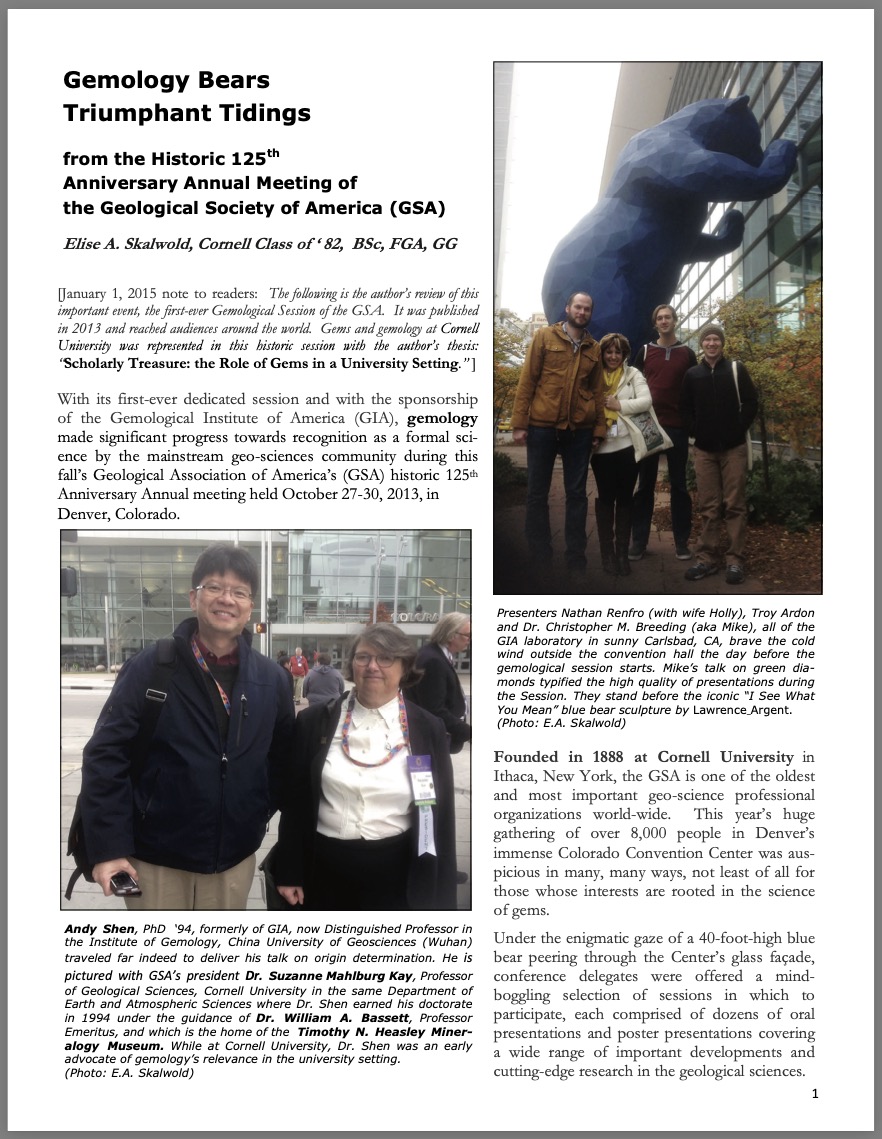
Women in Gemmology: Interview with E. Billie Hughes
Journal Article
Dominy, G. (2017) Women in Gemmology: Interview with E. Billie Hughes. Gemmology Today, February, pp. 14–21.
Record No. 4105  |  seen
Today women are playing an integral role in the jewellery and gemstone industry from the store front to the laboratory. Here we look at the women who are making a difference.

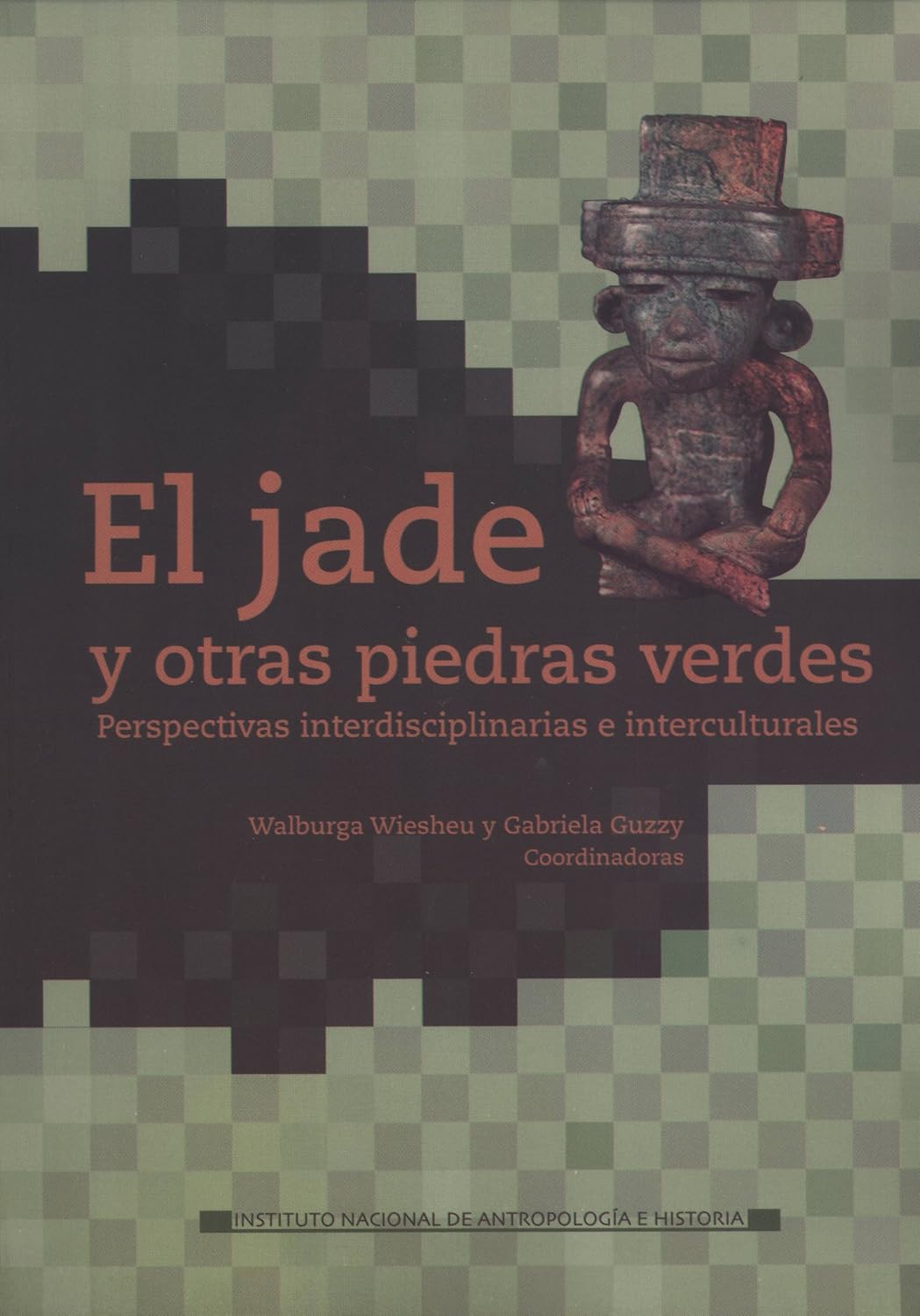
Gemology bears triumphant tidings. A review of the historic 125th Anniversary Annual Meeting of the Geological Society of America (GSA)
Conference Paper
Skalwold, E.A. (2013) Gemology bears triumphant tidings. A review of the historic 125th Anniversary Annual Meeting of the Geological Society of America (GSA). Denver, CO: Geological Society of America,
Record No. 4453
With its first-ever dedicated session and with the sponsorship of the Gemological Institute of America (GIA), gemology made significant progress towards recognition as a formal sci- ence by the mainstream geo-sciences community during this fall’s Geological Association of America’s (GSA) historic 125th Anniversary Annual meeting held October 27-30, 2013, in Denver, Colorado.

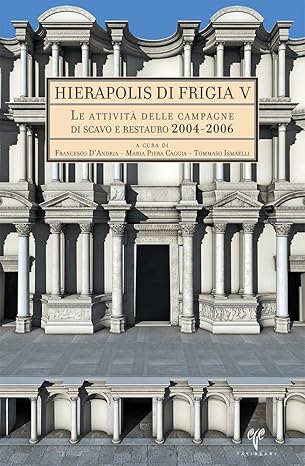
El Jade y Otras Piedras Verdes: Perspectivas Interdisciplinarias e Interculturales
Jade and Other Green Stones: Interdisciplinary and Intercultural Perspectives
Edited Book
Wiesheu, W.M. and Guzzy, G., editor (2012) El Jade y Otras Piedras Verdes: Perspectivas Interdisciplinarias e Interculturales. [Jade and Other Green Stones: Interdisciplinary and Intercultural Perspectives]. Mexico City, Instituto Nacional de Antropología e Historia, 323 pp..
Record No. 28309  |  ISBN/ISSN: 9786070000000  |  Sinkankas/Born No.: NIS/NIB  |  Language: in Spanish  |  not seen
Jade is a unique stone. Its exquisite range of colours, hardness and durability, transparency and delicate lustre, together with its acoustic qualities, led it to embody, in the ancient civilizations of Mesoamerica and Asia, human and cultural values intrinsic to those societies. For a time considered more precious than gold or silver, it has throughout human history been attributed with mystical and magical powers, as well as curative properties. In China, for example, it was associated with longevity and even immortality, while in Europe it was regarded as an effective remedy for kidney ailments. Through an interdisciplinary and intercultural perspective, this publication brings together eleven studies on various aspects related to this material: geochemical and archaeometric analyses, experimental archaeology projects, and anthropological investigations that together provide a broad panorama of the sociocultural significance and the profound symbolic and ideological connotations that jade and other green stones have held in various regions of ancient Mexico, Central America, South America, the Caribbean, China, and Korea.

Un quartiere residenziale: l'insula 104
A residential district: Insula 104
Book Section
Zaccaria, R.A. (2012) Un quartiere residenziale: l'insula 104. [A residential district: Insula 104] In: Hierapolis Di Frigia V: Le Attivita Delle Campagne Di Scavo E Restauro 2004-2006, pp. 419–452.
Record No. 27422  |  ISBN/ISSN: 9786050000000  |  Sinkankas/Born No.: NIS/NIB  |  Language: in Italian  |  not seen

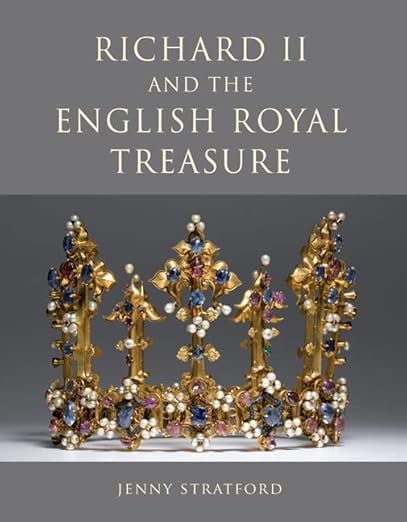
Richard II and the English Royal Treasure

Book
Stratford, J. (2012) Richard II and the English Royal Treasure. Woodbridge, UK, Boydell Press, 528 pp.
Record No. 17081  |  ISBN/ISSN: 9781840000000  |  Sinkankas/Born No.: NIS/NIB  |  not seen
Detailed documents describing Richard II's holdings of treasure highlight the magnificence of the 14th-century English court, often underrated by historians. Awarded the 'première medaille des Antiquités de France' for 2016 by the Académie des Inscriptions et Belles-Lettres The remarkable treasure of gold and silver from England and France which Richard II had amassed by the end of his reign in 1399 is fully revealed for the first time in this richly illustrated book. The author explores the nature of the objects themselves, their provenance and later fate, and examines the crucial role the treasure played in diplomacy and in financing the Hundred Years War, especially at the time of Agincourt. This fresh analysis is based on the discovery in the National Archives at Kew of a roll over 28 metres long, compiled around the time of Richard's deposition. English courtiers and Valois princes are named as the donors of many gifts. Concealed among the treasure are valuables Richard seized from the magnates he executed or exiled in 1397. Publication in full of this exceptional inventory leads to completely new perspectives on Richard II's court and on its splendour in the last years of the fourteenth century. Jenny Stratford began her career in the Department of Manuscripts, the British Library. Her books include The Bedford Inventories (1993). She is a Senior Research Fellow of the Institute of Historical Research, University of London.
Chalchiuitl on Paper: Reading the Illustrations of Jade in Book XI of “The Florentine Codex”
Chalchiuitl on Paper: Reading the Illustrations of Jade in Book XI of “The Florentine Codex”

Thesis
Bernick, A.M. (2011) Chalchiuitl on Paper: Reading the Illustrations of Jade in Book XI of “The Florentine Codex”., Dallas: Southern Methodist University
Record No. 28294  |  Sinkankas/Born No.: NIS/NIB  |  not seen
This thesis examines the illustrations of jade in Book XI of the twelve volume, sixteenth century Colonial Mexican manuscript, The Florentine Codex, or the Historia General de las Cosas de Nueva España. The book, a project led by Franciscan monk, Bernardino de Sahagún, records the Nahua world. These pictures of jade do not appear similar to most of the images contained within Book XI, as these are uncolored and use a different model to depict jade. By examining the individual elements of these pictures and the models used for this book and its illustrations, the jade images present a unique insight into the role of jade and stone in sixteenth-century Mexico. Sahagún was commissioned by the Franciscan Order to create a manuscript that could be used as a dictionary to aid the friars in communication and religious conversion with the native population of Central Mexico. He used native assistants trained at the mendicant school in Tlatelolco, where he had taught. By the end of the project, Sahagún was facing pressure from Spanish church and royal officials to end his research on the Nahua culture due to its recording of a pagan religion. The project was hurried and some illustrations had to be rushed. These jade illustrations show the effects of the rush. The artists had to create images that depicted the stone’s appearance without paint. They achieved this task by relying on the pre-Hispanic pictorial tradition. By depicting each jade stone’s appearance in symbolic forms, the illustrators represented both the stone’s physical appearance and metaphorical associations. The three jades—quetzalitztli, quetzalchalchiuitl, and chalchiuitl—distinguish how Nahua society valued differing characteristics of these stones. Importantly, the color of these stones created value and symbolic significance. The illustrations of jade provide a window into the sixteenth-century Aztec epistemology of color. The artists also used previous models from earlier and contemporary natural histories. By combining European and pre-Hispanic pictorial traditions, the illustrators create unique works that aligns best with Sahagún’s goal to produce a book for friars to understand the vocabulary of the native population. These illustrations of jade should be considered as a third text to the Spanish and transliterated Nahuatl, as they best reveal jade’s place within Nahua culture and how metaphors were created and used in Nahua rhetoric.

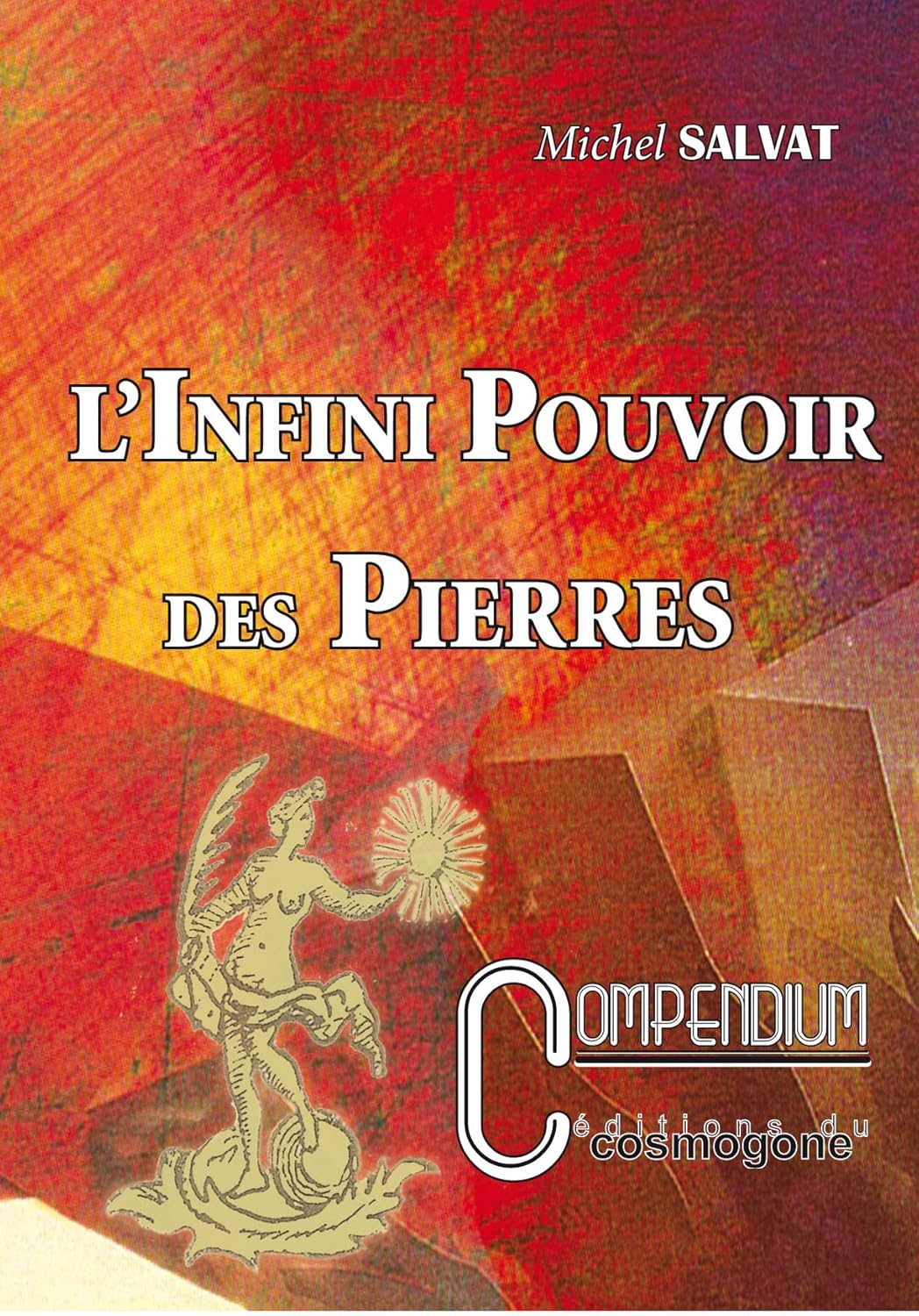
L'infini pouvoir des pierres: Du pectoral d'Aaron aux lapidaires médicaux
The Infinite Power of Stones: From Aaron’s Breastplate to Medical Lapidaries
Book
Salvat, M. and du Cosmogone, E. (2011) L'infini pouvoir des pierres: Du pectoral d'Aaron aux lapidaires médicaux. [The Infinite Power of Stones: From Aaron’s Breastplate to Medical Lapidaries] Lyon, Cosmogone, 69 pp.
Record No. 27974  |  ISBN/ISSN: 9782810000000  |  Sinkankas/Born No.: NIS/NIB  |  Language: in French  |  not seen
Men have always been fascinated by stones. The term Lapidaires dates back to the 12th century. A presentation of the “De Proprietatibus Rerum”.

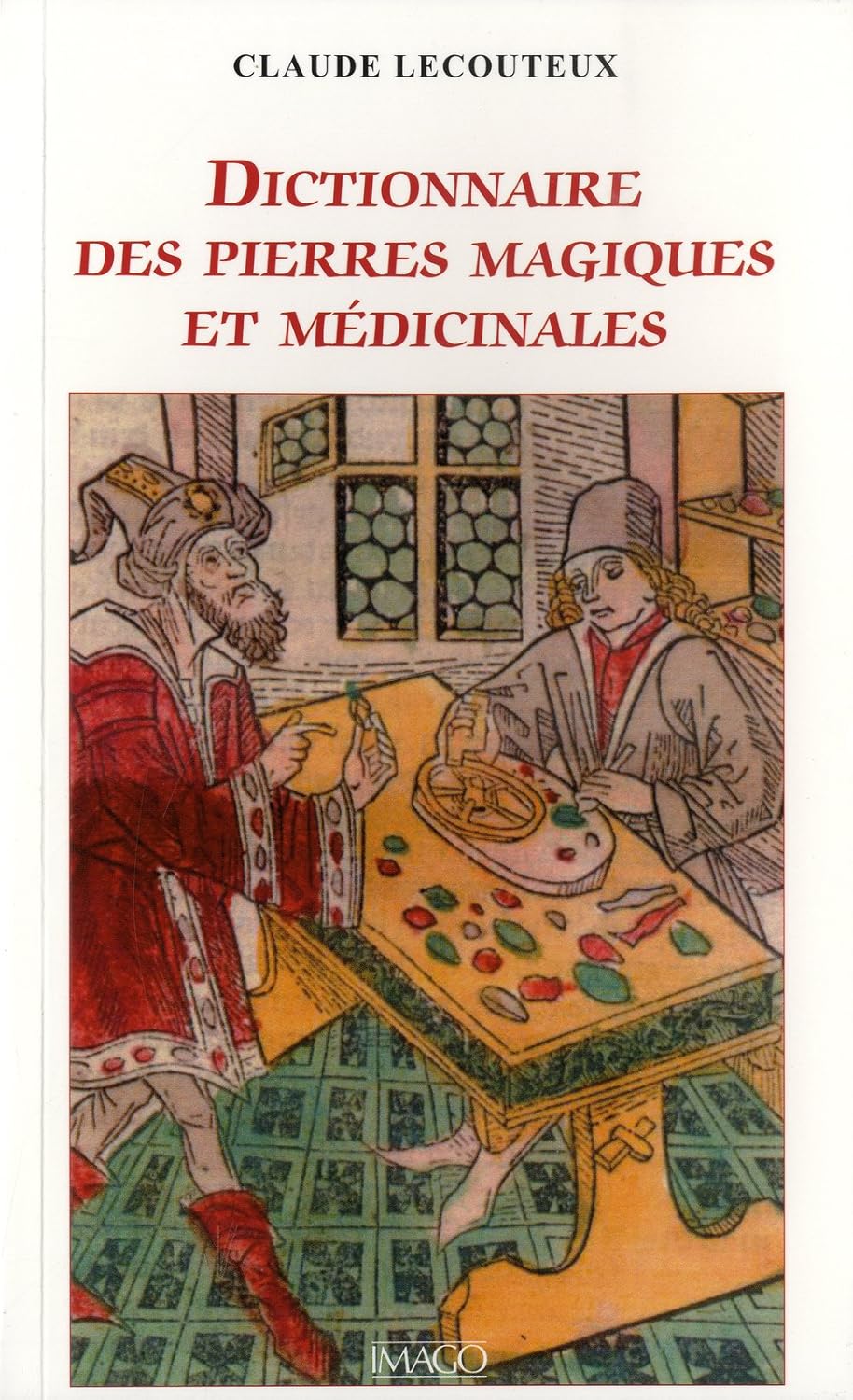
Dictionnaire des Pierres Magiques, Médicinales et Merveilleuses

Dictionary of Magical, Medicinal, and Marvelous Stones
Book
Lecouteux, C. (2011) Dictionnaire des Pierres Magiques, Médicinales et Merveilleuses. [Dictionary of Magical, Medicinal, and Marvelous Stones] Paris, Éditions Imago, 283 pp.
Record No. 27959  |  ISBN/ISSN: 9782850000000  |  Sinkankas/Born No.: NIS/NIB  |  Language: in French  |  not seen
Whether called emerald, jasper, agate, onyx, or anthracite… stones have a long history and, since Antiquity, have fired the imagination, nourishing beliefs, legends, and superstitions. Considered to be inhabited by sacred powers, they protect against accidents, envy, and witchcraft; they grant invisibility and the gift of tongues; they help fulfill wishes, predict the future, enhance memory, and cure illnesses… As for treatment, it may be done through application or rubbing, by grinding into powder to make a potion, or by wearing as a bracelet, ring, or pendant. Continuing his work on the supernatural, Claude Lecouteux, in this richly illustrated dictionary, has consulted many lapidaries—pagan, Christian, Gnostic…—and thus offers us a masterful synthesis at the crossroads of the history of mentalities, religions, and mysticism.
Gemmological and mineralogical studies of omphacite
Gemmological and mineralogical studies of omphacite

Journal Article
Liu, S., Peng, M.S. and Chan, W.C. (2011) Gemmological and mineralogical studies of omphacite. Proceedings of the Annual Conference of the Chinese Society for Mineralogy, Petrology and Geochemistry, Guangzhou, pp. 28–29.
Record No. 7828  |  Sinkankas/Born No.: NIS/NIB  |  Language: in Chinese  |  not seen

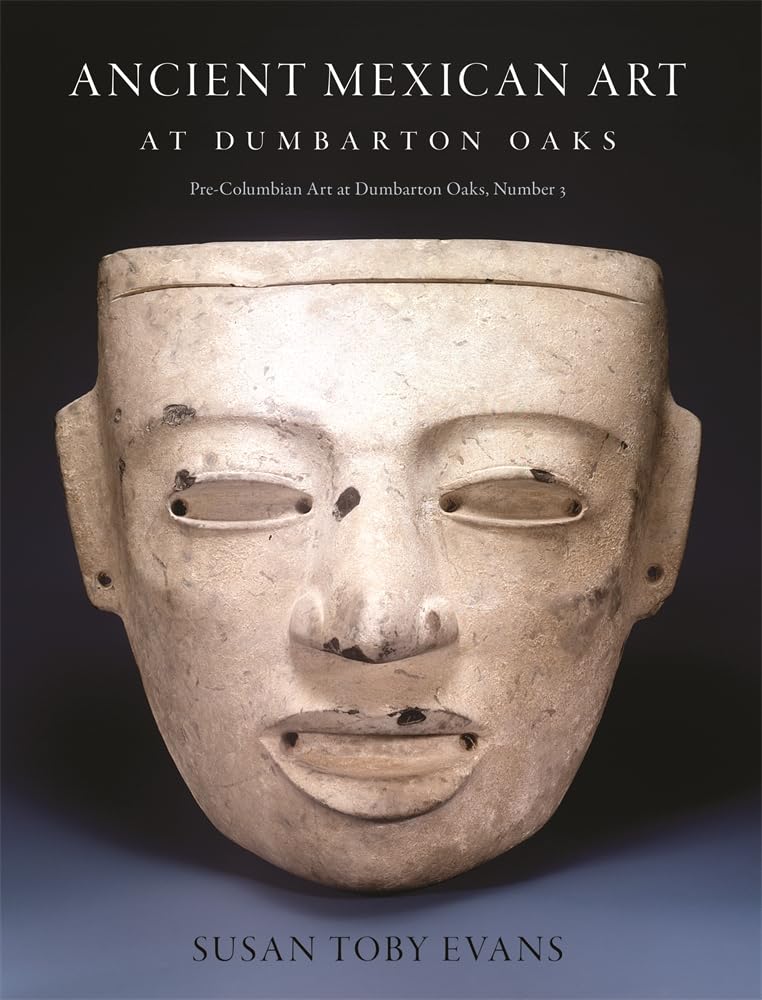
Human skulls with mosaic designs

Book Section
Urcid, J. (2010) Human skulls with mosaic designs. In: Ancient Mexican Art at Dumbarton Oaks, Pre-Columbian Art at Dumbarton Oaks, Washington, DC: Dumbarton Oaks Research Library and Collection, pp. 185–190.
Record No. 28671  |  Sinkankas/Born No.: NIS/NIB  |  not seen
This volume, the third in a series of catalogues of Pre-Columbian art at Dumbarton Oaks, presents the outstanding collection of Aztec, Mixtec, Zapotec, Teotihuacan, and Classic Veracruz sculpture, jewelry, and painting. Four leading scholars present essays on the ancient art and archaeology of Mexico’s Central Highlands, Southwestern Highlands, and Gulf Lowlands as well as extensive catalogue entries of over one hundred objects of jade, shell, fine ceramics, wood, and other materials. The catalogue is richly illustrated with color plates, comparative illustrations, and diagrams presented as black-and-white figures. This catalogue will be an important and enduring reference for scholars and students, as well as an attractive volume for admirers of Pre-Columbian art.

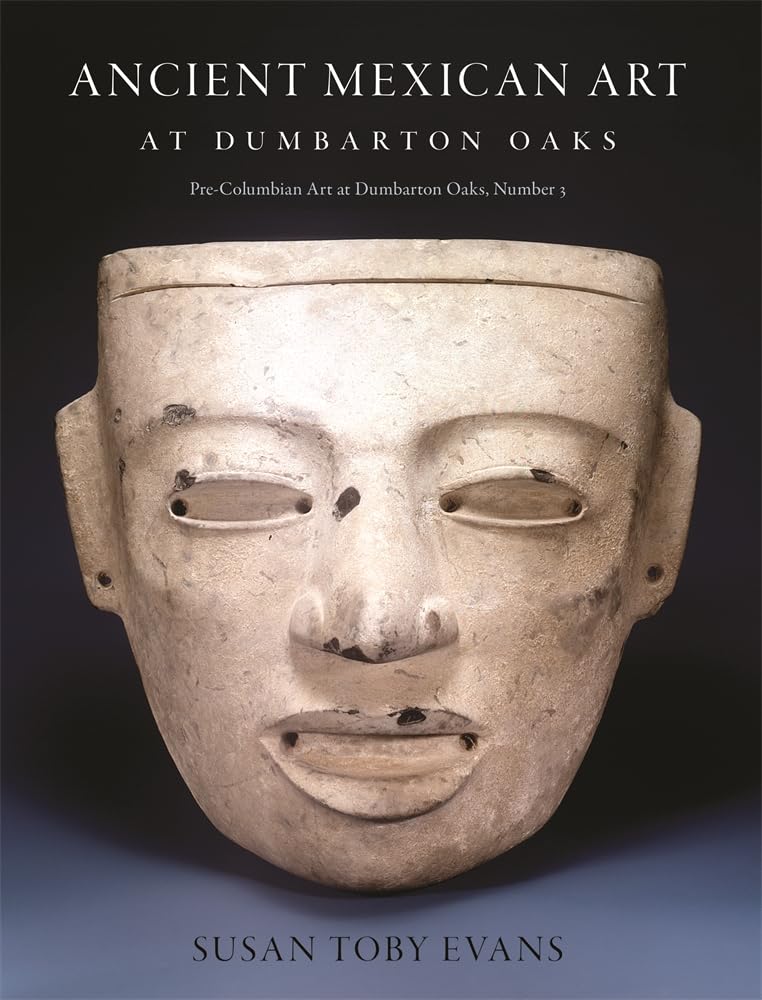
Ancient Mexican Art at Dumbarton Oaks
Edited Book
Evans, S.T., editor (2010) Ancient Mexican Art at Dumbarton Oaks.. Washington, DC, Dumbarton Oaks Research Library and Collection, 304 pp..
Record No. 28670  |  Sinkankas/Born No.: NIS/NIB  |  not seen
This volume, the third in a series of catalogues of Pre-Columbian art at Dumbarton Oaks, presents the outstanding collection of Aztec, Mixtec, Zapotec, Teotihuacan, and Classic Veracruz sculpture, jewelry, and painting. Four leading scholars present essays on the ancient art and archaeology of Mexico’s Central Highlands, Southwestern Highlands, and Gulf Lowlands as well as extensive catalogue entries of over one hundred objects of jade, shell, fine ceramics, wood, and other materials. The catalogue is richly illustrated with color plates, comparative illustrations, and diagrams presented as black-and-white figures. This catalogue will be an important and enduring reference for scholars and students, as well as an attractive volume for admirers of Pre-Columbian art.

Sagesses Minérales: Médecine et Magie des Pierres Précieuses au Moyen Âge
Mineral Wisdoms: Medicine and Magic of Precious Stones in the Middle Ages
Book
Gontero-Lauze, V. (2010) Sagesses Minérales: Médecine et Magie des Pierres Précieuses au Moyen Âge. [Mineral Wisdoms: Medicine and Magic of Precious Stones in the Middle Ages] Paris, Classiques Garnier, 316 pp.
Record No. 27902  |  ISBN/ISSN: 9782810000000  |  Sinkankas/Born No.: NIS/NIB  |  Language: in French  |  not seen
Treatises on precious stones, lapidaries catalogue and describe gems, then present their medicinal and magical virtues. The emerald heals vision; the sapphire enables escape from prison; the diamond, like the sapphire, is the stone of love; the carbuncle, which is born in the head of the dragon, shines with a dazzling brilliance, and so on. From the lapidary of Philippe de Thaon to that of Jean de Mandeville, these little-known texts open a window into the world of the marvelous, while shedding light on medieval encyclopedism. These treatises on precious stones present the inventory of the jewels and their medical and magical qualities. This volume gives the translation of five treatises dating from the 12th to the 14th century, thus giving access to these difficult texts so that their importance for the history of science and for social history of mentalities may be appreciated.

Between the Sahara and the Mediterranean coast: The archaeological research in the oasis of Fewet (Fazzan, Libyan Sahara) and the rediscovery of the Garamantes

Book Section
Mori, L. (2010) Between the Sahara and the Mediterranean coast: The archaeological research in the oasis of Fewet (Fazzan, Libyan Sahara) and the rediscovery of the Garamantes. In: Meetings Between Cultures in the Ancient Mediterranean | XVII Congresso Internazionale di Archeologia Classica. Roma, 22–26 Settembre 2008, pp. 17–29.
Record No. 27349  |  not seen

Building a Gemological Library

Gemological books range from general identification manuals and textbooks to specialized works on individual gems, mineralogy, jewelry, treatments, synthesis, history and gem-producing regions.

For a curated selection of particularly useful books, read The Gemologist's Core Library — Classic Books on Gemology, Jewelry and Mineralogy.

About Four Treasures

Four Treasures is Lotus Gemology's freely accessible gemological reference database. Use the full database to search by author, title or keyword and explore literature on gemology, mineralogy, jewelry and related fields. Where available, hyperlinks on titles may lead directly to the full publication.

Search the Complete Four Treasures Database