Gemology Books Bibliography

Gemology Books Bibliography

Explore books on gems, gemology, jewelry and mineralogy in Four Treasures, the Lotus Gemology reference database. This bibliography brings together matching book records from the collection, with publication details, abstracts and cover images where available.

Gemology Book References

The list below matches books concerning gemology and related subjects in the database's searchable fields. Some works cover several branches of gems, jewelry or mineralogy.
3,201–3,220 of 3,451 matching references

The History of Vardapet Aŗak´el of Tabriz
Book
Bournoutian, G.A. (2006) The History of Vardapet Aŗak´el of Tabriz. Costa Mesa, CA, Mazda, 2 Vols., Vol. 2 , 237 pp.
Record No. 17067  |  ISBN/ISSN: 1568591829  |  not seen
Vardapet Arak‘el of Tabriz (d. 1670). The History of Father Arak‘el is the most important Armenian primary source dealing with contemporary events that occurred in Iran, Armenia, Ottoman Empire, and Georgia from 1602 to 1662. It describes the Jelali Revolt; the Armenian Community in Poland and its struggle against and eventual loss to Roman Catholicism, the corruption and decline of the Holy See of Ejmiatsin in the first half of the seventeenth century and its revival in the second half of that century. The life and acts of the various Armenian Kat‘oghikoi (Supreme Patriarchs) are especially interesting, since the author was present at the Holy See and privy to its inner secrets. It also details account of numerous martyrdoms; a rare and informative chapter on the Jewish community of Isfahan and their forced conversion to Islam; and four chapters on the history of Georgia. The founding and history of the famous monastic schools and hermitages are described in great details. Most importantly, the book has the best description of the forcible settlement of the Armenians in Iran by Shah Abbas I and its aftermath. This, the first English translation, will be of great use to scholars of Iranian, Armenian, Ottoman, and Georgian history.

The Maya jade skull bead: 700 years as a military insignia?

Book Section
Dillon, B.D. and Christensen, W. (2005) The Maya jade skull bead: 700 years as a military insignia? In: Archaeology Without Limits: Papers in Honor of Clement W. Meighan, Lancaster, CA: Labyrinthos, pp. 369–385.
Record No. 28573  |  Sinkankas/Born No.: NIS/NIB  |  not seen
Las fuentes de jade azul: Nuevos descubrimientos del proyecto arqueológico del jade
Las fuentes de jade azul: Nuevos descubrimientos del proyecto arqueológico del jade

The sources of blue jade: New discoveries from the Jade Archaeological Project
Conference Paper
Hruby, Z., Romero, L.A. and Taube, K.A. (2005) Las fuentes de jade azul: Nuevos descubrimientos del proyecto arqueológico del jade. [The sources of blue jade: New discoveries from the Jade Archaeological Project] XVIII Simposio de Investigaciones Arqueológicas, 21 July, Guatemala City: Ministerio de Cultura y Deportes, Instituto de Antropología e Historia,
Record No. 28510  |  Sinkankas/Born No.: NIS/NIB  |  Language: in Spanish  |  not seen

Gemologische Kurzinformationen: Tansania-Mondstein:Albit (Peristerit) mit blauem Fläschenschimmer
Gemological brief notes: Tanzanian moonstone – albite (peristerite) with blue adularescence
Journal Article
Henn, U. (2005) Gemologische Kurzinformationen: Tansania-Mondstein:Albit (Peristerit) mit blauem Fläschenschimmer. [Gemological brief notes: Tanzanian moonstone – albite (peristerite) with blue adularescence] Gemmologie: Zeitschrift der Deutschen Gemmologischen Gesellschaft, Vol. 54, No. 2/3, pp. 114–117.
Record No. 26919  |  Sinkankas/Born No.: NIS/NIB  |  Language: in German  |  not seen

Le Portrait d'Alexandre le Grand

The Portrait of Alexander the Great
Book
Bopearachchi, O., de (2005) Le Portrait d'Alexandre le Grand. [The Portrait of Alexander the Great] Monaco, Éditions du Rocher, 279 pp.
Record No. 17197  |  ISBN/ISSN: 9782270000000  |  Sinkankas/Born No.: NIS/NIB  |  Language: in French  |  not seen
The Portrait of Alexander the Great recounts the story of a remarkable treasure hunt. From Europe to Japan, by way of the banks of the Indus, the authors set out in search of the treasure of Mir Zakah, unearthed by villagers in Afghanistan. In the summer of 1992, four tons of gold, silver, and bronze coins emerged from a spring—along with a profusion of jewelry, ornaments, votive plaques, and gemstones, struck or engraved, dating from the golden age of the Achaemenid Empire in the 5th century BCE to the decline of the Kushan Empire. Warlords, bandits, and traffickers seized this national treasure and sold it at auction to billionaire collectors. In 2004, a gold medal bearing the likeness of Alexander the Great appeared in London, in the hands of a man from Peshawar, Pakistan. Osmund Bopearachchi realized the historical importance of this exceptional piece—quite possibly the only portrait of the conqueror made during his lifetime. In 326 BCE, after conquering the Persian Empire, Alexander crossed the Indus and defeated King Porus’s elephant cavalry. This marked the beginning of Greek rule in Central Asia and India, which would last four centuries. On this victory medal, Alexander, wearing the scalp of an elephant as a headdress, appears as the equal of Zeus. He gave rare examples of it to his generals. Unknown to the wider public, this magnificent gift has resurfaced, allowing one of the most glorious chapters in world history to be written.

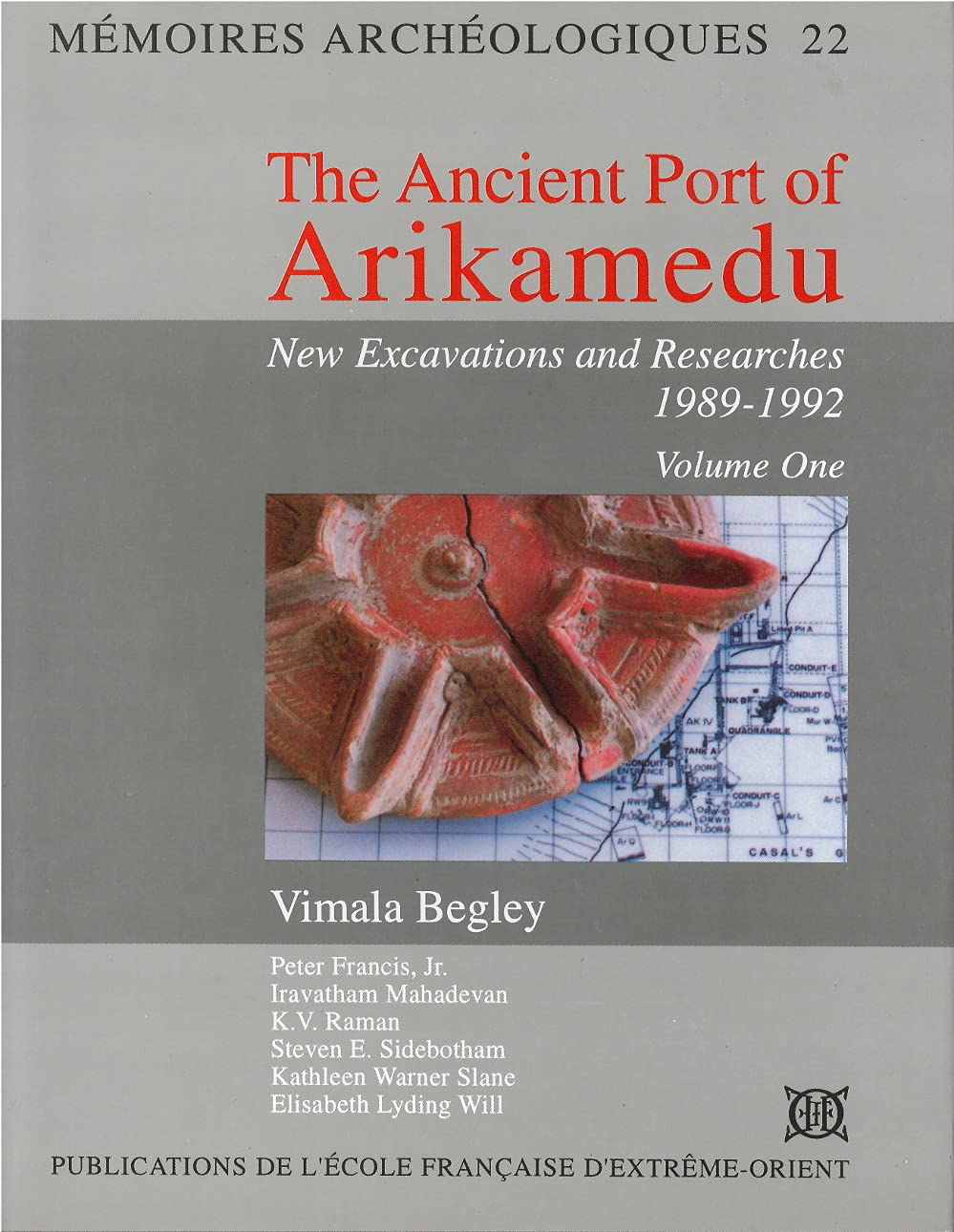
The Ancient Port of Arikamedu: New Excavations and Researches 1989–1992, Vol. 1
Book
Begley, V., Sidebotham, S.E., Lyding, W.E., Francis, P., Raman, K.V., Mahadevan, I. and Warner, S.K. (2005) The Ancient Port of Arikamedu: New Excavations and Researches 1989–1992, Vol. 1. Paris, EFEO, No. 22 , 402 pp.
Record No. 17180  |  Sinkankas/Born No.: NIS/NIB  |  not seen
Arikamedu, located on the Coromandel coast of India, is the most important site for the study of Indian sea trade with the Mediterranean region during Imperial Roman times. The site has been excavated previously in the 1940s and 1950s, but because of many unresolved problems, during three seasons from 1989 to 1992, new excavations were carried out as a collaborative project of the University of Pennsylvania Museum and Madras University. The project was conceived by Dr. Vimala Begley who has previously edited Rome and India: The Ancient Sea Trade (1991), conceived the project. The present volume is the second (the first was published in 1996) of two which comprise the final excavation report. Altogether seven eminent scholars, with expertise in both Indian and Greek and Roman archaeology, are the joint authors of this study, which is unique in its attempt to understand the layout, economical basis and historical significance of this most famous Indian seaport and its overseas commerce. The methods of excavation and recording of data used by the excavation team differ widely from those commonly used in India. Since the site has been extremely disturbed from ancient times to the present, the authors have provided a detailed examination and catalogue of the artifacts recovered from both their own and earlier excavations. Along with this second volume, the final excavation report will shed new light on a site that turned out to be far more complicated than any of the earlier excavators had realized. Extensively illustrated, with site plans, photographs of pottery and numerous drawings, the both volumes will be an indispensable reference work for scholars interested in the entire array of sites along the Coromandel coast which provide evidences of an extensive network of trade that existed before, during and after the period of Indo-Roman trade.

Beads and selected small finds from the 1989–92 excavations
Book Section
Francis, P. (2005) Beads and selected small finds from the 1989–92 excavations. In: The Ancient Port of Arikamedu: New Excavations and Researches 1989–1992, Vol. 2, Mémoires archéologiques, Paris: EFEO, No. 22 , pp. 447–604.
Record No. 17155  |  not seen
Arikamedu, located on the Coromandel coast of India, is the most important site for the study of Indian sea trade with the Mediterranean region during Imperial Roman times. The site has been excavated previously in the 1940s and 1950s, but because of many unresolved problems, during three seasons from 1989 to 1992, new excavations were carried out as a collaborative project of the University of Pennsylvania Museum and Madras University. The project was conceived by Dr. Vimala Begley who has previously edited Rome and India: The Ancient Sea Trade (1991), conceived the project. The present volume is the second (the first was published in 1996) of two which comprise the final excavation report. Altogether seven eminent scholars, with expertise in both Indian and Greek and Roman archaeology, are the joint authors of this study, which is unique in its attempt to understand the layout, economical basis and historical significance of this most famous Indian seaport and its overseas commerce. The methods of excavation and recording of data used by the excavation team differ widely from those commonly used in India. Since the site has been extremely disturbed from ancient times to the present, the authors have provided a detailed examination and catalogue of the artifacts recovered from both their own and earlier excavations. Along with this second volume, the final excavation report will shed new light on a site that turned out to be far more complicated than any of the earlier excavators had realized. Extensively illustrated, with site plans, photographs of pottery and numerous drawings, the both volumes will be an indispensable reference work for scholars interested in the entire array of sites along the Coromandel coast which provide evidences of an extensive network of trade that existed before, during and after the period of Indo-Roman trade.

The restoration of the jade funerary masks. A reencounter with the faces of the past

Maya Faces: Lineage and Power
Journal Article
Martinez del Campo Lanz, S. and Filloy Nadal, L. (2004) The restoration of the jade funerary masks. A reencounter with the faces of the past. [Maya Faces: Lineage and Power] Arqueologia Mexicana, Edicion Especial Rostros Mayas. Linaje y poder, Mexico"", No.16, June,
Record No. 28724  |  Sinkankas/Born No.: NIS/NIB  |  Language: in Spanish  |  not seen
Methoden zur materialkundlichen Untersuchung antiker Schmuckstücke
Methoden zur materialkundlichen Untersuchung antiker Schmuckstücke

Methods for the Materials Analysis of Ancient Jewelry
Thesis
Gartzke, E. (2004) Methoden zur materialkundlichen Untersuchung antiker Schmuckstücke. [Methods for the Materials Analysis of Ancient Jewelry]. Universität Würzburg
Record No. 27382  |  Sinkankas/Born No.: NIS/NIB  |  Language: in German  |  not seen

L'opale d'Ethiope: Gemmologie ordinaire et caractéristiques exceptionnelles
Ethiopian opal: Ordinary gemmology and exceptional characteristics
Journal Article
Gauthier, J.-P., Mazzero, F., Mandaba, Y. and Fritsch, E. (2004) L'opale d'Ethiope: Gemmologie ordinaire et caractéristiques exceptionnelles. [Ethiopian opal: Ordinary gemmology and exceptional characteristics] Revue de Gemmologie A.F.G., No. 149, pp. 15–23.
Record No. 27163  |  Sinkankas/Born No.: NIS/NIB  |  Language: in French  |  not seen

Indus Civilization

Book
Pruthi, R.K. (2004) Indus Civilization. New Delhi, Discovery Publishing, 252 pp.
Record No. 27125  |  ISBN/ISSN: 9788170000000  |  Sinkankas/Born No.: NIS/NIB  |  not seen

Prehistory and Harappan Civilization
Book
Pruthi, R. (2004) Prehistory and Harappan Civilization. New Delhi, A.P.H. Publishing, 301 pp.
Record No. 27121  |  ISBN/ISSN: 9788180000000  |  Sinkankas/Born No.: NIS/NIB  |  not seen
Relates to the history and culture of ancient India and aims to make available the best sources on the subject in proper historical perspective. Contains 13 chapters and also covers the Indus Valley Civilization in 16 chapters, with an appendix, map, and illustrations.

Gemologische Kurzinformationen: Hydrophanopal aus Indonesien

Gemological brief notes: Hydropane opal from Indonesia
Journal Article
Milisenda, C. (2004) Gemologische Kurzinformationen: Hydrophanopal aus Indonesien. [Gemological brief notes: Hydropane opal from Indonesia] Gemmologie: Zeitschrift der Deutschen Gemmologischen Gesellschaft, Vol. 54, No. 2/3, pp. 114–117.
Record No. 27032  |  Sinkankas/Born No.: NIS/NIB  |  Language: in German  |  not seen
Study to establish characteristic attributes of the marble-hosted type of Vietnam ruby and sapphire deposits – the basis for modelling of this type of deposits
Study to establish characteristic attributes of the marble-hosted type of Vietnam ruby and sapphire deposits – the basis for modelling of this type of deposits

Journal Article
Khoi, N.N. (2004) Study to establish characteristic attributes of the marble-hosted type of Vietnam ruby and sapphire deposits – the basis for modelling of this type of deposits. Journal of Earth Sciences, Vol. 26, pp. 333–342.
Record No. 3009  |  Language: in Vietnamese  |  not seen
Primary and secondary deposits in the Tan Huong-Truc Lau area of northern Vietnam's Yen Bai Province have supplied rubies (especially star rubies) and some sapphires-mostly of cabochon quality-for more than a decade. The gems are typically translucent to semitransparent and pink to purplish or brownish red, with rare color zoning. The most distinctive features of this corundum after polishing include growth zoning and asterism. The samples contain relatively high amounts of Fe and variable Ti and Cr. The geologic origin and gemological properties of this corundum are distinct from that of the adjacent Khoan Thong-An Phu area.

Les pierres talismaniques: Speculum lapidum, Livre III
Talismanic stones: Speculum lapidum, Book III
Book
Leonardi, C., Lecouteux, C. and Montfort, A. (2003) Les pierres talismaniques: Speculum lapidum, Livre III. [Talismanic stones: Speculum lapidum, Book III] Paris, Presses Paris Sorbonne, 276 pp.
Record No. 27955  |  ISBN/ISSN: 9782840000000  |  Sinkankas/Born No.: NIS/NIB  |  Language: in French  |  not seen
In the Middle Ages, precious stones were used in a wide variety of ways. While their therapeutic and symbolic properties are well known, much less is known about their talismanic and magical virtues. Leonardi’s compilation offers us an excellent overview of these. It primarily concerns seals and stones engraved with planetary, zodiacal, and decanic figures, or with magical characters. It allows us to glimpse a world of belief in which astrology plays a determining role, since gems were endowed with the power of stars and constellations through engraving—when the stone was not already engraved by nature. The traditions Leonardi transcribes are largely unfamiliar to medievalists, although they deserve to be brought out of the shadows, if only because they had a great impact from the Middle Ages to the dawn of modern times.

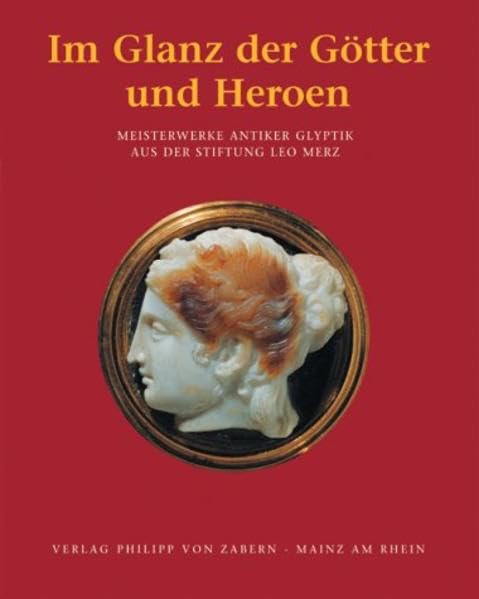
Im Glanz der Götter und Heroen: Meisterwerke antiker Glyptik aus der Stiftung Leo Merz
In the Splendor of Gods and Heroes: Masterpieces of Ancient Glyptic art from the Leo Merz Collection
Book
Willers, D. and Raselli-Nydegger, L. (2003) Im Glanz der Götter und Heroen: Meisterwerke antiker Glyptik aus der Stiftung Leo Merz. [In the Splendor of Gods and Heroes: Masterpieces of Ancient Glyptic art from the Leo Merz Collection] Mainz, Philip Von Zabern, 232 pp.
Record No. 27687  |  ISBN/ISSN: 9783810000000  |  Sinkankas/Born No.: NIS/NIB  |  Language: in German  |  not seen
Contents: Dietrich Willers, On the collection of ancient gliptics and ancient treasures: a foreword with a contribution by Eva Merz -- Lilian Raselli-Nydegger, In the splendor of the gods and heroes: Gems from the seal to the artwork with a contribution by Thomas Armbruster -- Sabine Häberli and Lore Kiefert, Nulla parte mirabilior. On the use of precious stones in antiquity -- Erika Zwierlein-Diehl, From the treasury of Claudius to the reliquary of Rene d'Anjou. To the Claudius-Kameo of the Merz Foundation -- Gertrud Platz-Horster, drawings and gems by Giovanni Calandrelli.

Les villes du nord-ouest du sous-continent indien des Indo-Grecs aux Kouchans
The cities of the north-western Indian subcontinent from the Indo-Greeks to the Kushans.
Book Section
Callieri, P. (2003) Les villes du nord-ouest du sous-continent indien des Indo-Grecs aux Kouchans. [The cities of the north-western Indian subcontinent from the Indo-Greeks to the Kushans.] In: De l'Indus à l'Oxus. Archéologie de l'Asie Centrale. Catalogue de l'exposition, Montpellier: Musée de Lattes, pp. 211–212.
Record No. 27664  |  ISBN/ISSN: 9782950000000  |  Sinkankas/Born No.: NIS/NIB  |  Language: in French  |  not seen
Presented here is the publication of a great many objects from the Indo-Iranian borderlands, dating primarily from the period between the Greeks and the Kushans, but more broadly covering the entire pre-Islamic history of the region. Especially well represented are coins and Buddhist representations from India or Afghanistan. The illustrations are of very high quality. Priority is given to the object entries over the accompanying texts, which are concise and written by leading specialists, ranging from “The Civilization of Central Asia in the Bronze and Iron Ages” (H.-P. Francfort) to “Christianity in Herat” (Ph. Gignoux), including “Indo-Greeks, Indo-Scythians, Indo-Parthians” (O. Bopearachchi) and “The Coinage of the ‘Iranian Huns.’” Contains ruby and two diamonds in ring from Ai Khanoum.

De l'Indus à l'Oxus. Archéologie de l'Asie Centrale. Catalogue de l'exposition
From the Indus to the Oxus: Archaeology of Central Asia. Exhibition catalogue
Book
Bopearachchi, O., de, Landes, C., Sachs, C., Cayzac, N. and Millet, F. (2003) De l'Indus à l'Oxus. Archéologie de l'Asie Centrale. Catalogue de l'exposition. [From the Indus to the Oxus: Archaeology of Central Asia. Exhibition catalogue] Montpellier, Musée de Lattes, 419 pp.
Record No. 27469  |  ISBN/ISSN: 9782950000000  |  Sinkankas/Born No.: NIS/NIB  |  Language: in French  |  not seen
Presented here is the publication of a great many objects from the Indo-Iranian borderlands, dating primarily from the period between the Greeks and the Kushans, but more broadly covering the entire pre-Islamic history of the region. Especially well represented are coins and Buddhist representations from India or Afghanistan. The illustrations are of very high quality. Priority is given to the object entries over the accompanying texts, which are concise and written by leading specialists, ranging from “The Civilization of Central Asia in the Bronze and Iron Ages” (H.-P. Francfort) to “Christianity in Herat” (Ph. Gignoux), including “Indo-Greeks, Indo-Scythians, Indo-Parthians” (O. Bopearachchi) and “The Coinage of the ‘Iranian Huns.’” Contains ruby and two diamonds in ring from Ai Khanoum.

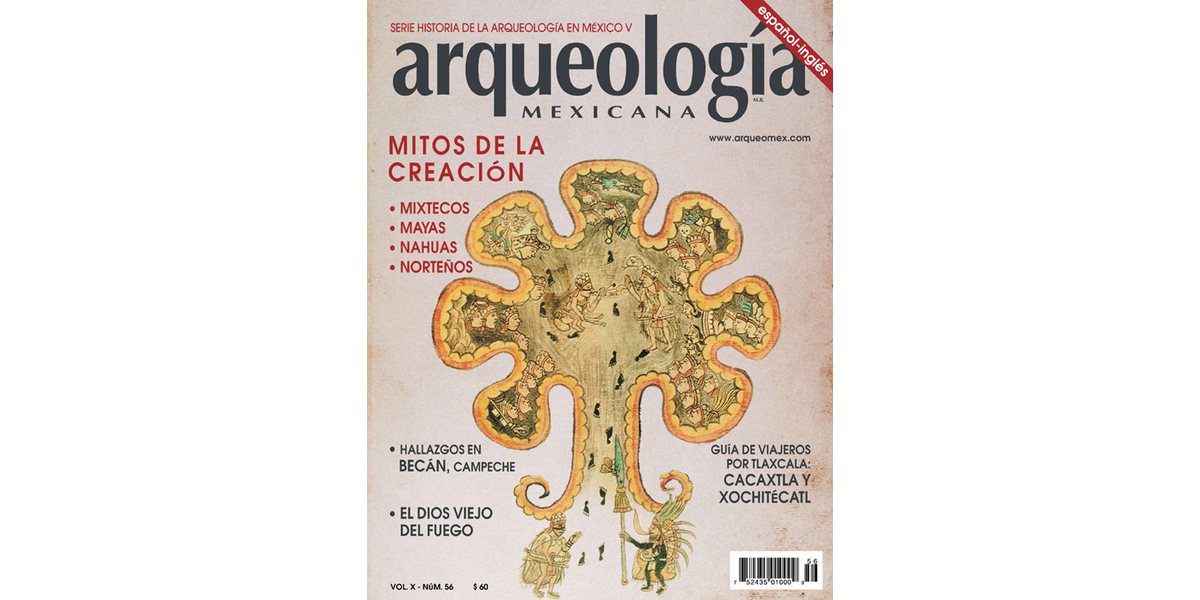
Amazonita en la máscara de Malinaltepec, Guerrero

Journal Article
Sánchez-Hernández, R. and Robles-Camacho, J. (2002) Amazonita en la máscara de Malinaltepec, Guerrero. Arqueología mexicana, Vol. 10, No. 56, p. 4.
Record No. 28622  |  Sinkankas/Born No.: NIS/NIB  |  not seen
A new jadeite re-creation product

A new jadeite re-creation product

Journal Article
Zhang, X. (2002) A new jadeite re-creation product. Journal of Gems & Gemmology, Vol. 5, No. 3,
Record No. 28117  |  not seen

Building a Gemological Library

Gemological books range from general identification manuals and textbooks to specialized works on individual gems, mineralogy, jewelry, treatments, synthesis, history and gem-producing regions.

For a curated selection of particularly useful books, read The Gemologist's Core Library — Classic Books on Gemology, Jewelry and Mineralogy.

About Four Treasures

Four Treasures is Lotus Gemology's freely accessible gemological reference database. Use the full database to search by author, title or keyword and explore literature on gemology, mineralogy, jewelry and related fields. Where available, hyperlinks on titles may lead directly to the full publication.

Search the Complete Four Treasures Database