Gemology Books Bibliography

Gemology Books Bibliography

Explore books on gems, gemology, jewelry and mineralogy in Four Treasures, the Lotus Gemology reference database. This bibliography brings together matching book records from the collection, with publication details, abstracts and cover images where available.

Gemology Book References

The list below matches books concerning gemology and related subjects in the database's searchable fields. Some works cover several branches of gems, jewelry or mineralogy.
3,241–3,260 of 3,452 matching references

Gem corundums and zircons from the Primorye placers
Journal Article
Ananyev, S.A., Ananyeva, T.A., Garanin, V.K. and Kudryavtseva, G.P. (1998) Gem corundums and zircons from the Primorye placers. Zapiski RMO (Proceedings of the Russian Mineralogical Society), Vol. 127, No. 4, pp. 120–124.
Record No. 7758  |  not seen
Descriptions are given of gem-quality sapphire and “hyacinth” zircon—and the associated chrome spinel, magnetite, and enstatite—found at Primorye in heavy-mineral concentrates that were ultimately derived from alkali basalts. Transparent blue, blue-green, green, and occasional multicolored sapphires are found as rounded pebbles (2 to 30 mm in size); some star sapphires are recovered. Chemical analyses and visible absorption spectra show that the sapphire coloration is related to the presence of Fe (0.72–1.75 wt.% FeO) and Ti (0.02–0.20 wt.% TiO₂). Inclusions of hercynite and ferrocolumbite were identified in some of these corundums. The zircon also is found as rounded pebbles (1 to 25 mm in size). They are transparent orange, orange-yellow, or brown-red, and become colorless on heating. Their chemical compositions correspond to those of the rare zircon variety naegite, with 4.59–6.14 wt.% Ta₂O₅, 3.22–3.59 wt.% Nb₂O₅, and 3.98–4.09 wt.% ThO₂. [Editor’s note: The terms hyacinth and naegite are not used in most modern gemology and mineralogy references in English.]

Tairus hydrothermal synthetic ruby

Journal Article
Qi, L. and Lin, S. (1998) Tairus hydrothermal synthetic ruby. China Gems, Vol. 7, No. 1, pp. 122–124.
Record No. 7757  |  not seen
Gemological investigations of Tairus hydrothermal synthetic ruby revealed characteristic microscopic features, including solid alloy inclusions consisting mainly of copper–iron alloys and wavy growth lines. Chemical analysis by microprobe showed that the chromium concentration in the area of the growth lines averaged 3.81 wt.% Cr₂O₃, as compared to 1.53 wt.% Cr₂O₃ in the remainder of the stone. Characteristic infrared absorption peaks are 3308, 3233, and 3186 cm⁻¹.

Gemstone bonanza at Yogo Gulch

Journal Article
Voynick, S.M. (1998) Gemstone bonanza at Yogo Gulch. Wild West, Vol. 11, No. 1, pp. 36–41, 81.
Record No. 2947  |  not seen
This article describes the historical events and fascinating people involved in sapphire mining at Yogo Gulch, Montana. It travels in time from Jake Hoover’s discovery of the translucent blue stones at Yogo Creek in 1895, through the mine’s numerous British and American owners, to the current owner, Roncor Inc. Dr. George F. Kunz, of Tiffany & Co., originally confirmed the identity of the blue pebbles from Jake Hoover’s sluice box as “sapphires of unusual quality.” Jake Hoover stayed involved, eventually taking on partners, until 1897, when he sold his quarter share to his partners for $5,000 so he could join the Alaskan gold rush. Two months later, British interests purchased his share for $100,000.. Production at Yogo started in 1896 and continued almost without interruption until July 1923, when a flash flood destroyed the mine infrastructure. From 1898 through 1923, the Yogo dike yielded 16 million carats of rough sapphire, resulting in 675,000 carats of fine blue cut sapphire worth $25 million. Charles T. Gadsden, appointed mine supervisor in 1902, resided at Yogo from 1903 until his death in 1954, even though the mine (locally known as the English mine) had been inactive for more than 30 years.. In 1956, Yogo returned to American ownership. Since then there has been only minor, intermittent production, by a variety of American owners and lessees, none of which has had significant success. While mining has never progressed deeper than 250 feet (about 77 m), it is believed that the dike exceeds a mile (1.6 km) in depth and contains reserves estimated at 40 million carats of gem-quality rough sapphire. [Editor’s note: For further details, see K. A. Mychaluk, “The Yogo sapphire deposit,” Spring 1995 Gems & Gemology, pp. 28–41.]. Kim Thorup

500 Jahre Edelsteinregion Idar-Oberstein (1497–1997)
500 years of the Idar-Oberstein gemstone region (1497–1997)
Journal Article
Bank, H. (1997) 500 Jahre Edelsteinregion Idar-Oberstein (1497–1997). [500 years of the Idar-Oberstein gemstone region (1497–1997)] Zeitschrift der Deutschen Gemmologischen Gesellschaft, Vol. 46, No. 3, pp. 129–152.
Record No. 29658  |  Sinkankas/Born No.: NIS/NIB  |  Language: in German  |  not seen
Surveys five centuries of gemstone activity in Idar-Oberstein, tracing the development of the region from its documented late-fifteenth-century beginnings into one of the world’s best-known centers for gemstone cutting, trading and gemological research. Bank reviews the historical exploitation of local agate and other quartz materials, the growth of water-powered cutting mills along the Nahe and Idar, and the transformation of the industry after imported rough—particularly agate from Brazil—supplemented declining local supplies. The article follows the expansion of Idar-Oberstein’s lapidary and jewelry trades, its increasingly international gemstone connections, and the establishment of institutions devoted to gemology, education, research, museums and commerce. Published for the 500th anniversary of the gemstone region, it presents Idar-Oberstein’s history as a continuous interaction between local mineral resources, specialized cutting skills, international trade and organized gemological expertise. The article is illustrated with 10 photographs, two maps and a table.

Green stones from Pakistan. XRD identification of ethnographic and archaeological samples of steatite" and other rocks"
Book Section
Vidale, M. and Bianchetti, P. (1997) Green stones from Pakistan. XRD identification of ethnographic and archaeological samples of steatite" and other rocks". In: South Asian Archaeology 1995: Proceedings of the 13th Conference of the European Association of South Asian Archaeologists, Cambridge, 5-9 July, 1995, New Delhi: Oxford & IBH Publishing, pp. 947–953.
Record No. 26947  |  ISBN/ISSN: 9788120000000  |  Sinkankas/Born No.: NIS/NIB  |  not seen
A study examined green stones from Pakistan using X-ray diffraction (XRD) to identify ethnographic and archaeological samples of steatite" (soapstone) and other rocks, according to a study published in South Asian Archaeology 1995. This research included elemental analysis, including steatite samples from Pakistan and Afghanistan, and seal samples from Harappa using X-ray fluorescence (XRF) and XRD techniques. The study also investigated the origin of raw materials used in the Indus Valley Civilization, particularly for seals."

Attributs et Symboles dans l’Art Profane: Dictionnaire d'un Langage Perdu (1450–1600)
Attributes and Symbols in Secular Art: Dictionary of a Lost Language (1450–1600)
Book
Tervarent, G., de (1997) Attributs et Symboles dans l’Art Profane: Dictionnaire d'un Langage Perdu (1450–1600). [Attributes and Symbols in Secular Art: Dictionary of a Lost Language (1450–1600)] Geneva, DROZ, 536 pp.
Record No. 17090  |  ISBN/ISSN: 9782600000000  |  Language: in French  |  not seen
A classic tool for Renaissance studies, this dictionary explains the meaning and origins of the many attributes and symbols used by humanists, artists, and intellectuals of the 15th and 16th centuries. Now finally reissued in a completely revised edition that incorporates the 1964 supplement, this essential reference work helps modern readers recover a symbolic language that has largely been lost. It offers those interested in the art of the period a reliable way to rediscover its visual vocabulary, moving from the known to the unknown—since in any composition, no matter how obscure or complex, one element is often recognizable: a rose, a unicorn, or an anchor. For each symbol reflected in Renaissance art, the book also strives to trace its sources of inspiration. An index of “immaterial entities” and another of names make the dictionary especially easy to consult.

A gemmological description of spinels from Vietnam

Journal Article
Scarratt, K.V.G., Kammerling, R.C. and Koivula, J.I. (1997) A gemmological description of spinels from Vietnam. Journal of the Gemmological Association of Hong Kong, Vol. 17, pp. 31–37.
Record No. 7794  |  not seen
Geological Report, Independent geological, gemmological and mining experts' report for Asia Sapphire Limited covering exploration concession ages and mining areas in northwest Laos

Geological Report, Independent geological, gemmological and mining experts' report for Asia Sapphire Limited covering exploration concession ages and mining areas in northwest Laos

Report
Senior, B.R. and Coenraads, R.R. (1997) Geological Report, Independent geological, gemmological and mining experts' report for Asia Sapphire Limited covering exploration concession ages and mining areas in northwest Laos. Asia Sapphire Limited,
Record No. 5251  |  not seen
Independent Gemmological Report on the H. Sala Alluvial Deposit near Ban Houei Xai, Bokeo Province, Lao
Independent Gemmological Report on the H. Sala Alluvial Deposit near Ban Houei Xai, Bokeo Province, Lao

Report
Coenraads, R.R. (1997) Independent Gemmological Report on the H. Sala Alluvial Deposit near Ban Houei Xai, Bokeo Province, Lao. Asia Sapphires Limited, 18 pp.
Record No. 2861  |  not seen

Kashmir ruby: A preliminary report on the deposit at Nangimali, Azad Kashmir, Pakistan
Conference Paper
Kane, R.E. (1997) Kashmir ruby: A preliminary report on the deposit at Nangimali, Azad Kashmir, Pakistan. 26th International Gemmological Conference Abstract Volume, Sept. 27–Oct. 3, Idar-Oberstein, Germany pp. 28–30.
Record No. 2676  |  not seen

Short notes on some gemstone treatments
Journal Article
Hänni, H.A. (1997–1998) Short notes on some gemstone treatments. Journal of the Gemmological Association of Hong Kong, Vol. 20, pp. 44–52.
Record No. 2535  |  not seen

The identification of B + C jade

Journal Article
Wu, S.T. (1997) The identification of B + C jade. Journal of the Gemmological Association of Hong Kong, Vol. 20, pp. 27–29.
Record No. 2421  |  not seen

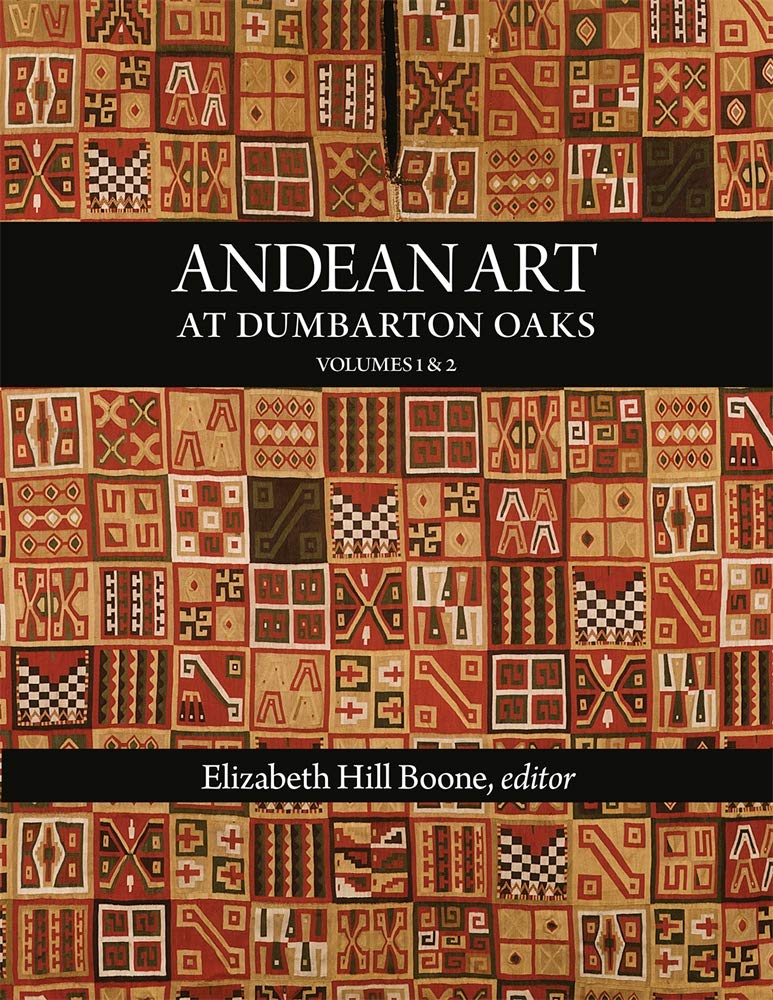
Andean Art at Dumbarton Oaks

Edited Book
Boone, E.H., editor (1996) Andean Art at Dumbarton Oaks.. Cambridge, MA, Harvard University Press, 2 Vols., 497 pp..
Record No. 28856  |  ISBN/ISSN: 9780880000000  |  not seen
Andean Art at Dumbarton Oaks presents the Andean portion of the Robert Woods Bliss Collection of Pre-Columbian Art. The volume superbly illustrates all 133 Andean objects in color plates and includes numerous complementary and comparative black-and-white illustrations and drawings. The body of Pre-Columbian art that Robert Woods Bliss carefully assembled over more than half a century, between 1912 and 1963, and which has been expanded slightly since his death, constitutes a remarkably significant collection. These works rank among the finest examples of the visual arts produced by Andean cultures. This Andean volume is the first in a planned series of four catalogues devoted to the entirety of the Bliss Pre-Columbian collection. The remaining volumes were intended to focus on objects from eastern Mesoamerica (Olmec and Maya), western Mesoamerica (Teotihuacan, Veracruz, Mixtec, and Aztec), and Lower Central America. Andean Art is composed of five thematic essays, shorter studies on the Andean cultures represented in the collection, and detailed discussions of the individual objects. These contributions were written by specialists in Pre-Columbian art and present the latest scholarly perspectives on Andean cultures and the works themselves. All thirteen authors bring broad expertise in Andean cultural history, archaeology, and art history to their essays, while focusing primarily on the objects in order to provide meaningful contexts and to demonstrate how these artworks, created and used with specific purposes, reveal distinctive qualities of Andean civilization. The volume gives readers a strong sense of how the creators and original owners of the objects in the Bliss collection used and valued these works on many levels. The authors also place individual pieces alongside comparable examples whenever possible. An especially notable feature of the book is the technical analysis of the metal objects contributed by metals specialist Heather Lechtman.

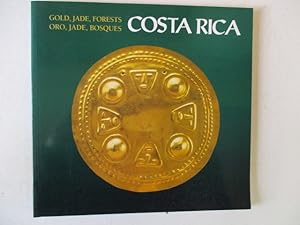
Gold, Jade, Forests: Costa Rica

Book
Calvo Mora, M., Bonilla Vargas, L. and Sanchez Perez, J. (1996) Gold, Jade, Forests: Costa Rica. Seattle, University of Washington Press, 108 pp.
Record No. 28586  |  ISBN/ISSN: 9780300000000  |  Sinkankas/Born No.: NIS/NIB  |  not seen
Gold, Jade, Forests: Costa Rica is a richly illustrated introduction to the archaeological and cultural heritage of Costa Rica before European contact. Focusing on the country’s remarkable traditions of jade carving and goldworking, the book explores how these precious materials served as symbols of power, status, religious belief, and social identity among ancient Costa Rican peoples. Through photographs of artefacts, archaeological sites, and natural landscapes, it traces the development of indigenous societies from the jade-working cultures of the first millennium AD to the later florescence of gold metallurgy, while also highlighting the tropical forests that shaped and sustained these civilizations. Published in conjunction with a major museum exhibition, the volume presents the artistic achievements and cultural history of pre-Columbian Costa Rica for a general audience. 
Raman spectroscopic analysis in the identification of bleached and polymer impregnated jadeite

Raman spectroscopic analysis in the identification of bleached and polymer impregnated jadeite

Journal Article
Yu, S., Lee, J. and Wu, S. (1996) Raman spectroscopic analysis in the identification of bleached and polymer impregnated jadeite. Journal of the Gemmological Association of Hong Kong, Vol. 19, pp. 21–26.
Record No. 28118  |  not seen
Le bestiaire et le Lapidaire du Rosarius (B.N.f.fr. 12483)
Le bestiaire et le Lapidaire du Rosarius (B.N.f.fr. 12483)

The Bestiary and the Lapidary of the Rosarius (B.N. f. fr. 12483)
Book
Sandqvist, S. (1996) Le bestiaire et le Lapidaire du Rosarius (B.N.f.fr. 12483). [The Bestiary and the Lapidary of the Rosarius (B.N. f. fr. 12483)] Lund, Lund University Press, 240 pp.
Record No. 27973  |  ISBN/ISSN: 9789180000000  |  Sinkankas/Born No.: NIS/NIB  |  Language: in French  |  not seen

Finds of Sasanian gems in the Otrar oasis
Book Section
Smagulov, E.A. (1996) Finds of Sasanian gems in the Otrar oasis. In: Ancient Civilizations from Scythia to Siberia, Vol. 3 , pp. 253–259.
Record No. 27459  |  Sinkankas/Born No.: NIS/NIB  |  not seen
A woman’s burial in southern Kazakhstan included beads of carnelian, coral, glass, and amber, and bracelets of large amber beads, all described in some detail but not illustrated. Some perhaps came from Iran by trade or as booty.

The Roman East from the Chinese Perspective
Book Section
Graf, D.F. (1996) The Roman East from the Chinese Perspective. In: Palmyra and the Silk Road: International Colloquium, Palmyra, 7-11 April 1992, Damascus, Vol. 42 , pp. 199–216.
Record No. 27253  |  not seen

The Roman Empire in Chinese Sources

Book
Leslie, D.D. and Gardiner, K.H.J. (1996) The Roman Empire in Chinese Sources. Rome, Bardi Editore, 425 pp.
Record No. 27101  |  not seen

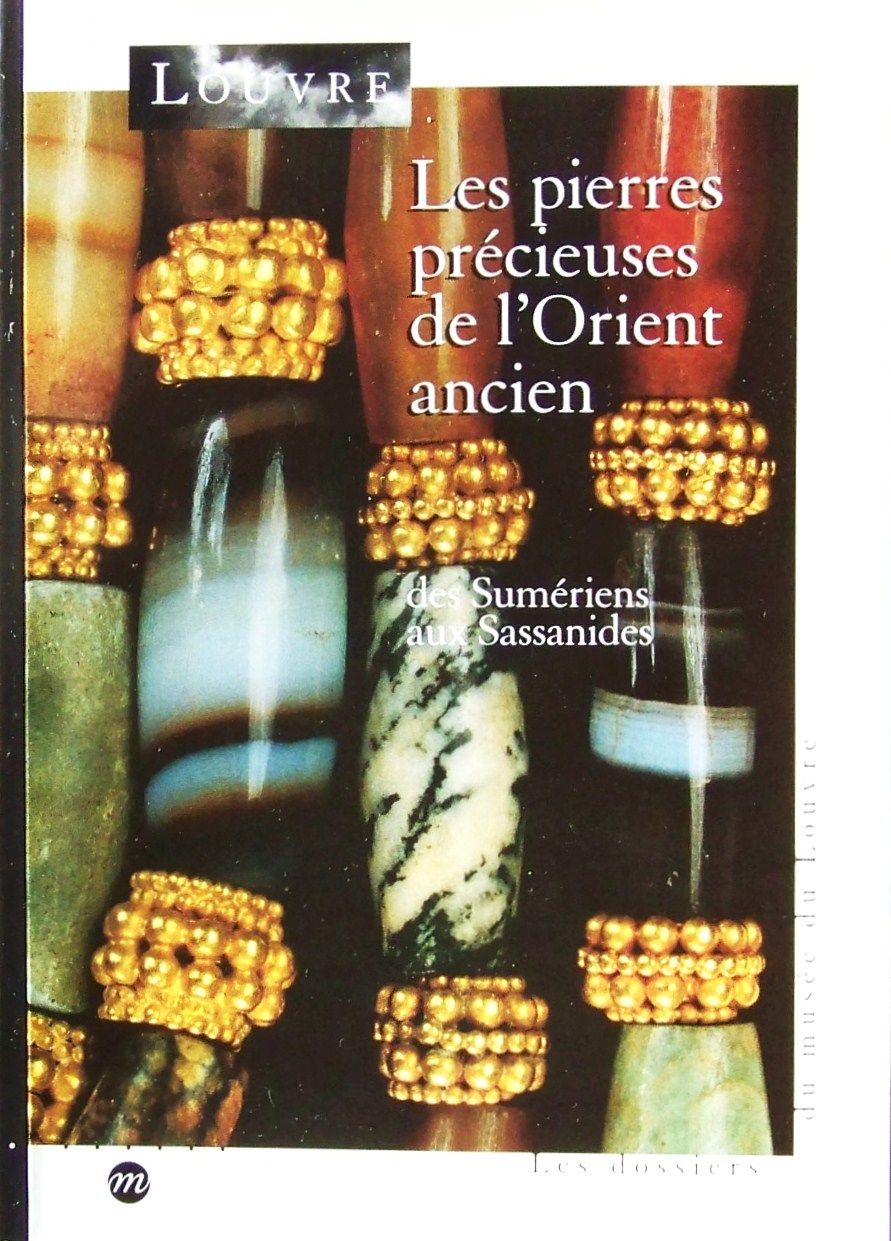
Le lapis-lazuli dans l'Orient antique / La fabrication des perles de lapis-lazuli

The manufacture of lapis lazuli beads
Book Section
Casanova, M. (1995) Le lapis-lazuli dans l'Orient antique / La fabrication des perles de lapis-lazuli. [The manufacture of lapis lazuli beads] In: Les pierres précieuses de l'Orient ancien, des Sumériens aux Sassanides, Les dossiers du musee du Louvre, Paris: Louvre Museum, pp. 15–20, 45–46.
Record No. 27754  |  Sinkankas/Born No.: NIS/NIB  |  Language: in French  |  not seen
The ancient Near East, from the fourth millennium B.C. to the seventh century A.D., developed a luxury craft industry based on precious stones. This dossier from the Louvre Museum presents beautiful pieces—ornaments of princes or offerings to the gods—and explains the techniques.

Building a Gemological Library

Gemological books range from general identification manuals and textbooks to specialized works on individual gems, mineralogy, jewelry, treatments, synthesis, history and gem-producing regions.

For a curated selection of particularly useful books, read The Gemologist's Core Library — Classic Books on Gemology, Jewelry and Mineralogy.

About Four Treasures

Four Treasures is Lotus Gemology's freely accessible gemological reference database. Use the full database to search by author, title or keyword and explore literature on gemology, mineralogy, jewelry and related fields. Where available, hyperlinks on titles may lead directly to the full publication.

Search the Complete Four Treasures Database