Gemology Books Bibliography

Gemology Books Bibliography

Explore books on gems, gemology, jewelry and mineralogy in Four Treasures, the Lotus Gemology reference database. This bibliography brings together matching book records from the collection, with publication details, abstracts and cover images where available.

Gemology Book References

The list below matches books concerning gemology and related subjects in the database's searchable fields. Some works cover several branches of gems, jewelry or mineralogy.
3,381–3,400 of 3,452 matching references

Damigéron, Evax et Marbode: l’héritage alexandrin dans les lapidaires médiévaux
Damigéron, Evax and Marbode: The Alexandrian heritage in the medieval lapidaries
Journal Article
Halleux, R. (1974) Damigéron, Evax et Marbode: l’héritage alexandrin dans les lapidaires médiévaux. [Damigéron, Evax and Marbode: The Alexandrian heritage in the medieval lapidaries] Studi Medievali, Vol. 15, pp. 327–347.
Record No. 924  |  Sinkankas/Born No.: 2686; NIB  |  Language: in French  |  not seen
Halleux examines the transmission of the Alexandrian lapidary tradition into medieval Europe through texts associated with Damigeron, Evax, and Marbode. The study traces relationships among these lapidaries and investigates the survival and transformation of ancient traditions concerning stones, particularly their supposed medicinal, magical, and astrological properties. It considers the textual sources and transmission of this material from late antiquity into medieval Latin literature, showing how inherited knowledge about stones was adapted and reorganized by successive authors. The article is particularly relevant to the history of gemology for its analysis of the origins and development of medieval European beliefs concerning the properties and virtues of gemstones.

El dios-hacha de jadeita en la América Central: su localización geográfica y su lugar en el tiempo

The jadeite axe god in Central America: Its geographical distribution and its place in time
Conference Paper
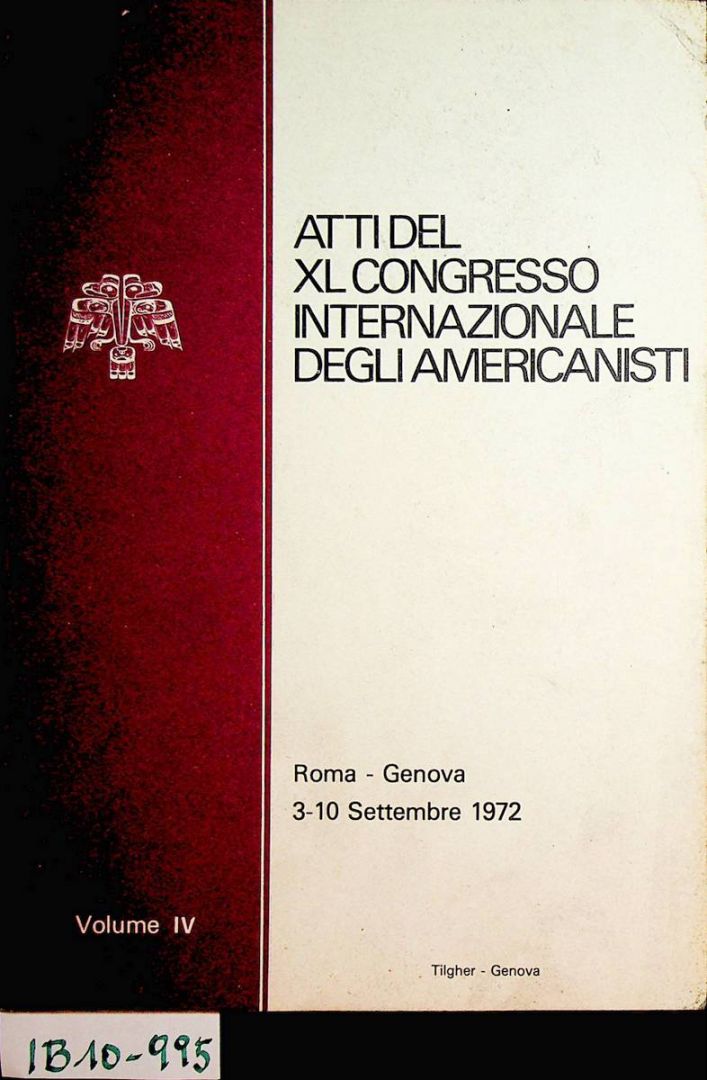
Stone, D.Z. (1973) El dios-hacha de jadeita en la América Central: su localización geográfica y su lugar en el tiempo. [The jadeite axe god in Central America: Its geographical distribution and its place in time] Atti del XL Congresso Internazionale Degli Americanisti, 3–10 September, Roma, Genova: Tilgher, pp. 213–218.
Record No. 28603  |  Sinkankas/Born No.: NIS/NIB  |  Language: in Spanish  |  not seen
Stone examines the “axe-god” (dios-hacha), a distinctive form of jadeite artifact from Central America, with particular attention to its geographical distribution and chronological position. The study considers the occurrence of these carved jadeite axes within the archaeological record and their distribution among Central American cultural areas in an effort to establish where and when the type was produced and used.
The cultural sequence of Shahr-i Sokhta
The cultural sequence of Shahr-i Sokhta

Journal Article
Tosi, M. (1973) The cultural sequence of Shahr-i Sokhta. Bulletin of the Asia Institute of Pahlavi University, Vol. 3, pp. 64–80.
Record No. 27757  |  not seen
Around the same time, flint drills were discovered in large numbers in Shahr-i Sokhta. A comparative study between the turquoise waste found in the archaeological site’s layers and turquoise beads discovered in burials indicates that turquoise came to the town in the form of finished products, in contrast to lapis lazuli, which was manufactured on-site (because of the larger quantity of extracted lapis waste) (Tosi 1973).

A gemological report on rhodolite garnet, Malagasy
Journal Article
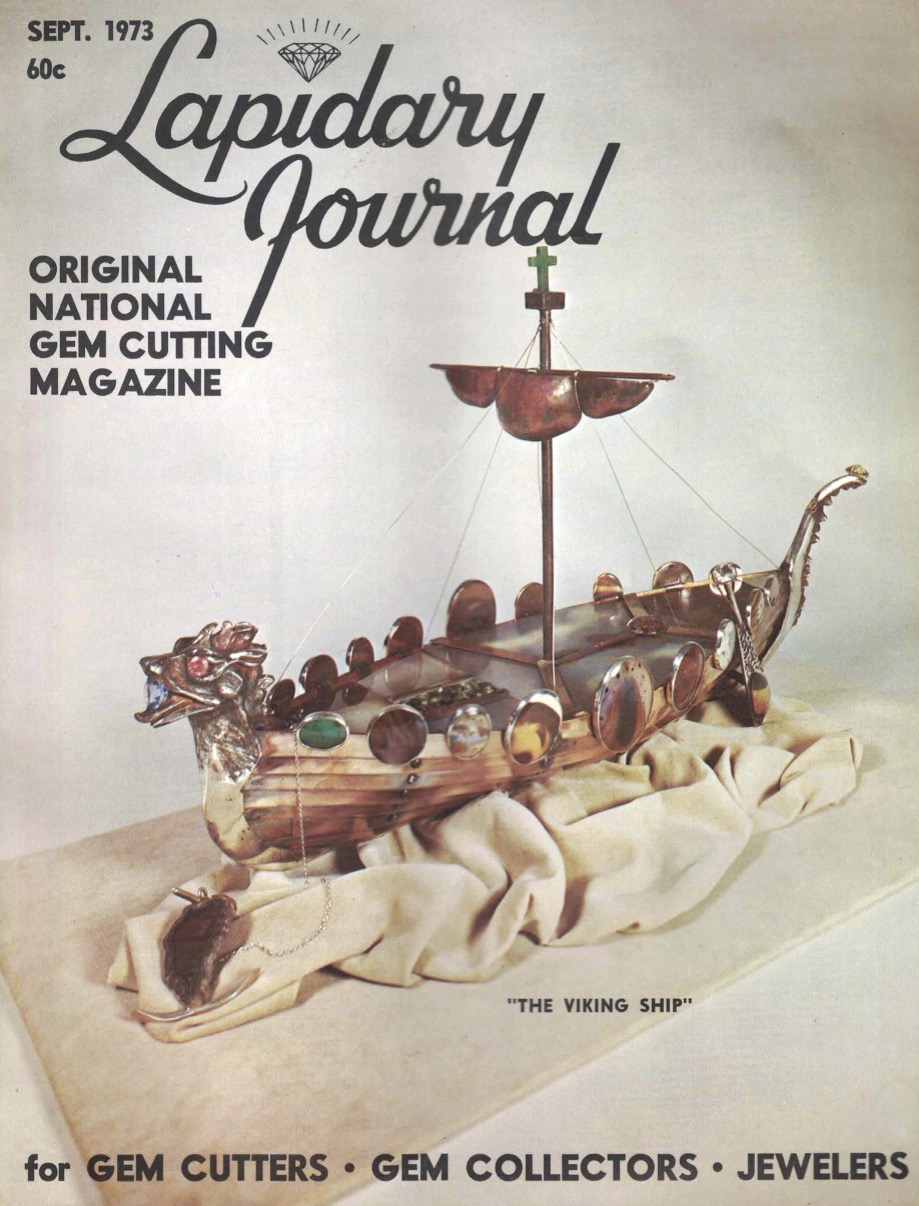
Campbell, I.C.C. (1973) A gemological report on rhodolite garnet, Malagasy. Lapidary Journal, September, pp. 958–960.
Record No. 26704  |  not seen

La esmeralda de Colombia: Descripción y Propiedades
The Emerald of Colombia: Description and Properties
Book
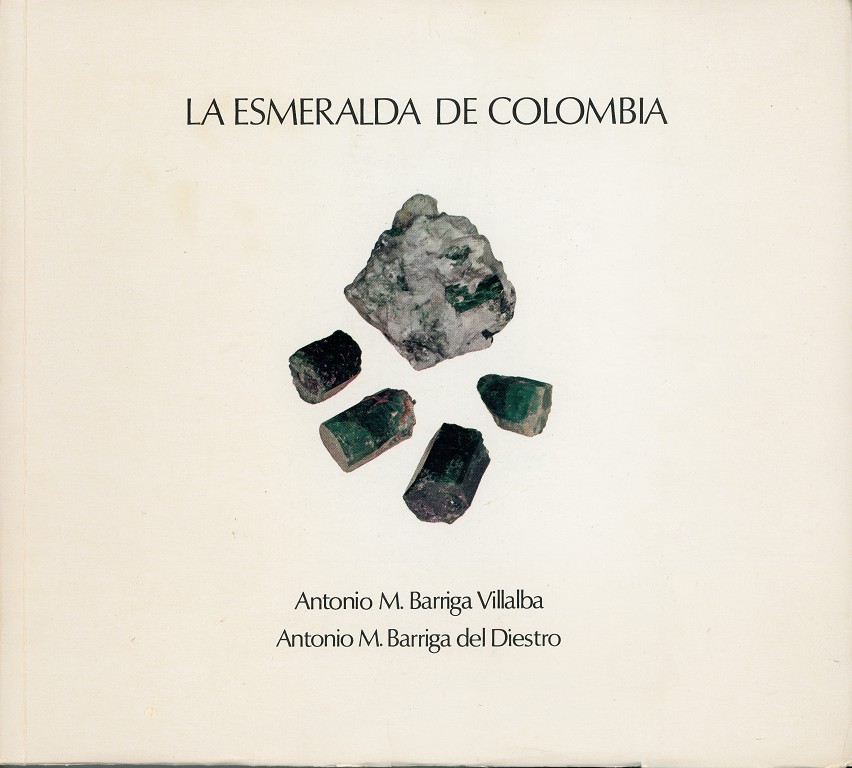
Barriga Villalba, A.M. and Barriga del Diestro, A.M. (1973) La esmeralda de Colombia: Descripción y Propiedades. [The Emerald of Colombia: Description and Properties] Bogotá, Colegio Mayor de Nuestra Señora del Rosario, Departamento de Publicaciones, 100 pp.
Record No. 5444  |  Sinkankas/Born No.: 414; NIB  |  Language: in Spanish  |  not seen
Barriga Villalba and Barriga del Diestro present a monographic study of Colombian emerald, describing its principal characteristics and properties. The work considers emerald as a mineral and gemstone, with attention to its physical and optical properties, characteristic color and inclusions, and the features associated with Colombian material. It also discusses the geological occurrence and principal emerald-producing areas of Colombia, particularly the deposits of the Eastern Cordillera, and addresses aspects of mining and the evaluation of emeralds. The volume provides a contemporary Colombian account of the country’s most important gemstone and its distinguishing gemological and geological characteristics.

Les corindons artificiels commercialement denommes; rubis synthétiques et saphirs synthétiques
The artificially produced corundums commercially known as synthetic rubies and synthetic sapphires
Journal Article
Poirot, J.-P. (1973) Les corindons artificiels commercialement denommes; rubis synthétiques et saphirs synthétiques. [The artificially produced corundums commercially known as synthetic rubies and synthetic sapphires] Revue de Gemmologie A.F.G., No. 37, December, pp. 13–14.
Record No. 1429  |  Language: in French  |  not seen
Poirot discusses artificially produced corundum marketed as synthetic ruby and synthetic sapphire, with attention to their commercial nomenclature and gemological identification. The brief article concerns the distinction between synthetic corundum and its natural counterparts and the terminology applied to these manufactured gemstones.

Le lapis-lazuli de Sar-e-Sang (Badakhshan, Afghanistan)
Lapis lazuli from Sar-e-Sang (Badakhshan, Afghanistan)
Journal Article
Wyart, J., Bariand, P. and Filippi, J. (1972) Le lapis-lazuli de Sar-e-Sang (Badakhshan, Afghanistan). [Lapis lazuli from Sar-e-Sang (Badakhshan, Afghanistan)] Revue de Géographie Physique et de Géologie Dynamique, Second Series, Vol. 14, No. 4, pp. 443–448.
Record No. 27763  |  Sinkankas/Born No.: NIS/NIB  |  Language: in French  |  not seen
Wyart, Bariand and Filippi describe the lapis lazuli deposit of Sar-e-Sang in Badakhshan, Afghanistan, one of the historically important sources of the material. The paper examines the geological setting and mineralogy of the deposit, where lapis lazuli occurs in metamorphosed carbonate rocks, and discusses the constituent minerals of the lapis-bearing material. Particular attention is given to lazurite, the mineral responsible for the characteristic blue color, and to its association with calcite, pyrite, and other minerals. The authors relate the mineral assemblage to the geological conditions of formation and provide a mineralogical and geological characterization of Sar-e-Sang lapis lazuli and its host rocks.

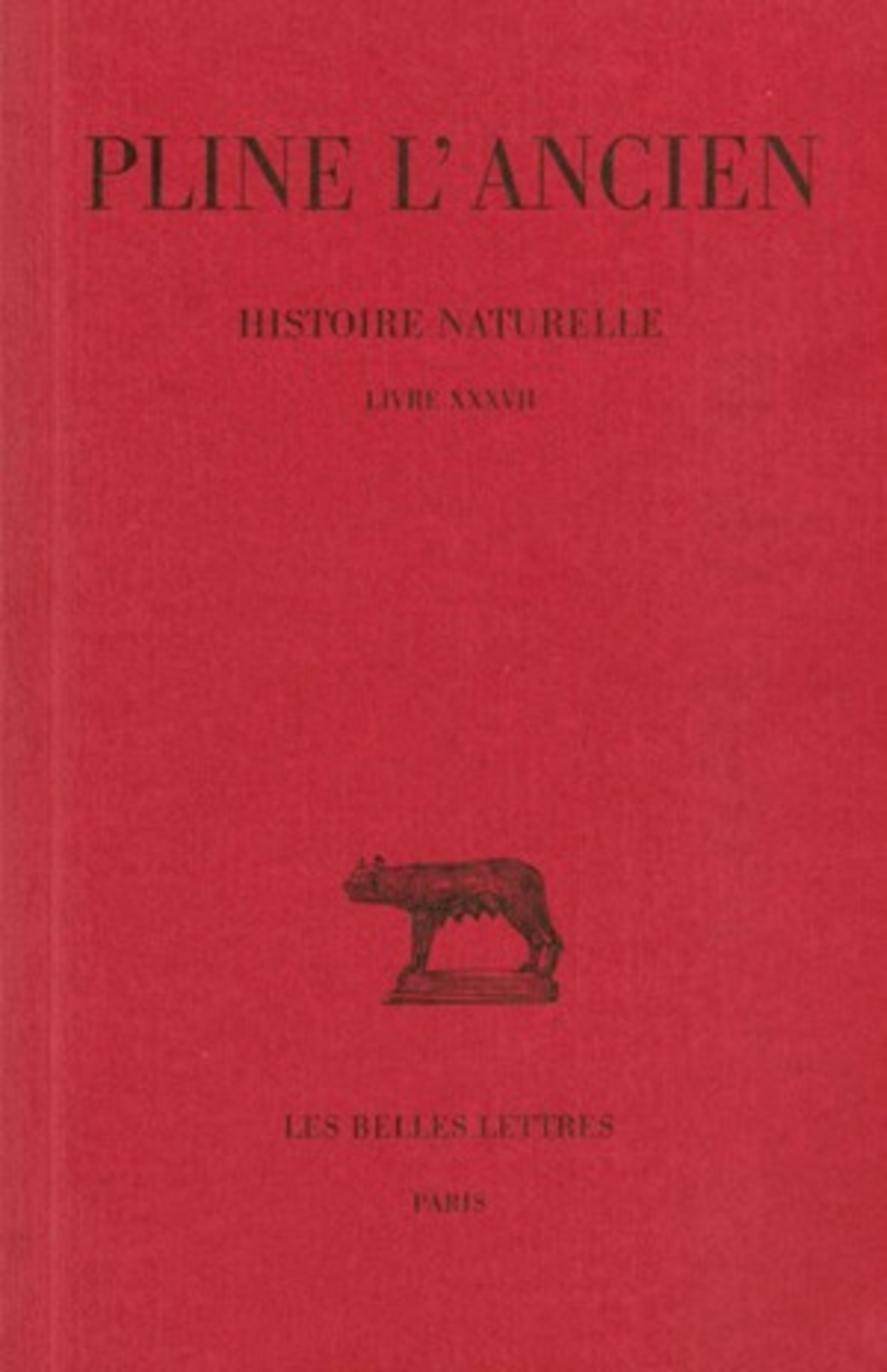
Pline l’Ancien | Histoire Naturelle. Livre XXXVII
Pliny the Elder | Natural History. Book 37
Book
Pliny the Elder and Saint-Denis, E., de (1972) Pline l’Ancien | Histoire Naturelle. Livre XXXVII. [Pliny the Elder | Natural History. Book 37] Paris, Les Belles Lettres, 292 pp.
Record No. 17111  |  ISBN/ISSN: 9782250000000  |  Sinkankas/Born No.: NIS/NIB  |  Language: in French and Latin  |  not seen
Of Pliny’s works, only one has come down to us—his Natural history. It is not, strictly speaking, what in our modern language we would understand by a similar title. The author begins by presenting ideas about the world, the earth, the sun, the planets, and the remarkable properties of the elements. From there, he moves on to the geographical description of the parts of the earth known to the ancients. After geography comes what we would call natural history—namely, the history of land animals, fish, insects, and birds. The botanical section that follows is quite substantial, all the more so because Pliny includes a great deal of information about the arts, such as the making of wine and oil, the cultivation of grains, and various industrial applications. Once the botanical part is finished, he returns to animals in order to list the remedies they provide; finally, he moves on to mineral substances, and there (in what is one of the most interesting parts of his book) he recounts both the history of the extraction processes for these substances and the history of painting and sculpture among the ancients. One can see that, in truth, Pliny’s work is a kind of encyclopedia.

Violette edelkorunde aus dem Umba-Geviet von Tanzania
Violet gem corundums from the Umba region of Tanzania
Journal Article
Bank, H., Berdesinski, W. and Ottemann, J. (1972) Violette edelkorunde aus dem Umba-Geviet von Tanzania. [Violet gem corundums from the Umba region of Tanzania] Zeitschrift der Deutschen Gemmologischen Gesellschaft, Vol. 21, pp. 126–127.
Record No. 4695  |  Sinkankas/Born No.: NIS/NIB  |  Language: In German  |  not seen
Bank, Berdesinski and Ottemann describe violet gem-quality corundum from the Umba region of Tanzania. The brief paper examines the mineralogical and gemological properties of the violet material and its relationship to other fancy-colored corundums from this important East African deposit. Particular attention is given to the coloration of the stones and the trace elements responsible for it, together with physical and optical properties useful in characterizing the material. The occurrence adds violet corundum to the wide range of ruby, sapphire, and fancy-colored corundum known from the Umba area.

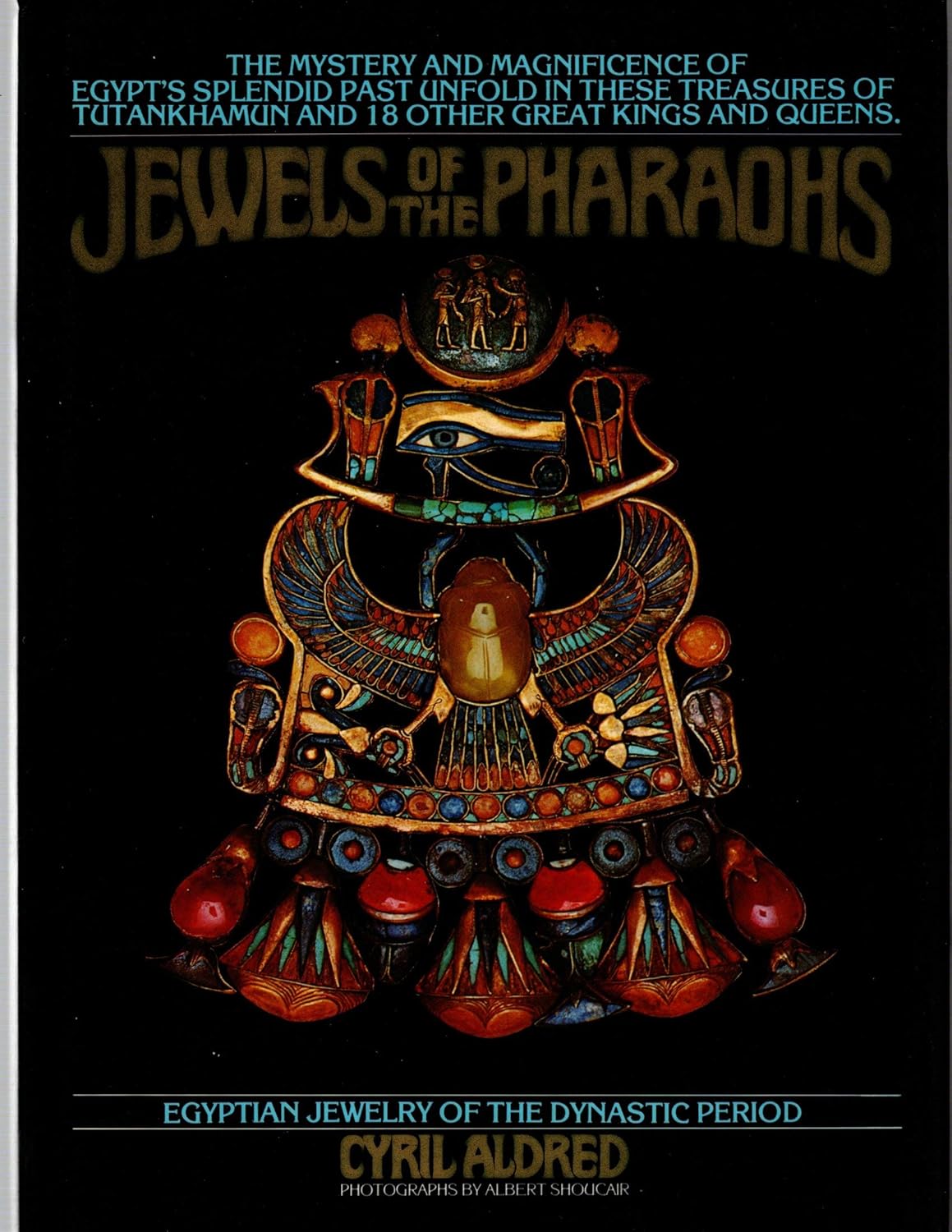
Jewels of the Pharoahs | Egyptian Jewelry of the Dynastic Period
Book
Aldred, C. (1971) Jewels of the Pharoahs | Egyptian Jewelry of the Dynastic Period. New York, Praeger Publishers, 256 pp., many plates in color
Record No. 26509  |  Sinkankas/Born No.: 69; NIB  |  not seen
Only a small amount of Egyptian jewelry has survived the ravages of time and the grave robbers, but the remnant is staggeringly beautiful. This book presents for the first time in a single volume nearly 200 priceless objects from collections all over the world. The best known example is the virtually intact tomb of the Pharaoh Tutankhamun, discovered in 1922, but there are many other colections and individual pieces extant: diadems, armlets, pendants, rings, bracelets, earrings, buckles, breastplates, necklaces, amulets – wrought in Nubian gold, lapis lazuli, brilliant colored faience and blood red carnelian. These opulent jeweled pieces, many modelled after organic forms such as vultures, cobras, falcons, lotus flowers, scarab beetles and winged half-human goddesses, are among the most splendid objects of Egyptian antiquity. Cyril Aldred’s lively text covers the enchanting story of each piece, including misdeeds and discoveries both ancient and modern. He explains the fascinating uses and significance of Egyptian jewels, the materials, and the techniques used to transform these materials into the exquisitely decorative trappings of wealth for kings and queens. Mr. Aldred’s text, which covers the finest pieces from every major find, is illustrated throughout with line drawings in addition to photographs, many in brilliant color, taken under special conditions in the Cairo Museum by Albert Shoucair. As one prominent Egyptologist noted, Jewels of the Pharaohs is unequalled in its comprehensiveness and destined to be a standard for generations. • Sinkankas: An interesting, authoritative, and well-balanced work, it begins with notes on the recovery of jewels from ancient hoards and burials, exploring the uses of jewelry, the materials employed, the craftsmen and their tools, and techniques used in working both metals and non-metals, as well as the various forms jewelry took. This is followed by a chronological table and extensive, detailed notes on the illustrations, which occupy nearly half the volume. Gemologists will find much of value here, as gemstones play a prominent role in the jewelry of the Egyptians.

Egyptian Blue as a pigment and ceramic material

Book Section
Chase, W.T. (1971) Egyptian Blue as a pigment and ceramic material. In: Science and Archaeology, Cambridge, MA: MIT Press, pp. 80–90.
Record No. 26445  |  Sinkankas/Born No.: NIS/NIB  |  not seen
Egyptian blue is defined; identification, especially by X-ray powder diffraction, is described; history of use is summarized; laboratory fabrica tion of Egyptian blue is described; evidence of manufacturing techniques is discussed. If they shape one common theme, these collected papers clearly indicate the directions of current research in archaeological chemistry—a term that,, taken in a broad sense, includes techniques and methodologies of many areas of science other than chemistry. Dr. Brill, in fact, advocates use of the term “archaeometry” (coined by Dr. E. T. Hall of Oxford University) to describe more accurately the work of quite a few investigators in the field. Twenty-one chapters by distinguished contributors are organized in three main categories according to research objectives. Part One contains investigations of individual objects or small groups of objects, describing how they were made and their places in the early history of technology or science. Studies in Part Two consist of analyses of such diverse materials as metals, pottery, obsidian, and amber to uncover patterns of chemical composition for the classification of fragments according to provenance or date. A number of chapters in this section deal with neutron-activation analysis. The book's final part describes four techniques used for dating archaeological objects. The volume is generous in scope, ranging over a variety of approaches and motivations, research tools, and archaeological materials. Some of the more technically advanced studies cover up-to-date and complex instrumentation for analyzing samples more accurately, more rapidly, and with greater convenience than before, while others emphasize the detailed handling or “autopsy” of the objects themselves. The material in this book was originally prepared for the Fourth Symposium on Archaeological Chemistry, sponsored by the Division of the History of Chemistry of the American Chemical Society in 1968. Dr. Brill cites several problems that should form the basis for further research: the criteria for selecting what is necessary and significant from increasingly unwieldy bodies of data; the means by which findings in this field can be used in a more than descriptive manner to reveal something new about early man; and the continued necessity for close cooperation between the archaeometrist and archaeologist. The former, Dr. Brill points out, must take a major part in interpreting his findings and not merely leave his tabulations and statistical correlations to the historian and archaeologist.
The Mineralogical/Gemmological Account of the (9) Gemstones from Kyaukpyatthat and Kyatpyin area, Mogok District
The Mineralogical/Gemmological Account of the (9) Gemstones from Kyaukpyatthat and Kyatpyin area, Mogok District

Thesis
U Tin Hlaing (1971) The Mineralogical/Gemmological Account of the (9) Gemstones from Kyaukpyatthat and Kyatpyin area, Mogok District., Rangoon: Rangoon Arts & Science University
Record No. 6737  |  not seen

The Garamantes of Southern Libya

Book
Daniels, C. (1970) The Garamantes of Southern Libya. London, Oleander Press, 47 pp., 14 plates
Record No. 27355  |  Sinkankas/Born No.: NIS/NIB  |  not seen
Daniels’s essay on the Garamantes, though brief, contains a remarkable amount of valuable information, much of it drawn from fieldwork at Germa and its environs in which he has been directly involved. While much of the material has appeared previously, it remains difficult to access, and the significance of the work at Germa lies in its major contribution to the broader understanding of “Rome beyond the Imperial Frontiers”—a field which, the reviewer suggests, offers more fruitful opportunities for archaeologists than continued focus on well-explored Roman provincial areas. The Romans themselves seem to have shown little interest in their North African neighbors; it is telling that almost nothing was added to Herodotus’s account between the fifth and first centuries BCE, and that Roman curiosity about the desert fringes was minimal. Daniels provides a concise and sensible overview of the region’s human geography, carefully avoiding speculative theories based on strained interpretations of Pliny and Ptolemy. He also cautions against equating archaeological finds with tribal names—highlighting, for example, the absence of chariot or horse-trapping remains in presumed Garamantian territory despite Herodotus’s famous descriptions, even as chariot imagery appears widely across Saharan rock art from Tibesti to southern Morocco. Overall, Daniels adopts a conservative approach to defining the Garamantes’ territorial range, anchoring their core in the Wadi el-Ajal with Garama/Germa as their capital, and noting that their relation to other Libyan groups remains unknown, particularly given the lack of inscriptions in the Libyan alphabet.

Estudio sobre jadeítas y albititas de Guatemala
Study of jadeitites and albitites from Guatemala
Journal Article
Silva, Z.C.G.a. (1969) Estudio sobre jadeítas y albititas de Guatemala. [Study of jadeitites and albitites from Guatemala] Boletín Geologico, No. N5, 22 pp..
Record No. 28423  |  Sinkankas/Born No.: NIS/NIB  |  Language: in Spanish  |  not seen
Silva presents a mineralogical and geological study of jadeitites and albitites from Guatemala, examining their mineral composition, textures, and occurrence. The study describes jadeite-bearing rocks and associated albite-rich rocks and considers their relationships within the regional geological setting. Particular attention is given to the mineralogical characteristics of the jadeitites, their associated minerals, and variations in composition and appearance. The work represents an early geological investigation of Guatemalan jadeite and is significant for documenting natural jadeitite occurrences in Guatemala and distinguishing them from associated albititic rocks.

A Middle English Lapidary

Edited Book
Zettersten, A., editor (1968) A Middle English Lapidary.. Lund, Gleerups, 50 pp..
Record No. 27937  |  Sinkankas/Born No.: 7433; NIB  |  not seen
Sinkankas: A study of a lapidary identified as Bodleian Library MS Eng. misc. e. 558, with introductory remarks on Old and Middle English in general, the manuscript, its language, etc. Treats 37 stones, including gemstones, and is claimed to be “a rather close translation of the Second Anglo-Norman Prose Lapidary” of Studer & Evans, Anglo-Norman Lapidaries (1925), pp. 111–136, which see.

Die Natur der Mineraleinschlüsse in Edelsteinen
The nature of mineral inclusions in gemstones
Journal Article
Gübelin, E.J. (1968) Die Natur der Mineraleinschlüsse in Edelsteinen. [The nature of mineral inclusions in gemstones] Schweizer Goldschmied, mit fortsetzungen,
Record No. 2096  |  Sinkankas/Born No.: 2574; NIB  |  Language: in German  |  not seen
First comprehensive article on the determination of inclusions in gemstones by means of the electron microprobe. Techniques are described and results explained. Fine color illustrations. Essentially the same article appeared in Journal of Gemmology, 11(5), 1969, pp. 149–192, with 80 color photographs, 3 figures, and 49 references.

Gemmologische Beobachtungen am neuen Smaragd aus Pakistan
Gemmological observations on the new emerald from Pakistan
Journal Article
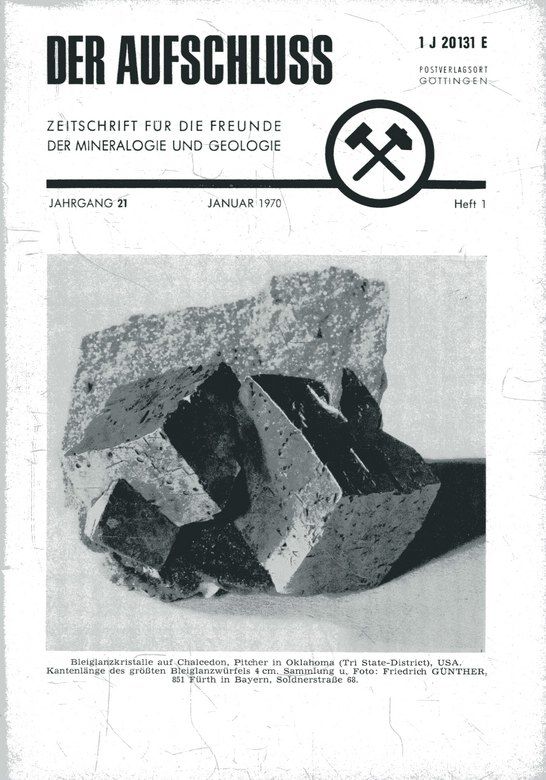
Gübelin, E.J. (1968) Gemmologische Beobachtungen am neuen Smaragd aus Pakistan. [Gemmological observations on the new emerald from Pakistan] VFMG—Der Aufschluss, Special Issue 18,
Record No. 2095  |  Language: in German  |  not seen

Black star corundum

Journal Article
Peterson, H. (1968) Black star corundum. Rocks & Minerals, Vol. 43, pp. 492–493.
Record No. 1420  |  not seen
Peterson discusses black star corundum, a dark variety of corundum that displays asterism when cut en cabochon. The article describes the appearance and gemological characteristics of the material and the inclusions responsible for the star effect, produced by oriented needle-like inclusions that reflect light along crystallographically controlled directions. It considers the relationship between the dark body color, inclusions, and visibility of the star, as well as the orientation required in cutting to display the phenomenon effectively. The brief account provides a practical description of black star corundum and the optical phenomenon responsible for its distinctive appearance.

Im Stein ist Heil. Medizin und Magie in mittelalterlichen Steinbüchern
Healing is in the stone: Medicine and magic in medieval lapidaries
Journal Article
Martin, E. (1967) Im Stein ist Heil. Medizin und Magie in mittelalterlichen Steinbüchern. [Healing is in the stone: Medicine and magic in medieval lapidaries] Die Grünenthal Waage, Vol. 6, pp. 136–140.
Record No. 27962  |  Sinkankas/Born No.: NIS/NIB  |  Language: in German  |  not seen

Mineralogisch-gemmologische Untersuchungen an Apatiten von Edelsteinqualität aus dem Casaccia-Tal, Tessin

Mineralogical-gemological studies on gemstone-quality apatites from the Casaccia Valley, Ticino
Journal Article
Gübelin, E.J. (1967) Mineralogisch-gemmologische Untersuchungen an Apatiten von Edelsteinqualität aus dem Casaccia-Tal, Tessin. [Mineralogical-gemological studies on gemstone-quality apatites from the Casaccia Valley, Ticino] Zeitschrift der Deutschen Gesellschaft für Edelsteinkunde, No. 61,
Record No. 2093  |  Language: In German  |  not seen

Building a Gemological Library

Gemological books range from general identification manuals and textbooks to specialized works on individual gems, mineralogy, jewelry, treatments, synthesis, history and gem-producing regions.

For a curated selection of particularly useful books, read The Gemologist's Core Library — Classic Books on Gemology, Jewelry and Mineralogy.

About Four Treasures

Four Treasures is Lotus Gemology's freely accessible gemological reference database. Use the full database to search by author, title or keyword and explore literature on gemology, mineralogy, jewelry and related fields. Where available, hyperlinks on titles may lead directly to the full publication.

Search the Complete Four Treasures Database