Gemstone Inclusions Bibliography

Gemstone Inclusions Bibliography

Explore books, articles and historical sources on inclusions in gemstones in Four Treasures, the Lotus Gemology reference database. This bibliography brings together matching records from the collection, with publication details, abstracts and cover images where available.

Gemstone Inclusion References

The list below matches the terms inclusion or inclusions in the database's searchable fields. Some references discuss inclusions as part of a broader subject.
181–200 of 1,121 matching references

Demantoid from Val Malenco, Italy: Review and update
Journal Article
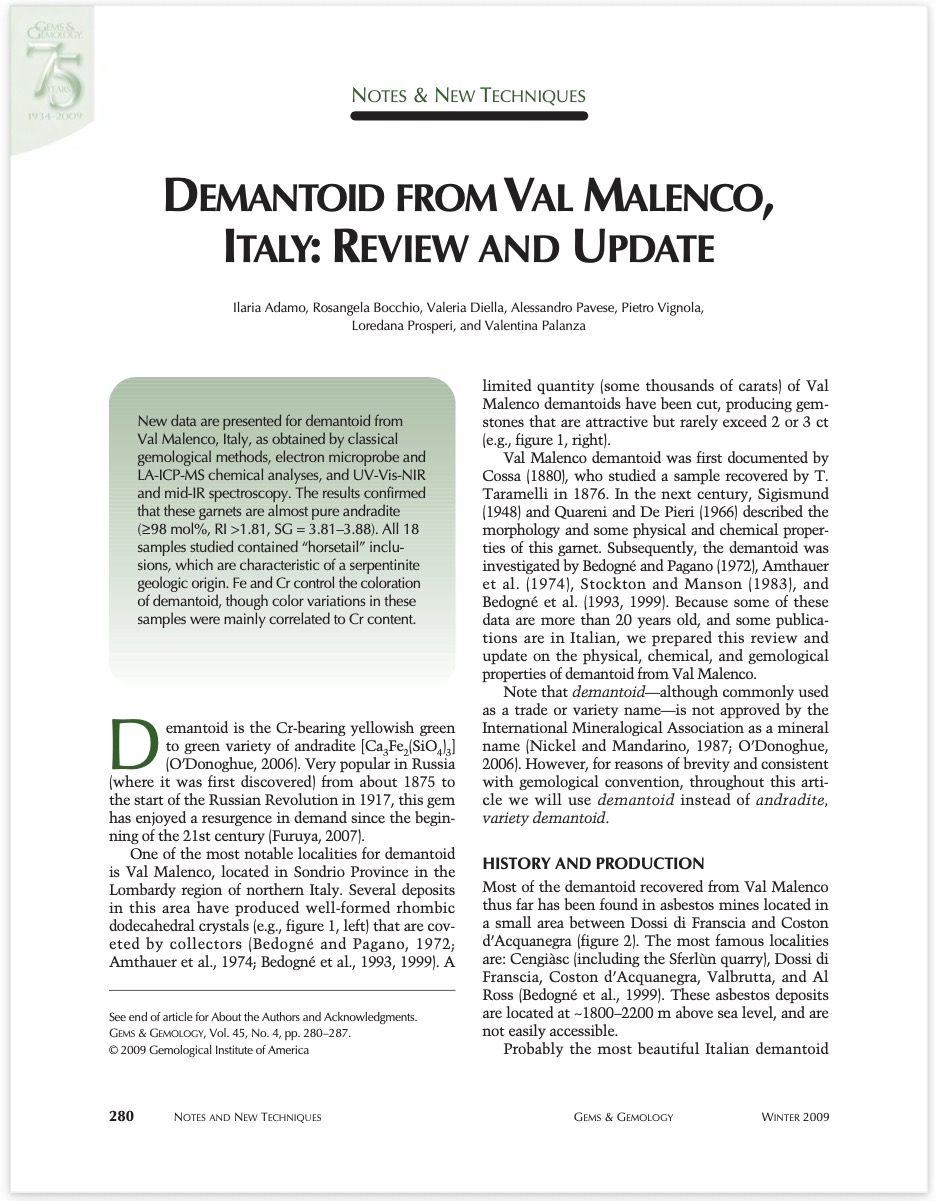
Adamo, I., Bocchio, R., Diella, V., Pavese, A., Vignola, P., Prosperi, L. and Palanza, V. (2009) Demantoid from Val Malenco, Italy: Review and update. Gems & Gemology, Vol. 45, No. 4, Winter, pp. 280–287.
Record No. 26677  |  Sinkankas/Born No.: NIS/NIB  |  RWHL*
New data are presented for demantoid from Val Malenco, Italy, as obtained by classical gemological methods, electron microprobe and LA-ICP-MS chemical analyses, and UV-Vis-NIR and mid-IR spectroscopy. The results confirmed that these garnets are almost pure andradite (≥98 mol%, RI>1.81, SG = 3.81–3.88). All 18 samples studied contained “horsetail” inclusions, which are characteristic of a serpentinite geologic origin. Fe and Cr control the coloration of demantoid, though color variations in these samples were mainly correlated to Cr content.

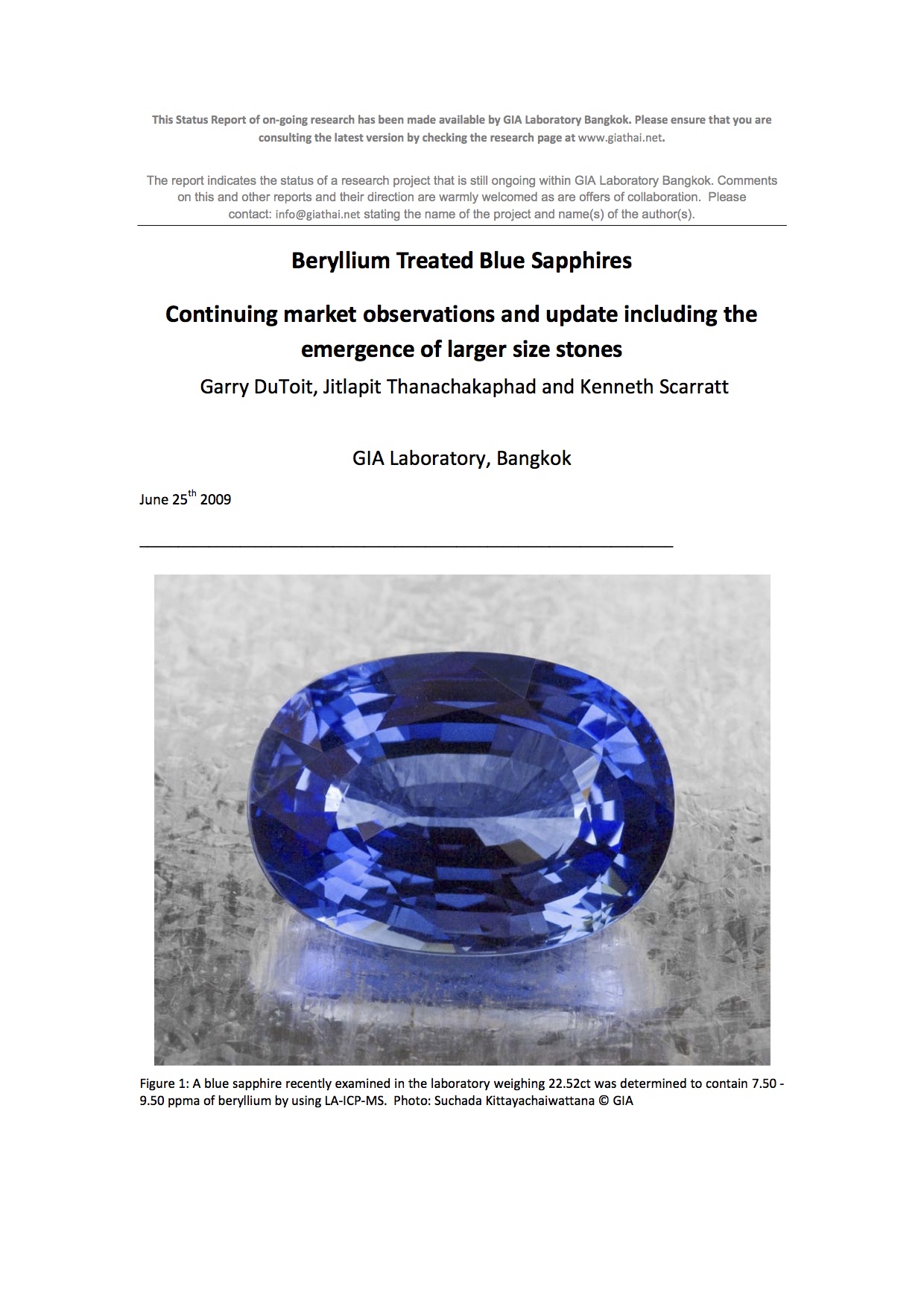
Beryllium treated blue sapphires: Continuing market observations and update including the emergence of larger size stones
Report
Du Toit, G., Thanachakaphad, J. and Scarratt, K. (2009) Beryllium treated blue sapphires: Continuing market observations and update including the emergence of larger size stones. Bangkok: Gemological Institute of America, 24 pp.
Record No. 5350  |  RWHL*
This paper, which constitutes a small portion of an on‐going project, is an update on the presence in the market of beryllium treated blue sapphires, the types of material and their identifying characteristics. Five commercial quality (in the 1ct range) beryllium treated blue sapphires that are representative of a large parcel recently purchased on the Bangkok market are described with details of their chemistry, inclusion scenes and optical data. Further, two large 22ct and 53ct beryllium treated blue sapphires that are reportedly treated by a different technique are also described. The data reveals several types of start material are used for the beryllium treatment of blue sapphires but that in each case there are important clues that lead the gemologist toward the nature of the treatment with the ultimate test being analysis using LA‐ICP‐MS.

Seeking low-cost perfection: Synthetic gems
Journal Article
Kane, R.E. (2009) Seeking low-cost perfection: Synthetic gems. Elements, Vol. 5, pp. 169–174.
Record No. 4287  |  DOI: https://dx.doi.org/10.2113/gselements.5.3.169  |  Sinkankas/Born No.: NIS/NIB  |  RWHL*
Synthetic gems are superlative examples of crystal growth. Today, industrial and scientific crystal growth is a highly sophisticated endeavor employing a wide range of methods. Many of these have been adapted to grow gems for jewelry use. Most major gemstones have been synthesized, and these products are commercially available around the world, often at a fraction of the cost of a natural gem of comparable size and quality. Distinguishing them from their natural equivalents involves a number of interesting challenges. Inclusions (internal features) observed by microscopy often provide conclusive proof of synthetic origin. When routine testing procedures (refractive index, specific gravity, fluorescence, and internal inclusions) do not provide sufficient evidence, laboratories must employ more advanced analytical instrumentation.

Micro magma chambers in natural rubies and sapphires
Journal Article
Koivula, J.I. (2009) Micro magma chambers in natural rubies and sapphires. Australian Gemmologist, Vol. 23, No. 11, July–September, pp. 509–512.
Record No. 3755  |  RWHL*
The behavior of certain fluid inclusions in natural corundum during high-temperature heat treatment processes has been examined before and is relatively well known (Koivula, 1986). From such studies and observations, the condition of fluid inclusions has become an extremely useful means of determining whether or not a particular ruby or sapphire was heat-treated to alter its color and/or clarity. But when it comes to the behavior of solid mineral inclusions during the heat treatment of corundum, much less is actually understood. This leads to speculation and “best guessing” in the diagnosis of heat treatment in instances where solid inclusions are the determinant characteristics.

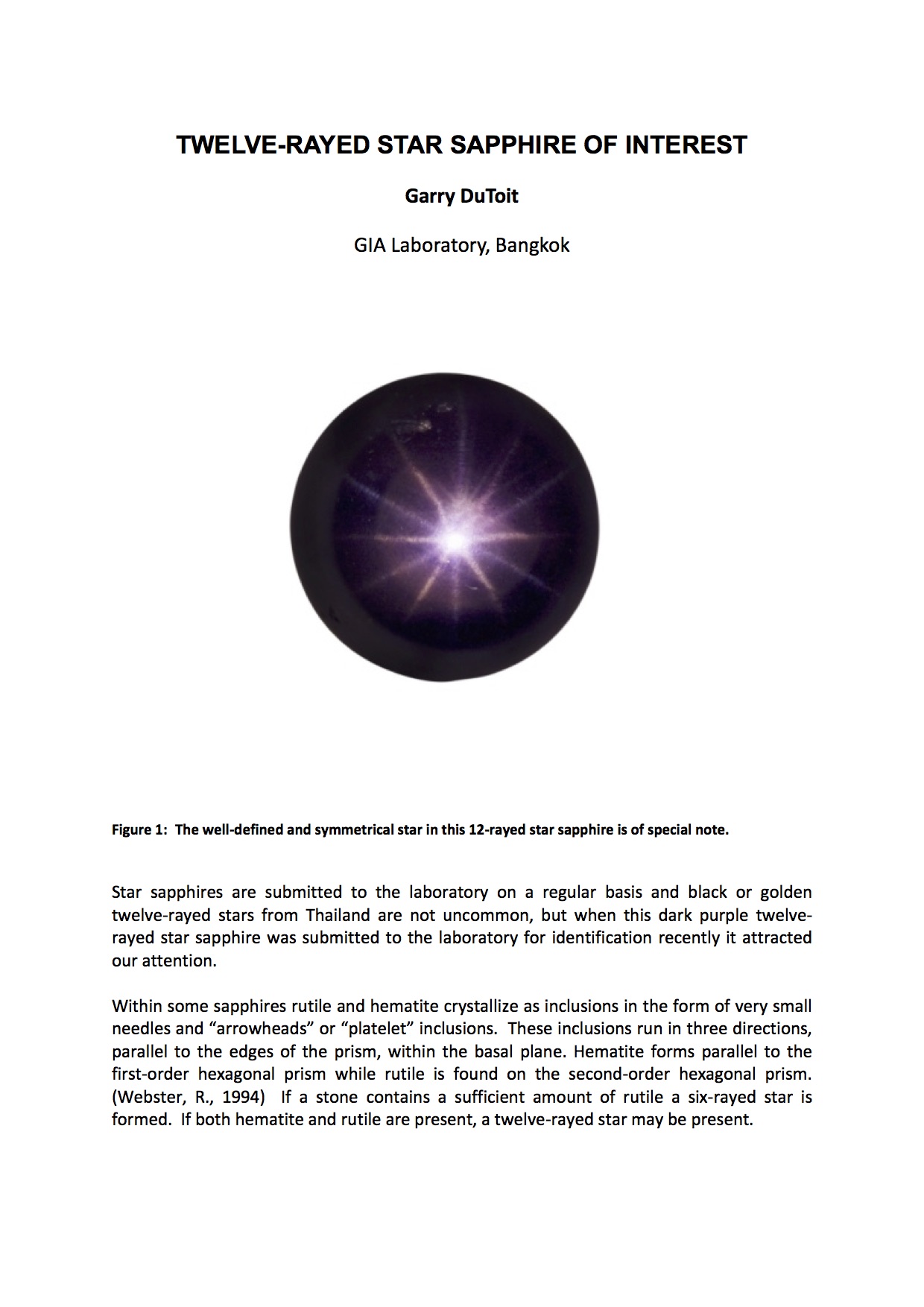
Twelve-rayed star sapphire of interest
Report
Du Toit, G. (2009) Twelve-rayed star sapphire of interest. Bangkok: Gemological Institute of America, March 22, 2 pp.
Record No. 2942  |  RWHL*
Star sapphires are submitted to the laboratory on a regular basis and black or golden twelve‐rayed stars from Thailand are not uncommon, but when this dark purple twelve‐ rayed star sapphire was submitted to the laboratory for identification recently it attracted our attention.

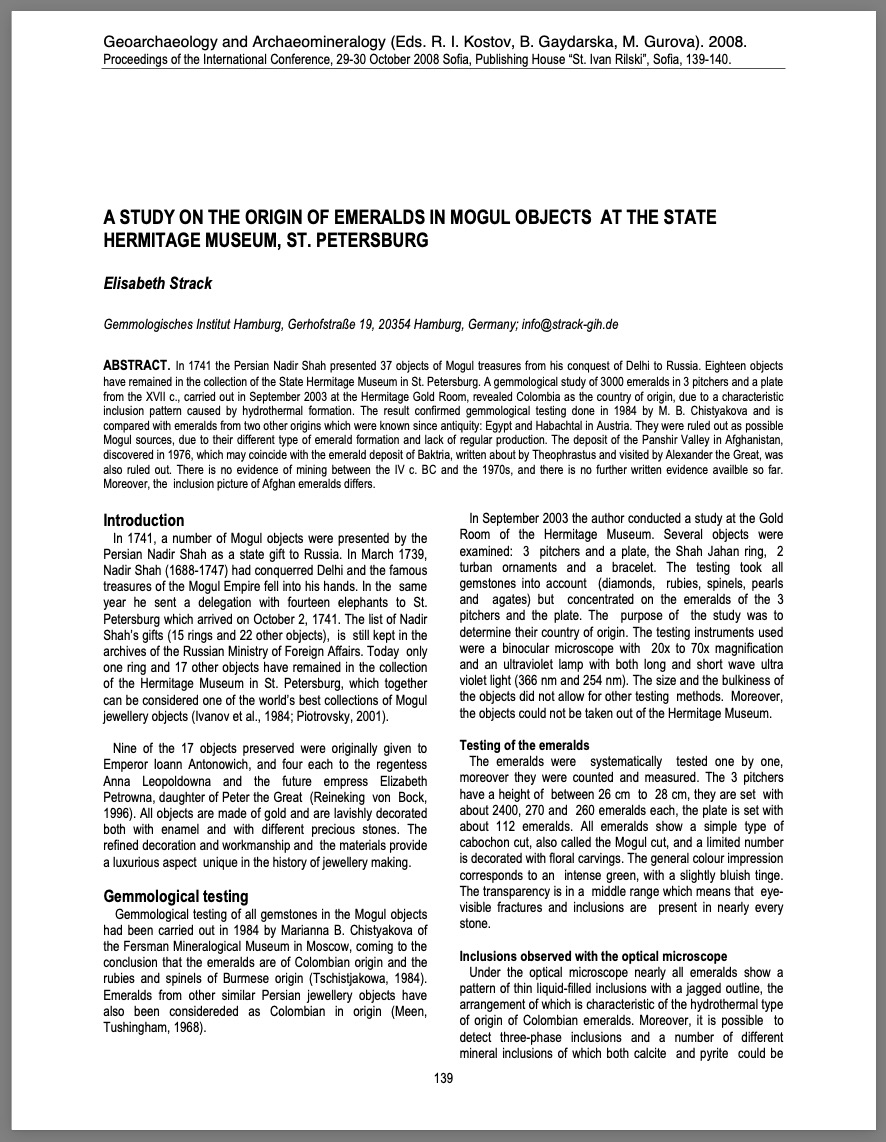
A study on the origin of emeralds in Mogul objects at the State Hermitage Museum, St. Petersburg
Conference Paper
Strack, E. (2008) A study on the origin of emeralds in Mogul objects at the State Hermitage Museum, St. Petersburg. Geoarchaeology and Archaeomineralogy | Proceedings of the International Conference, 29–30 October, Sofia: St. Ivan Rilski, pp. 139–140.
Record No. 27211  |  ISBN/ISSN: 9789540000000  |  Sinkankas/Born No.: NIS/NIB  |  RWHL*
In 1741 the Persian Nadir Shah presented 37 objects of Mogul treasures from his conquest of Delhi to Russia. Eighteen objects have remained in the collection of the State Hermitage Museum in St. Petersburg. A gemmological study of 3000 emeralds in 3 pitchers and a plate from the XVII c., carried out in September 2003 at the Hermitage Gold Room, revealed Colombia as the country of origin, due to a characteristic inclusion pattern caused by hydrothermal formation. The result confirmed gemmological testing done in 1984 by M. B. Chistyakova and is compared with emeralds from two other origins which were known since antiquity: Egypt and Habachtal in Austria. They were ruled out as possible Mogul sources, due to their different type of emerald formation and lack of regular production. The deposit of the Panjshir Valley in Afghanistan, discovered in 1976, which may coincide with the emerald deposit of Bactria, written about by Theophrastus and visited by Alexander the Great, was also ruled out. There is no evidence of mining between the IV c. BC and the 1970s, and there is no further written evidence available so far. Moreover, the inclusion picture of Afghan emeralds differs.

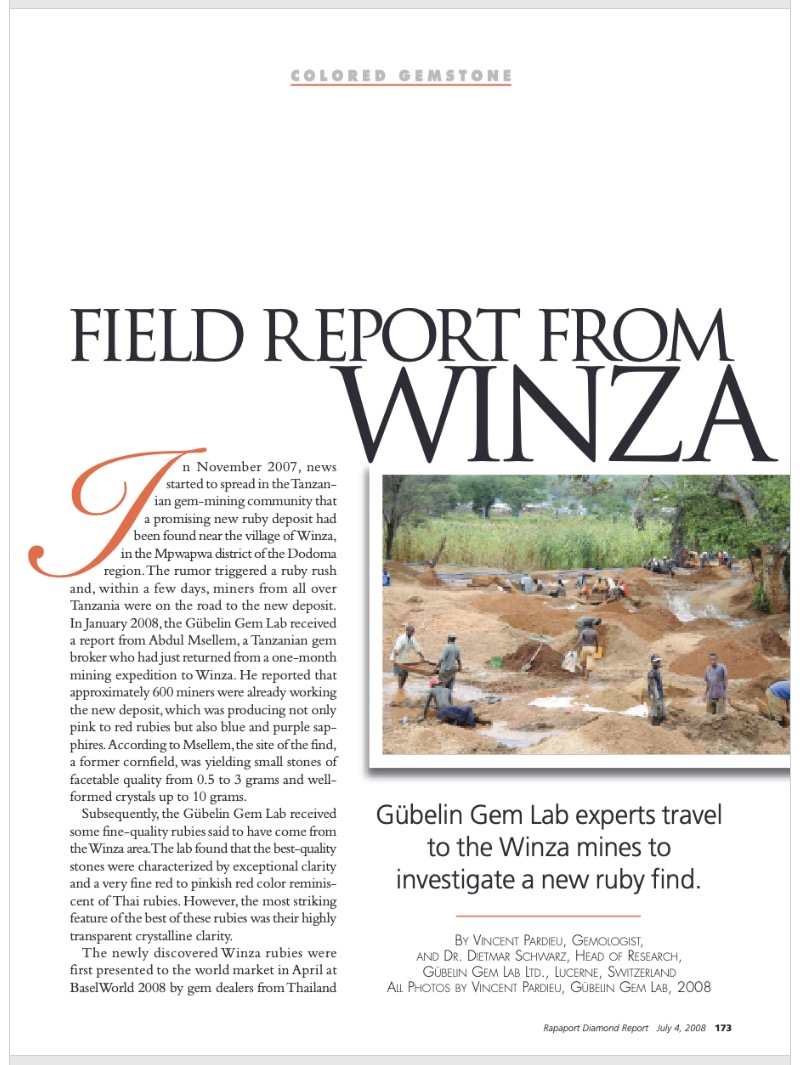
Field report from Winza

Journal Article
Pardieu, V. and Schwarz, D. (2008) Field report from Winza. Rapaport Diamond Report, Vol. 31, No. 26, July, pp. 173–175.
Record No. 7845  |  RWHL*
In November 2007, news started to spread in the Tanzanian gem-mining community that a promising new ruby deposit had been found near the village of Winza, in the Mpwapwa district of the Dodoma region. The rumor triggered a ruby rush and, within a few days, miners from all over Tanzania were on the road to the new deposit. In January 2008, the Gübelin Gem Lab received a report from Abdul Msellem, a Tanzanian gem broker who had just returned from a one-month mining expedition to Winza. He reported that approximately 600 miners were already working the new deposit, which was producing not only pink to red rubies but also blue and purple sapphires. According to Msellem, the site of the find, a former cornfield, was yielding small stones of facetable quality from 0.5 to 3 grams and well-formed crystals up to 10 grams.

Emerald deposits and occurrences: A review
Journal Article
Groat, L., Giuliani, G., Marshall, D.D. and Turner, B. (2008) Emerald deposits and occurrences: A review. Ore Geology Reviews, Vol. 34, pp. 87–112.
Record No. 6077  |  DOI: https://doi.org/10.1016/j.oregeorev.2007.09.003  |  Sinkankas/Born No.: NIS/NIB  |  RWHL*
Emerald, the green gem variety of beryl, is the third most valuable gemstone (after diamond and ruby). Although it is difficult to obtain accurate statistics, Colombia supplies most (an estimated 60%, worth more than $500,000,000 per year) of the world's emeralds. However there is speculation that the emerald mines in Colombia are becoming depleted. Brazil currently accounts for approximately 10% of world emerald production. Emeralds have also been mined in Afghanistan, Australia, Austria, Bulgaria, China, India, Madagascar, Namibia, Nigeria, Pakistan, South Africa, Spain, Tanzania, the United States, and Zimbabwe. Because it is difficult to obtain accurate analyses of beryllium, most published analyses of beryl are renormalized on the basis of 18 oxygen and 3 Be atoms per formula unit. The color of emerald is due to trace amounts of chromium and/or vanadium replacing aluminum at the Y site; in most cases the Cr content is much greater than that of V. To achieve charge balance, the substitution of divalent cations at the Y site is coupled with the substitution of a monovalent cation for a vacancy at a channel site. Beryl is relatively rare because there is very little Be in the upper continental crust. Unusual geologic and geochemical conditions are required for Be and Cr and/or V to meet. In the classic model, Be-bearing pegmatites interact with Cr-bearing ultramafic or mafic rocks. However in the Colombian deposits there is no evidence of magmatic activity and it has been demonstrated that circulation processes within the host black shales were sufficient to form emerald. In addition, researchers are recognizing that regional metamorphism and tectonometamorphic processes such as shear zone formation may play a significant role in certain emerald deposits. A number of genetic classification schemes have been proposed for emerald deposits. Most are ambiguous when it comes to understanding the mechanisms and conditions that lead to the formation of an emerald deposit. Studies of individual emerald deposits show that in most cases a combination of mechanisms (magmatic, hydrothermal, and metamorphic) were needed to bring Be into contact with the chromophores. This suggests the need for a more flexible classification scheme based on mode of formation. Stable isotopes can be used to estimate the contribution of each mechanism in the formation of a particular deposit. Such estimates could perhaps be more precisely defined using trace element data, which should reflect the mode of formation. Emerald may be identified in the field by color, hardness, and form. It will tend to show up in stream sediment samples but because its specific gravity is relatively low, it will not concentrate in the heavy mineral fraction. In Colombia, structural geology, the sodium content of stream sediment samples, and the lithium, sodium, and lead contents of soil samples have all been used to find emerald occurrences. Exploration for gem beryl could result in the discovery of new occurrences of non-gem beryl or other Be minerals that could become new sources of Be and Be oxide. Future efforts should go towards creating a comprehensive data base of emerald compositions (including trace elements), determination of the role of metamorphism in the formation of some emerald deposits, improved classification schemes, and more effective exploration guidelines.

Characterization of emeralds from a historical deposit: Byrud (Eidsvoll), Norway
Journal Article
Rondeau, B., Fritsch, E., Peucat, J.-J., Nordrum, F.S. and Groat, L. (2008) Characterization of emeralds from a historical deposit: Byrud (Eidsvoll), Norway. Gems & Gemology, Vol. 44, No. 2, Summer, pp. 108–122.
Record No. 6071  |  ISBN/ISSN: 0016626X  |  RWHL*
An emerald deposit at Byrud, in southern Norway, yielded significant quantities of crystals and gem rough in the late 19ᵗʰ and early 20ᵗʰ centuries. Complex multiphase inclusions in the emeralds consist of water, gaseous methane, halite, sylvite, calcite, and a sulfide assemblage (pyrrhotite, galena, and sphalerite). This sulfide assemblage makes it easy to distinguish Byrud emeralds from those from other localities with a binocular microscope. The chemical composition of Byrud emeralds is also characteristic: they are colored mostly by vanadium (up to 1 wt.% V₂O₃), and contain low sodium and magnesium (0.1 wt.% oxide or less). Moreover, the relative amounts of iron, magnesium, chromium, rubidium, and cesium appear to be diagnostic. Infrared absorption spectra show that they contain little water. Emeralds from the Byrud deposit are still occasionally recovered by hobbyist collectors from the mine dumps.

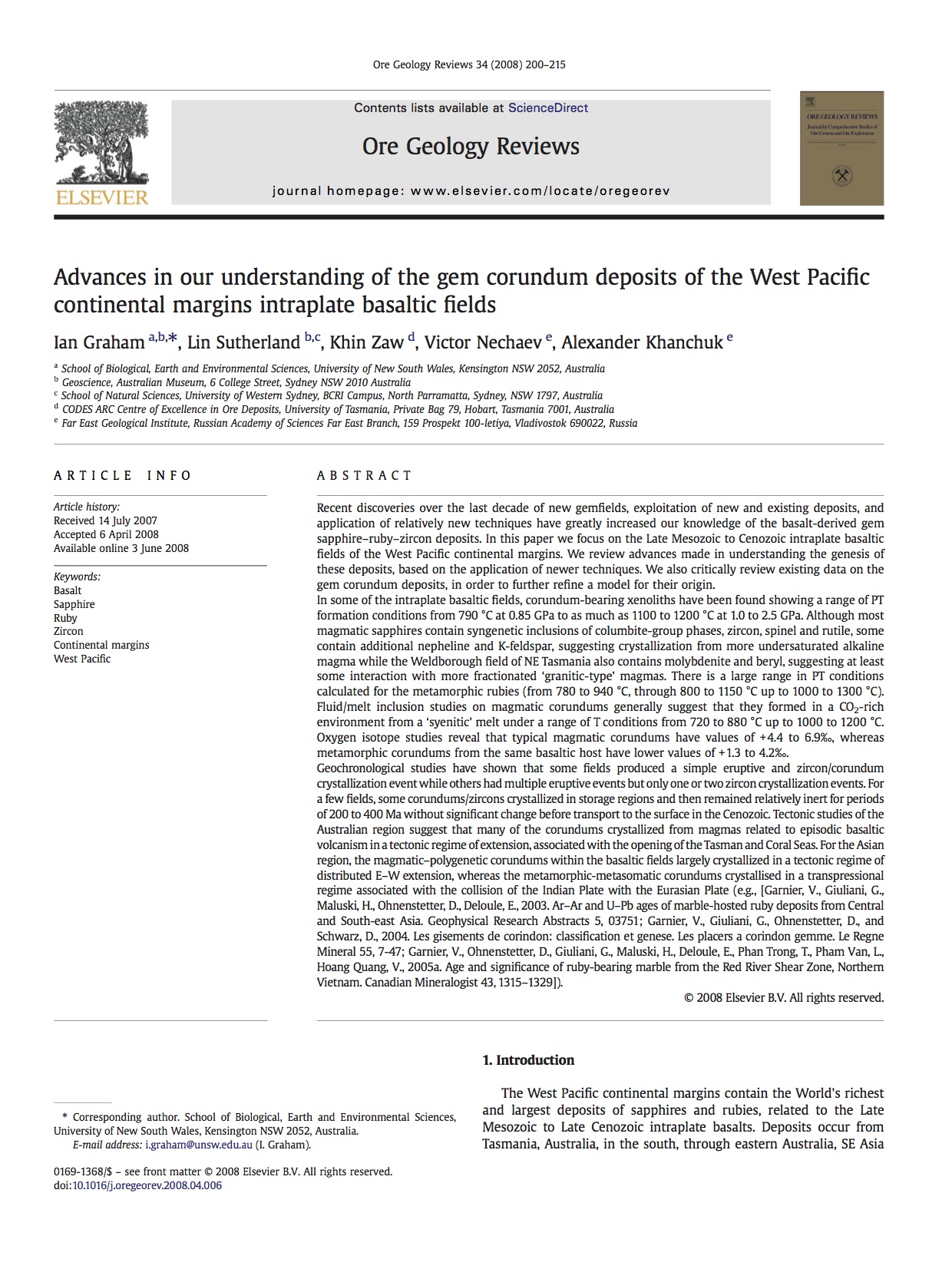
Advances in our understanding of the gem corundum deposits of the West Pacific continental margins intraplate basaltic fields
Journal Article
Graham, I., Sutherland, L., Zaw, K., Nechaev, V. and Khanchuk, A. (2008) Advances in our understanding of the gem corundum deposits of the West Pacific continental margins intraplate basaltic fields. Ore Geology Reviews, Vol. 34, No. 1–2, pp. 200–215.
Record No. 5328  |  ISBN/ISSN: 1691368  |  RWHL*
Recent discoveries over the last decade of new gemfields, exploitation of new and existing deposits, and application of relatively new techniques have greatly increased our knowledge of the basalt-derived gem sapphire–ruby–zircon deposits. In this paper we focus on the Late Mesozoic to Cenozoic intraplate basaltic fields of the West Pacific continental margins. We review advances made in understanding the genesis of these deposits, based on the application of newer techniques. We also critically review existing data on the gem corundum deposits, in order to further refine a model for their origin. In some of the intraplate basaltic fields, corundum-bearing xenoliths have been found showing a range of P–T formation conditions from 790 °C at 0.85 GPa to as much as 1100 to 1200 °C at 1.0 to 2.5 GPa. Although most magmatic sapphires contain syngenetic inclusions of columbite-group phases, zircon, spinel and rutile, some contain additional nepheline and K-feldspar, suggesting crystallization from more undersaturated alkaline magma, while the Weldborough field of NE Tasmania also contains molybdenite and beryl, suggesting at least some interaction with more fractionated ‘granitic-type’ magmas. There is a large range in P–T conditions calculated for the metamorphic rubies (from 780 to 940 °C, through 800 to 1150 °C up to 1000 to 1300 °C). Fluid/melt inclusion studies on magmatic corundums generally suggest that they formed in a CO₂-rich environment from a ‘syenitic’ melt under a range of T conditions from 720 to 880 °C up to 1000 to 1200 °C. Oxygen isotope studies reveal that typical magmatic corundums have values of +4.4 to 6.9‰, whereas metamorphic corundums from the same basaltic host have lower values of +1.3 to 4.2‰. Geochronological studies have shown that some fields produced a simple eruptive and zircon/corundum crystallization event while others had multiple eruptive events but only one or two zircon crystallization events. For a few fields, some corundums/zircons crystallized in storage regions and then remained relatively inert for periods of 200 to 400 Ma without significant change before transport to the surface in the Cenozoic. Tectonic studies of the Australian region suggest that many of the corundums crystallized from magmas related to episodic basaltic volcanism in a tectonic regime of extension, associated with the opening of the Tasman and Coral Seas. For the Asian region, the magmatic–polygenetic corundums within the basaltic fields largely crystallized in a tectonic regime of distributed E–W extension, whereas the metamorphic–metasomatic corundums crystallized in a transpressional regime associated with the collision of the Indian Plate with the Eurasian Plate.

Winza rubies identified

Journal Article
Peretti, A., Peretti, F., Kanpraphai, A., Bieri, W.P., Hametner, K. and Gunther, D. (2008) Winza rubies identified. Contributions to Gemology, Vol. 7,, December pp. 1–97.
Record No. 5213  |  RWHL*
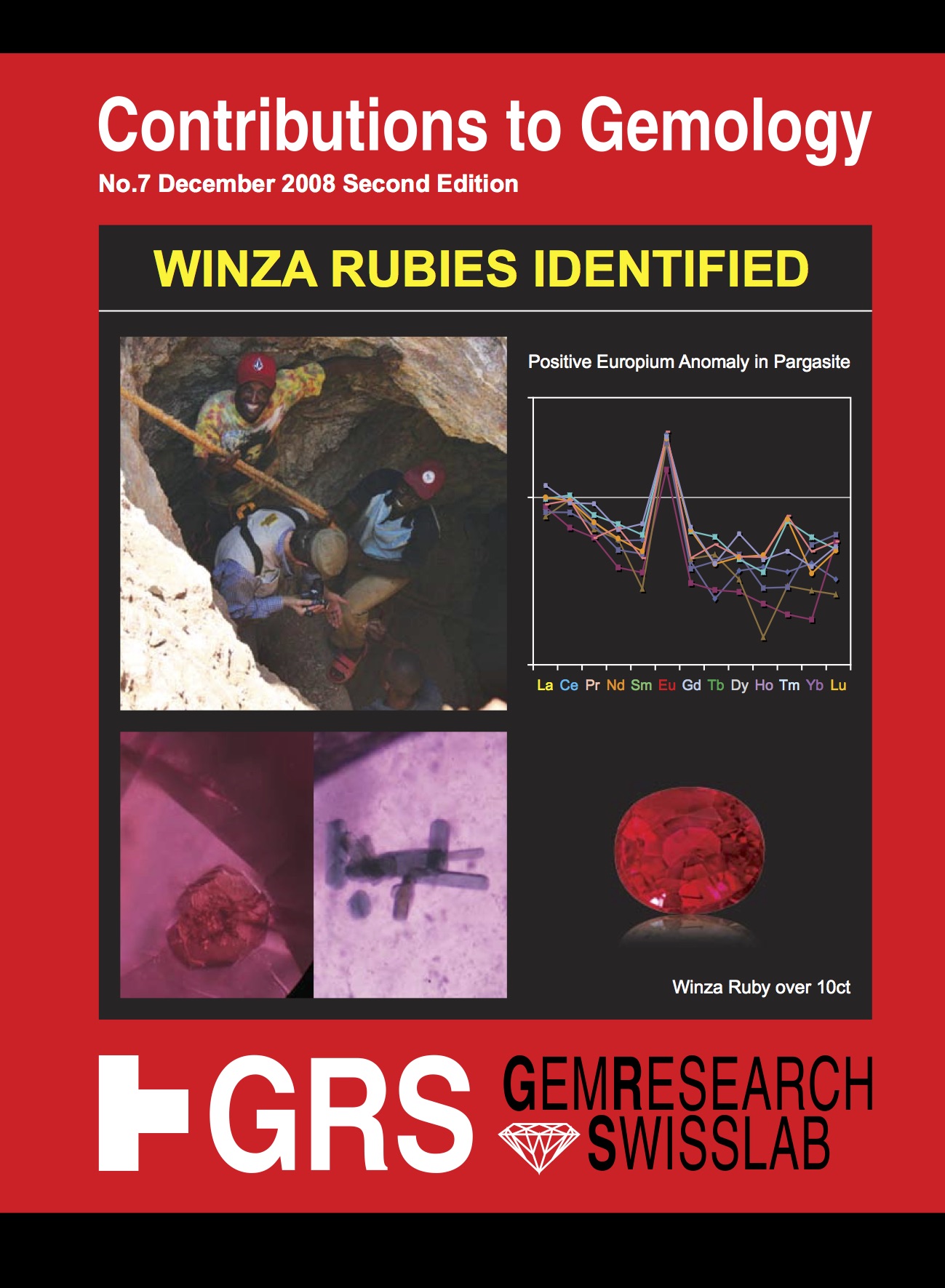
The authors present the results of a characterization study of gem rubies and sapphires from a relatively new locality near the village of Winza in central Tanzania. Since high-quality rubies were accidentally discovered in this remote region in the Fall of 2007, artisanal miners have recovered stones at the surface or in vertical shafts from an area covering several square kilometers. This report begins with a summary of the region’s geology. The rubies occur in association with amphibolites as rhombohedra or as tapered prismatic euhedral and subhedral crystals up to several centimeters long in a garnet-pargasite host rock. Weathering of the host rock near the surface distributed loose corundum crystals in the soil. Most are red to purplish red (occasionally violet or blue). In many instances, the corundum displays internal color zones with banded or irregular areas that are blue, pink, or both. Solid inclusions identified include apatite, chlorite, garnet, pargasite, pyrite, spinel, and talc. Whitish particle clouds and both primary and secondary fluid inclusions are also common, as is crystallographic growth zoning. Especially distinctive in Winza rubies are flat or needle-like inclusions, the latter exhibiting unusual curved or spiral patterns in some cases.. Minor and trace-element data obtained by LA-ICP-MS analysis showed small amounts of Ni (up to ~25 ppm), an unusual trace element in natural corundum. Multiple analyses along the traverses of color-zoned crystals correlated trace-element contents with coloration. Heating experiments on Winza rubies using traditional techniques were not very successful, producing orange coloration and diminishing transparency. Heat treatment appears to be detectable by infrared spectroscopy.

Rubies and sapphires from Winza, central Tanzania
Journal Article
Schwarz, D., Pardieu, V., Saul, J.M., Schmetzer, K., Laurs, B.M., Giuliani, G., Klemm, L., Malsy, A.-K., Erel, E., Hauzenberger, C., Du Toit, G., Fallick, A.E. and Ohenstetter, D. (2008) Rubies and sapphires from Winza, central Tanzania. Gems & Gemology, Vol. 44, No. 4, Winter, pp. 322–347.
Record No. 5211  |  ISBN/ISSN: 0016626X  |  RWHL*
Since late 2007, rubies and sapphires have been mined by hand methods from both eluvial and primary deposits at Winza in central Tanzania. The gem corundum is related to “dikes” of amphi-bolitic rocks that belong to the Paleoproterozoic Usagaran Belt. Based on crystal morphology, Winza corundum is subdivided into two types: prismatic-tabular-rhombohedral and dipyramidal. In general, medium red and dark (orangy) red top-quality rubies are rhombohedral. Pinkish red and purplish red rubies, as well as pink, purple, and blue (often strongly color zoned) sapphires are, for the most part, dipyramidal. The top-quality rubies are characterized by a distinct assem-blage of long tube-, fiber-, needle-, or hair-like inclusions containing an orange-brown material (most likely limonite). The lower-quality material generally contains a larger amount of solid inclusions (mostly amphibole crystals), fissures, and growth features. Unique to corundum from this locality are bluish violet color zones oriented parallel to the prism and basal pinacoid, and occasionally also parallel to rhombohedral and dipyramidal faces. The relatively high Fe content of Winza rubies separates them from most other natural and almost all synthetic counterparts.

Photoatlas of Inclusions in Gemstones, Volume 3
Book
Gübelin, E.J. and Koivula, J.I. (2008) Photoatlas of Inclusions in Gemstones, Volume 3. Basel, Switzerland, Opinio Publishers, 672 pp.
Record No. 5196  |  Sinkankas/Born No.: NIS/NIB  |  RWHL*
Photoatlas Volume 3, the final volume in the highly praised series, Photoatlas of Inclusions in Gemstones, focuses on inclusions in the major commercial gems (diamonds, rubies, sapphires, and emeralds) and inclusions in rare and unusual host materials, such as ekanite and taaffeite. This last book in the Photoatlas library concludes the 35-year collaboration of the renowned gemological authorities, E.J. Gübelin and J.I. Koivula. With the completion of Volume 3, Gübelin and Koivula have provided gemologists with the complete, authoritative photomicrographic reference volumes on inclusions in gemstones.

Copper-bearing (Paraíba-type) tourmaline from Mozambique
Journal Article
Laurs, B.M., Zwaan, J.C., Breeding, C.M., Simmons, W.B., Beaton, D., Rijsdijk, K.F., Befi, R. and Falster, A.F. (2008) Copper-bearing (Paraíba-type) tourmaline from Mozambique. Gems & Gemology, Vol. 44, No. 1, Spring, pp. 4–30.
Record No. 5185  |  ISBN/ISSN: 0016626X  |  RWHL*
Copper-bearing tourmaline from Mozambique was first recovered in 2001, but its Cu content was not recognized until 2003, and it was not widely sold with its Mozambique origin disclosed until 2005. It has been mined from alluvial deposits in an approximately 3 km² area near Mavuco in the eastern portion of the Alto Ligonha pegmatite district. Most of the production has come from artisanal mining, with hand tools used to remove up to 5 m of overburden to reach the tourmaline-bearing layer. The stones exhibit a wide range of colors, typically pink to purple, violet to blue, and blue to green or yellowish green. Heat treatment of all but the green to yellowish green stones typically produces Paraíba-like blue-to-green hues by reducing absorption at ~520 nm caused by the presence of Mn³⁺. The gemological properties are typical for Cu-bearing tourmaline (including material from Brazil and Nigeria); the most common inclusions consist of partially healed fractures and elongate hollow tubes. With the exception of some green to yellow-green stones, the tourmalines examined have relatively low Cu contents and very low amounts of Fe and Ti. Mechanized mining is expected to increase production from this region in the near future.

A noninvasive mineralogical study of nephrite artifacts from the Philippines and surroundings: The distribution of Taiwan nephrite and implications for island Southeast Asian archaeology
Book Section
Iizuka, Y., Hung, H.C. and Bellwood, P. (2007) A noninvasive mineralogical study of nephrite artifacts from the Philippines and surroundings: The distribution of Taiwan nephrite and implications for island Southeast Asian archaeology. In: Scientific Research on the Sculptural Arts of Asia, London: Archetype Publications, pp. 12–19.
Record No. 6242  |  ISBN/ISSN: 9781900000000  |  Sinkankas/Born No.: NIS/NIB  |  RWHL*
Jade artifacts composed of nephrite are found in China, Taiwan, and some regions of Southeast Asia, commencing in Neolithic times. Nephrite deposits are rare in nature, and it is widely accepted that chemical analysis is required if nephrite artifacts are to be sourced to specific quarries. Most analytical methods, however, require object sampling to obtain the chemical compositions of materials. A low-vacuum scanning electron microscope with an energy-dispersive x-ray spectrometer is a powerful and completely noninvasive method of analysis. It requires no conventional sampling, apart from surface cleaning of the artifact. This system has been used for noninvasive mineral studies of nephrite ornaments (Sa Huynh type lingling-o earrings) from Iron Age sites in the Tabon Caves on Palawan Island in the Philippines and in Niah Cave in Sarawak, western Borneo, Malaysia. These ornaments were found to be composed of nephrite (tremolite-actinolite amphiboles) with zinc-bearing chromite inclusions. The mineralogical characteristics of these nephrite ornaments are comparable to those of native rock from the Fengtian nephrite deposit in eastern Taiwan. The results suggest that the original materials for these artifacts were collected in eastern Taiwan and offer important information about long-distance cultural interaction among ancient Austronesian societies, commencing around 2000 B.C.E. and continuing until after 500 C.E.

OH in naturally occurring corundum

Journal Article
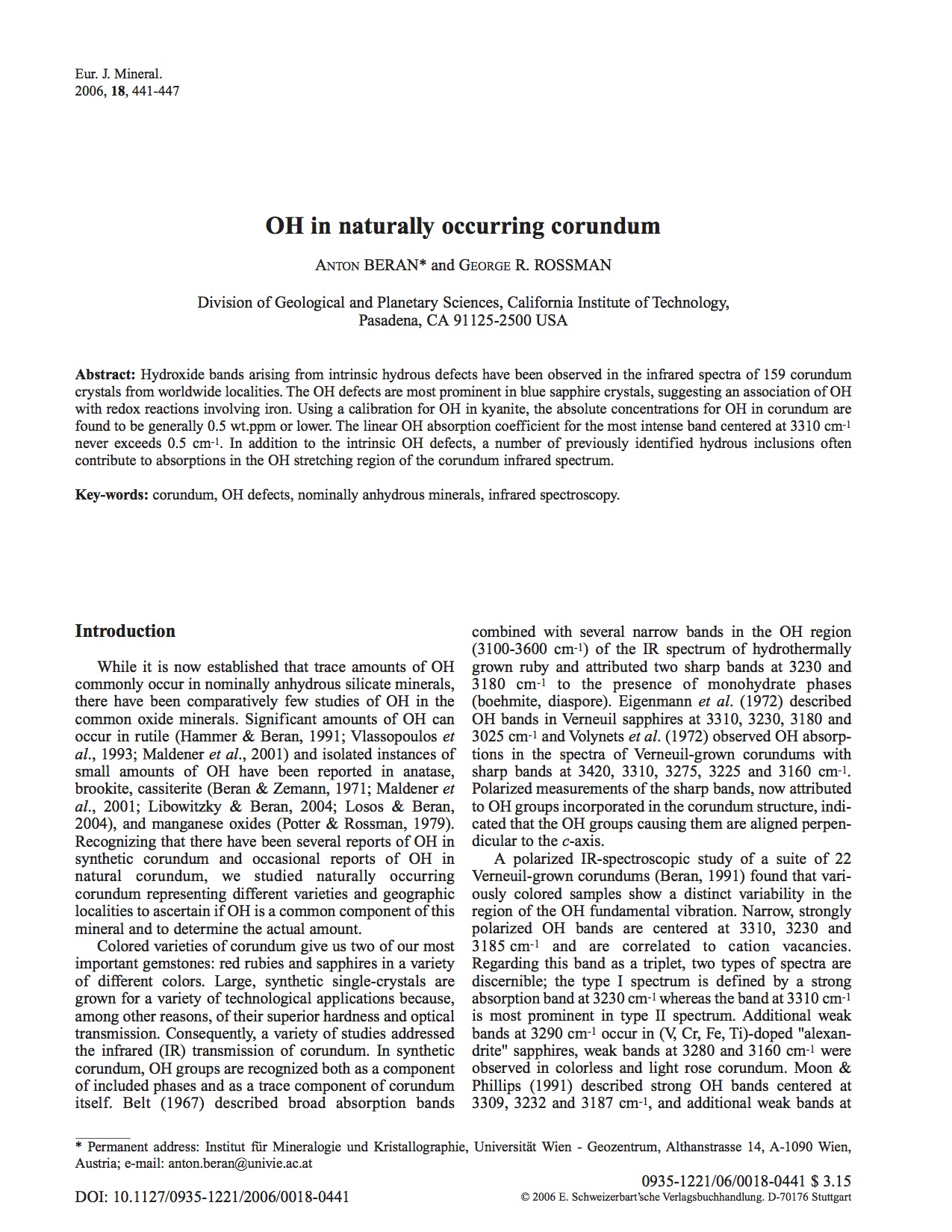
Beran, A. and Rossman, G. (2006) OH in naturally occurring corundum. European Journal of Mineralogy, Vol. 18, pp. 441–447.
Record No. 5554  |  DOI: https://doi.org/10.1127/0935-1221/2006/0018-0441  |  Sinkankas/Born No.: NIS/NIB  |  RWHL*
Infrared spectra of 159 corundum crystals from various global localities reveal hydroxide (OH) bands arising from intrinsic hydrous defects, with the strongest signals observed in blue sapphires. This suggests a link between OH defects and redox reactions involving iron. Applying a kyanite-based calibration, absolute OH concentrations in corundum are generally ≤ 0.5 wt. ppm. The strongest OH band at 3310 cm⁻¹ never exceeds a linear absorption coefficient of 0.5 cm⁻¹. Additionally, some of the OH absorptions originate from previously identified hydrous inclusions in the crystals.

The nature of Ti-rich inclusions responsible for asterism in Verneuil-grown corundum
Journal Article
Viti, C. and Ferrari, M. (2006) The nature of Ti-rich inclusions responsible for asterism in Verneuil-grown corundum. European Journal of Mineralogy, Vol. 18, pp. 823–834.
Record No. 5358  |  RWHL*
Verneuil-grown star corundums—both ruby and sapphire—display variable color zoning and contain three sets of acicular inclusions intersecting at 120°, measuring 20–30 μm in length and 0.1–0.4 μm in width. These inclusions, oriented parallel to the {110} planes and showing polysynthetic twinning on those planes, have cross-sections that approximate the wavelength of visible light, producing sharp six-rayed stars in cabochon-cut stones due to optical diffraction. High-resolution TEM and electron diffraction reveal the inclusions to be nearly isostructural with the corundum host, but distorted into a monoclinic lattice (a = 5.00 Å, b = 4.63 Å, c = 13.08 Å, γ = 118°). Nanochemical analysis indicates a TiO₂ stoichiometry, suggesting Ti⁴⁺ cations occupy half the octahedral sites in a corundum-like structure, with associated vacancies. Near the apical tips of the TiO₂ needles, local composition suggests the presence of Ti²⁺ ions, attributed to redox disproportionation occurring during post-growth thermal annealing.

The effects of heat treatment on zircon inclusions in Madagascar sapphires
Journal Article
Wang, W., Scarratt, K., Emmett, J.L., Breeding, C.M. and Douthit, T.R. (2006) The effects of heat treatment on zircon inclusions in Madagascar sapphires. Gems & Gemology, Vol. 42, No. 2, Summer, pp. 134–150.
Record No. 5178  |  ISBN/ISSN: 0016626X  |  RWHL*
Zircon inclusions in sapphires from Madagascar were examined to assess the effects of heat treatment on their gemological and spectroscopic characteristics, revealing a systematic alteration sequence between 1400 °C and 1850 °C. In unheated sapphires, the zircon inclusions appeared as transparent, slightly elongated euhedral crystals with sharp interfaces and were typically confined under high internal pressures (up to 27 kbar), often showing signs of metamictization due to natural radiation damage. At temperatures as low as 1400 °C, subsolidus reactions began in zircons with preexisting radiation damage, leading to decomposition into baddeleyite (ZrO₂) and a SiO₂-rich phase. Above 1600 °C, zircon melting and dissolution of adjacent sapphire occurred, producing baddeleyite and an Al₂O₃–SiO₂-rich quenched glass. These observations define a progressive transformation and destruction sequence of zircon inclusions with rising temperature, which can serve both as a gemological tool to detect heat treatment in zircon-bearing corundum and as a means of estimating the treatment temperature.

Gemmology, geology and origin of the Sandawana emerald deposits, Zimbabwe
Journal Article
Zwaan, J.C. (2006) Gemmology, geology and origin of the Sandawana emerald deposits, Zimbabwe. Scripta Geologica, Vol. 131, 211 pp..
Record No. 4203  |  RWHL*
As one of the most valuable gemstones, emeralds are known to occur in several countries of the world, such as Colombia, Zambia, Brazil, Pakistan, Afghanistan, Russia, Madagascar and Zimbabwe. The emerald deposits at Sandawana, Zimbabwe, are described, the emeralds from this deposit characterised and a model of emerald formation presented; this is compared with existing models.

Fluorite: The Collectors Choice

Edited Book
Staebler, G.A., editor (2006) Fluorite: The Collectors Choice.. Denver, Lithographie, 128 pp..
Record No. 3889  |  ISBN/ISSN: 9780970000000  |  Sinkankas/Born No.: NIS/NIB  |  RWHL*
Fluorite is clear and colorless in its pure form, but defects and impurities endow it with an array of colors, in both fluorescent and white light, a number of which can occur in a single crystal. Those famous color zones are one of the many features that have drawn people to collect fluorite, giving it a rich history that spans cultures and millennia. Colorful fluorite has been carved into all form of vases, cups, utensils, and decorator items that have historically commanded astronomical prices. The few fluorite artifacts preserved from days of old provide a glimpse into the lives of the ancients and open questions about their sources for fluorite as well as what was known of the mineral's properties. Flourite is also an important ore. Its use as a flux for making steel has been long known, and its optical properties make it an important component in high-end lens systems. Fluorite is also man's most significant source for fluorine, which enjoys innumerable industrial applications. The commercial demand means fluorite is readily mined from places across the globe. Fluorite is generally deposited by hydrothermal fluids, which can traverse many rock types. The mineral is thus found in a variety of geologic environments and the crystals reflect that variety. From simple cubes to incredibly complex crystals, colorful fluorite occurs in association with flashy species such as galena, quartz, calcite, sphalerite, and rhodochrosite. Rich in color, form, and association, fluorite is The Collector's Choice.

Exploring the Literature of Gemstone Inclusions

The literature of gemstone inclusions covers identification, origin determination, treatments, synthesis, mineral inclusions, fluid inclusions and other internal features of natural and synthetic gems.

For a curated selection of important sources, read Inclusions in Gemstones — Hyperion Literature Sources.

About Four Treasures

Four Treasures is Lotus Gemology's freely accessible gemological reference database. Use the full database to search by author, title or keyword and explore literature on gemology, mineralogy, jewelry and related fields. Where available, hyperlinks on titles may lead directly to the full publication.

Search the Complete Four Treasures Database