Gemstone Inclusions Bibliography

Gemstone Inclusions Bibliography

Explore books, articles and historical sources on inclusions in gemstones in Four Treasures, the Lotus Gemology reference database. This bibliography brings together matching records from the collection, with publication details, abstracts and cover images where available.

Gemstone Inclusion References

The list below matches the terms inclusion or inclusions in the database's searchable fields. Some references discuss inclusions as part of a broader subject.
221–240 of 1,121 matching references

Heat-treated rubies: Glass or not glass?
Journal Article
Scarratt, K. (2000) Heat-treated rubies: Glass or not glass? Gems & Gemology, Vol. 36, No. 1, Spring, pp. 75–76.
Record No. 2905  |  ISBN/ISSN: 0016626X  |  RWHL*
One of the important issues at Tucson this year was the nature of the “fillings” in heat-treated rubies. A major concern was the potential misidentification of a natural surface-reaching inclusion as foreign material (see, e.g., J.L. Emmett, “Fluxes and the heat treatment of ruby and sapphire,” Gems & Gemology, Fall 1999, pp. 90–92). Kenneth Scarratt provided the following information. Since 1984, laboratories and gemologists have identified substances in cavities within ruby and sapphire as “glass” based on visual indicators such as surface luster, bubbles, and evidence of devitrification (see, e.g., R.R. Harding and K. Scarratt, “Glass infilling of cavities in natural ruby,” Journal of Gemmology, October 1984, pp. 293–297; R.E. Kane, “Natural rubies with glass-filled cavities,” Gems & Gemology, Winter 1984, pp. 187–199). Sophisticated techniques have not been used routinely, owing to the high cost of advanced testing and, until recently, the limited quantity of glass-filled rubies. In Bangkok, it has become common practice to use hydrofluoric acid—an aggressive acid that easily dissolves silicates and must be handled with extreme caution—to remove glass residues from rubies after heat treatment. This process is carried out either by the treating company or gem laboratories as an added client service. Typically, rubies are immersed in hydrofluoric acid for a few seconds or minutes to remove glass from surface-reaching cavities. However, in recent years, several instances have emerged in which materials that appeared visually to be glass could not be removed with hydrofluoric acid. These materials shared all the visual characteristics of glass fillings, but their resistance to acid treatment cast doubt on their identity. Consequently, the AGTA Gemological Testing Center in New York has adopted a policy of recording Raman spectra for all “glass-like” substances in ruby cavities. This has been enabled by newer, simplified laser Raman microspectrometers. During implementation, the Center found several fillings that looked like glass under magnification but were not silicate glass. In one case, a cavity featured a plateau of a transparent, slightly undulating, glassy material beneath the ruby’s surface. Raman spectroscopy revealed it was actually corundum with a small area of anatase (a titanium oxide mineral). Both corundum and anatase exhibit sharp peaks at characteristic wavenumbers in their Raman spectra, while true glass does not. This example underscores the importance of caution and proper analytical techniques in identifying substances within ruby cavities. Visual cues alone are insufficient for definitive identification.

The separation of natural from synthetic colorless sapphire
Journal Article
Elen, S. and Fritsch, E. (1999) The separation of natural from synthetic colorless sapphire. Gems & Gemology, Vol. 35, No. 1, Spring, pp. 30–41.
Record No. 28169  |  Sinkankas/Born No.: NIS/NIB  |  RWHL*
Greater amounts of colorless sapphire—promoted primarily as diamond substitutes, but also as natural gemstones—have been seen in the gem market during the past decade. In the absence of inclusions or readily identifiable growth structures, natural colorless sapphires can be separated from their synthetic counterparts by their trace-element composition and short-wave ultraviolet (SWUV) transparency. Energy-dispersive X-ray fluorescence (EDXRF) analysis shows higher concentrations of trace elements (i.e., Fe, Ti, Ca, and Ga) in natural sapphires. These impurities cause a reduction in SWUV transparency that can be detected by UV-visible spectrophotometry (i.e., a total absorption in the UV region below 280–300 nm, which is not seen in their synthetic counterparts). This article describes a SWUV transparency tester that can rapidly identify parcels of colorless sapphires.

Sapphire and ruby in Australia

Journal Article
Neville, B.J. and Gnielinski, F., von (1999) Sapphire and ruby in Australia. Queensland Government Mining Journal, Vol. 100, No. 1171, June, pp. 6–12.
Record No. 7754  |  RWHL*
Sapphires, predominantly medium to dark blue but also in other colors (e.g., green and parti-color), have been mined in eastern Australia for more than 100 years. Most have come from two major fields: Anakie in Queensland and New England in New South Wales. The sapphires are alluvial, derived from the erosion of alkali volcanic rocks (basalt lavas, pyroclastics, and volcaniclastics) of Tertiary and Quaternary age. They are similar in many ways (including gemological properties) to sapphires from Thailand, Cambodia, Nigeria, and China, which also are associated with alkali volcanic rocks of similar ages. The gem properties of Australian sapphires are typical for sapphire, with a broad range of refractive index (nε = 1.761–1.765, nω = 1.769–1.774) and specific gravity (3.97–4.02) values. The diaphaneity varies from transparent to opaque. Most stones exhibit a strong 450 nm iron-related absorption band with a spectroscope, and most are inert to both long- and short-wave UV radiation. Australian sapphires are characterized by their inclusions (e.g., pyrochlore, ilmenite, and spinel), chemistry (high iron content), and strong growth zoning and color banding. Nearly all are heat treated to improve clarity and color. The average size of faceted Australian sapphires is under 2 ct. The largest recorded rough sapphire, which weighed 4,180 ct, was carved into a 3,294 ct bust of Dr. Martin Luther King, Jr. Although numerous alluvial occurrences of ruby have been reported in Australia, gem-quality material is rare, and none of these deposits has ever been economic. The first discovery with significant potential was within gneiss in the Harts Range (Northern Territory). However, mining ceased after only minor production of mostly low-grade cabochon material. Sapphire mining in Australia was minor and sporadic from the 1880s until the early 1960s, except for a few favorable periods—such as immediately preceding World War I, when there was strong demand from Germany and Imperial Russia. Demand for sapphires increased in the 1960s and, with the arrival of buyers from Thailand, there was unprecedented activity in the Anakie and New England fields. Mining reached its peak in the mid-1970s, making Australia a major world producer. Since then, the Australian sapphire industry has declined because of the depletion of known resources, increased costs, and difficult land access. The situation has been further exacerbated by the discovery in recent years of important deposits in countries that have lower mining costs, mainly Madagascar, Tanzania, and Nigeria. Since 1998, sapphire mining in Australia has effectively ceased, and the industry faces an uncertain future.

Review of recent studies on black jadeite jade
Journal Article
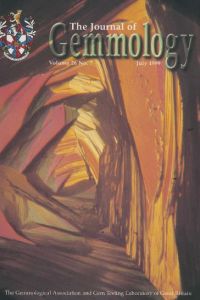
Ouyang, C.M. and Li, H. (1999) Review of recent studies on black jadeite jade. Journal of Gemmology, Vol. 26, No. 7, July, pp. 417–424.
Record No. 6726  |  ISBN/ISSN: 221252  |  RWHL*
Black jadeite jade, appearing on the Hong Kong market as bangles, beads and pendants, consists mainly of jadeite with small amounts of omphacitic pyroxene and accessory minerals. The colour of the jade is attributed to minute inclusions, largely of amorphous carbon with some metallic oxides and sulphides. In places the colour is patchy and the jade is colloquially known as black-skin-chicken jadeite.

Fluxes and the heat treatment of ruby and sapphire
Journal Article
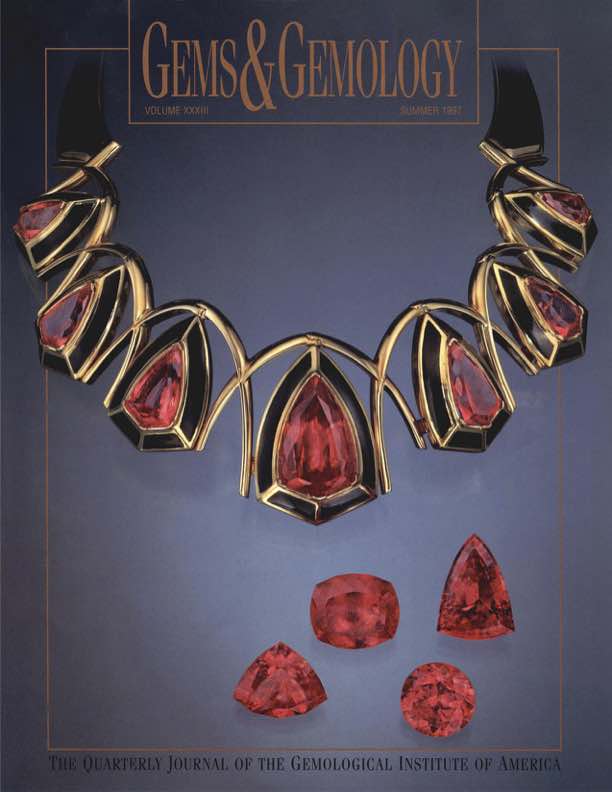
Emmett, J.L. (1999) Fluxes and the heat treatment of ruby and sapphire. Gems & Gemology, Vol. 35, No. 3, Fall, pp. 90–92.
Record No. 2534  |  ISBN/ISSN: 0016626X  |  RWHL*
THE DISCOVERY OF EXTENSIVE RUBY deposits in the Mong Hsu area of Myanmar (Burma) has provided the marketplace with a much-needed source of fine ruby in smaller sizes (see, e.g., Hlaing, 1991; Henn and Bank, 1993; Kammerling et al., 1994). Much of the ruby from this location is characterized by blue or blue-black cores which generally are removed by heat treatment (Peretti et al., 1995). The heat treatment is straight-forward: Temperatures of 900°C or above in an air atmosphere are usually sufficient to accomplish the desired change in color. When substantial quantities of Mong Hsu ruby began arriving at gemological lab-oratories worldwide, new features were recognized that were soon identified as residual flux inclusions (Peretti, 1993; Milisenda and Henn, 1994). These observations were mentioned in grading reports (Hänni et al., 1998), and have initiated a serious debate on the use of flux in heat treatment and, in particular, what the presence of large amounts of flux means in terms of the quality and durability of the original ruby.

De l’importance des inclusions solides et fluides dans la caractérisation des émeraudes naturelles et synthétiques
The importance of solid and fluid inclusions in the characterization of natural and synthetic emeralds
Book Section
Schwarz, D. (1998) De l’importance des inclusions solides et fluides dans la caractérisation des émeraudes naturelles et synthétiques. [The importance of solid and fluid inclusions in the characterization of natural and synthetic emeralds] In: L’emeraude/The Emerald, Paris: Association Française de Gemmologie, 71–80.
Record No. 4189  |  Sinkankas/Born No.: NIS/NIB  |  Language: in French and English  |  RWHL*

Topas

Topaz
Edited Book
Weise, C., editor (1997) Topas. [Topaz]. Munich, Christian Weise Verlag, 96 pp..
Record No. 27116  |  Sinkankas/Born No.: NIS/NIB  |  Language: in German  |  RWHL*
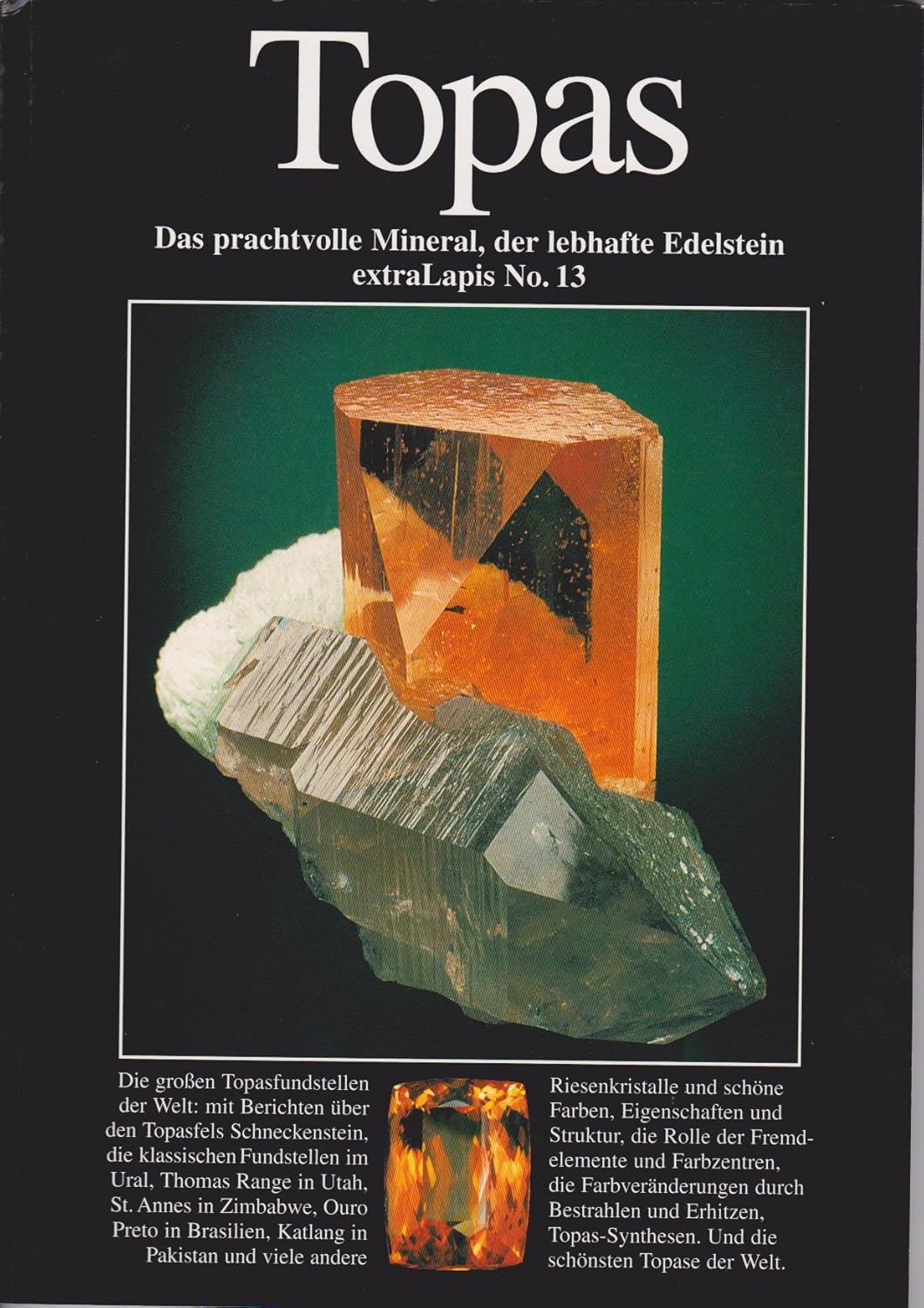
This special issue of the German magazine extraLapis focuses entirely on topaz, following earlier monographs by D. B. Hoover (1992) and Mineralogical Record (1995). The issue opens with a German translation by Maximilian Glas of part of Hoover’s “Historical Perspectives” chapter, covering the etymology of the name topaz, its misapplied names, obsolete trade terms like “Oriental topaz,” and nomenclature issues. A major contribution by Dietmar Schwarz follows, detailing topaz’s gemological and mineralogical properties, crystal structure, geological formation, and key localities (Sanarka in Russia, Katlang in Pakistan, Ouro Preto in Brazil), along with a list of giant cut topaz stones (up to 36,853 ct). Schwarz also discusses causes of topaz color, irradiation and heat treatments, detection methods, and typical inclusions, illustrated by Edward Gübelin’s photomicrographs. The second half of the issue explores historic mining localities: Heiner Vollstädt and Bernd Lahl chronicle the Schneckenstein site in Saxony, once the only significant topaz source in Central Europe and now a preserve; this is followed by a reprint of part of Nikolai I. Koksharov’s classic 1855 paper on Russian topaz from the Urals and Transbaikalia.

Update on emeralds from the Sandawana mines, Zimbabwe
Journal Article
Zwaan, J.C., Kanis, J. and Petch, E.J. (1997) Update on emeralds from the Sandawana mines, Zimbabwe. Gems & Gemology, Vol. 33, No. 2, Summer, pp. 80–100.
Record No. 6042  |  ISBN/ISSN: 0016626X  |  RWHL*
Zimbabwe’s Sandawana mines have been an important producer of emeralds for 40 years. Since the mines came under new ownership in 1993, consistent production has been established and, in addition to the small sizes for which Sandawana is known, greater numbers of polished stones as large as 1.50 ct have been produced. Currently, mining at the most active area, the Zeus mine, is done underground, with the ore processed in a standard washing/ screening trommel plant. Sandawana emeralds can be readily separated from emeralds from other localities. They have high refractive indices and specific gravities. Two amphiboles, actinolite and cummingtonite, are abundant inclusions; albite and apatite are common. Also found are remnants of fluid inclusions. Chemically, Sandawana emeralds typically have a very high chromium content.

Rubies and fancy-color sapphires from Nepal
Journal Article
Smith, C., Gübelin, E., Bassett, A.M. and Manandhar, M. (1997) Rubies and fancy-color sapphires from Nepal. Gems & Gemology, Vol. 33, No. 1, Spring, pp. 24–41.
Record No. 5216  |  ISBN/ISSN: 0016626X  |  RWHL*
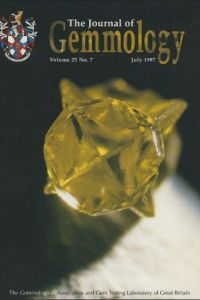
Gem-quality rubies and fancy-color sap-phires have been recovered from dolomite marble lenses located high in the Himalayan mountains of east-central Nepal (Ganesh Himal). First discovered in the early 1980s, these deposits have had only limited and sporadic production because of their isolated locations, high altitudes, and harsh seasonal weather conditions. The pre-cise locations and geology of the two best-known deposits are described. In addition, 27 polished samples and 19 rough crystals and mineral specimens were thoroughly investigated to document their gemological characteristics and crystal morphology. The most distinctive internal features are their color-zoning characteristics, various cloud-like and other patterns, as well as a wide variety of mineral inclusions, some of which have not been seen in rubies from other sources.

Sapphires from the Andranondambo mine in SE Madagascar: Evidence for metasomatic skarn formation
Journal Article
Gübelin, E.J. and Peretti, A. (1997) Sapphires from the Andranondambo mine in SE Madagascar: Evidence for metasomatic skarn formation. Journal of Gemmology, Vol. 25, No. 7, July, pp. 453–516.
Record No. 4796  |  ISBN/ISSN: 221252  |  RWHL*
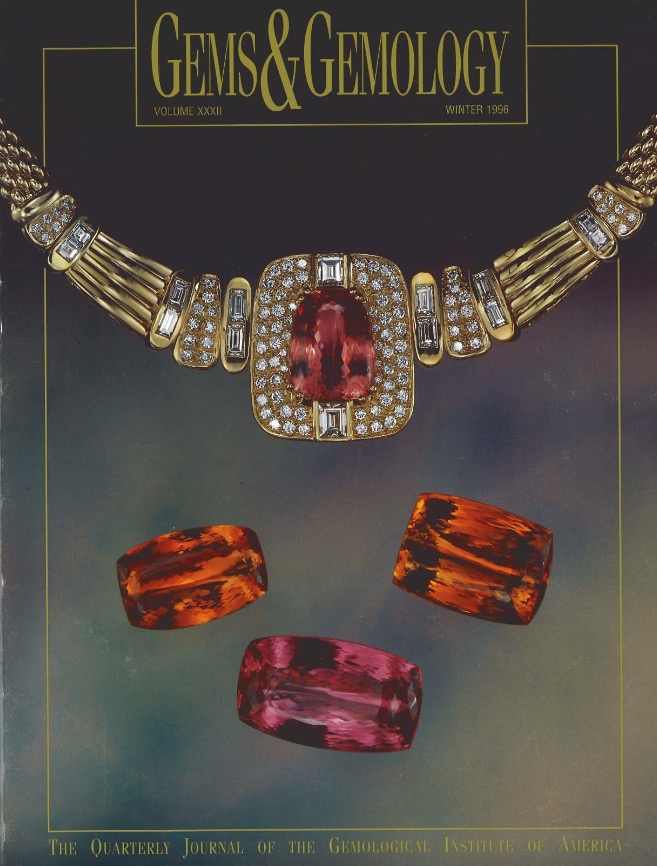
Mineral inclusions in gem-quality sapphires from the new mining area in southern Malagasy (Andranondambo) include calcite, fluorapatite, fluor-phlogopite, fluorite, baddeleyite, zirconolite, potassium-feldspar, anorthite, scapolite (meionite), thorianite (thorianite-uraninite solid solutions), and varieties of spinel, such as green Mg-Al-spinel, spinel-hercynite, and spinel-hercynite-gahnite solid solutions. These minerals are typically found in various rocks in the mining area belonging to the so-called U-Th skarns (various types of calcsilicate marbles). Therefore, these skarns are considered to be the host rocks for sapphire formation. Based on the different generations of primary fluid inclusions in the sapphires, various generations of solid inclusions, and the absence of hibonite inclusions, it is concluded that the Andranondambo sapphires have formed during several different metasomatic events. The later blue sapphire generations have grown from CO₂-rich fluids of complex chemical composition with minor concentrations of fluorine, water, and metals such as aluminium, titanium, iron, chromium, and zinc as well as other elements (Mg, Si, Ca, Na, K, P, Zr, U, Th).

Some gemological challenges in identifying black opaque gem materials
Journal Article
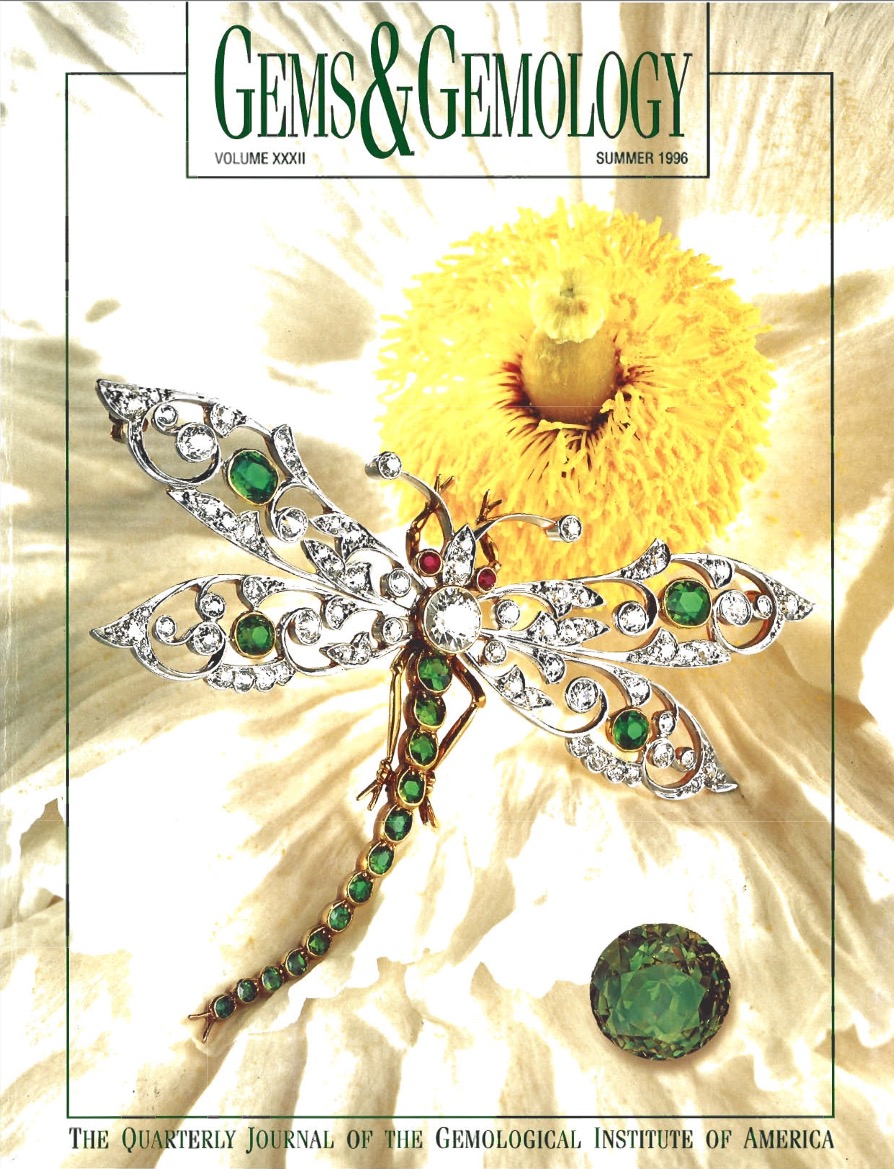
Johnson, M.L., McClure, S.F. and DeGhionno, D.G. (1996) Some gemological challenges in identifying black opaque gem materials. Gems & Gemology, Vol. 32, No. 4, Winter, pp. 252–261.
Record No. 26779  |  Sinkankas/Born No.: NIS/NIB  |  RWHL*
Among the most challenging gemstones to identify are those that are black and opaque or nearly so, as virtually any gem material can become opaque due to inclusions, any black opaque material can be cut and polished, and any porous material can be dyed. As a result, identification requires considering a wide range of possibilities, including various minerals, rocks, and man-made substances. While tools like the microscope, refractive index, specific gravity, magnetism, or radioactivity can offer helpful clues, advanced identification methods such as X-ray diffraction and EDXRF spectroscopy are often necessary—though even these may not yield definitive results. Particularly difficult are black opaque members of the pyroxene, amphibole, and spinel mineral groups.

Opal from Shewa province, Ethiopia

Journal Article
Johnson, M.L., Kammerling, R.C., DeGhionno, D.G. and Koivula, J.I. (1996) Opal from Shewa province, Ethiopia. Gems & Gemology, Vol. 32, No. 2, Summer, pp. 112–120.
Record No. 26760  |  Sinkankas/Born No.: NIS/NIB  |  RWHL*
Opal occurs as nodules in volcanic rocks at a new gem opal locality in the Menz Gishe district of Shewa Province, Ethiopia. The opal field, still in the early stages of exploration, extends over several square kilometers. Opals from Shewa Province have near-colorless to white, yellow, orange, gray, or brown body colors; some show face-up play-of-color, and many have contraluz play-of-color. The gemological properties are consistent with those of other natural opals, and small particles are common inclusions. Preliminary stability tests indicate that much of the material absorbs water, and some crazes when exposed to light and heat.

Mineralogical properties and secondary alterations of serpentine archaic jades
Journal Article
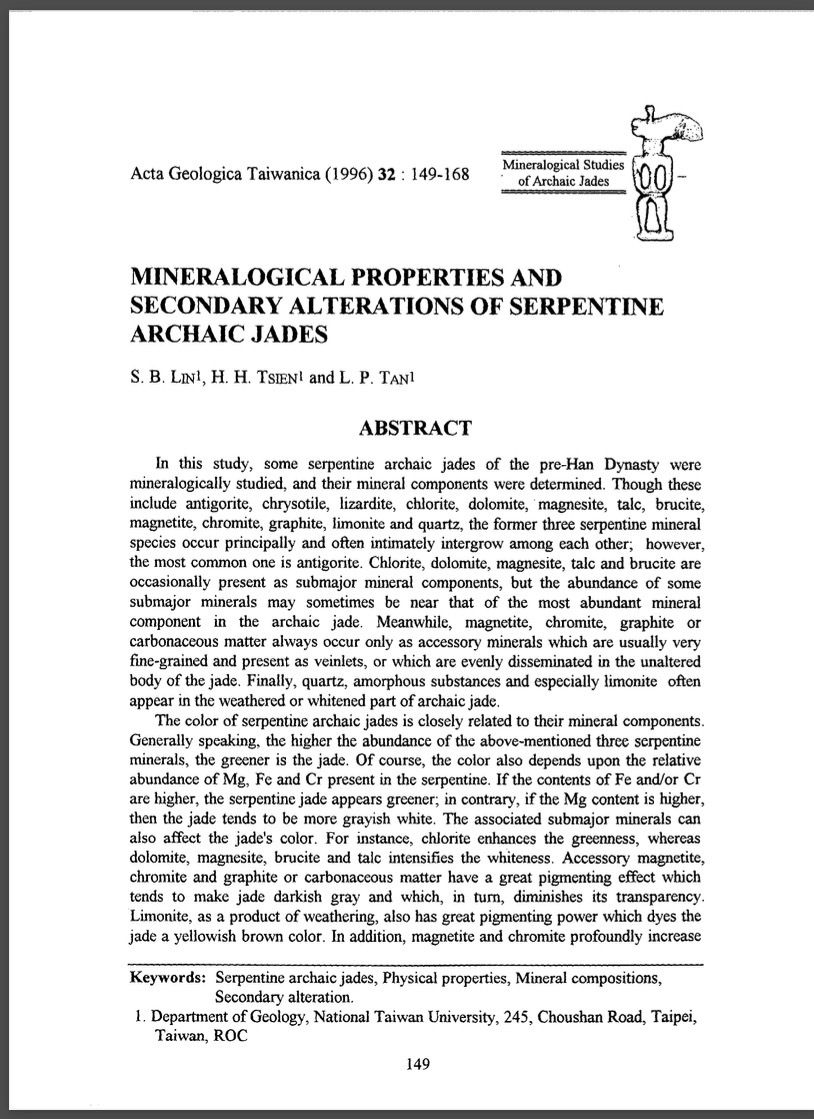
Lin, S.B., Tsien, H.H. and Tan, L.P. (1996) Mineralogical properties and secondary alterations of serpentine archaic jades. Acta Geologica Taiwanica, Vol. 32, pp. 149–168.
Record No. 7894  |  RWHL*
In this study, serpentine archaic jades from the pre-Han Dynasty were mineralogically analyzed to determine their components. The primary minerals identified were antigorite, chrysotile, and lizardite, which often intergrow intimately, with antigorite being the most common. Secondary minerals such as chlorite, dolomite, magnesite, talc, and brucite were occasionally present in significant amounts. Accessory minerals, including magnetite, chromite, graphite, and limonite, appeared in minor quantities, typically as fine-grained inclusions or veinlets. Quartz and amorphous substances, especially limonite, were frequently found in the weathered or whitened portions of the jade. The color of serpentine archaic jades is closely related to their mineral content. Higher concentrations of the three main serpentine minerals typically result in greener jade. The jade's color is also influenced by the relative abundance of magnesium (Mg), iron (Fe), and chromium (Cr). Higher Fe and/or Cr contents yield greener jade, whereas higher Mg content leads to a more grayish-white appearance. Submajor minerals also affect the color: chlorite enhances greenness, while dolomite, magnesite, brucite, and talc intensify whiteness. Accessory minerals like magnetite, chromite, and graphite contribute to a darker gray hue and reduce transparency. Limonite, a weathering product, imparts a yellowish-brown color. Additionally, magnetite and chromite increase the hardness and specific gravity of the jade, whereas brucite, chlorite, and talc reduce hardness, with talc giving the jade a greasy or pearly luster. The crystal habit, microstructure, and texture of the jade also significantly influence its perceived quality. Long-term weathering after the jade's creation induces three major secondary changes in its mineral composition and texture. Weathering causes the surface to become mottled and pitted, decreasing luster and transparency. It also increases porosity, reducing bulk density and mechanical strength. The most notable change is the whitening of jade," where the surface and sometimes inner parts of the jade turn whitish. This process can be classified into three types: self-pulverization, recrystallization, and substitutional transformation. The "whitening of archaic jade" is not due to calcification or intentional heating to facilitate carving or achieve a white surface."

Emerald and green beryl from Central Nigeria
Journal Article
Schwarz, D., Kanis, J. and Kinnaird, J. (1996) Emerald and green beryl from Central Nigeria. Journal of Gemmology, Vol. 25, No. 2, April, pp. 117–141.
Record No. 6045  |  ISBN/ISSN: 221252  |  RWHL*
Mineralogical and gemmological characteristics of emeralds and green beryls from the central Nigerian Kaduna and Plateau States are presented. A genetic model has been established for the occurrence of these gemstones within greisen associations of Mesozoic alkali granite ring complexes. Gemmologists should be able to distinguish Nigerian emeralds from those of other origins based on their unique inclusions and chemical characteristics. In Nigerian specimens containing solid inclusions, the specific mineral assemblage of albite + fluorides (fluorite, boldyrevite, ralstonite) + F-silicate + Fe-rich mica + ilmenite + monazite is diagnostic of the locality. Growth structures and fluid inclusions are extremely common; the latter display a wide range of features, including Colombian-type three-phase inclusions. For Nigerian emeralds exhibiting an inclusion pattern similar to Colombian material, the most reliable distinction is via absorption spectroscopy. Nigerian emeralds display ‘mixed spectra’ with absorption peaks due to Cr³⁺, Fe²⁺, Fe³⁺, and Fe²⁺/Fe³⁺, whereas Colombian emeralds typically show spectra largely devoid of iron-related features.

Investigations on sapphires from an alkali basalt, South West Rwanda
Journal Article
Krzemnicki, M.S., Hänni, H.A., Guggenheim, R. and Mathys, D. (1996) Investigations on sapphires from an alkali basalt, South West Rwanda. Journal of Gemmology, Vol. 25, No. 2, April, pp. 90–106.
Record No. 5369  |  ISBN/ISSN: 221252  |  RWHL*
Yet another new locality for natural blue and treatable sapphire surfaces in this description of material from the Cyangugu district of South West Rwanda. Following summary descriptions of the sapphires' geologic setting and apparent origin from alkali basalts, the results of testing 20 samples is reported. Absorption spectra (visible and infrared), quantitative chemistry (microprobe), and microthermometry were performed on two specially prepared samples. Ten prepared specimens were examined by SEMEDS for inclusions, and eight rough samples were also studied by SEM for detailed surface analysis. The appar ently meticulous methodology yielded high-quality detailed information that is a welcome addition to the gemological literature, despite the small sample size. Numerous illustrations also indicate that this material yields fine-quality gems of brilliant blue color. However, no mention is made of its commercial availability or potential supply.

Sapphires from the Andranondambo region, Madagascar
Journal Article
Schwarz, D., Petsch, E.J. and Kanis, J. (1996) Sapphires from the Andranondambo region, Madagascar. Gems & Gemology, Vol. 32, No. 2, Summer, pp. 80–99.
Record No. 5160  |  ISBN/ISSN: 0016626X  |  RWHL*
Since 1993, large amounts of gem-quality sapphires from the Andranondambo region of southern Madagascar have entered the international gem market. These sapphires, which are found in metamorphic skarn-type deposits, show a broad range of gemological and chemical properties, many of which are similar to those of sapphires from Sri Lanka, Myanmar (Burma), and even Kashmir. Most of the Andranondambo sapphires are heat treated in Bangkok; these can be separated from their non-heat-treated counterparts on the basis of inclusion features and absorption spectra. Key factors in the separation of Andranondambo sapphires from synthetic sapphires of different manufacturers are chemistry (especially the Ga content of the natural material) and internal features.

The role of fluorine in the formation of colour zoning in rubies from Mong Hsu, Myanmar (Burma)
Journal Article
Peretti, A., Mullis, J. and Mouawad, F. (1996) The role of fluorine in the formation of colour zoning in rubies from Mong Hsu, Myanmar (Burma). Journal of Gemmology, Vol. 25, No. 1, January, pp. 3–19.
Record No. 4941  |  ISBN/ISSN: 221252  |  RWHL*
Mong Hsu rubies are characterized by a black sapphire core and a ruby rim. This color zoning has been correlated with the presence of the trace elements Ti (violet to black) and Cr (red). Some examples of Mong Hsu rubies show a complex chemical zonation, which results in multiple zones of rubies, violet sapphires and black sapphires within one particular crystal. Rubies of this type have been studied by analyzing the solid and fluid inclusions as well as their chemical zoning. Minerals accompanying the rubies, such as tourmaline (dravite) and tremolite have also been analyzed. The formation conditions of the rubies have been reconstructed following the study of mineral associations and fluid inclusion analyses. Mong Hsu rubies were formed at 2–2.5 kbar and at temperatures between 500° and 550°C. The fluids were found to be water-bearing and multi-volatile CO₂-rich (multivolatile = composed of CO₂, CH₄ and other components, possibly N₂, H₂S and HF). Fluorite inclusions in the rubies indicate that fluids must have contained some HF. During the study of the homogenization temperatures in different populations of fluid inclusions, it was concluded that no major variations in temperature and pressure occurred during the growth of Mong Hsu rubies. However, the chemical zonation patterns found in Mong Hsu rubies and accompanying tourmalines are indicative of variations in the composition of the fluids, e.g. in contents of F, Ti and Cr. A preliminary model is proposed, which explains the cyclic growth of Mong Hsu rubies, with formation of alternating zones of ruby and sapphire by variation in HF concentration in the surrounding fluids. The possible multiple infiltration of fluids from metapelites into dolomites is discussed.

Corundum from basaltic terrains: A mineral inclusion approach to the enigma
Journal Article
Guo, J., O’Reilly, S.Y. and Griffin, W.L. (1996) Corundum from basaltic terrains: A mineral inclusion approach to the enigma. Contributions to Mineralogy and Petrology, Vol. 122, pp. 368–386.
Record No. 4818  |  RWHL*
This paper investigates the origin of corun-dum megacrysts that occur in many basaltic terrains, and which are considered to be eroded from basaltic rocks. Geochemical data for over 80 primary mineral inclu-sions within corundum megacrysts are used to gain a new insight into the petrogenetic history of the corundum megacrysts. A wide spectrum of minerals is present as inclusions in the corundum; the most common are Nb Ta oxides (such as titaniferous columbite and uran-pyrochlore), alkali feldspar, low-Ca plagioclase (albite-oligoclase) and zircon. Rare inclusions include Fe, Cu-sulphide (low in Ni), cobalt-rich spinel, Th, Ce-rich phosphate and uraninite. The similar chemistry of some inclusion minerals from corundum occurring in widely separated areas suggests that the corundum megacrysts in basalts have a similar petrogenesis. Geochemical characteristics of the inclusions indicate a bimodal grouping, which is best explained by a mixing-hybridisa-tion process. This study indicates that the corundum megacrysts are not cogenetic with their basaltic hosts but are crustal fragments accidentally incorporated into the erupting magma. It is suggested that interactions between a silicic component and an intruding carbon-atitic or similar Si-poor magma is responsible for Al-oversaturation, resulting in locally distributed lenses of corundum-bearing rock of mixed paragenesis (“hybrid rock hypothesis ”). Feldspar exsolution textures provide strong evidence that this hybridisation occurred at mid-crustal levels. Subsequent volcanic eruptions brought the corundum-bearing rocks (later disintegrated in the magma) up to the Earth’s surface. This petrogenetic model for corundum megacrysts is experimentally testable.

Lab report: Kashan-like inclusion scene in Vietnamese rubies; synthetic ruby with seed plate
Journal Article
Du Toit, G., Charoensrithanakul, S., Dunaigre, C., Gawenuntavong, S., Looney, J., Niphatthanaphan, M., Pingkarawat, P. and Virunhaphol, V. (1996) Lab report: Kashan-like inclusion scene in Vietnamese rubies; synthetic ruby with seed plate. JewelSiam, Vol. 7, No. 4, Aug–Sept, pp. 110–111.
Record No. 4761  |  ISBN/ISSN: 8581843  |  RWHL*

European Gemmologists on Rubies and Sapphires

Conference Proceedings
CISGEM (1996) European Gemmologists on Rubies and Sapphires. Gemmologia Europa, Milan: CISGEM, 141 pp..
Record No. 4244  |  Language: in English & Italian  |  RWHL*
Collection of papers on ruby and sapphire from the Gemmologia Europa V Conference.

Exploring the Literature of Gemstone Inclusions

The literature of gemstone inclusions covers identification, origin determination, treatments, synthesis, mineral inclusions, fluid inclusions and other internal features of natural and synthetic gems.

For a curated selection of important sources, read Inclusions in Gemstones — Hyperion Literature Sources.

About Four Treasures

Four Treasures is Lotus Gemology's freely accessible gemological reference database. Use the full database to search by author, title or keyword and explore literature on gemology, mineralogy, jewelry and related fields. Where available, hyperlinks on titles may lead directly to the full publication.

Search the Complete Four Treasures Database