Explore books, articles and historical sources on inclusions in gemstones in Four Treasures, the Lotus Gemology reference database. This bibliography brings together matching records from the collection, with publication details, abstracts and cover images where available.
Gemstone Inclusion References
The list below matches the terms inclusion or inclusions in the database's searchable fields. Some references discuss inclusions as part of a broader subject.
241–260 of 1,121 matching references
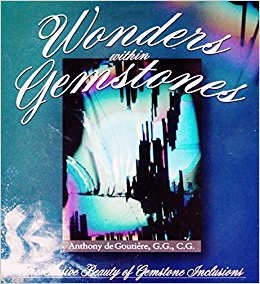
Wonders Within Gemstones: The Elusive Beauty of Gemstone Inclusions
Book
Goutiere, A., de (1996)Wonders Within Gemstones: The Elusive Beauty of Gemstone Inclusions. Chicago, Gemworld International, 135 pp.
Record No. 3235 | Sinkankas/Born No.: NIS/NIB | RWHL*
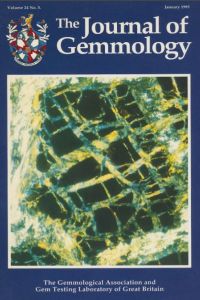
Smith, C.P. (1995) A contribution to understanding the infrared spectra of rubies from Mong Hsu, Myanmar.Journal of Gemmology, Vol. 24, No. 5, Jan., pp. 321–335.
The infrared absorption of the rubies from Mong Hsu was analyzed in order to classify the absorption features recorded. In the mid-infrared region, it was possible to distinguish two separate types of spectra. The first type was recorded in non-heat-treated ruby samples in the region from 1900 to 3400 cm⁻¹, identifying inclusions of diaspore. The second type was recorded in heat-treated ruby samples in the region from 3100 to 3600 cm⁻¹, indicating structurally bonded OH groups. Detailed for the first time in corundum, the building of OH groups is accomplished as a direct result of the dehydration of diaspore inclusions, demonstrated through heat treatment experiments.
The Yogo sapphire deposit
Journal Article
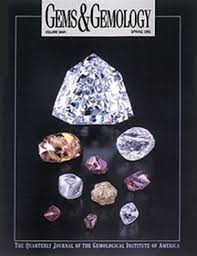
Mychaluk, K.A. (1995) The Yogo sapphire deposit.Gems & Gemology, Vol. 31, No. 1, Spring, pp. 28–41.
Record No. 1326 | ISBN/ISSN: 0016626X | RWHL*
Reference copied to clipboard!
corundum, USA.12, Montana.12, Yogo, gems
Yogo Gulch, discovered over a century ago, is one of four major sapphire-producing regions in Montana, United States. Yogo sapphires are celebrated for their uniform, richly saturated blue color, minimal inclusions and zoning, and exceptional luster and brilliance under both natural and artificial light; notably, they require no heat treatment. The rough crystals are typically flat with low cutting retention and usually weigh less than one carat, though specimens up to 19 carats have been reported. Unlike the other Montana sapphire sources, which are secondary deposits, Yogo sapphires are extracted directly from a lamprophyre host rock. At least six dikes are known in the Yogo area, five of which bear sapphire. Between 1895 and 1994, the Yogo deposit yielded an estimated 18.2 million carats of rough, from which over 500,000 carats of cut gemstones are believed to have been produced, and significant reserves remain.
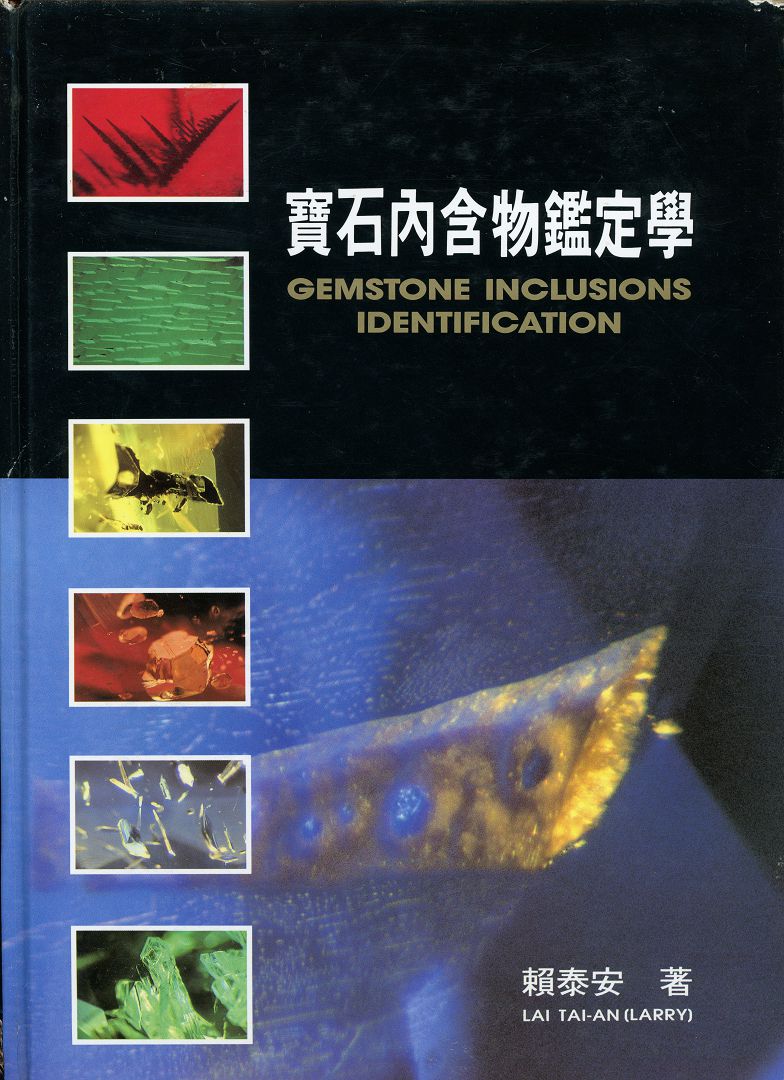
Gemstone Inclusions Identification
寶石內含物鑑定學
Book
Lai, T.-A. (1995)Gemstone Inclusions Identification. [寶石內含物鑑定學] Taipei, Gemological Institute of Lai Tai-An, 343 pp.
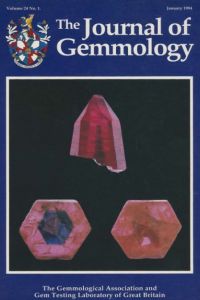
Kammerling, R.C., Scarratt, K., Bosshart, G., Jobbins, E.A., Kane, R.E., Gübelin, E.J. and Levinson, A.A. (1994) Myanmar and its gems—An update.Journal of Gemmology, Vol. 24, No. 1, January, pp. 3–40.
Synthetic rubies by Douros: A new challenge for gemologists
Journal Article
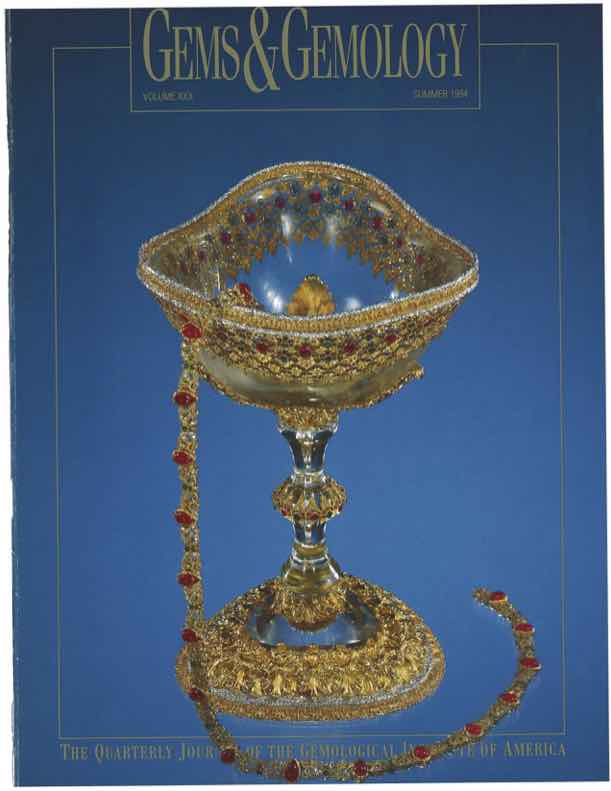
Hänni, H.A., Schmetzer and Bernhardt, H.-J. (1994) Synthetic rubies by Douros: A new challenge for gemologists.Gems & Gemology, Vol. 30, No. 2, Summer, pp. 72–86.
Record No. 4800 | ISBN/ISSN: 0016626X | RWHL*
Reference copied to clipboard!
corundum, synthetic corundum.7, gems
Greek manufacturer A. Douros introduced a new flux synthetic ruby in early 1993. Grown by spontaneous nucleation in a lead-based solvent, the Douros synthetic ruby occurs as rhombohedral single crystals and twinned tabular crystals, as well as in clusters. The tabular crystals typically have intense red cores that gradually decrease in saturation to a near-colorless outermost layer; the rhombohedral crystals have a deep red body and a thin near-colorless layer on the rhombohedral faces, with umbrella-like growth patterns in some areas. Some samples contain distinctive inclusions of yellow residual flux with spherical bubbles. Chemically, the crystals are heavily zoned, and EDXRF analyses revealed variable trace amounts of Ti, Fe, Cr, and Ga, as well as some Pb; SEM-EDS identified the flux particles as lead-bearing. Microprobe analyses showed high Cr values in the crystal cores; in certain growth zones, Fe replaces Cr in the outermost layers. If inclusions or typical growth structures are not present, chemical composition appears to be the best means of separating these Douros synthetic rubies from natural rubies.
Emeralds from the Mananjary region, Madagascar: Internal features
Journal Article
Schwarz, D. (1994) Emeralds from the Mananjary region, Madagascar: Internal features.Gems & Gemology, Vol. 30, No. 2, Summer, pp. 88–101.
Record No. 4194 | ISBN/ISSN: 0016626X | RWHL*
Reference copied to clipboard!
gems, inclusions, beryl, emerald, Madagascar
Inclusions in emeralds from the Mananjary region in the eastern part of the island nation of Madagascar are reported and compared with inclusions in emeraldsf rom other, especially African, localities. Although most of these internal features are similar to those found in emeralds from other schist-type deposits, Mananjary emeralds usually can be separated from emeralds from other localities by means of associations of certain mineral inclusions (especially talc, carbonates, amphiboles, and quartz) with specific types of fluid inclusions.
Rubini e zaffiri: Inclusioni—Rubies and sapphires: Inclusions
Conference Paper
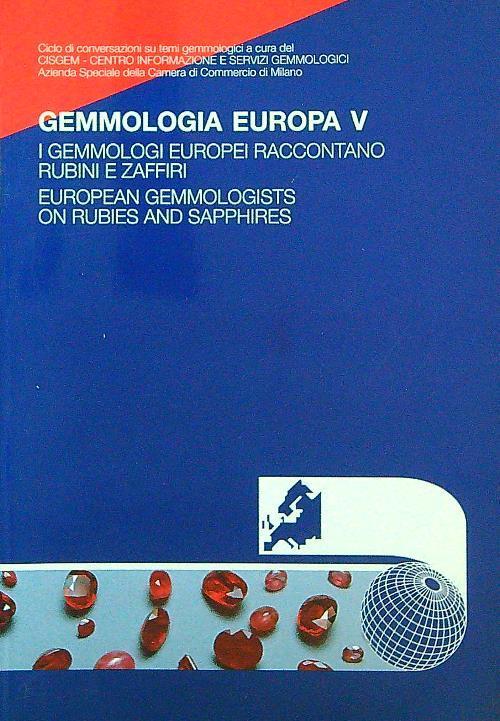
Gübelin, E.J. (1994)Rubini e zaffiri: Inclusioni—Rubies and sapphires: Inclusions. Gemmologia Europa: European Gemmologists on Rubies and Sapphires, Milan: CISGEM, pp.106–137.
Record No. 3139 | RWHL*
Reference copied to clipboard!
corundum, inclusions.5, gems
Flux-grown synthetic red and blue spinels from Russia
Journal Article
Muhlmeister, S., Koivula, J.I., Kammerling, R.C., Smith, C.P., Fritsch, E. and Shigley, J.E. (1993) Flux-grown synthetic red and blue spinels from Russia.Gems & Gemology, Vol. 29, No. 2, Summer, pp. 81–98.
gems, spinel, synthetic spinel, flux synthetic spinel, Russia
Examination of red and blue samples of relatively new flux synthetic spinel from Russia established criteria by which they can be separated from their natural counterparts. The flux synthetic blue spinels can be recognized on the basis of their inclusions, ultraviolet luminescence, and visible absorption spectrum. Magnification is insufficient to identify the flux synthetic red spinels when flux or metallic inclusions are present; in the absence of such inclusions, however, chemical analysis is required. Red and blue natural spinels both contain significantly more zinc than their flux synthetic counterparts. Also, trace amounts of Pb (from the flux) and Pt and Ir (from the crucible) were found in some of the flux synthetic spinels.
Emeralds and green beryls of Upper Egypt
Journal Article
Jennings, R.H., Kammerling, R.C., Kovaltchouk, A., Calderon, G.P., El Baz, M.K. and Koivula, J.I. (1993) Emeralds and green beryls of Upper Egypt.Gems & Gemology, Vol. 29, No. 2, Summer, pp. 100–115.
Record No. 6067 | ISBN/ISSN: 0016626X | RWHL*
Reference copied to clipboard!
gems, beryl, emerald, Egypt, inclusions
Egypt is the most ancient of sources for emerald. More than 2,000 years ago, emerald deposits in upper Egypt were supplying gems throughout the Graeco-Roman Empire. A recent visit to this emerald province revealed that the emeralds occur within a northwest-southeast trending belt of schistose rocks in the Red Sea Hills, near the port town of Marso Alam. At the time of the visit, there was no official commercial mining of emerald in the region, although there was evidence of sporadic activity by Bedouin tribespeople. Gemological examination of 14 cut emeralds and green beryls revealed properties consistent with those of material from similar geologic environments.
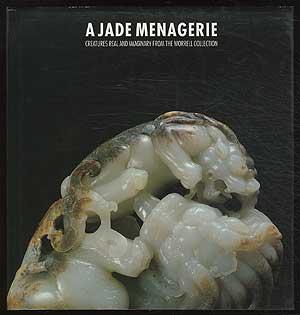
A Jade Menagerie: Creatures Real and Imaginary from the Worrell Collection
Book
Ayers, J. (1993)A Jade Menagerie: Creatures Real and Imaginary from the Worrell Collection. London, Azimuth Editions, 72 pp.
The Worrell Collection of Chinese jade animals has been assembled by T. Eugene Worrell, who is an avid outdoorsman and a noted animal art collector who resides in Charlottesville, Virginia. Believed to be unique among American jade collections, it numbers more than 150 carvings of real and imagined creaturess from the legendary Chinese bestiary, dating from the neolithic age to the twentieth century. Forty-one examples from the collection were chosen by John Ayers for inclusion in this book. Under his scholarly pen, A Jade Menagerie becomes an indispensable reference for the serious collector and a delightful introduction to jade collecting for everyone.
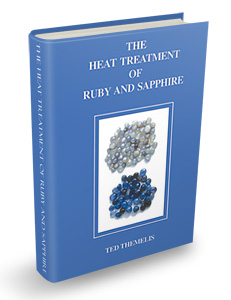
The Heat Treatment of Ruby & Sapphire
Book
Themelis, T. (1992)The Heat Treatment of Ruby & Sapphire. No city, Gemlab Inc., 254 pp.
Record No. 1714 | Sinkankas/Born No.: NIS/NIB | RWHL*
Sapphires and rubies associated with volcanic provinces: Inclusions and surface features shed light on their origin
Journal Article
Coenraads, R.R. (1992) Sapphires and rubies associated with volcanic provinces: Inclusions and surface features shed light on their origin.Australian Gemmologist, Vol. 18, No. 3, pp. 70–78.
A condensed historical and mining survey is followed by a compilation of the most notable crystals of Colombian emeralds ever found and of the details of their chemical composition. A summary of the elemental substitutions and their effects on the outlined range of gemmological data is given. Special emphasis is placed on the cause of the famous, vividly green coloration, i.e. on the selective absorption of orange-red and violet light, dictated by minor contents of the chromophoric elements Cr and V substituting for Al³⁺ in octahedrally coordinated sites of the beryl lattice (Cr ≈ V, with the Cr/V ratio found to be ranging from 4.5 to 0.5, in extreme cases from about 10 to 0.1). Iron, however, has barely been detected in the UV/VIS absorption spectra of Colombian emeralds. Though generally present in slightly larger amounts than Cr³⁺, iron does not recognizably influence the colour (little Fe²⁺ and possibly some Fe³⁺ positioned in the axial channels of the ring-silicate structure). A detailed presentation of the currently known internal characteristics (inclusions and growth structures) is supplemented by a discussion of identification problems with treated emeralds and the disclosure of the treatment during transactions in the wholesale and retail trade. Allocation of the emeralds to individual Colombian mines on the basis of inclusion patterns does not appear possible in most instances. However, the differentiation of Colombian emeralds from other natural emeralds (such as those from the Panjsher Valley exhibiting very similar (s,l,g) three-phase inclusions) or from difficult, modern hydrothermal and flux synthetics is shown to be feasible by a combination of microscopy, refractometry, and absorption spectrometry (UV/VIS and NIR/MIR), assisted by chemical analysis only in the most difficult cases. Safe identification of authenticity, treatment, and origin of emeralds, however, is increasingly becoming the task of the experts in the specialized laboratory. The mineralogical definition of emerald as a yellowish to bluish-green variety of natural beryl is shown to be valid for any Cr and V-containing variety except possibly the rare, absolutely chromium-free (V,Fe)-beryls (modification of the former definition of type II emerald): in many of the preferred Colombian emeralds, chromium is clearly dominated by vanadium (Cr/V ratio < 1). However, chromium has a higher efficiency of coloration than vanadium and a much higher one than iron ions in the various substitutional and interstitial lattice sites of beryl. Cr influences colour even at very low trace levels. An extensive and up-dated selection of literature, covering all aspects cited, completes the synopsis.
Emeralds of Colombia, (Part 2)
Journal Article
Bosshart, G. (1991) Emeralds of Colombia, (Part 2).Journal of Gemmology, Vol. 22, No. 7, July, pp. 409–425.
A condensed historical and mining survey is followed by a compilation of the most notable crystals of Colombian emeralds ever found and of the details of their chemical composition. A summary of the elemental substitutions and their effects on the outlined range of gemmological data is given. Special emphasis is placed on the cause of the famous, vividly green coloration, i.e. on the selective absorption of orange-red and violet light, dictated by minor contents of the chromophoric elements Cr and V substituting for Al³⁺ in octahedrally coordinated sites of the beryl lattice (Cr ≈ V, with the Cr/V ratio found to be ranging from 4.5 to 0.5, in extreme cases from about 10 to 0.1). Iron, however, has barely been detected in the UV/VIS absorption spectra of Colombian emeralds. Though generally present in slightly larger amounts than Cr³⁺, iron does not recognizably influence the colour (little Fe²⁺ and possibly some Fe³⁺ positioned in the axial channels of the ring-silicate structure). A detailed presentation of the currently known internal characteristics (inclusions and growth structures) is supplemented by a discussion of identification problems with treated emeralds and the disclosure of the treatment during transactions in the wholesale and retail trade. Allocation of the emeralds to individual Colombian mines on the basis of inclusion patterns does not appear possible in most instances. However, the differentiation of Colombian emeralds from other natural emeralds (such as those from the Panjsher Valley exhibiting very similar (s,l,g) three-phase inclusions) or from difficult, modern hydrothermal and flux synthetics is shown to be feasible by a combination of microscopy, refractometry, and absorption spectrometry (UV/VIS and NIR/MIR), assisted by chemical analysis only in the most difficult cases. Safe identification of authenticity, treatment, and origin of emeralds, however, is increasingly becoming the task of the experts in the specialized laboratory. The mineralogical definition of emerald as a yellowish to bluish-green variety of natural beryl is shown to be valid for any Cr and V-containing variety except possibly the rare, absolutely chromium-free (V,Fe)-beryls (modification of the former definition of type II emerald): in many of the preferred Colombian emeralds, chromium is clearly dominated by vanadium (Cr/V ratio < 1). However, chromium has a higher efficiency of coloration than vanadium and a much higher one than iron ions in the various substitutional and interstitial lattice sites of beryl. Cr influences colour even at very low trace levels. An extensive and up-dated selection of literature, covering all aspects cited, completes the synopsis.
Emeralds of Colombia, (Part 1)
Journal Article
Bosshart, G. (1991) Emeralds of Colombia, (Part 1).Journal of Gemmology, Vol. 22, No. 6, April, pp. 355–361.
A condensed historical and mining survey is followed by a compilation of the most notable crystals of Colombian emeralds ever found and of the details of their chemical composition. A summary of the elemental substitutions and their effects on the outlined range of gemmological data is given. Special emphasis is placed on the cause of the famous, vividly green coloration, i.e. on the selective absorption of orange-red and violet light, dictated by minor contents of the chromophoric elements Cr and V substituting for Al³⁺ in octahedrally coordinated sites of the beryl lattice (Cr ≈ V, with the Cr/V ratio found to be ranging from 4.5 to 0.5, in extreme cases from about 10 to 0.1). Iron, however, has barely been detected in the UV/VIS absorption spectra of Colombian emeralds. Though generally present in slightly larger amounts than Cr³⁺, iron does not recognizably influence the colour (little Fe²⁺ and possibly some Fe³⁺ positioned in the axial channels of the ring-silicate structure). A detailed presentation of the currently known internal characteristics (inclusions and growth structures) is supplemented by a discussion of identification problems with treated emeralds and the disclosure of the treatment during transactions in the wholesale and retail trade. Allocation of the emeralds to individual Colombian mines on the basis of inclusion patterns does not appear possible in most instances. However, the differentiation of Colombian emeralds from other natural emeralds (such as those from the Panjsher Valley exhibiting very similar (s,l,g) three-phase inclusions) or from difficult, modern hydrothermal and flux synthetics is shown to be feasible by a combination of microscopy, refractometry, and absorption spectrometry (UV/VIS and NIR/MIR), assisted by chemical analysis only in the most difficult cases. Safe identification of authenticity, treatment, and origin of emeralds, however, is increasingly becoming the task of the experts in the specialized laboratory. The mineralogical definition of emerald as a yellowish to bluish-green variety of natural beryl is shown to be valid for any Cr and V-containing variety except possibly the rare, absolutely chromium-free (V,Fe)-beryls (modification of the former definition of type II emerald): in many of the preferred Colombian emeralds, chromium is clearly dominated by vanadium (Cr/V ratio < 1). However, chromium has a higher efficiency of coloration than vanadium and a much higher one than iron ions in the various substitutional and interstitial lattice sites of beryl. Cr influences colour even at very low trace levels. An extensive and up-dated selection of literature, covering all aspects cited, completes the synopsis.
Emeralds of the Panjshir Valley, Afghanistan
Journal Article
Bowersox, G.W., Snee, L.W., Foord, E.E. and Seal, R.R. (1991) Emeralds of the Panjshir Valley, Afghanistan.Gems & Gemology, Vol. 27, No. 1, Spring, pp. 26–39.
Record No. 6064 | ISBN/ISSN: 0016626X | RWHL*
Reference copied to clipboard!
gems, beryl, emerald, Afghanistan, inclusions
With the withdrawal of Soviet troops from Afghanistan, villagers in the Panjshir Valley are turning their attention to the emerald riches of the nearby Hindu Kush Mountains. Large, dark green crystals have been found in the hundreds of tunnels and shafts dug there. Teams of miners use explosives and drills to remove the limestone that hosts the emerald-bearing quartz and ankerite veins. The gemological properties of Panjshir emeralds are consistent with those of emeralds from other localities; chemically, they are most similar to emeralds from the Muzo mine in Colombia. Nodules," previously reported only in tourmaline and morganite, have been found in Panjshir emeralds as well. Approximntely $10 million in emeralds were produced in 1990; future prospects ore excellent."
Emeralds from the Ural Mountains, USSR
Journal Article
Schmetzer, K., Bernhardt, H.-J. and Biehler, R. (1991) Emeralds from the Ural Mountains, USSR.Gems & Gemology, Vol. 27, No. 2, Summer, pp. 86–99.
Emeralds are again being mined in the historic district of the Ural Mountains. Physical, chemical, spectroscopic, and ini-croscopic characteristics of stones from the recent production are presented and com-pared with data on older samples as well as those reported in the literature. Chemi-cal analysis and visible and infrared spec-troscopy provide information on crystal chemistry and color-causing trace ele-ments that is useful both to characterize these stones and to separate them from their synthetic counterparts. A variety of mineral inclusions as well as liquid, two-phase, and three-phase inclusions were seen with magnification. All of the data are critically evaluated with respect to the confirmation of unknown samples as Uralian.
The microscopic determination of structural properties for the characterization of optical uniaxial natural and synthetic gemstones. Part 3: Examples for the applicability of structural features for the distinction of natural and synthetic sapphire, ruby, amethyst and citrine
Journal Article
Kiefert, L. and Schmetzer, K. (1991) The microscopic determination of structural properties for the characterization of optical uniaxial natural and synthetic gemstones. Part 3: Examples for the applicability of structural features for the distinction of natural and synthetic sapphire, ruby, amethyst and citrine.Journal of Gemmology, Vol. 22, No. 8, October, pp. 471–482.
The application of diagnostic growth structures for the distinction of natural and synthetic optically uniaxial gem minerals such as corundum and quartz is discussed. Typical examples for the characterization of natural gem varieties of corundum and quartz are quoted, e.g. sapphires and rubies, amethysts and citrines from distinct sources are described by means of growth structures. In addition, their synthetic counterparts of some producers are compared using structural features of diagnostic value. Criteria, which are useful for the recognition of faceted gemstones as natural or synthetic, are underlined. Gem materials described in detail are natural sapphires from alkaline host rocks (Australian, Nigerian, Cambodian and Thai sapphires), Chatham synthetic sapphires, natural rubies from Malawi, Knischka synthetic rubies, natural amethysts and citrines from different sources as well as synthetic amethysts and citrines from different producers.
The growth of rubies in southeast Kenya
Journal Article
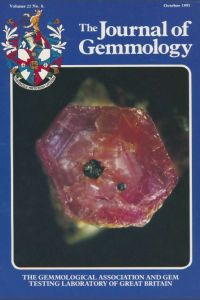
Key, R.M. and Ochieng, J.O. (1991) The growth of rubies in southeast Kenya.Journal of Gemmology, Vol. 22, No. 8, October, pp. 484–496.
Record No. 4845 | ISBN/ISSN: 221252 | RWHL*
Reference copied to clipboard!
corundum, ruby, Kenya.12, East Africa, inclusions.5, gems
Exploring the Literature of Gemstone Inclusions
The literature of gemstone inclusions covers identification, origin determination, treatments, synthesis, mineral inclusions, fluid inclusions and other internal features of natural and synthetic gems.
Four Treasures is Lotus Gemology's freely accessible gemological reference database. Use the full database to search by author, title or keyword and explore literature on gemology, mineralogy, jewelry and related fields. Where available, hyperlinks on titles may lead directly to the full publication.