Gemstone Inclusions Bibliography

Gemstone Inclusions Bibliography

Explore books, articles and historical sources on inclusions in gemstones in Four Treasures, the Lotus Gemology reference database. This bibliography brings together matching records from the collection, with publication details, abstracts and cover images where available.

Gemstone Inclusion References

The list below matches the terms inclusion or inclusions in the database's searchable fields. Some references discuss inclusions as part of a broader subject.
381–400 of 1,121 matching references

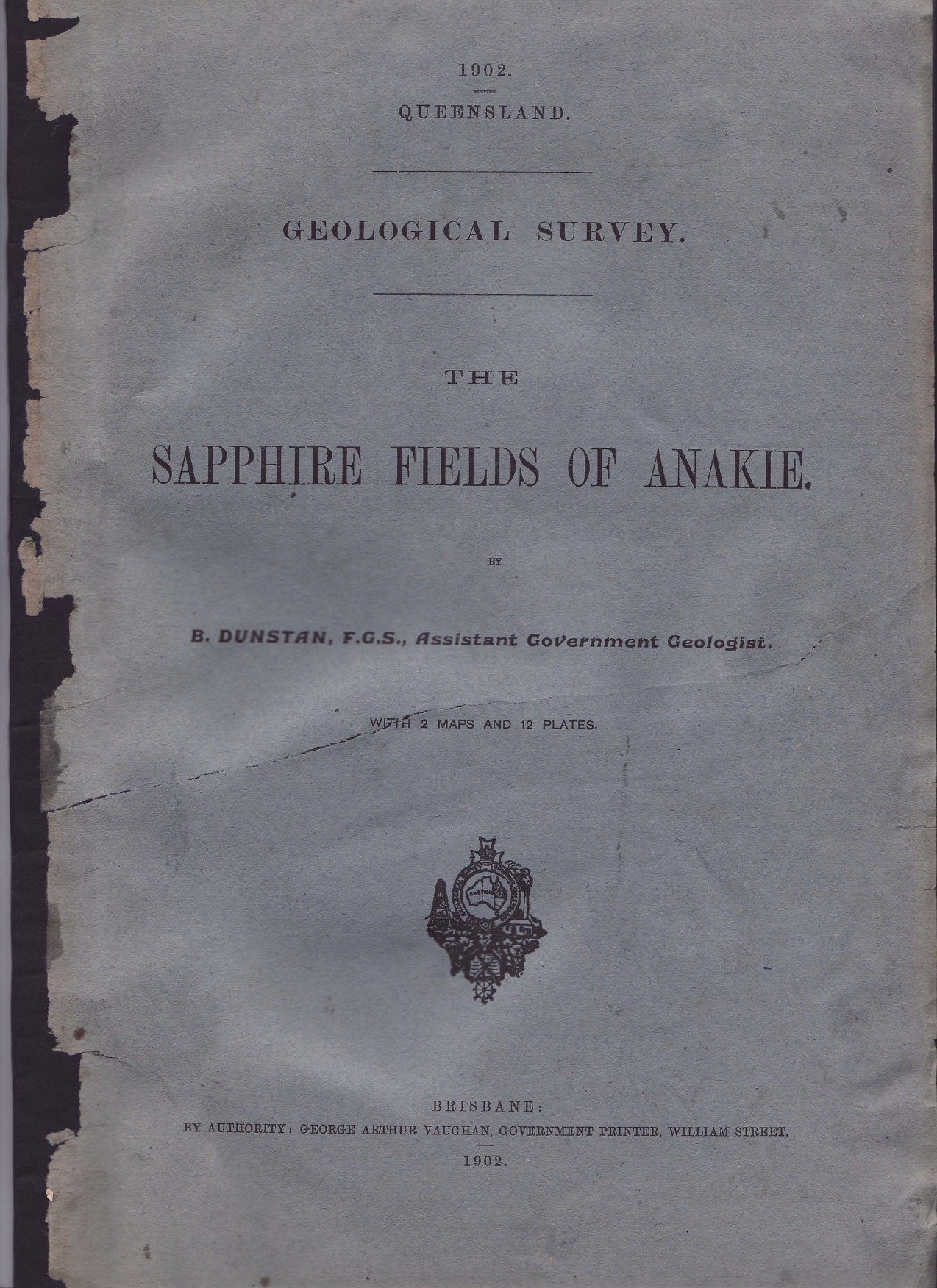
The sapphire fields of Anakie

Journal Article
Dunstan, B. (1902) The sapphire fields of Anakie. Geological Survey of Queensland, Publications, pp. 1–26.
Record No. 683  |  Sinkankas/Born No.: 1807; NIB  |  RWHL*
Sinkankas: The first geological-mineralogical report on the famous Anakie gem corundum field and almost as interesting for its remarkable color plates as for its text. Describes general geology, details on specially productive areas, advice to prospectors, and much incidental information also useful to the lapidary and gemologist as washing sapphire-bearing gravel, the crystal forms of corundum, zircon and spinel, a note of a diamond discovery at one of the localities, a list of minerals found, historical notes, notes on foreign deposits, and descriptions of the plates. Though crudely executed, the plates depict sapphire crystals in various forms and inclusions in them, and appear to be the first colored illustrations of Anakie sapphires. Among the color plates is one that shows corundum faceted gems, brilliant-cut, in a variety of hues. An extremely scarce report.

The Bishop Collection: Investigations and Studies in Jade
Book
Bishop, H.R. (1900) The Bishop Collection: Investigations and Studies in Jade. Mershon, NJ, privately published, 378 pp.
Record No. 4323  |  Sinkankas/Born No.: 661  |  RWHL*
Sinkankas: Jade as a mineral, p l–14 (with F W Clarke, on jade colors, 6–10); SL Penfield, crystalline system, optical properties, 14–17; C Palache, properties & table, 17–36; JP Iddings, microscopic petrography, 37–60; tenacity, 60–62; L W Page, impact tests, 62–70; I H Woolson, compression & tension tests, 70–93, 93–95; fracture, hardness, 95–98; TA Jaggar, microsclerometer hardness tests, 98–110; W Hallock, SG, 111–15; sonorousness, 116–9; W Hallock, sonorousness tests, 120–4; F W Clarke, chemical constitution, 125–77; S L Penfield, chemical notes, 177–96; inclusions, 197–99; L V Pirsson, origin of jadeite, 200–7; JP Iddings, relation of jadeite to nephrite, 208–12; HS Washington, localities, geol occurrences, 213–64; G F Kunz, minerals mistaken for, 265–84; S W Bushell, jade in China, 285–320, also by Bushell: Yii-Shuo, a discourse on jade ... by T'ang Jung-Tso styled Hsi-Wu ... translated by Stephen W Bushell, p 321–66, with an appendix giving titles of 71 books quoted in the discourse, p 367–70, and illustrations of the modem manu- facture of jade... by Li Shih-Ch'iian, styled Cheng-Yuan, p 371–78 [actually descriptions of the illustrations and not the illustrations themselves, which are not given here]. Because of its importance, this contribution is described separately, see T'ANG JUNG-TSO.Aside from the detailed work on jades by H Fischer (l880), which see, no other work, even now, approaches the above for its wealth of property data; the occurrences section by Washington is richly supplied with bibliographical footnotes of continuing value to students of jades. Bushell's translation seems to be found nowhere else save here. This book, apparently printed in very few copies and probably for extremely limited private circulation is so rare that I have not seen advertised another copy in thirty years.

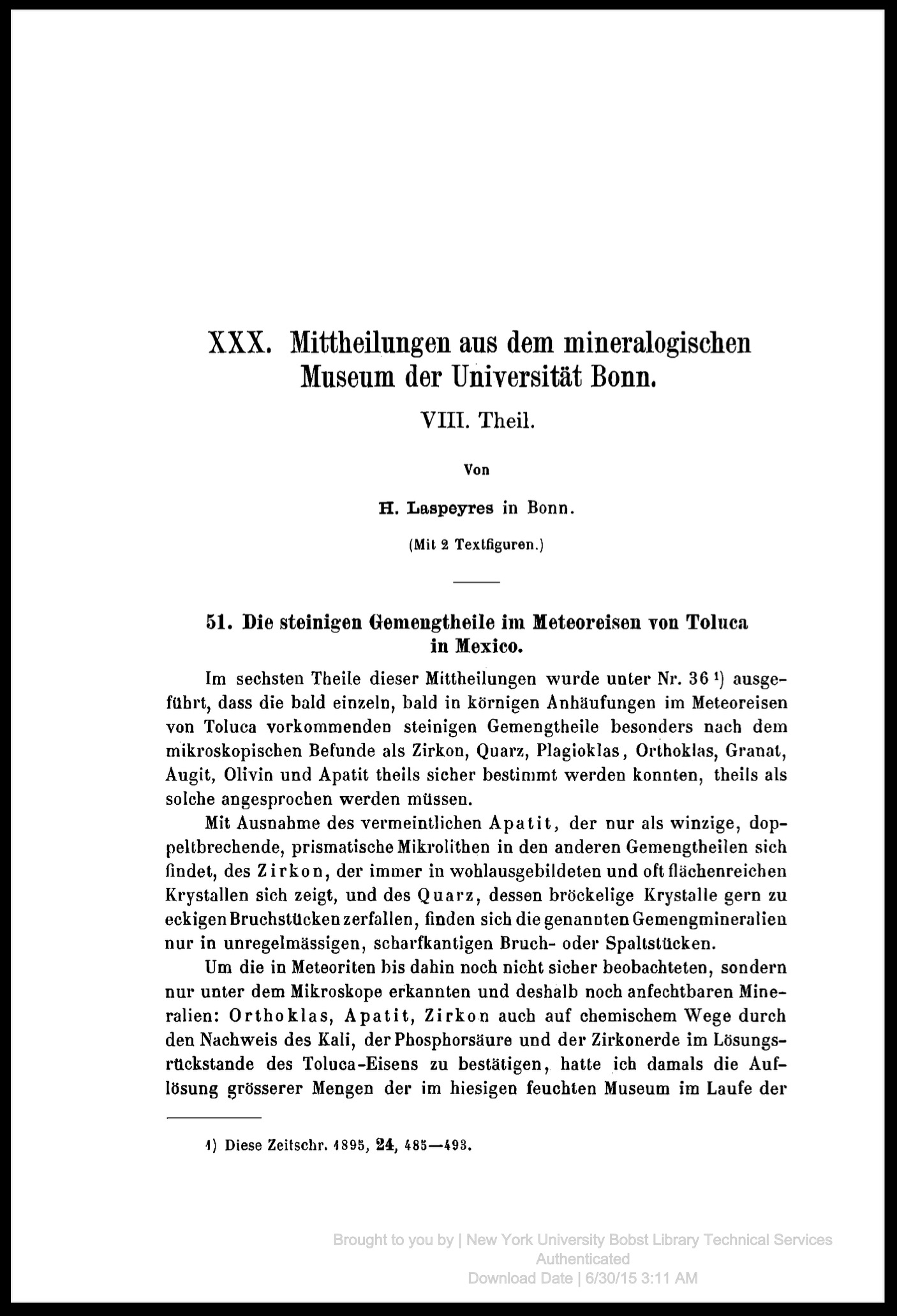
Die steinigen Gemengtheile im Meteoreisen von Toluca in Mexico
The stony inclusions in the meteoric iron from Toluca in Mexico
Journal Article
Laspeyres, H. (1897) Die steinigen Gemengtheile im Meteoreisen von Toluca in Mexico. [The stony inclusions in the meteoric iron from Toluca in Mexico] Zeitschrift für Krystallographie und Mineralogie, Vol. 27, pp. 586–600.
Record No. 6478  |  Sinkankas/Born No.: NIS/NIB  |  Language: in German  |  RWHL*
Article about the first discovery of kosmochlor (ureyite). Laspeyres investigates the stony inclusions enclosed within the Toluca iron meteorite of Mexico, treating them as mineralogical components capable of providing information on the meteorite’s composition and history. He describes the appearance, distribution, and microscopic character of the inclusions and identifies their constituent minerals through crystallographic, optical, and chemical observations. Particular attention is given to silicate minerals embedded in the metallic iron and to their relationships with one another and with the surrounding meteoritic metal. Laspeyres compares these constituents with minerals known from other meteorites and terrestrial rocks, discussing their mineralogical identity and the implications of their occurrence within an iron meteorite. The paper contributes to the late nineteenth-century investigation of the Toluca meteorites by demonstrating that apparently metallic masses can contain a complex assemblage of stony mineral inclusions and by documenting the mineralogical character of those inclusions in detail.

The rubies of Burma and associated minerals; their mode of occurrence, origin and metamorphoses: A contribution to the history of corundum
Journal Article
Brown, C.B. and Judd, J.W. (1896) The rubies of Burma and associated minerals; their mode of occurrence, origin and metamorphoses: A contribution to the history of corundum. Philosophical Transactions of the Royal Society of London, Series A, Vol. 187, pp. 151–228.
Record No. 4717  |  Sinkankas/Born No.: 957; NIB  |  RWHL*
Brown and Judd present a detailed investigation of the ruby deposits of Burma, based on geological observations and specimens collected by Brown and mineralogical and petrographic examination by Judd. They describe the occurrence of ruby at Mogok and neighboring localities, emphasizing its association with crystalline limestone and the minerals accompanying it, and distinguish primary occurrences from the secondary gem-bearing deposits produced by weathering and erosion. Microscopic study is used to investigate the structure of corundum and the numerous inclusions, alterations, and secondary minerals developed within or around the crystals. Particular attention is given to the transformation of corundum into other minerals and to the evidence these changes provide concerning the geological history of the ruby-bearing rocks. The authors discuss the probable origin of Burmese ruby, the metamorphic processes affecting the deposits, and the subsequent concentration of resistant corundum crystals in superficial deposits. The paper is an important early study combining field geology, mineralogy, and petrography to explain the occurrence, origin, and alteration of the rubies of the Mogok district.

On the structure-planes of corundum

Journal Article
Judd, J.W. (1895) On the structure-planes of corundum. Mineralogical Magazine, No. 11, pp. 49–55.
Record No. 1072  |  Sinkankas/Born No.: NIS/NIB  |  RWHL*
Judd examines the “structure-planes” or parting-planes developed in corundum, drawing particularly on specimens brought from Burma by C. Barrington Brown and comparing them with corundum from Ceylon, southern India, the United States, Siam, and other localities. He distinguishes three systems of parting, including basal and rhombohedral planes, and discusses earlier interpretations of these features by Tschermak, Mügge, von Lasaulx, and others. Microscopic examination shows that the development and prominence of the planes vary greatly, even within individual crystals. Especially noteworthy are corundums from the Chantabun Hills of Siam, in which concentric zones of growth are emphasized by internal reflections from parting planes. Judd considers the relationship of these structural features to inclusions, alteration, and lamellar or twin-like structures, emphasizing that the apparent cleavage of corundum represents secondary structural parting rather than true cleavage.

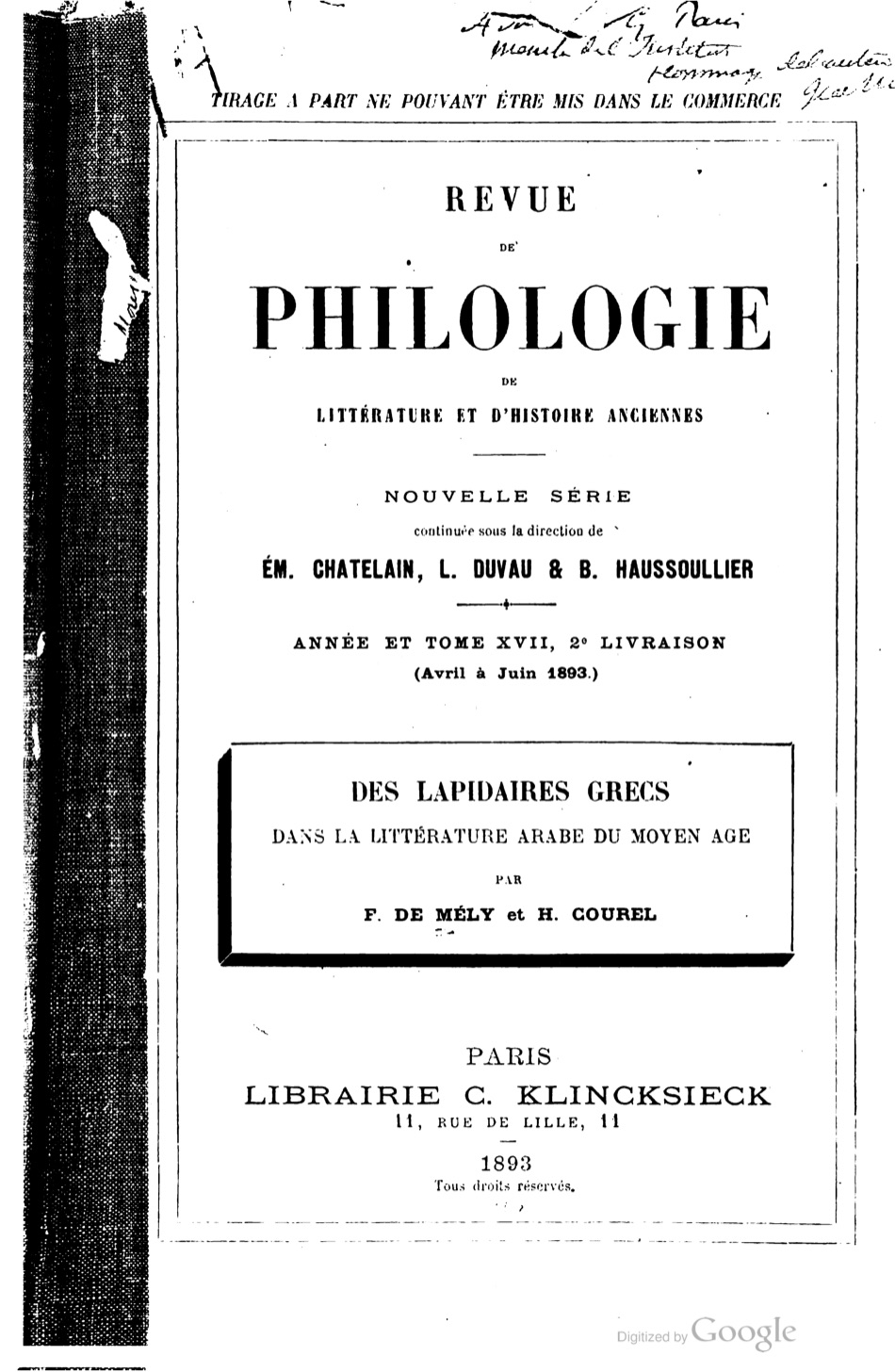
Les Lapidaires Grecs dans la Littérature Arabe du Moyen Age
The Greek Lapidaries in Medieval Arabic Literature
Book
Mély, F.d.S., de and Courel, H. (1893) Les Lapidaires Grecs dans la Littérature Arabe du Moyen Age. [The Greek Lapidaries in Medieval Arabic Literature] Paris, Klincksieck, 66 pp.
Record No. 5241  |  Sinkankas/Born No.: 4366  |  Language: in French  |  RWHL*
As one progresses in the study of lapidaries, one becomes convinced that they all stem from a common source; but so far, that source has not yet emerged from the obscurity surrounding its origins. In all these treatises, in fact, we find the same legends, the same myths. Whether it concerns lapidaries of precious stones or lapidaries of engraved stones, lapidaries from Antiquity or from the late Middle Ages, whichever manuscript we turn to, whichever author we consult, we always encounter the same fables: they vary only in form, never in substance. To uncover this original source, it would seem at first glance that one need only go back, continually retracing the chain we possess, and that the oldest known lapidary must, in some sense, be the original treatise. That would be a great error. The path is strewn with pitfalls, full of unforeseen twists and turns; just when one believes one firmly holds the guiding thread through this labyrinth, it suddenly breaks, and acquisitions that once seemed definitive abruptly vanish, leaving in their place a new field of exploration where everything must be rediscovered. In this realm of legend, where each century has left something of itself, imagination sometimes takes hold and one believes one can intuit meanings; yet on the contrary, in these scientific and magical treatises, there exists a tradition that has been faithfully transmitted and which one finds absolutely identical at both ends of the historical spectrum. The most precise method, the most scrupulous criticism, are thus essential here: they must accompany every step forward with their checks and allow the inclusion of a document in the general structure of the work only insofar as it appears absolutely indisputable. As of today, one point is absolutely established: it can serve as a reliable foundation. All known lapidaries, whether manuscript or printed, derive from one of the following four origins: 1° Greek: represented by Theophrastus, Dioscorides, the Cyranides, Hermes, Damigeron, the Book of Enoch, the Μετὰ Ζῆλος of Orpheus, the Pseudo-Plutarch, and Psellus. 2° Latin: preserved for us by Pliny, Saint Isidore, and Marbode; this tradition does not appear to have been interrupted in the West. 3° Arabic: the Book of Stones of Aristotle, the Book of Talismans, al-Bīrūnī, Ibn al-Bayṭār, and al-Tīfāshī seem to encapsulate the knowledge of Eastern lapidaries. 4° Hebrew: which certainly shows the greatest affinities with the Arabic lapidaries, but of which we also find absolutely distinctive traces in the Western lapidaries that we possess.

Ueber das optische Verhalten und die Mikrostructur des Korund
On the optical behavior and microstructure of the corundum
Journal Article
Lasaulx, A., von (1885) Ueber das optische Verhalten und die Mikrostructur des Korund. [On the optical behavior and microstructure of the corundum] Zeitschrift für Kristallographie und Mineralogie, Vol. 10, pp. 346–365, 2 plates.
Record No. 1169  |  Sinkankas/Born No.: NIS/NIB  |  Language: in German  |  RWHL*
Important early article on the microscopic and surface features of corundum. Lasaulx investigates the optical behavior and microscopic structure of corundum, examining thin sections and crystal specimens to explain optical irregularities observed in a mineral that should ideally behave as a uniaxial crystal. He describes variations in interference phenomena, anomalous double refraction, internal lamellar structures, inclusions, and other microscopic features, relating these to the growth and structural history of the crystals. Particular attention is given to ruby and sapphire varieties of corundum and to the relationship between their internal structure and optical behavior. Illustrated by two plates, the paper is an important early application of microscopic and optical mineralogical methods to corundum and demonstrates that apparently homogeneous crystals may contain complex internal structures capable of producing anomalous optical effects.

Les enclaves du saphir, du rubis, et du spinelle
The inclusions of sapphire, ruby, and spinel
Journal Article
Prinz, W. (1883) Les enclaves du saphir, du rubis, et du spinelle. [The inclusions of sapphire, ruby, and spinel] Bulletin des séances de la Société belge de microscopie, Vol. 8, Année 1881–1882, pp. 97–105, 1 pl..
Record No. 3190  |  Sinkankas/Born No.: NIS/NIB  |  Language: in French  |  RWHL*
Prinz examines microscopic inclusions in sapphire, ruby, and spinel, describing the internal features observed in specimens of these gemstones and illustrating them on an accompanying plate. He discusses the form, distribution, and appearance of the inclusions under magnification and considers their possible nature and origin. The paper is an early application of microscopy to the systematic examination of gemstone inclusions and is particularly significant to gemology because such internal features later became important criteria for identifying gems, determining their natural origin, and distinguishing between closely similar materials.

Optisches Verhalten von Korund-Krystallen
Optical behavior of corundum crystals
Journal Article
Tschermak, G. (1878) Optisches Verhalten von Korund-Krystallen. [Optical behavior of corundum crystals] Mineralogische und Petrographische Mittheilungen, Vol. 1, No. 4, pp. 362–364.
Record No. 1741  |  Sinkankas/Born No.: NIS/NIB  |  Language: in German  |  RWHL*
An important early optical and microscopic study by Gustav Tschermak of corundum crystals from Ceylon and the Urals. Tschermak describes anomalous biaxial optical behavior in crystals otherwise regarded as uniaxial and relates this to internal structural irregularities. Of particular gemological importance is his examination of inclusions in Ceylon sapphire: he identifies relatively large tetragonal crystals as rutile from their form, appearance and color, and further observes extremely fine brown needles arranged in intersecting networks at 60°, which he likewise interprets as rutile. This is the earliest clear identification of the “silk” in corundum as rutile. He also records similar reticular inclusions and color zoning in Ural corundum. The paper is a landmark in the microscopic study of ruby and sapphire inclusions and in understanding the internal structure of corundum.

Die Einschlüsse von Mineralien in krystallisirten Mineralien; deren chemische Zusammensetzung und die Art ihrer Entstehung
The Inclusions of Minerals in Crystallized Minerals; Their Chemical Composition and the Nature of their Formation
Book
Blum, J.R., Leonhard, G., Seyfert, A.H. and Söchting, E. (1854) Die Einschlüsse von Mineralien in krystallisirten Mineralien; deren chemische Zusammensetzung und die Art ihrer Entstehung. [The Inclusions of Minerals in Crystallized Minerals; Their Chemical Composition and the Nature of their Formation] Haarlem, Loosjes, 264 pp., 8 color plates
Record No. 17053  |  Sinkankas/Born No.: 718A; NIB  |  Language: in German  |  RWHL*
Sinkankas: In a masterful introduction to the study of inclusions in crystallized minerals, the authors set forth the fundamental principles of paragenesis and the evidence supporting them, considering types of inclusions based on environment and genesis type, such as whether the minerals were grown from solution or in an igneous rock mass. The first part provides 334 examples of inclusions, followed by a table of 107 others, a table of chemical groups into which the minerals containing inclusions fall, and copious notes. In the second part, the authors begin with a brief historical survey of the knowledge of inclusions, mentioning Claudian to show that the ancients were already aware of watery inclusions in rock crystal, and naming mineralogists and collectors thereafter, especially in the latter half of the 18th century, who remarked on or zealously collected inclusions, regardless of cost. Notable authorities such as Pini, Collini, Davila, Rome Delisle, Reuss, Jameson, and others are featured. The text of this part starts with quartz, with no less than 43 examples of inclusions in rock crystal, amethyst, etc., followed by 13 in calcite and numerous others in fluorite, barite, topaz, tourmaline, adularia, beryl, analcime, apophyllite, and more. The second part concludes with a handsome colored plate of inclusions and phantoms in quartz, calcite, and fluorite. The third part begins with a further discussion and a list of periodicals the authors consulted. This is followed by examples of microscopic or “cryptic” inclusions, such as sunstone and bronzite, as well as a brief note on diamond, in which the “ashes of burnt diamonds showed traces of organic structure,” along with several examples of phantom growth and explanations of inclusion growth in minerals like tourmaline, cakite, aragonite, garnet, fluorite, and others. While this is the first systematic monograph to describe and offer paragenetic theories on the growth of inclusions, it does not mention the work of David Brewster of Scotland, who published important discoveries in his Edinburgh Philosophical Journal from 1823 onward, especially recognizing two- and three-phase inclusions in topaz. See also SOCHTING, J.W.E., 1860.

The Life and Remains of the Rev. Edward Daniel Clarke, LL.D.
Book
Otter, W. (1824) The Life and Remains of the Rev. Edward Daniel Clarke, LL.D. London, George Cowie and Co, 2 Vols., 667, 486 pp.
Record No. 29483  |  Sinkankas/Born No.: NIS/NIB  |  RWHL*
A two-volume biography of the English traveler, antiquarian, mineralogist, and clergyman Edward Daniel Clarke, compiled by William Otter from Clarke’s correspondence, journals, manuscripts, and other papers. The work chronicles Clarke’s education, travels, academic career, scientific investigations, collecting activities, and associations with leading scholars of his period, and includes substantial extracts from his writings. Of particular gemological and mineralogical interest is the inclusion of Clarke’s “The Gas Blow-Pipe” (pp. 411–483), describing his apparatus for producing extremely high temperatures and experiments on the fusion and behavior of minerals, metals, earths, and other substances, illustrating the early development of blowpipe analysis in mineralogy.

Traité des pierres précieuses, des porphyres, granits, marbres, albatres, et autres roches propres a recevoir le poli et a orner les monumens publics et les edifices particuliers, etc.
Treatise on Precious Stones, Porphyries, Granites, Marbles, Alabasters, and Other Rocks Suitable for Polishing and Adorning Public Monuments and Private Buildings, etc.
Book
Brard, C.P. (1808) Traité des pierres précieuses, des porphyres, granits, marbres, albatres, et autres roches propres a recevoir le poli et a orner les monumens publics et les edifices particuliers, etc. [Treatise on Precious Stones, Porphyries, Granites, Marbles, Alabasters, and Other Rocks Suitable for Polishing and Adorning Public Monuments and Private Buildings, etc.] Paris, Schoell, 2 Vols., 565 pp.
Record No. 7086  |  Sinkankas/Born No.: 897  |  Language: in French  |  RWHL*
Sinkankas: A large, detailed work which embraces not only gemstones but also ornamental and monumental kinds, with much on their extraction, working, and polishing. First volume: gemstones, ornamental stones, with discussion of crystallography, mineral properties, detailed descriptions of hard" and "soft" stones, with diamond receiving most attention; others treated include corundum, chrysoberyl, spine!, topaz, beryl, zircon, garnet, euclase, quartz, the last also given a great deal of space for its treatment of crystalline & cryptocrystalline varieties (p 79-149), and including opal, a large number of trivial jasper varieties, and, briefly, descriptions of figured stones, natural and false, engraved gems, etc. Among "soft" stones are idocrase, peridot, tourmaline, epidote, kyanite, prehnite, feldspars (including jade which Brard believes to be a kind of compact feldspar), hypersthene, lapis lazuli, lepidolite, natrolite, chiastolite, fluorite, calcite, talc and gypsum. This section is quite remarkable for its treatment of so many uncommon or rare gemstones and is one of the earliest treatises to include many of them. In an appendix to the first volume, Brard also treats halite, jet, hard coal, amber, malachite, turquoise, pyrite, hematite, rhodonite and obsidian although there seems to be no explanation why these materials were separately treated. Here also appears a very brief remark on magnetite and "eagle-stone" amulets, followed by a short discus- sion on how to detect differences between real and false gems, among the interesting remarks being Brard's recognition of spherical inclusions as being typical of glasses rather than of real gemstones (p 209). Volume I closes with a good explanation of lapidary techniques and abrasive/polishing agents, and the "agate mills" of ldar-Oberstein, Pl IV. The engraved plates additionally depict crystal forms, a lapidary bench as used in Paris, wire saw, diamond cuts, disk saw, carving tools, a multiple-blade saw, a lapidary in the act of sawing, and a gem-engraver's bench with accessories. In contrast, the second volume is far less interesting to the gemologist inasmuch as it confines itself to monumen- tal/architectural stones, eg, porphyries, variolites, amygdaloids, granites,etc, while others are the numerous varieties of marbles and alabasters, along with explanations of quarrying and process- ing of stones into finished shapes. A scarce and important work giving every evidence of great care in selecting and assembling accurate and useful information, reflecting the state of the stone arts at that time."

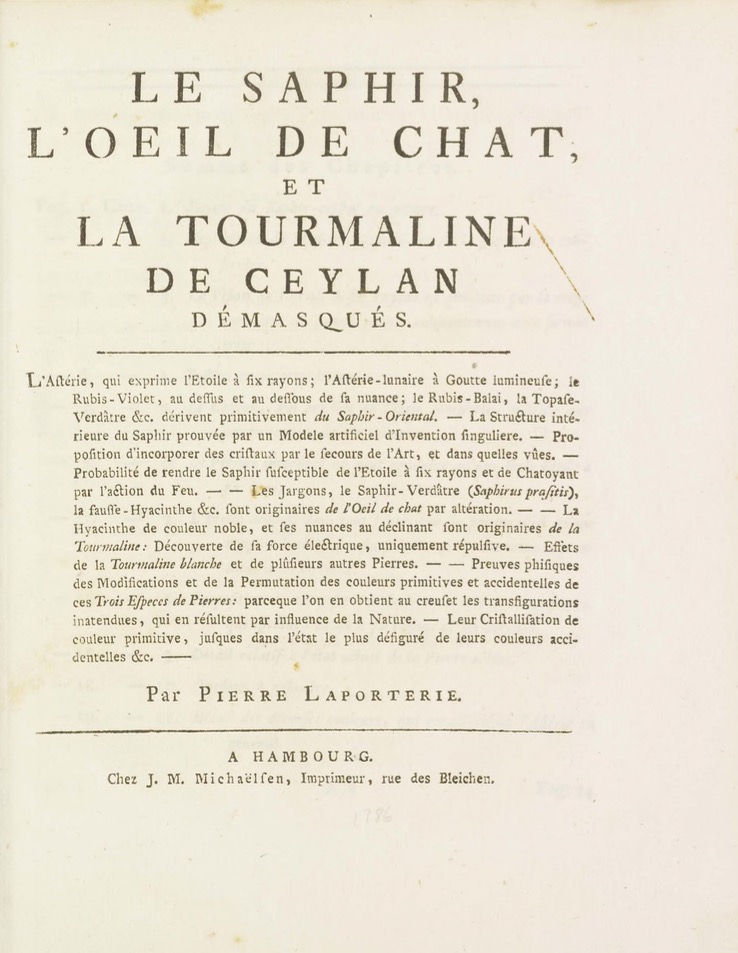
Le Saphir l’Oeil de Chat, et la Tourmaline de Ceylan Démasqués
The Cat's Eye Sapphire and the Tourmaline of Ceylon Unmasked.
Book
Laporterie, P. (1786) Le Saphir l’Oeil de Chat, et la Tourmaline de Ceylan Démasqués. [The Cat's Eye Sapphire and the Tourmaline of Ceylon Unmasked.] Hamburg, Chez J. M. Michaëlsen, 74 pp.
Record No. 6864  |  Sinkankas/Born No.: 3780  |  Language: in French  |  RWHL*
Sinkankas: Bound with: Explication de la planche, qui représente plûsieurs variétés de la pierre aux etoiles mouvantes, *) ainsi que sa cristallisation ; Explication de la planche, qui représente le hérisson solaire et la pierre, qui le produit / Pierre Laportorie. [Hambourg : s.n., 1786]. Of the two Explication[s] de la planche" bound with the "Saphir l'oeil de chat", Sinkankas writes: "The two...short contributions are sometimes cited as independent works, which they may have been, but they commonly are bound up together with the [Saphir]. All are rare."-​-​Gemology by J. Sinkankas, v. 2, p. 600. Le saphir l'oeil de chat...: "Laporterie describes and explains the reflective light streaks observed on certain corundum gems, notably on tke [sic] star sapphires of Ceylon, with remarks on the tourmaline from that country and its properties...Ma​ny specimens [of sapphire] are described in detail, along with remarks on internal structures observed and a theory that the star stones form through a series of growth and alteration cycles as evidenced by the straight bands noted within them."-​-​Gemology by J. Sinkankas, entry no. 3780 (JSL3780)."

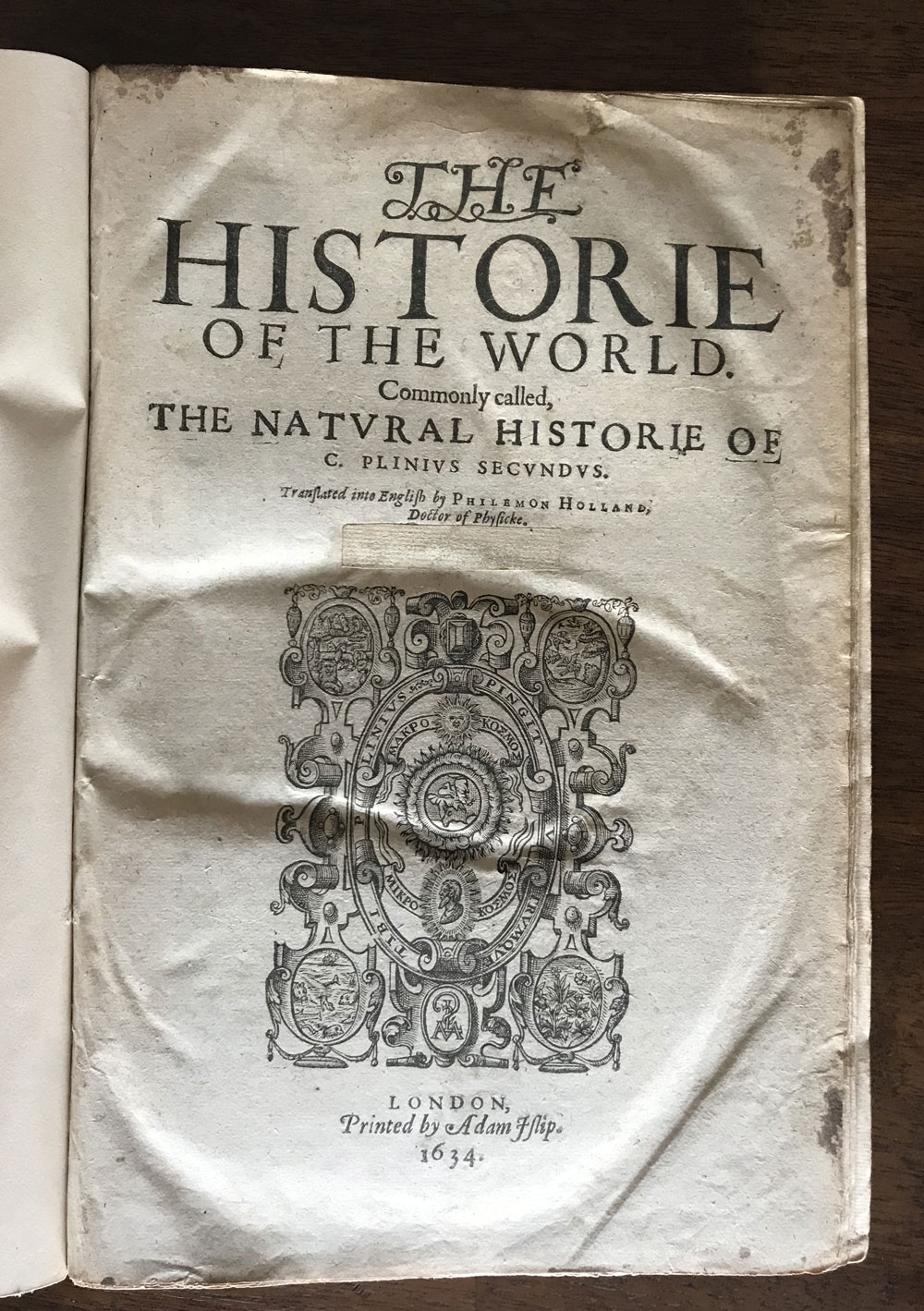
The Histoirie of the World, Commonly Called the Naturall Historie of C. Plinius Secundus
Book
Pliny the Elder and Holland, P. (1601) The Histoirie of the World, Commonly Called the Naturall Historie of C. Plinius Secundus. London, Adam Islip, 2 Vols. in 1, 614 + 632 pp.
Record No. 4071  |  Sinkankas/Born No.: 5166  |  RWHL*
The Roman author and historian Gaius Plinius Secundus, a.k.a. Pliny the Elder (23-79 A.D.) compiled the Naturalis Historia (Natural History) from a reported two thousand sources. This thirty-seven volume work, published in 77A.D., embraces the domain of natural history in the broadest sense. It includes astronomy, geography and meteorology. Beyond what is today considered natural history, it also includes fine arts, inventions, and human relations. It stands as the chief source from which future historians have obtained informative descriptions of life in the first century. Much of Pliny’s information on gems was not written from direct observation. His studies were often a retelling from second-hand sources, now lost in antiquity. Many stones are lumped together by color, mining location, or attributes passed on in legends. His recounting of legends and myths, and assumptions drawn from these, are the basis of much of the writing which appeared into the Middle Ages. He became the most often quoted writer on the subject, and his information was relied upon and repeated without question in book after book. In the first thirteen centuries of European history, little scientific in-formation was added to the limited knowledge of gems garnered from Pliny’s accounts. However, many later authors embellished the writings and added their own speculations and unwarranted conclusions. Pliny is credited with his attempts to classify gems according to color and observable external characteristics. This led to the practice of assigning the attributes of one stone to all stones of similar color or appearance. The green stones named smaragdus in Latin are prime examples. Pliny classified most green stones as varieties of emerald. In all, twelve varieties are listed; green sapphire, turquoise, smithsonite, malachite, jasper, and even glass are identifiable by his descriptions. He also is credited with making some astute classifications. It is thought that he was the first to recognize the connection between beryls and emeralds. Some of the stones grouped by Pliny share little in common. It is obvious that some of his “observations” were gathered through other’s eyes. Errors in translation or reliance on oral tradition may have led to the inclusion of misinformation about stones that Pliny was not able to observe in nature. Since the original Latin version, over two hundred and fifty editions of his classic have been published in numerous languages. The first complete edition of Natural History was published in Venice in 1469, and the first critical edition was offered by Hardouin in 1685. The most detailed study of Pliny’s gemstone accounts is a work by S. H. Ball. See also the translations from Eichholz, which many experts consider more authoritative.

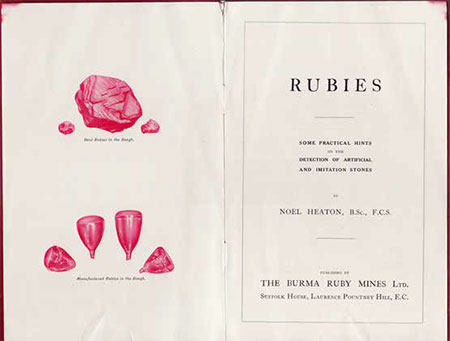
Rubies: Some Practical Hints on the Detection of Artificial and Imitation Stones
Book
Heaton, N. (n.d., ca. 1912) Rubies: Some Practical Hints on the Detection of Artificial and Imitation Stones. London, Burma Ruby Mines Ltd., 15 pp.
Record No. 6933  |  Sinkankas/Born No.: 2829; NIB  |  RWHL*
Sinkankas: Issued to advertise the company’s rubies but with useful information on natural and synthetic rubies and their distinction. To this end, the color illustrations depict natural ruby crystals and synthetic boules, and six figures of cut gems showing typical inclusions to be found in each type. The text also discusses gemological testing methods and instruments required,and pastes.

G&G Micro-World: Vesuvianite in sapphire
Journal Article
Tao, S. (2026) G&G Micro-World: Vesuvianite in sapphire. Gems & Gemology, Vol. 62, No. 2, Summer, p. 212.
Record No. 29939  |  Sinkankas/Born No.: NIS/NIB  |  RWHL
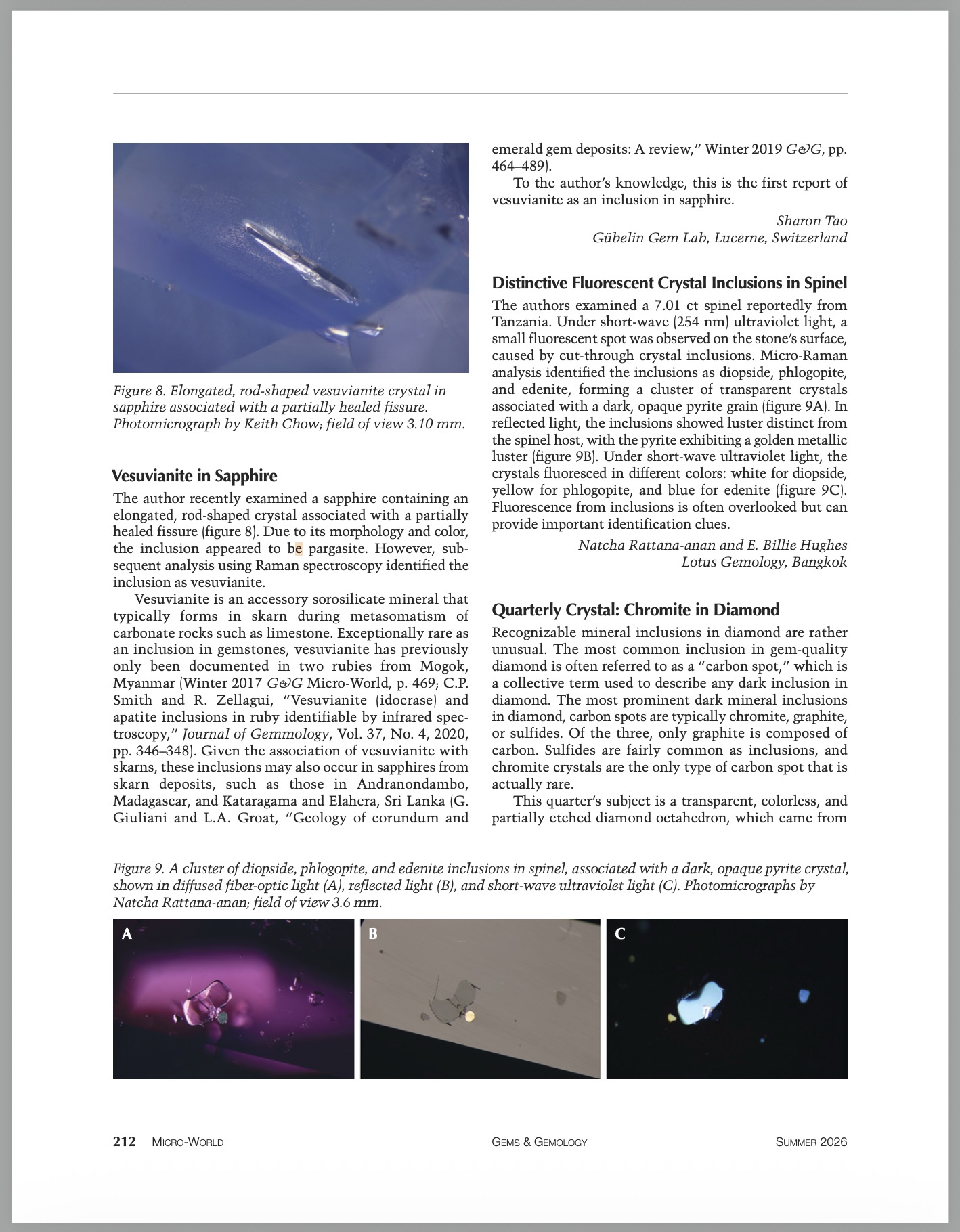
The author recently examined a sapphire containing an elongated, rod-shaped crystal associated with a partially healed fissure (figure 8). Due to its morphology and color, the inclusion appeared to be pargasite. However, subsequent analysis using Raman spectroscopy identified the inclusion as vesuvianite. Vesuvianite is an accessory sorosilicate mineral that typically forms in skarn during metasomatism of carbonate rocks such as limestone. Exceptionally rare as an inclusion in gemstones, vesuvianite has previously only been documented in two rubies from Mogok, Myanmar (Winter 2017 G&G Micro-World, p. 469; C.P. Smith and R. Zellagui, “Vesuvianite (idocrase) and apatite inclusions in ruby identifiable by infrared spectroscopy,” Journal of Gemmology, Vol. 37, No. 4, 2020, pp. 346–348). Given the association of vesuvianite with skarns, these inclusions may also occur in sapphires from skarn deposits, such as those in Andranondambo, Madagascar, and Kataragama and Elahera, Sri Lanka (G. Giuliani and L.A. Groat, “Geology of corundum and emerald gem deposits: A review,” Winter 2019 G&G, pp. 464–489). To the author’s knowledge, this is the first report of vesuvianite as an inclusion in sapphire.

Gem Notes: Synthetic sapphires resembling Paraíba-type tourmaline
Journal Article
Radhi, K. and Alatawi, A. (2026) Gem Notes: Synthetic sapphires resembling Paraíba-type tourmaline. Journal of Gemmology, Vol. 40, No. 2, pp. 134–135.
Record No. 28984  |  Sinkankas/Born No.: NIS/NIB  |  RWHL
Two bluish green faceted samples that resembled Paraíba-type (Cu-bearing) tourmaline (13.94 and 15.95 ct; Figure 36) were recently submitted to the DANAT laboratory for identification. Standard gemmological testing revealed RIs of 1.761–1.770 and a hydrostatic SG of 3.98 for both specimens, which match the values for corundum. The specimens were free of inclusions when viewed with 10×–70× magnification, suggesting a synthetic origin. However, no curved colour banding was observed with diffused lighting while they were immersed in water. As previously documented by Hughes (2019), curved banding in synthetic sapphire and ruby also can be revealed by exposure to short-wave UV radiation. We examined the present samples using a DiamondView, but they did not fluoresce under its ultra-short-wave UV source, nor under long-wave UV radiation. LA-ICP-MS chemical analysis of both samples was performed with an iCAP Q ICP-MS unit coupled with a Q-switched Nd:YAG laser-ablation device operating at a wavelength of 213 nm. The common trace elements in natural corundum—Cr, Ti, V, Fe, Ni and Ga—were all below the detection limits, which proved that the specimens were synthetic. (Detection limits were 1.8 ppmw Cr, 0.44 ppmw Ti, 0.75 ppmw V, 7.9 ppmw Fe, 2.1 ppmw Ni and 1.2 ppmw Ga.) Moreover, the analyses showed an elevated content of Co (51.1–78.1 ppmw).

Jadeite from Guatemala: New observations and distinctions among lavender and black jade
Journal Article
Zhao, M., Xu, B., Zhao, S., Liu, Y. and Li, Z. (2026) Jadeite from Guatemala: New observations and distinctions among lavender and black jade. Crystals, Vol. 16, No. 2, Article No. 130 (21 pp.).
Record No. 28265  |  ISBN/ISSN: ISSN 2073-4352  |  Sinkankas/Born No.: NIS/NIB  |  RWHL
This study systematically investigates the mineralogical, spectral, and geochemical characteristics of Guatemalan lavender jadeite and black omphacite to elucidate their coloration mechanisms and genetic origins. Lavender samples are primarily composed of jadeite, which derives its color from synergistic effects involving Mn³⁺ and Fe²⁺–Ti⁴⁺ charge transfer (554–614 nm). In contrast, black samples are dominated by omphacite, which owes its dark hue to Cr³⁺ (670 nm) and Fe²⁺–Fe³⁺ charge transfer (857 nm). Chemically, lavender jadeite exhibits higher Na₂O and Al₂O₃, approaching the jadeite end-member composition, whereas black omphacite is enriched in CaO, MgO, and FeO. Trace element analyses reveal low overall abundances, with black omphacite showing synchronous LREE and HREE depletion forming a “bulge-shaped” pattern, while lavender jadeite displays N‑MORB‑like REE distributions. Guatemalan jadeites are distinguished from Myanmar counterparts by Y enrichment. The identification of graphite and CH₄ and CO₂ fluid inclusions indicates formation in an organic-rich reducing environment. Cathodoluminescence zoning and abundant fluid inclusions support a direct crystallization genesis from high-pressure fluids (P‑type) in subduction zones. This study establishes key constraints for origin discrimination and genetic classification of Guatemalan lavender jadeite and black omphacite.

Mineralological characteristics of high-quality Guatemalan green emerald rock and its origin landmark
高品质危地马拉绿色翡翠岩石矿物学特征及其产地标型
Journal Article
Deng, Z.-x., Luo, Z.-c., Qiu, Z.-l., Chen, S.-j., Yang, J., Hou, S.-y., Chen, S., Xu, Z., Zhang, Y.-f. and Peng, Y.-f. (2025) Mineralological characteristics of high-quality Guatemalan green emerald rock and its origin landmark. [高品质危地马拉绿色翡翠岩石矿物学特征及其产地标型] Acta Petrologica et Mineralogica 岩石矿物学杂志, Vol. 44, No. 4, pp. 981–994.
Record No. 29025  |  DOI: https://doi.org/10.20086/j.cnki.yskw.2025.4122  |  Sinkankas/Born No.: NIS/NIB  |  Language: in Chinese with English abstract  |  RWHL
High-quality green jadeite recently discovered in Guatemala is comparable in quality to the finest green jadeite from Myanmar and has become an increasingly important source of premium jadeite jewelry in the Chinese market. However, its mineralogical characteristics and geographic origin indicators remain poorly understood. This study examines high-quality Guatemalan green jadeite rough and finished jewelry widely available in the Chinese market. Their mineralogical and compositional characteristics were systematically investigated using microscopic observation, Raman spectroscopy, and electron microprobe analysis. The results show that the material, marketed as “Maya Green,” is composed predominantly of omphacite, with minor accessory minerals including phlogopite, phengite, and chlorite. Three generations of omphacite (Omp-I, Omp-II, and Omp-III) were identified, with Omp-III forming the principal constituent of the jadeite. Omp-III is characterized by low Mg (average 7.59%) and Fe (average 1.57%) contents, relatively high Cr (average 0.24%), and a jadeite end-member component of XJd > 0.5 (average 0.53). Previous studies have shown that jadeite from different segments of the Motagua Fault in Guatemala displays distinctive mineral assemblages. In contrast, the high-quality Guatemalan green jadeite examined in this study is mineralogically simple, consisting primarily of nearly pure omphacite but containing two distinctive metallic inclusions, native copper and nickeline. These inclusion characteristics, together with the mineral chemistry and mineral assemblage, differ significantly from those of other high-quality green jadeites and provide important mineralogical criteria for distinguishing premium Guatemalan green jadeite from traditional Myanmar jadeite and similar high-quality jadeites from other localities.

G&G Micro-World: Dark red tantalite crystal in greenish blue sapphire

Journal Article
Estrella, A. and Hukins, J. (2025) G&G Micro-World: Dark red tantalite crystal in greenish blue sapphire. Gems & Gemology, Vol. 61, No. 4, Winter, p. 403.
Record No. 28174  |  Sinkankas/Born No.: NIS/NIB  |  RWHL
The authors recently examined a 1.80 ct greenish blue sapphire and were surprised to observe a dark red internal protuberance jutting inward from the surface of the pavilion (figure 8). The prismatic inclusion was identified as manganotantalite ((Mn,Fe)(Ta₂O₆); a manganese-enriched iron-tantalum oxide) using Raman spectroscopy, consistent with its red bodycolor. This mineral displayed a blunt termination and etched pinacoidal surfaces. Laser ablation–inductively coupled plasma–mass spectrometry analysis showed that the host sapphire had iron levels of up to 1900 ppma. With a spectroscope, a strong broad absorption around 840–880 nm was observed. These observations are consistent with known occurrences of tantalite in sapphire hosts from basaltic-related origins (S. Promwongnan and C. Sutthirat, “Mineral inclusions in ruby and sapphire from the Bo Welu gem deposit in Chanthaburi, Thailand,” Fall 2019 G&G, [354–369]). While tantalite itself is not uncommon in sapphires of this type, this inclusion was notable due to its interesting morphology and attractive dark red color, attributed to the presence of manganese, which contrasted with the greenish blue stone (O.I. Lee and E.T. Wherry, “Manganotantalite from Amelia, Virginia,” American Mineralogist, Vol. 4, No. 7, 1919, [80–83]).

Exploring the Literature of Gemstone Inclusions

The literature of gemstone inclusions covers identification, origin determination, treatments, synthesis, mineral inclusions, fluid inclusions and other internal features of natural and synthetic gems.

For a curated selection of important sources, read Inclusions in Gemstones — Hyperion Literature Sources.

About Four Treasures

Four Treasures is Lotus Gemology's freely accessible gemological reference database. Use the full database to search by author, title or keyword and explore literature on gemology, mineralogy, jewelry and related fields. Where available, hyperlinks on titles may lead directly to the full publication.

Search the Complete Four Treasures Database