Gemstone Inclusions Bibliography

Gemstone Inclusions Bibliography

Explore books, articles and historical sources on inclusions in gemstones in Four Treasures, the Lotus Gemology reference database. This bibliography brings together matching records from the collection, with publication details, abstracts and cover images where available.

Gemstone Inclusion References

The list below matches the terms inclusion or inclusions in the database's searchable fields. Some references discuss inclusions as part of a broader subject.
1,061–1,080 of 1,123 matching references

Gem corundums and zircons from the Primorye placers
Journal Article
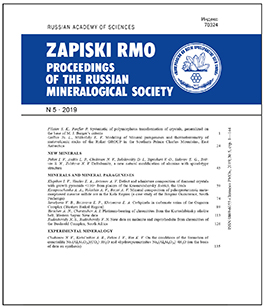
Ananyev, S.A., Ananyeva, T.A., Garanin, V.K. and Kudryavtseva, G.P. (1998) Gem corundums and zircons from the Primorye placers. Zapiski RMO (Proceedings of the Russian Mineralogical Society), Vol. 127, No. 4, pp. 120–124.
Record No. 7758  |  not seen
Descriptions are given of gem-quality sapphire and “hyacinth” zircon—and the associated chrome spinel, magnetite, and enstatite—found at Primorye in heavy-mineral concentrates that were ultimately derived from alkali basalts. Transparent blue, blue-green, green, and occasional multicolored sapphires are found as rounded pebbles (2 to 30 mm in size); some star sapphires are recovered. Chemical analyses and visible absorption spectra show that the sapphire coloration is related to the presence of Fe (0.72–1.75 wt.% FeO) and Ti (0.02–0.20 wt.% TiO₂). Inclusions of hercynite and ferrocolumbite were identified in some of these corundums. The zircon also is found as rounded pebbles (1 to 25 mm in size). They are transparent orange, orange-yellow, or brown-red, and become colorless on heating. Their chemical compositions correspond to those of the rare zircon variety naegite, with 4.59–6.14 wt.% Ta₂O₅, 3.22–3.59 wt.% Nb₂O₅, and 3.98–4.09 wt.% ThO₂. [Editor’s note: The terms hyacinth and naegite are not used in most modern gemology and mineralogy references in English.]

Tairus hydrothermal synthetic ruby

Journal Article
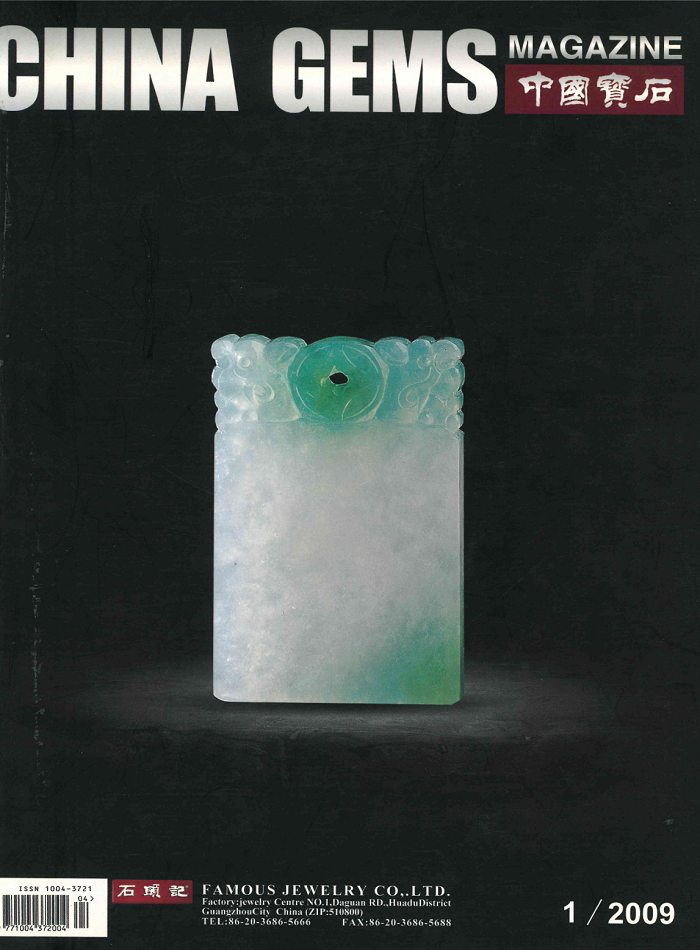
Qi, L. and Lin, S. (1998) Tairus hydrothermal synthetic ruby. China Gems, Vol. 7, No. 1, pp. 122–124.
Record No. 7757  |  not seen
Gemological investigations of Tairus hydrothermal synthetic ruby revealed characteristic microscopic features, including solid alloy inclusions consisting mainly of copper–iron alloys and wavy growth lines. Chemical analysis by microprobe showed that the chromium concentration in the area of the growth lines averaged 3.81 wt.% Cr₂O₃, as compared to 1.53 wt.% Cr₂O₃ in the remainder of the stone. Characteristic infrared absorption peaks are 3308, 3233, and 3186 cm⁻¹.

Madagascar rubies debut

Journal Article
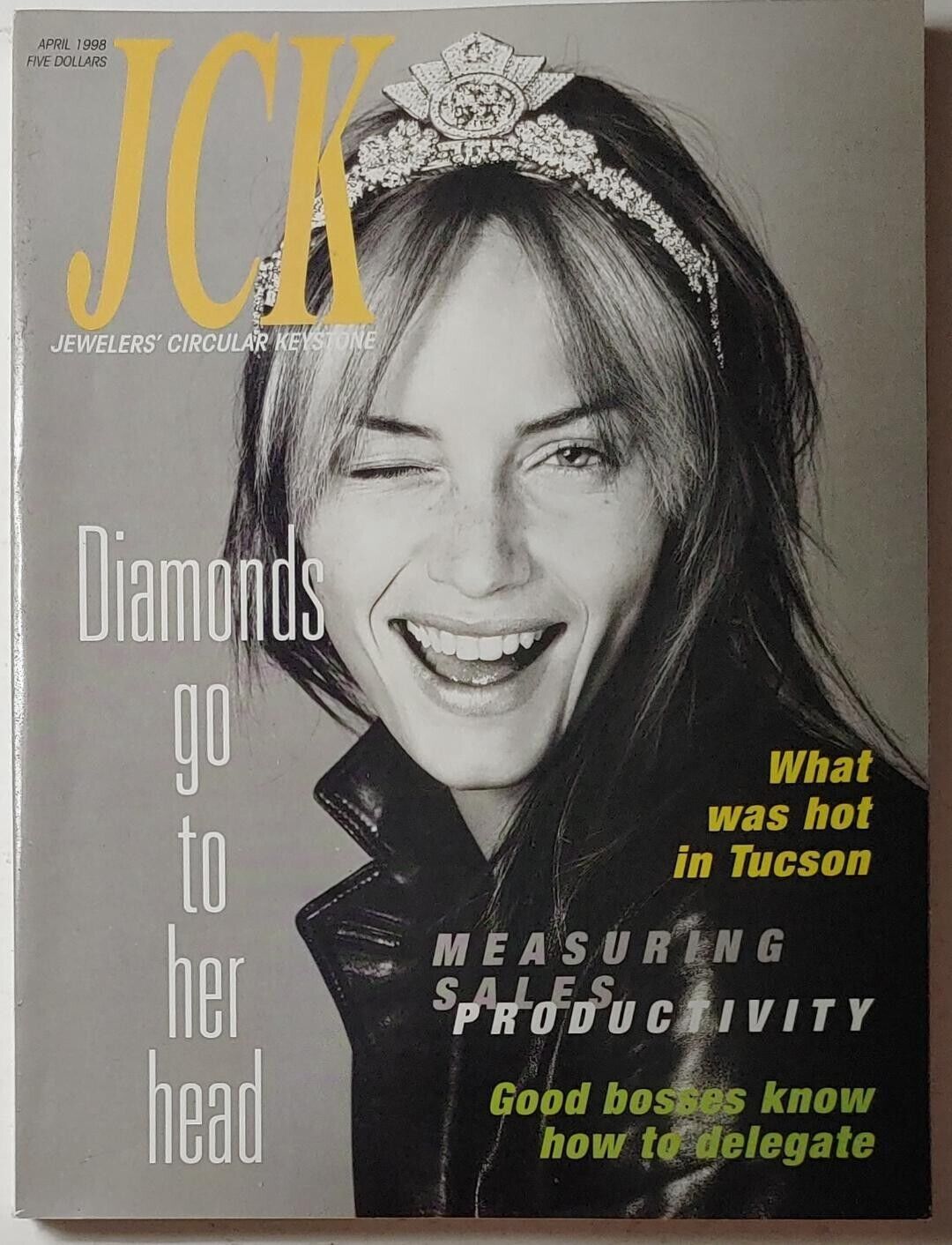
Roskin, G. (1998) Madagascar rubies debut. Jewelers’ Circular Keystone, Vol. 169, No. 8, pp. 40, 42.
Record No. 2948  |  seen
Strongly saturated, slightly purplish red rubies that have yielded cut stones up to 3 ct have been found recently in Madagascar. Characteristic inclusions are rounded transparent crystals, “treacle” type graining, and nests of short, flat, acicular 60° needles. The rubies contain uneven, strong, parallel growth lines and fingerprint-like veils, similar to those seen in both Burmese and Thai material. The color is somewhat dark in tone, and the ruby fluoresces moderate red to long-wave UV radiation. A dealer in Pittsburgh, Pennsylvania, is distributing the faceted material in the U.S.

Emerald mineralization and metasomatism of amphibolite, Khaltaro granitic pegmatite-hydrothermal vein system, Haramosh Mountains, northern Pakistan
Journal Article
Laurs, B.M., Dilles, J.H. and Snee, L.W. (1996) Emerald mineralization and metasomatism of amphibolite, Khaltaro granitic pegmatite-hydrothermal vein system, Haramosh Mountains, northern Pakistan. Canadian Mineralogist, Vol. 34, No. 6, December, pp. 1253–1286.
Record No. 6062  |  not seen
Emerald mineralization is found within 0.1- to 1-m-thick hydrothermal veins and granitic pegmatites cutting amphibolite within the Nanga Parbat-Haramosh massif, in northern Pakistan. The amphibolite forms a sill-like body within garnet-mica schist, and both are part of a regional layered gneiss unit of Proterozoic (?) age. The 40 Ar/ 39 Ar data for muscovite from a pegmatite yield a plateau age of 9.13+ or -0.04 Ma. Muscovite from mica schist and hornblende from amphibolite yield disturbed spectra with interpreted ages of 9 to 10 Ma and more than 225 Ma, respectively, which indicate that peak Tertiary metamorphism reached 325 to 550 degrees C prior to 10 Ma. Pegmatites were emplaced after peak metamorphism during this interval and are older than pegmatites farther south in the massif. At Khaltaro, simply zoned albite-rich miarolitic pegmatites and hydrothermal veins containing various proportions of quartz, albite, tourmaline, muscovite, and beryl are associated with a 1- to 3-m-thick heterogeneous leucogranite sill, that is locally albitized. The pegmatites likely crystallized at 650 to 600 degrees C at pressures of less than 2 kbar. Crystals of emerald form within thin (<30 cm) veins of quartz and tourmaline-albite, and more rarely in pegmatite, near the contacts with altered amphibolite. The emerald-green coloration is produced by Cr and Fe. The Cr and total Fe contents, expressed as Cr 2 O 3 , and Fe 2 O 3 , respectively, decrease systematically from emerald (>0.20, 0.54-0.89 wt%), to pale blue beryl (< or =0.07, 0.10-0.63%), to colorless beryl (<0.07, 0.07-0.28%). The amphibolite is metasomatized in less than 20-cm-wide selvages that are symmetrically zoned around veins or pegmatites. A sporadic inner zone containing F-rich biotite, tourmaline, and fluorite, with local albite, muscovite, quartz, and rare beryl, gives way to an intermediate zone containing biotite and fluorite with local plagioclase and quartz, and to an outer zone of amphibolite containing sparse biotite and local quartz. The inner and intermediate zones experienced gains of K, H, F, B, Li, Rb, Cs, Be, Ta, Nb, As, Y and Sr, and losses of Si, Mg, Ca, Fe, Cr, V and Sc. The outer alteration zone has gained F, Li, Rb, Cs, and As. Oxygen isotope analyses of igneous and hydrothermal minerals indicate that a single fluid of magmatic origin with delta 18 OH 2 O = 8 per mil produced the pegmatite-vein system and hydrothermal alteration at temperatures between 550 and 400 degrees C. The formation of emerald result from introduction of HF-rich magmatic-hydrothermal fluids into the amphibolite, which caused hydrogen ion metasomatism and released Cr and Fe into the pegmatite-vein system.

Crystal chemistry of barian enrichment in micas from metasomatized inclusions in serpentine, Motagua fault zone, Guatemala
Journal Article
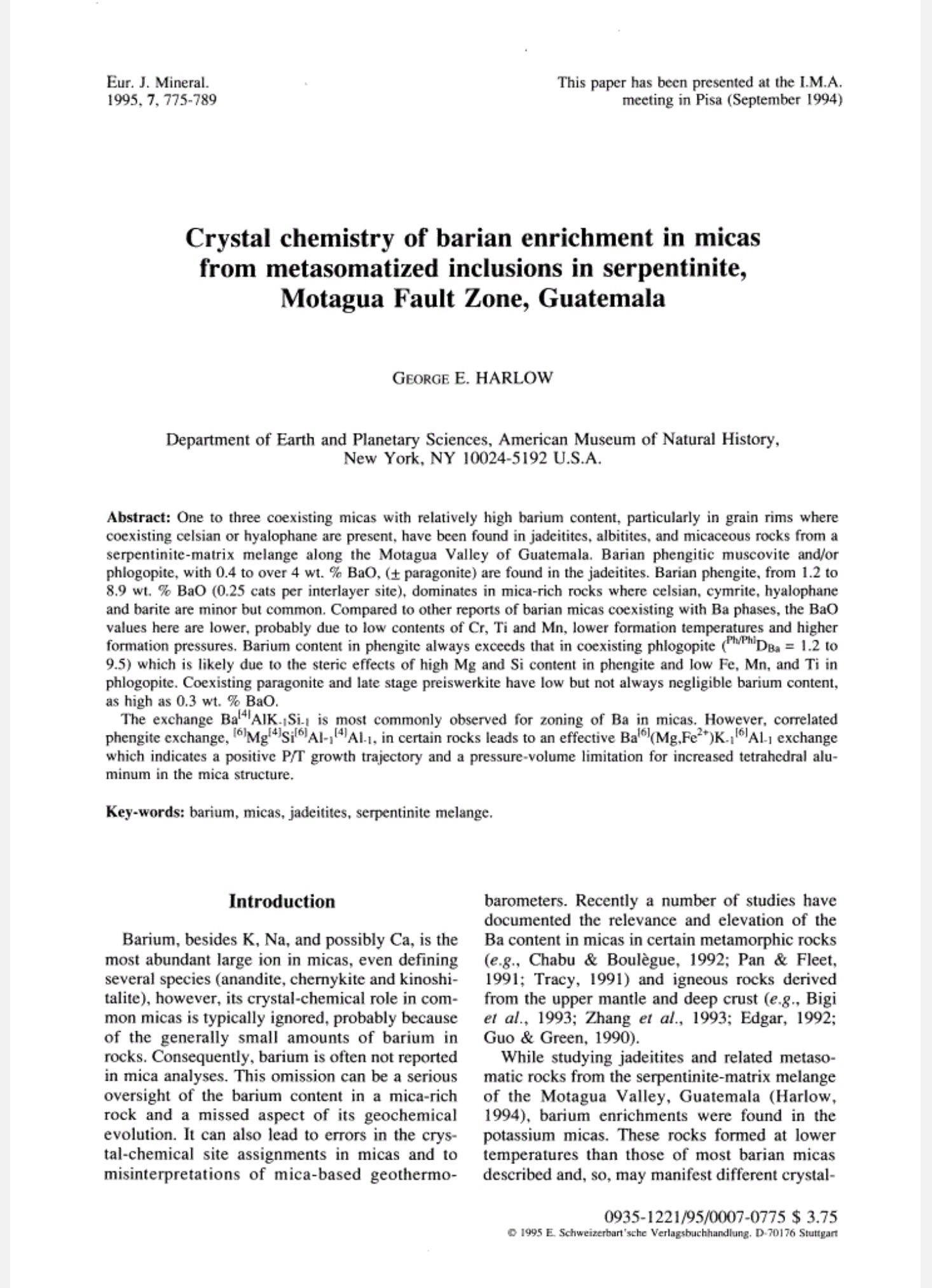
Harlow, G.E. (1995) Crystal chemistry of barian enrichment in micas from metasomatized inclusions in serpentine, Motagua fault zone, Guatemala. European Journal of Mineralogy, Vol. 7, No. 4, pp. 775–789.
Record No. 28457  |  Sinkankas/Born No.: NIS/NIB  |  not seen
Abstract One to three coexisting micas with relatively high barium content, particularly in grain rims where coexisting celsian or hyalophane are present, have been found in jadeitites, albitites, and micaceous rocks from a serpentinite-matrix mélange along the Motagua Valley of Guatemala. Barian phengitic muscovite and/or phlogopite, with 0.4 to over 4 wt.% BaO (± paragonite), are found in the jadeitites. Barian phengite, from 1.2 to 8.9 wt.% BaO (0.25 cations per interlayer site), dominates in mica-rich rocks where celsian, cymrite, hyalophane and barite are minor but common. Compared to other reports of barian micas coexisting with Ba phases, the BaO values here are lower, probably due to low contents of Cr, Ti and Mn, lower formation temperatures and higher formation pressures. Barium content in phengite always exceeds that in coexisting phlogopite (Ph/Phl Dᴮᵃ = 1.2 to 9.5), which is likely due to the steric effects of high Mg and Si content in phengite and low Fe, Mn and Ti in phlogopite. Coexisting paragonite and late-stage preiswerkite have low but not always negligible barium content, as high as 0.3 wt.% BaO. The exchange Ba[4]AlK⁻¹Si⁻¹ is most commonly observed for zoning of Ba in micas. However, correlated phengite exchange, [6]Mg[4]Si[6]Al⁻¹[4]Al⁻¹, in certain rocks leads to an effective Ba⁶K⁻¹[6]Al⁻¹ exchange, which indicates a positive P/T growth trajectory and a pressure-volume limitation for increased tetrahedral aluminum in the mica structure.

Über den Goldenen Schmuck der Spätantike
The golden jewelry of Late Antiquity
Book Section
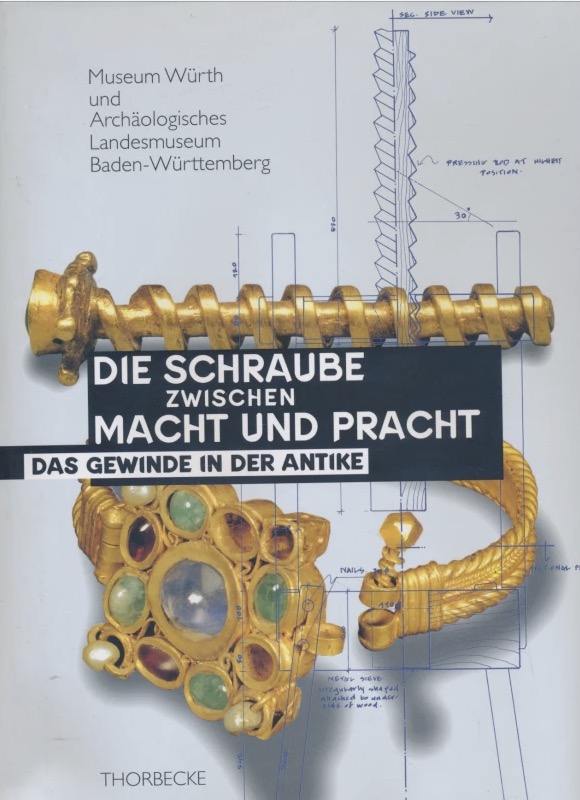
Deppart-Lippitz, B. (1995) Über den Goldenen Schmuck der Spätantike. [The golden jewelry of Late Antiquity] In: Die Schraube zwischen Macht und Pracht: Das Gewinde in der Antike [The Screw between power and Splendor: The Thread in Antiquity], Baden-Württemberg: Museum Würth und Archäologisches Landesmuseum, pp.  113–140.
Record No. 26957  |  ISBN/ISSN: 9783800000000  |  Language: in German with English absracts  |  not seen
On the occasion of the 50th anniversary of the Würth Group in 1995, a unique exhibition on the history of the screw and the thread in antiquity was presented for the first time through a joint effort by the Museum Würth in Künzelsau-Gaisbach and the Archaeological State Museum of Baden-Württemberg. The exhibition was supported by over twenty museums in Europe and the USA with precious Late Antique jewelry exhibits. Special thanks are due to co-initiator Dr. Rüdiger Krause, director of the Archaeological State Museum and president of the State Heritage Office of Baden-Württemberg, to Prof. Dr. Dieter Planck, and especially to Reinhold Würth and all the scholars involved in the research project, for making this exhibition possible, which has now been crowned with a scholarly publication on a topic previously neglected in general cultural history. The exhibition’s preparation and the development of the volume were preceded by intensive and thorough research on the topic of threads in antiquity. This involved not only ancient threading techniques based on archaeological remains or written sources attesting to such techniques, but also the political and social conditions of Late Antiquity, which were particularly defined by rank insignia and prestige objects (fibulae, arm rings, bracelets, pectorals, pectoral crosses, belts, etc.) using screw fastenings. The richly illustrated and high-quality volume, featuring numerous (including full-page) color and black-and-white images, drawings, and maps, is structured as follows: after the introductory foreword by Reinhold Würth (pp. 7–13) and the exhibition introduction by Dieter Planck (pp. 14–22), the main thematic section is divided into four specific areas: Rüdiger Krause writes on “The Thread in Antiquity” (pp. 23–54), Astrid Schürmann on “The Transmission of Ancient Authors” (pp. 55–76), Barbara Theune-Großkopf on “Onion-Head Fibulae and Their Wearers – Jewelry and Rank Insignia” (pp. 77–112), and Barbara Deppert-Lippitz on “The Golden Jewelry of Late Antiquity” (pp. 113–140). A special feature of the volume is the inclusion of English and French summaries preceding each article, along with trilingual captions (German, English, French) for all images.

Alteración de las inclusiones de zircón, apatito y vidrio en el tratamiento térmico de rubies y zafiros
Alteration of the inclusions of zircon, apatite, and glass in the thermal treatment of rubies and sapphires
Journal Article
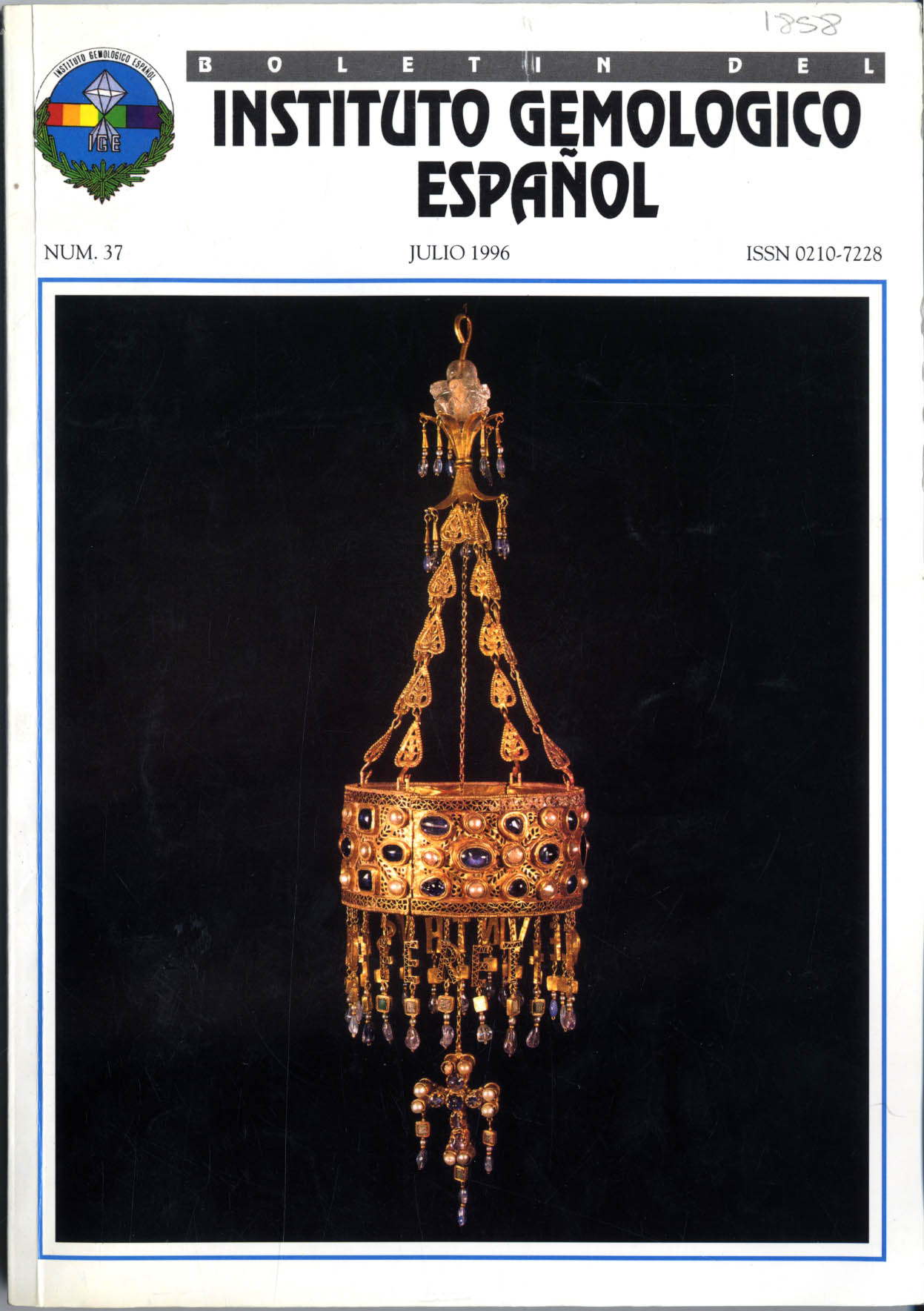
Cózar, J.S. and Vicente-Mingarro, I., de (1995) Alteración de las inclusiones de zircón, apatito y vidrio en el tratamiento térmico de rubies y zafiros. [Alteration of the inclusions of zircon, apatite, and glass in the thermal treatment of rubies and sapphires] Boletin del Instituto Gemologico Español, Vol. 36, pp. 47–54.
Record No. 4743  |  Language: in Spanish  |  not seen

Unusual synthetic

Journal Article
Ramchandran, K.T. and Panjikar, J. (1994) Unusual synthetic. Indian Gemmologist, Vol. 4, No. 3/4, p. 3.
Record No. 7679  |  not seen

The emerald mines of Madagascar

Journal Article
Thomas, A. (1993) The emerald mines of Madagascar. South African Gemmologist, Vol. 7, No. 3, pp. 3–11.
Record No. 4197  |  not seen

Mineral inclusions in gemstones recently observed, analyzed and identified
Conference Paper
Gübelin, E.J. (1993) Mineral inclusions in gemstones recently observed, analyzed and identified. XXIV International Gemmological Conference, Paris S. 85.
Record No. 3114  |  not seen

Origin of sapphire in eastern Australian basalts: Inferred from inclusion studies
Journal Article
Guo, J., O’Reilly, S.Y. and Griffin, W.L. (1992) Origin of sapphire in eastern Australian basalts: Inferred from inclusion studies. Geological Society of Australia Abstracts, No. 32, pp. 219–220.
Record No. 7647  |  not seen

Identificación de gemas sintéticas fabricadas por fusión a la llama (método Verneuil)
Identification of synthetic gemstones made by flame fusion (Verneuil method).
Journal Article
Kammerling, R.C., Koivula, J.I. and Weldon, R. (1991) Identificación de gemas sintéticas fabricadas por fusión a la llama (método Verneuil). [Identification of synthetic gemstones made by flame fusion (Verneuil method).] Boletin del Instituto Gemologico Español, Vol. 33, diciembre, pp. 32–37.
Record No. 7650  |  Sinkankas/Born No.: NIS/NIB  |  Language: in Spanish  |  seen
Describes the Verneuil flame-fusion process and the diagnostic features used to identify gemstones produced by it. Particular attention is given to microscopic inclusions and absorption spectra, with illustrations showing characteristic features of flame-fusion synthetics. The article explains how evidence resulting from the growth process can distinguish these laboratory-grown materials from their natural counterparts and provides practical criteria for routine gemological identification. A contemporary Journal of Gemmology abstract specifically confirms this emphasis on the Verneuil process, inclusions and absorption spectra.

Observation of inclusions in a Madagascar emerald and their possible implications
Journal Article
Kleyenstüber, A. (1991) Observation of inclusions in a Madagascar emerald and their possible implications. South African Gemmologist, Vol. 5, No. 2, pp. 4–9.
Record No. 4196  |  not seen

A report on one of a number of emeralds from Madagascar
Journal Article
Campbell, I.C.C. (1991) A report on one of a number of emeralds from Madagascar. South African Gemmologist, Vol. 5, No. 1, pp. 8–15.
Record No. 4195  |  not seen

Inclusion of the Month: Native element inclusions
Journal Article
Koivula, J.I. (1991) Inclusion of the Month: Native element inclusions. Lapidary Journal, Vol. 44, No. 11, February, p. 48.
Record No. 1123  |  seen

Lamellar iron-free högbomite-24R from Tanzania
Journal Article
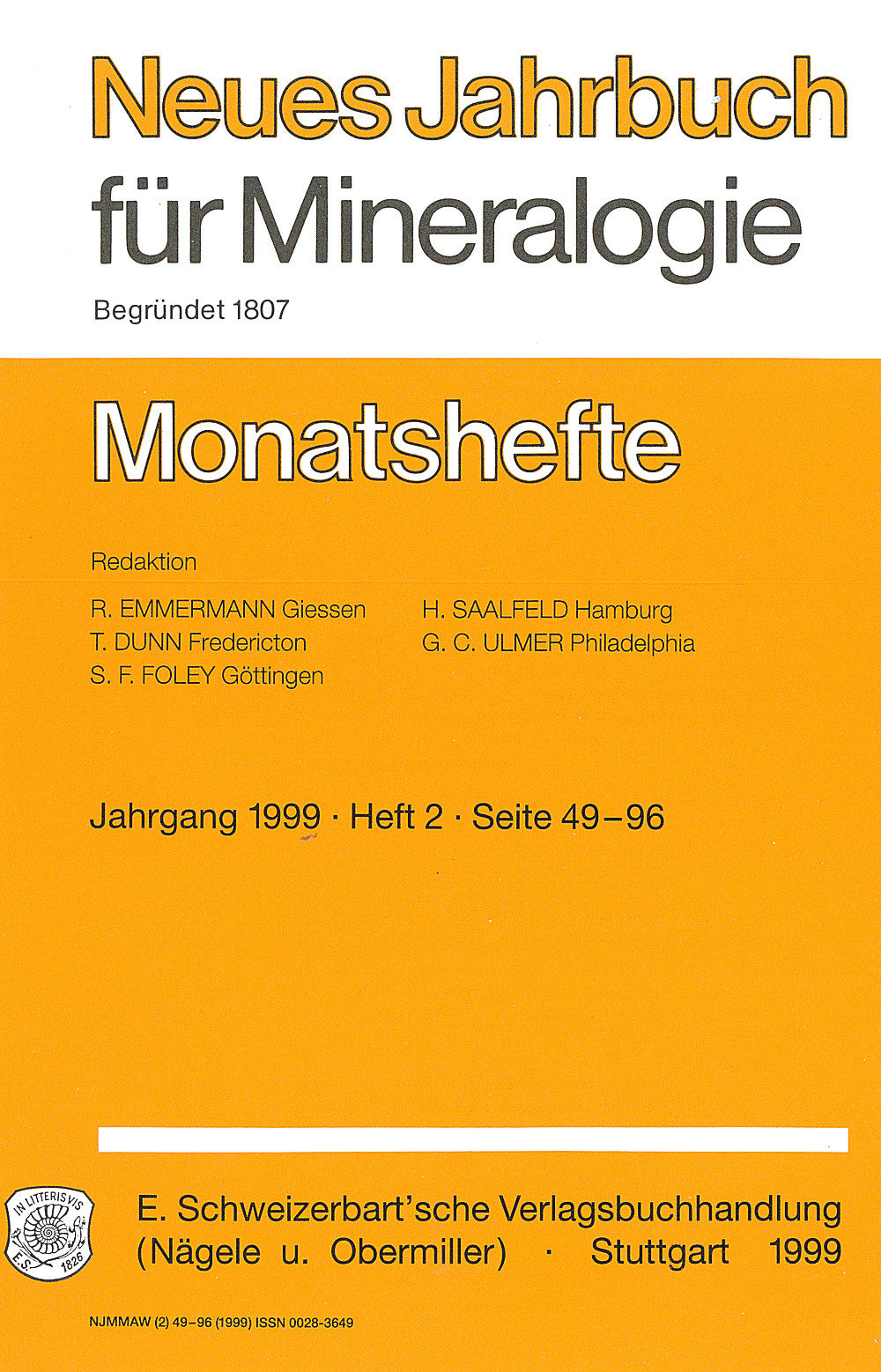
Schmetzer, K. and Berger, A. (1990) Lamellar iron-free högbomite-24R from Tanzania. Neues Jahrbuch für Mineralogie Monatshefte, No. 9, pp. 401–412.
Record No. 7795  |  not seen

Alexandrit aus einem heuentdeckten Vorkommen in Brasilien
Alexandrite from a newly discovered deposit in Brazil
Journal Article
Gübelin, E.J. (1988) Alexandrit aus einem heuentdeckten Vorkommen in Brasilien. [Alexandrite from a newly discovered deposit in Brazil] Schweizerische Uhrmacher- und Goldschmiede-Zeitung (SUZ), No. 2, pp. 16–22.
Record No. 2190  |  Sinkankas/Born No.: NIS/NIB  |  Language: in German  |  not seen
Gübelin reports on the newly discovered Hematita alexandrite deposit in Minas Gerais, Brazil, discovered in 1987 and notable for producing unusually fine and relatively clean material. He describes the appearance and gemological characteristics of the alexandrite, including its pronounced color change from greenish hues in daylight to reddish or purplish red under incandescent illumination. Particular attention is given to internal features useful for identifying the Brazilian material. Among the characteristic mineral inclusions subsequently identified in Hematita alexandrite are fluorite and apatite, together with mica and fluid inclusions. The discovery was significant because Hematita rapidly became an important source of fine alexandrite at a time when supplies from the traditional Russian and Sri Lankan sources were limited.

Emeralds from Goiás State – Brazil

Conference Paper
Barros, J.C. and Kinnaird, J.A. (1987) Emeralds from Goiás State – Brazil. XXI International Gemmological Conference, Abstracts, Rio de Janeiro
Record No. 7803  |  RHL

Die Abkühlungsgeschwindigkeit als Ursache für die Bildung entweder von Sternkorunden oder von kornblumenblauen Saphiren
The cooling rate as the cause for the formation of either star corundums or cornflower blue sapphires
Journal Article
Harder, H. and Schneider, A. (1987) Die Abkühlungsgeschwindigkeit als Ursache für die Bildung entweder von Sternkorunden oder von kornblumenblauen Saphiren. [The cooling rate as the cause for the formation of either star corundums or cornflower blue sapphires] Neues Jahrbuch fuer Mineralogie Monatshefte, No. 8, pp. 344—346.
Record No. 7775  |  Language: in German  |  not seen
Harder and Schneider investigate experimentally how cooling rate controls whether Ti-bearing corundum develops asterism or a cornflower-blue color. They relate the two effects to the behavior of titanium during cooling: under conditions permitting exsolution, titanium is precipitated as oriented rutile needles, producing the silk responsible for asterism; under different cooling conditions, titanium remains incorporated in the corundum lattice, where interaction between iron and titanium produces blue coloration. Thus, corundum of essentially comparable composition can develop either the oriented rutile inclusions required for a star effect or the transparent blue appearance characteristic of sapphire, depending upon its thermal history. The paper emphasizes cooling rate as a decisive factor governing the distribution of titanium between the corundum lattice and exsolved rutile.

Tiploidite in quartz

Journal Article
Koivula, J.I., Fryer, C.W. and Gübelin, E.J. (1987) Tiploidite in quartz. Indian Gemmologist, Vol. 1, No. 2, pp. 5–7.
Record No. 7772  |  not seen

Exploring the Literature of Gemstone Inclusions

The literature of gemstone inclusions covers identification, origin determination, treatments, synthesis, mineral inclusions, fluid inclusions and other internal features of natural and synthetic gems.

For a curated selection of important sources, read Inclusions in Gemstones — Hyperion Literature Sources.

About Four Treasures

Four Treasures is Lotus Gemology's freely accessible gemological reference database. Use the full database to search by author, title or keyword and explore literature on gemology, mineralogy, jewelry and related fields. Where available, hyperlinks on titles may lead directly to the full publication.

Search the Complete Four Treasures Database