Oiled Emerald Inclusions
Explore oiled emerald inclusions in Hyperion, the Lotus Gemology inclusion database. Hyperion contains photomicrographs of inclusions and internal features in natural emeralds that have undergone fissure filling with colorless oil or resin, documented with information on geographic origin, treatment, lighting conditions, field of view, photographer and published references.
Close up of a trapiche emerald. The hexagonal structure of the emerald can be clearly observed.
Natural • Beryl • Trapiche • Emerald •
Colombia •
Enhancements:
Fissure Filling with colorless Oil/resin (FF-O1–2) •
Lighting Conditions:
Dark Field
Photographer:
E. Billie Hughes •
Image Number:
A-004-7422-1
• Field of View = 6mm
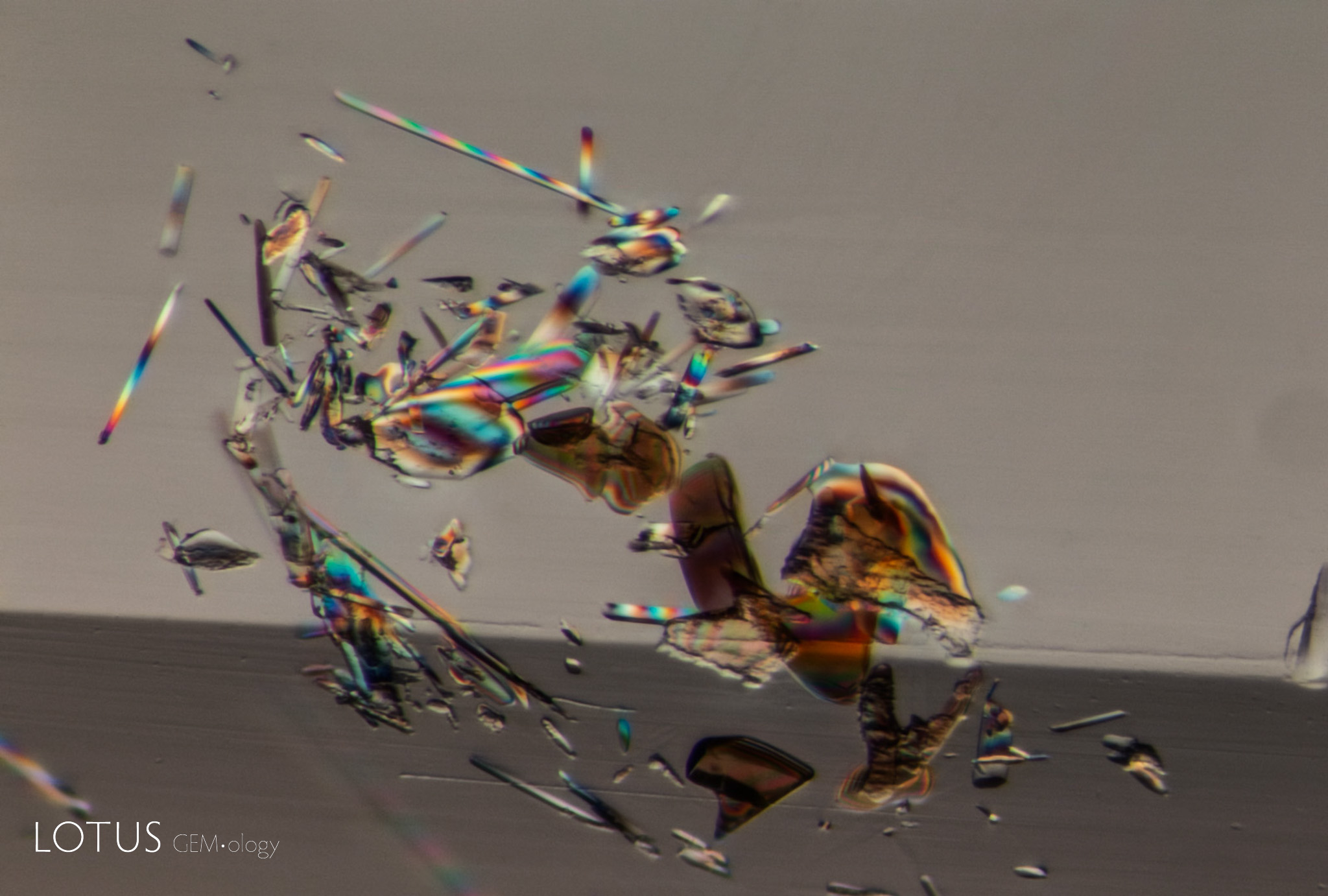
Slim rods of what may be amphibole, alongside brown plates of what is probably mica in emerald of schist-hosted origin. The iridescent interference colors are produce by examining the specimen between crossed polars. This demonstrates that the crystals are doubly refractive, giving clues to their identity.
Natural • Beryl • Emerald •
Schist-Hosted •
Enhancements:
Fissure Filling with colorless Oil/resin (FF-O1) •
Lighting Conditions:
Diffuse Light Field + Crossed Polars
Photographer:
Wimon Manorotkul •
Image Number:
A-004-6743-1
• Field of View = 2.5mm
Several dark green crystals can be observed in this emerald. Analysis with micro Raman identified them as tremolite (amphibole).
Natural • Beryl • Emerald •
Zambia •
Enhancements:
Fissure Filling with colorless Oil/resin (FF-O3) •
Lighting Conditions:
Diffuse Light Field (Transmitted Light)
Photographer:
E. Billie Hughes •
Image Number:
A-004-1565-2
• Field of View = 3mm
Several solid inclusions can be observed in this emerald. When viewed in reflected light where cut through, we can see that their luster is just slightly different from that of the host emerald. Analysis with micro Raman revealed that these crystals are tremolite (amphibole).
Natural • Beryl • Emerald •
Zambia •
Enhancements:
Fissure Filling with colorless Oil/resin (FF-O3) •
Lighting Conditions:
Fiber Optic: Diffuse Overhead
Photographer:
E. Billie Hughes •
Image Number:
A-004-1565-1
• Field of View = 3mm
When viewed in crossed polars, this calcite crystal (identified with micro Raman) displays interference colors and polysynthetic twin planes. This calcite is ensconced in an emerald from Colombia.
Natural • Beryl • Emerald •
Colombia •
Enhancements:
Fissure Filling with colorless Oil/resin (FF-O2) •
Lighting Conditions:
Diffuse Light Field + Crossed Polars + Diffuse Fiber Optic
Photographer:
E. Billie Hughes •
Image Number:
A-004-0028-2
• Field of View = 4.5mm
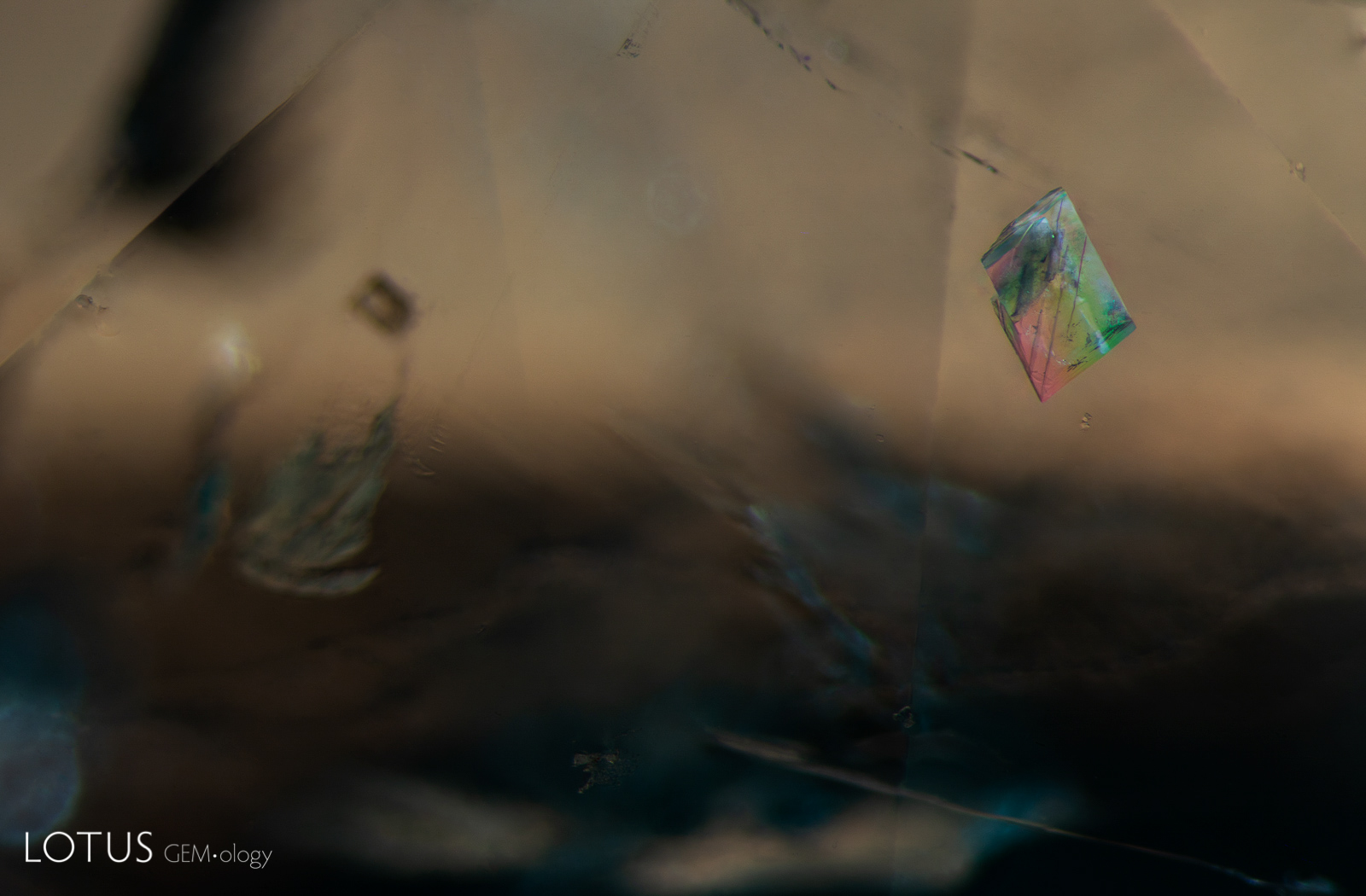
This crystal, suspended in a Colombian emerald, has sharp angular features. Micro Raman identified it as calcite. Note that twin planes are visible in crossed polars.
Natural • Beryl • Emerald •
Colombia •
Enhancements:
Fissure Filling with colorless Oil/resin (FF-O2) •
Lighting Conditions:
Dark Field + Green & White Filters + Diffuse Fiber Optic + Crossed Polars
Photographer:
E. Billie Hughes •
Image Number:
A-004-0028-1
• Field of View = 3mm
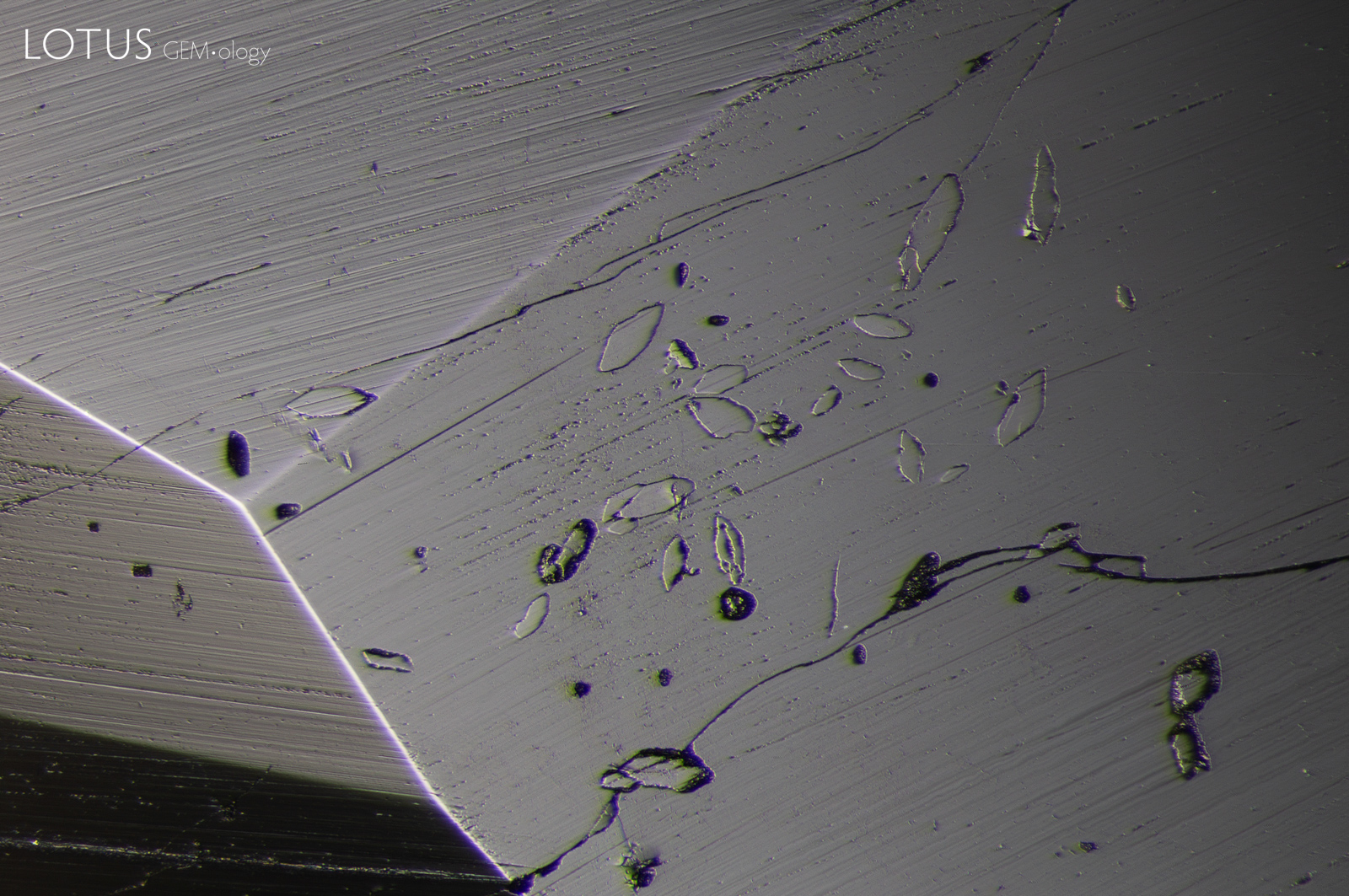
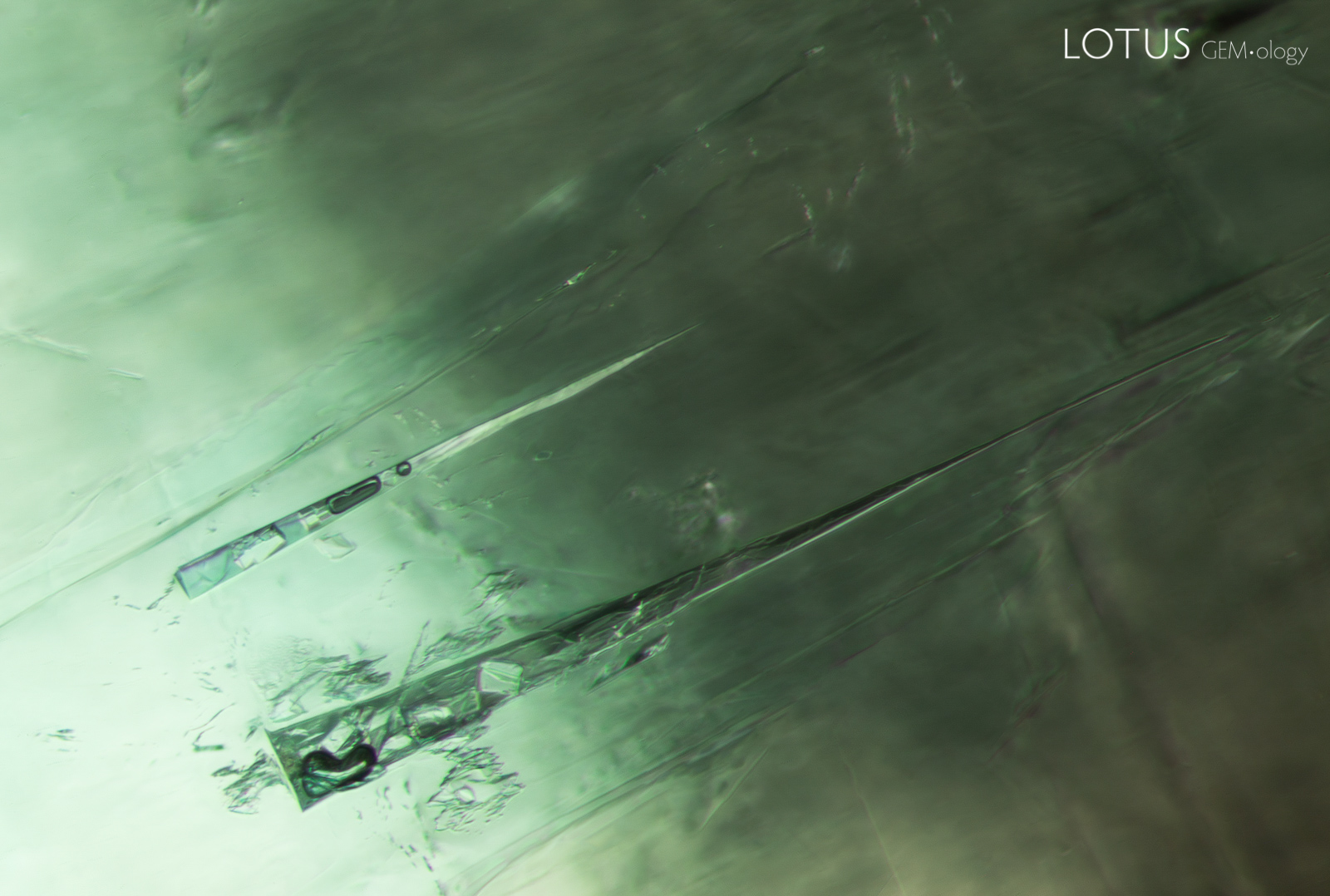
This emerald contained several elongated three-phase inclusions.
Natural • Beryl • Emerald •
Afghanistan •
Enhancements:
Fissure Filling with colorless Oil/resin (FF-O1) •
Lighting Conditions:
Diffuse Light Field (Transmitted Light)
Photographer:
E. Billie Hughes •
Image Number:
A-003-8909-2
• Field of View = 2mm
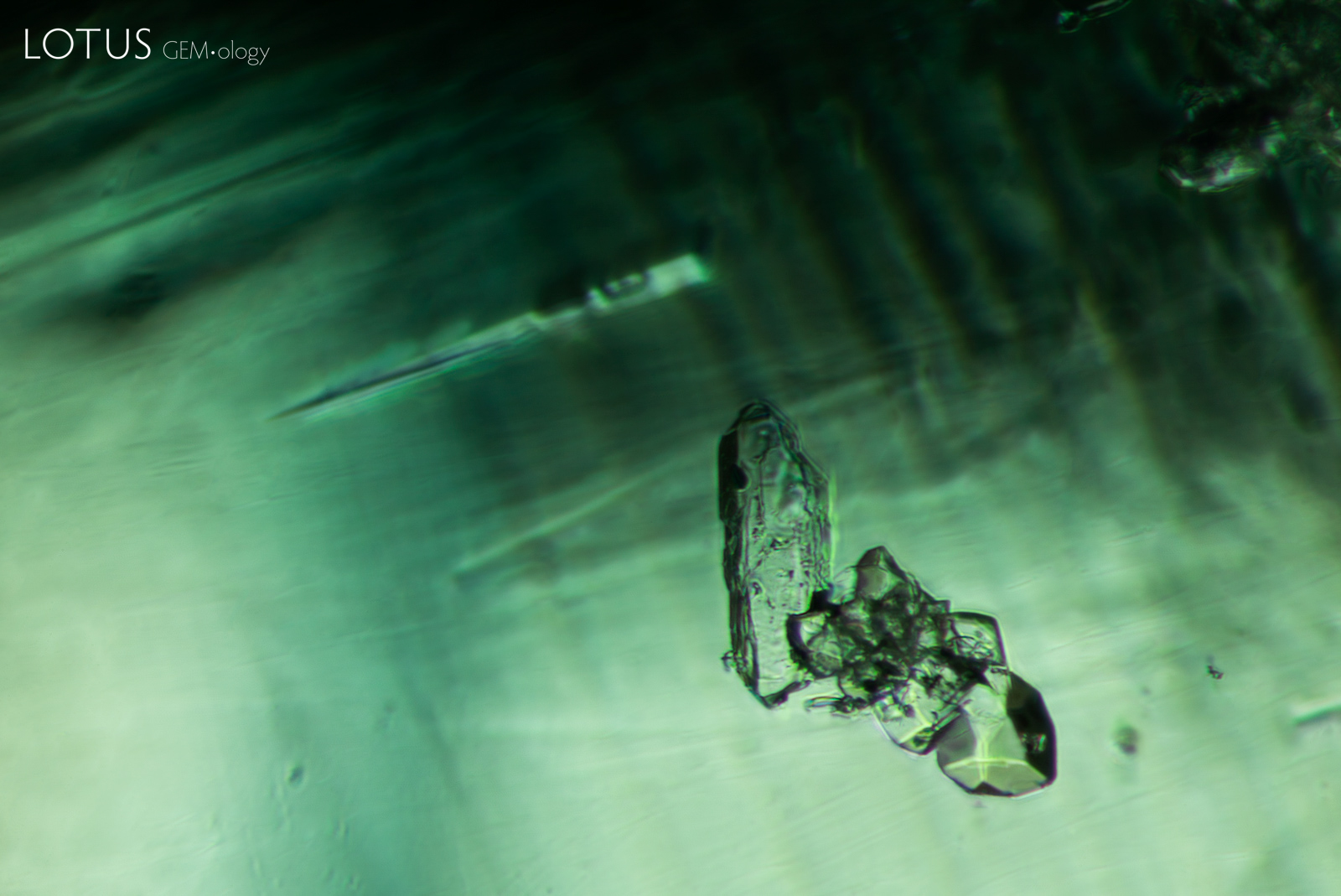
Micro Raman revealed that this cluster of inclusions in emerald contained a variety of crystals. The elongated crystal on the left is quartz, the area in the center contains calcite and apatite, and the right-most crystal is calcite.
Natural • Beryl • Emerald •
Afghanistan •
Enhancements:
Fissure Filling with colorless Oil/resin (FF-O1) •
Lighting Conditions:
Dark Field
Photographer:
E. Billie Hughes •
Image Number:
A-003-8909-1
• Field of View = 1.7mm
3-phase inclusion in Colombian emerald.
Natural • Beryl • Beryl • Emerald •
Colombia •
Enhancements:
Fissure Filling with colorless Oil/resin (FF-O1) •
Lighting Conditions:
Dark Field
Photographer:
Wimon Manorotkul •
Image Number:
A-003-8198-1
• Field of View = 1.8mm
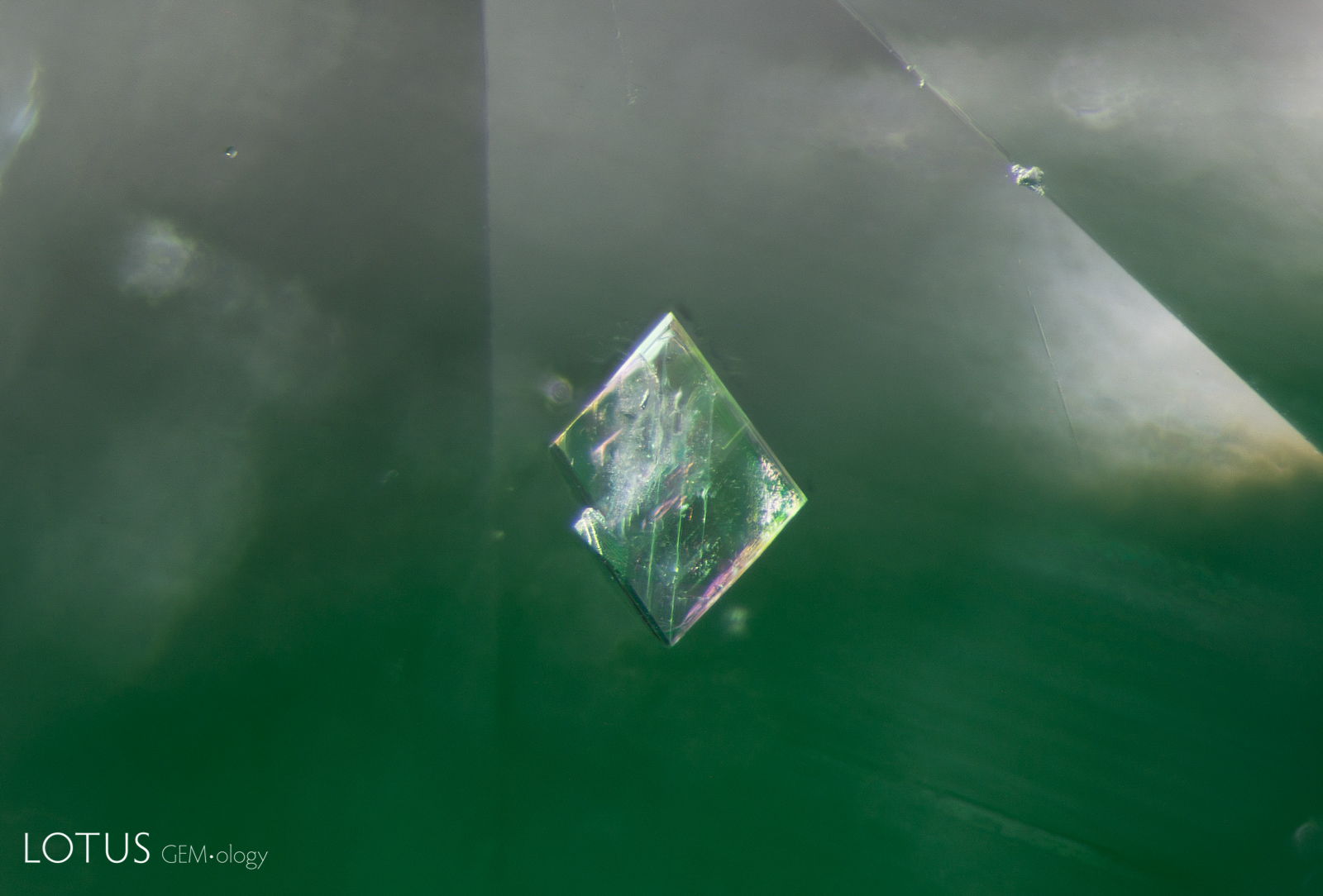
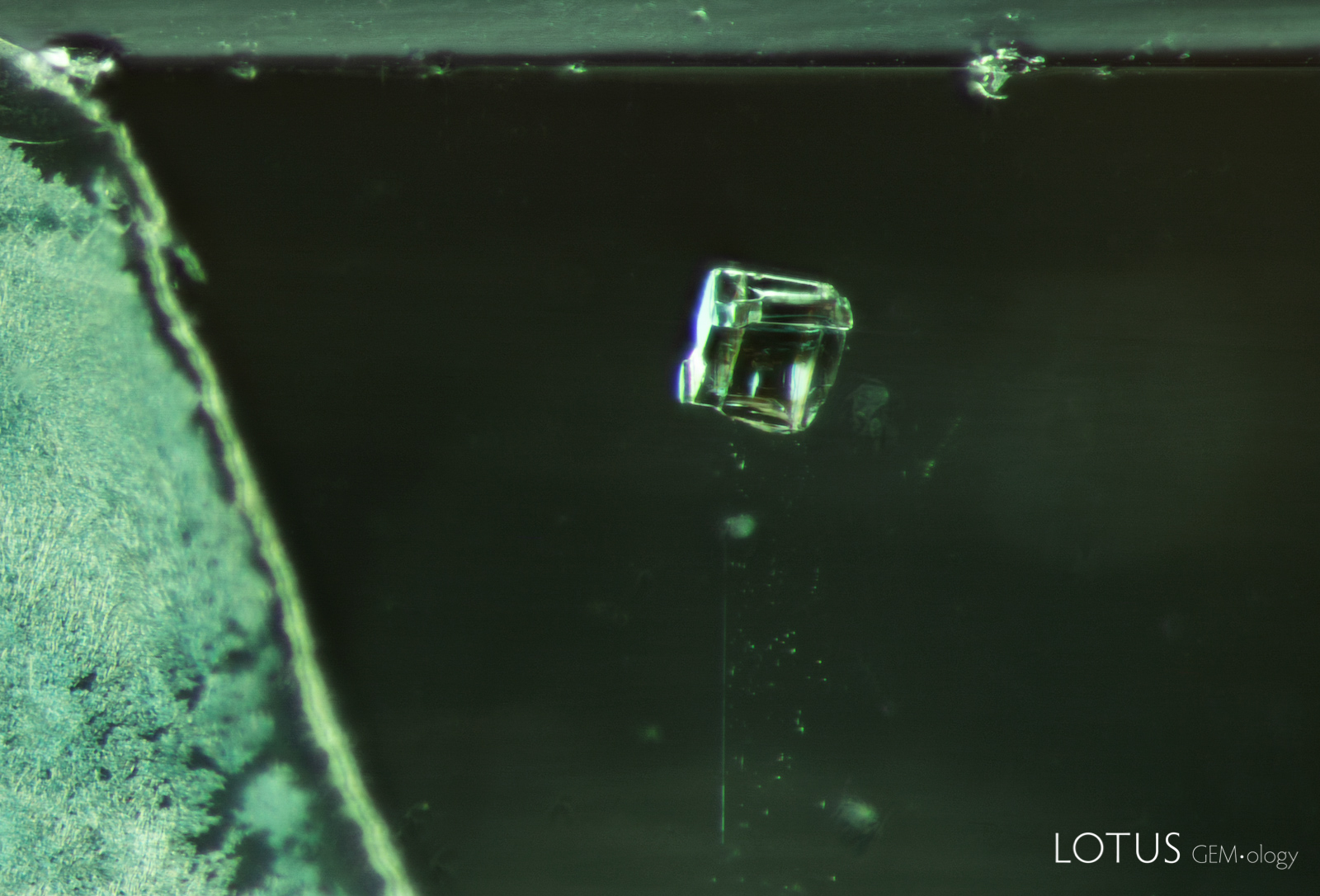
This blocky, transparent crystal stood out in its Zambian emerald host. Analysis with micro Raman revealed that it is fluorophlogopite.
Natural • Beryl • Emerald •
Zambia •
Enhancements:
Fissure Filling with colorless Oil/resin (FF-O1) •
Lighting Conditions:
Dark Field
Photographer:
E. Billie Hughes •
Image Number:
A-003-7759-1
• Field of View = 2mm
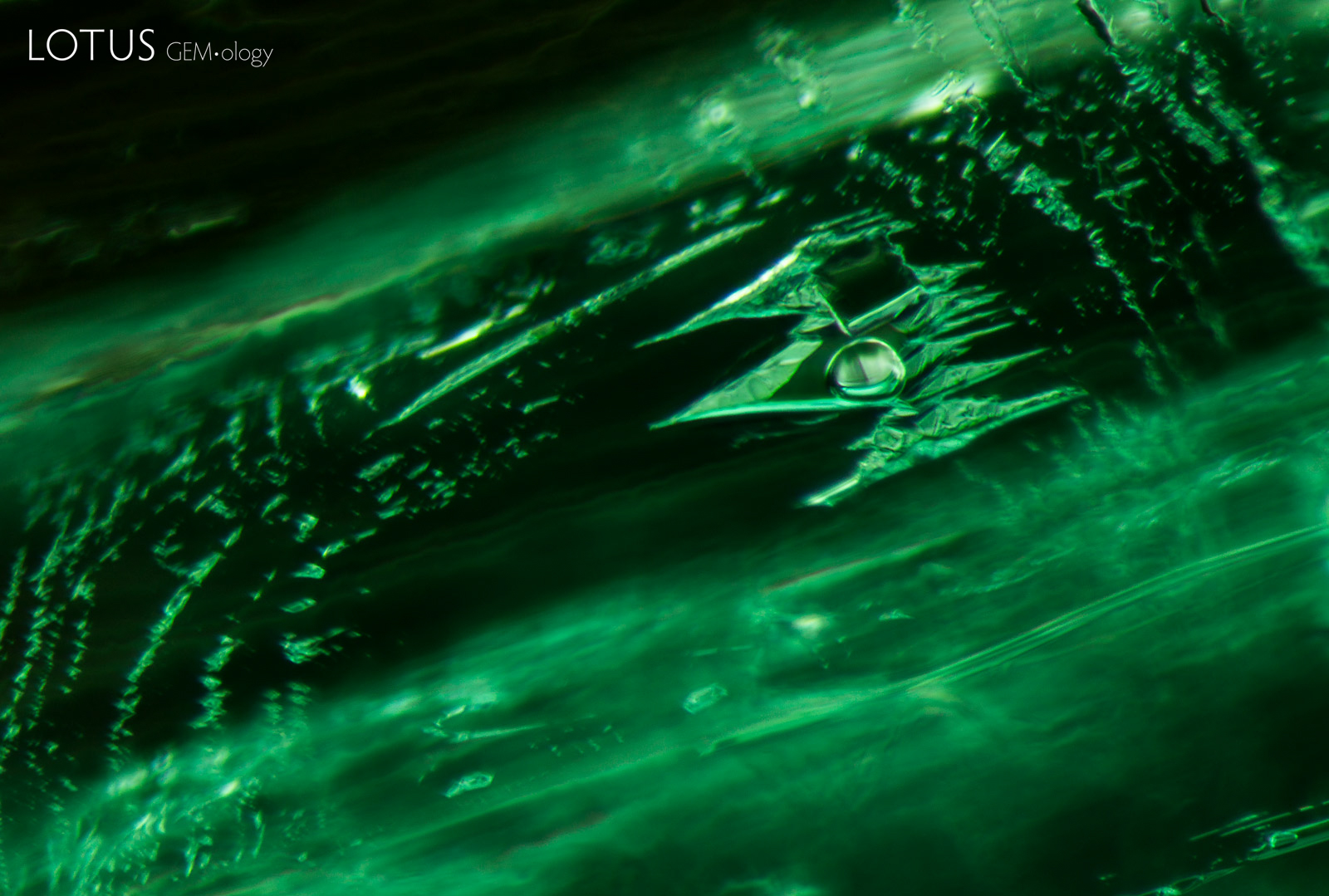
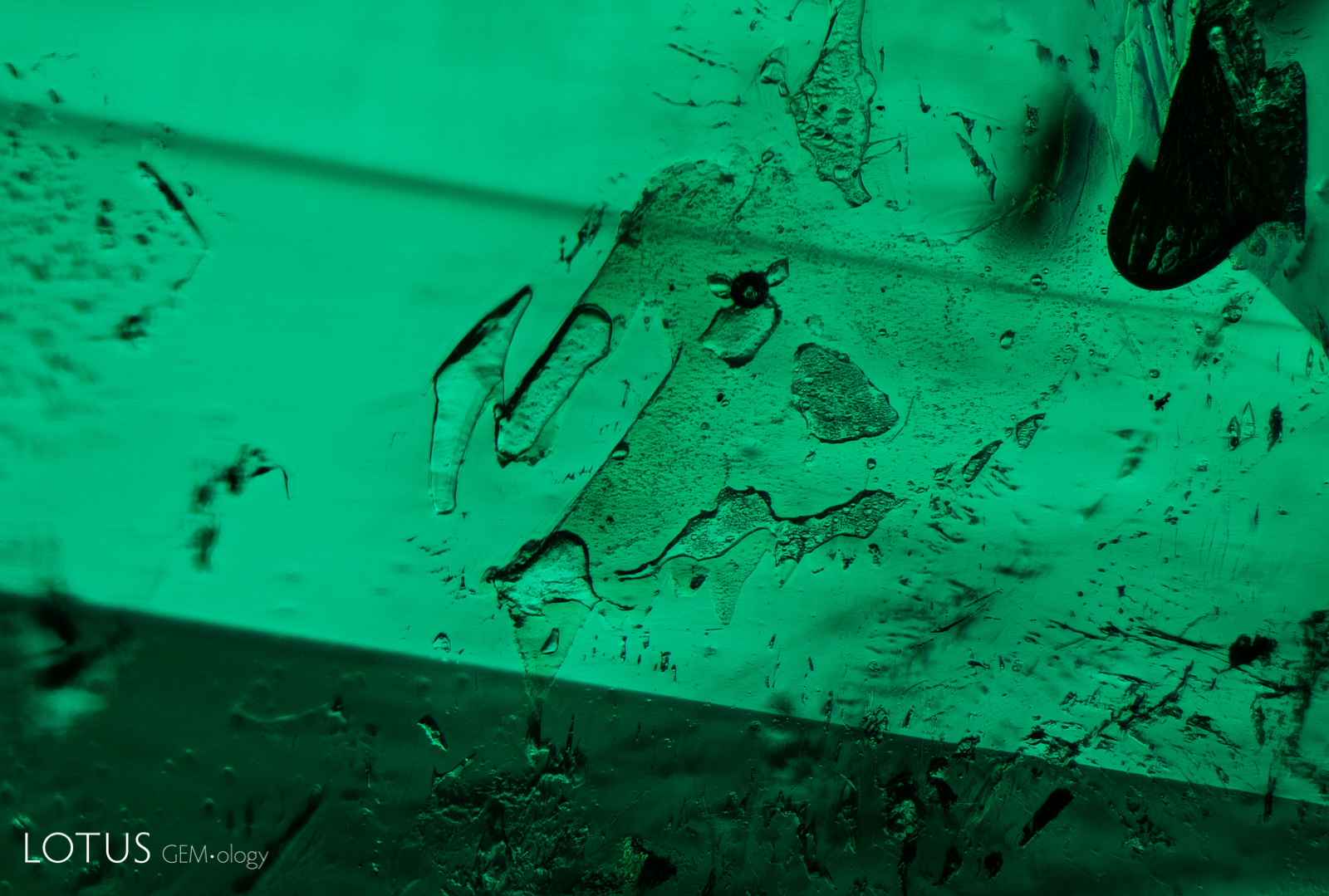
Upon close examination of this emerald, we can see tiny bubbles in areas that contain filler.
Natural • Beryl • Beryl • Emerald •
Colombia •
Enhancements:
Fissure Filling with colorless Oil/resin (FF-O2) •
Lighting Conditions:
Dark Field
Photographer:
E. Billie Hughes •
Image Number:
A-003-7644-2
• Field of View = 4mm
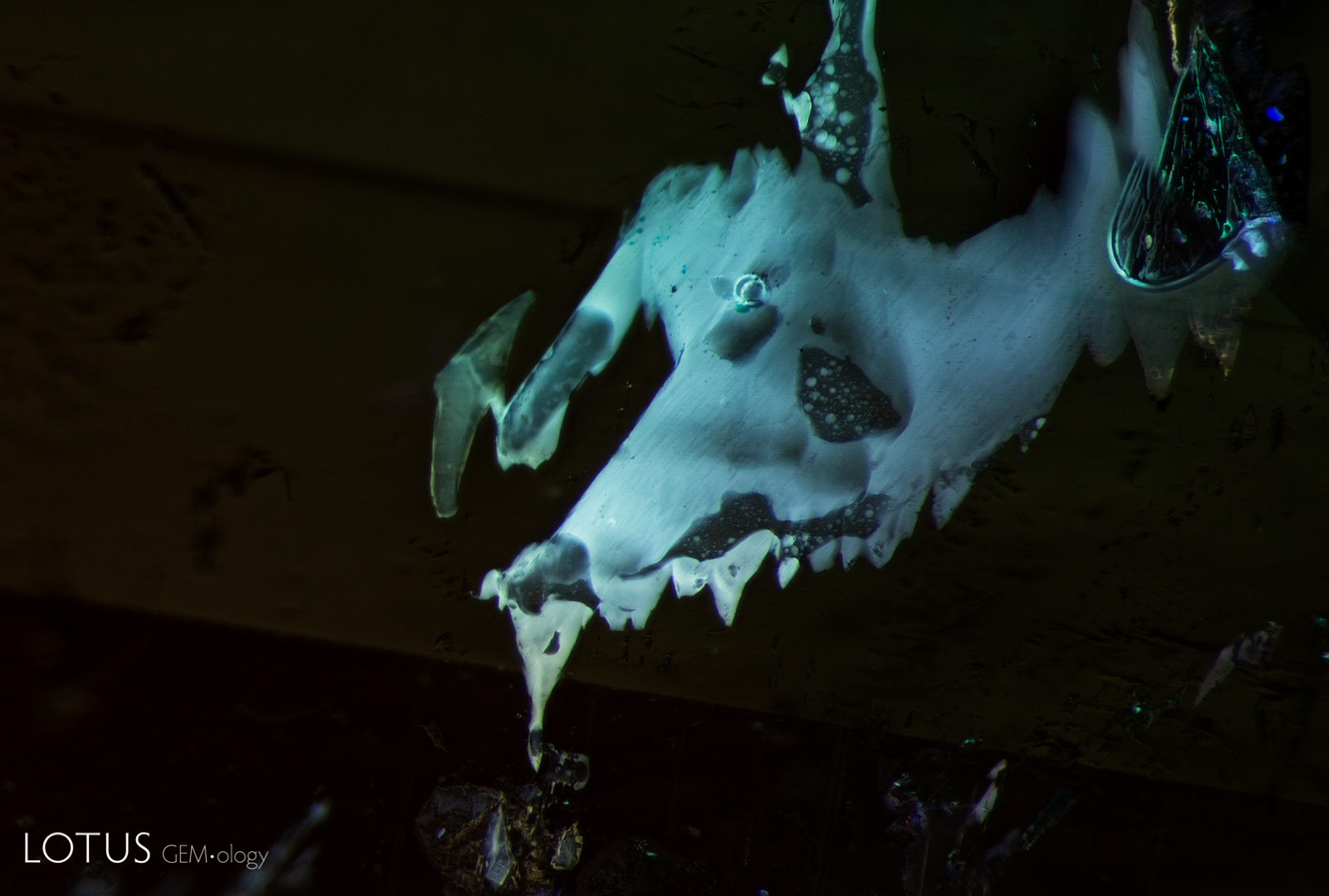
This emerald contained filler to help improve the appearance of fissures in the stone. It can be hard to see this with just dark field illumination, but by shining a longwave UV torch on the stone, the filled areas become immediately apparent with a chalky appearance. We can also see many small bubbles in the area with filler.
Natural • Beryl • Beryl • Emerald •
Colombia •
Enhancements:
Fissure Filling with colorless Oil/resin (FF-O2) •
Lighting Conditions:
Ultraviolet: Longwave
Photographer:
E. Billie Hughes •
Image Number:
A-003-7644-1
• Field of View = 4mm
Search the Complete Hyperion Database
Emeralds commonly contain surface-reaching fissures that may be filled with colorless oil or resin to reduce their visibility. Microscopic examination may reveal features associated with such filling, including differences in relief, flash effects, trapped bubbles or incomplete filling within fissures.
Oiled Emerald Inclusion Photomicrographs
The Hyperion oiled emerald gallery includes microscopic features documented in natural emeralds recorded as having fissure filling with colorless oil or resin. Each entry identifies the recorded treatment and is accompanied by descriptive information and, where available, references to the gemological literature.
What Inclusions Can Reveal About Emerald Treatment
Microscopic examination is an important part of detecting fissure filling in emerald. The appearance of surface-reaching fissures and the materials within them can provide evidence of treatment and help gemologists assess the nature of the filling material.
Hyperion combines inclusion photomicrography with supporting gemological information so that treatment-related features can be compared with documented examples in natural emerald.
About Hyperion
Hyperion is the Lotus Gemology searchable inclusion database. It allows users to browse gemstone inclusions by gem type, geographic origin, treatment and keyword.