
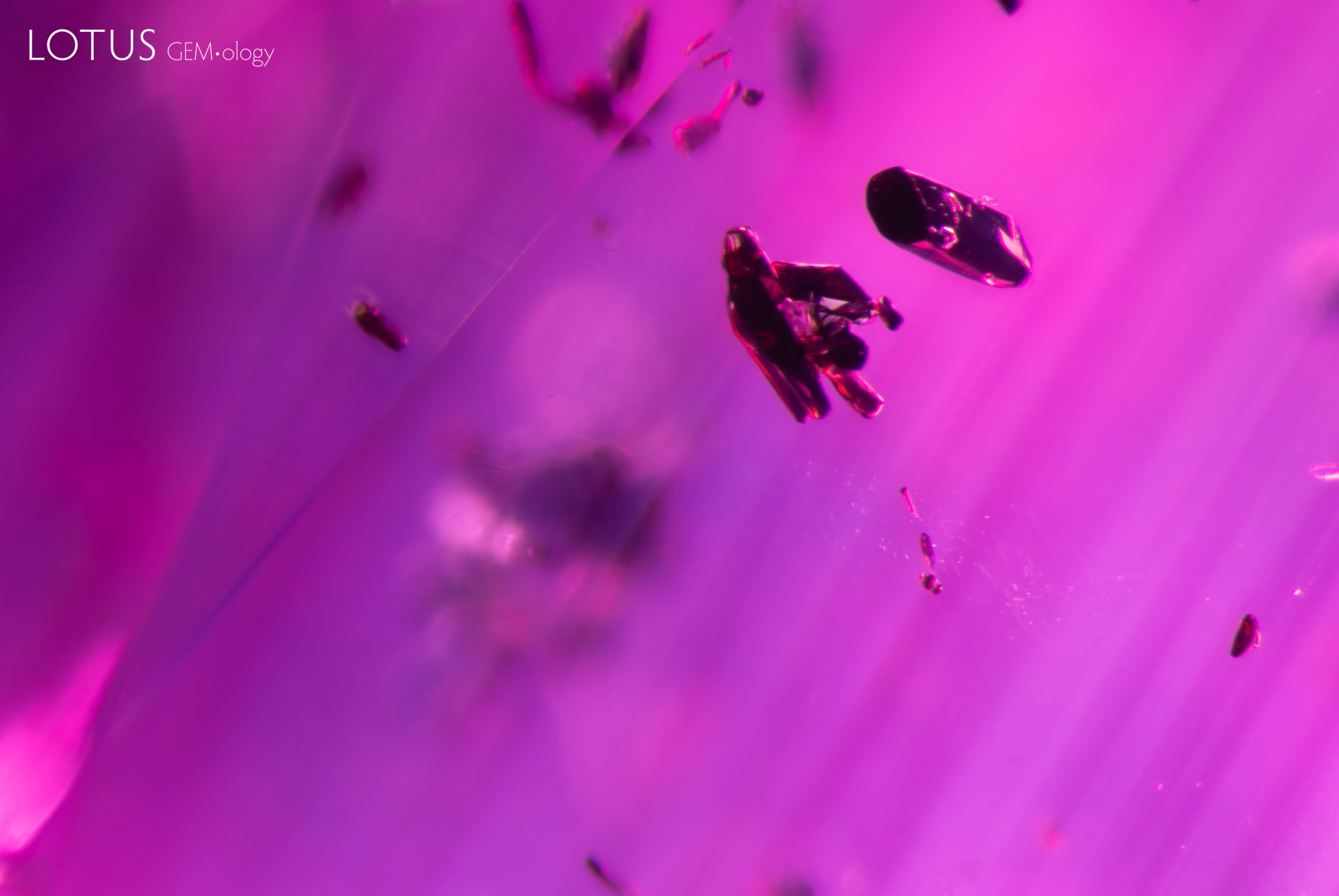
A. Prismatic, red-orange crystals enclosed within ruby, observed under dark-field illumination and suspected to be primary rutile, trapped during the growth of the ruby. Nearby, a faint cloud of fine rutile silk can also be seen. Unlike the larger crystals, this fine silk formed as the ruby cooled, when impurities within the ruby separated out and gathered to form tiny rutile needles. This example shows two forms of rutile inclusions in ruby: larger crystals trapped during ruby growth and fine rutile needles formed during cooling.
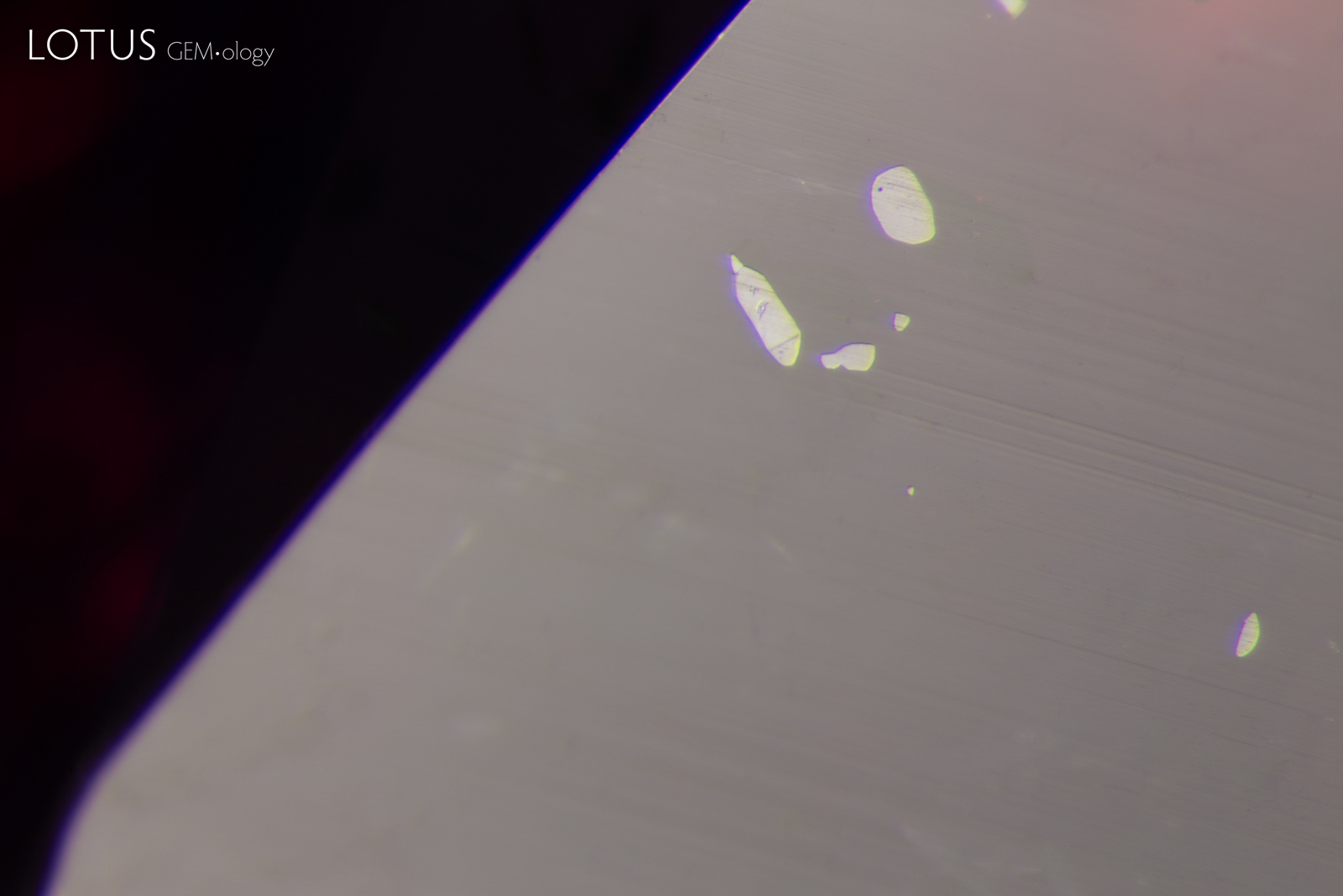
B. The same crystals cut through at the polished surface, where they display noticeably higher apparent luster than the surrounding ruby. This contrast in surface reflection demonstrates that the inclusions have a higher refractive index than corundum (RI ≈ 1.77). Based on their crystal habit, color and luster, the inclusions are considered likely to be rutile (RI ≈ 2.75). These observable features provide useful clues that help gemologists narrow down the possible identity of mineral inclusions.
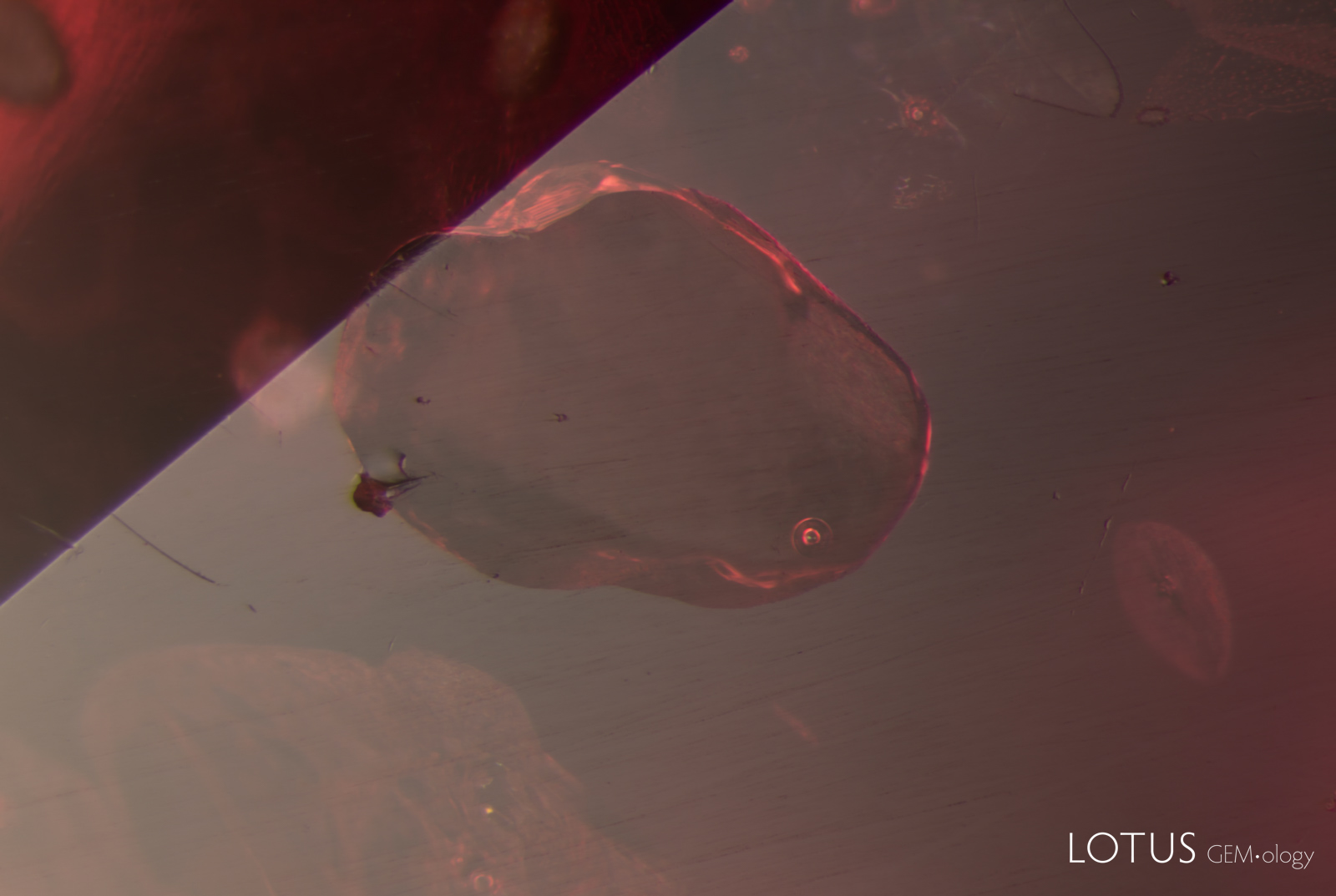
A. Fiber-optic illumination is useful for examining surface characteristics and identifying differences in luster. In this glass-filled ruby, the glass-filled areas extending to the surface appear less lustrous than the surrounding ruby because they have a lower refractive index than the surrounding ruby (n=1.76), helping distinguish the filler from the host material.
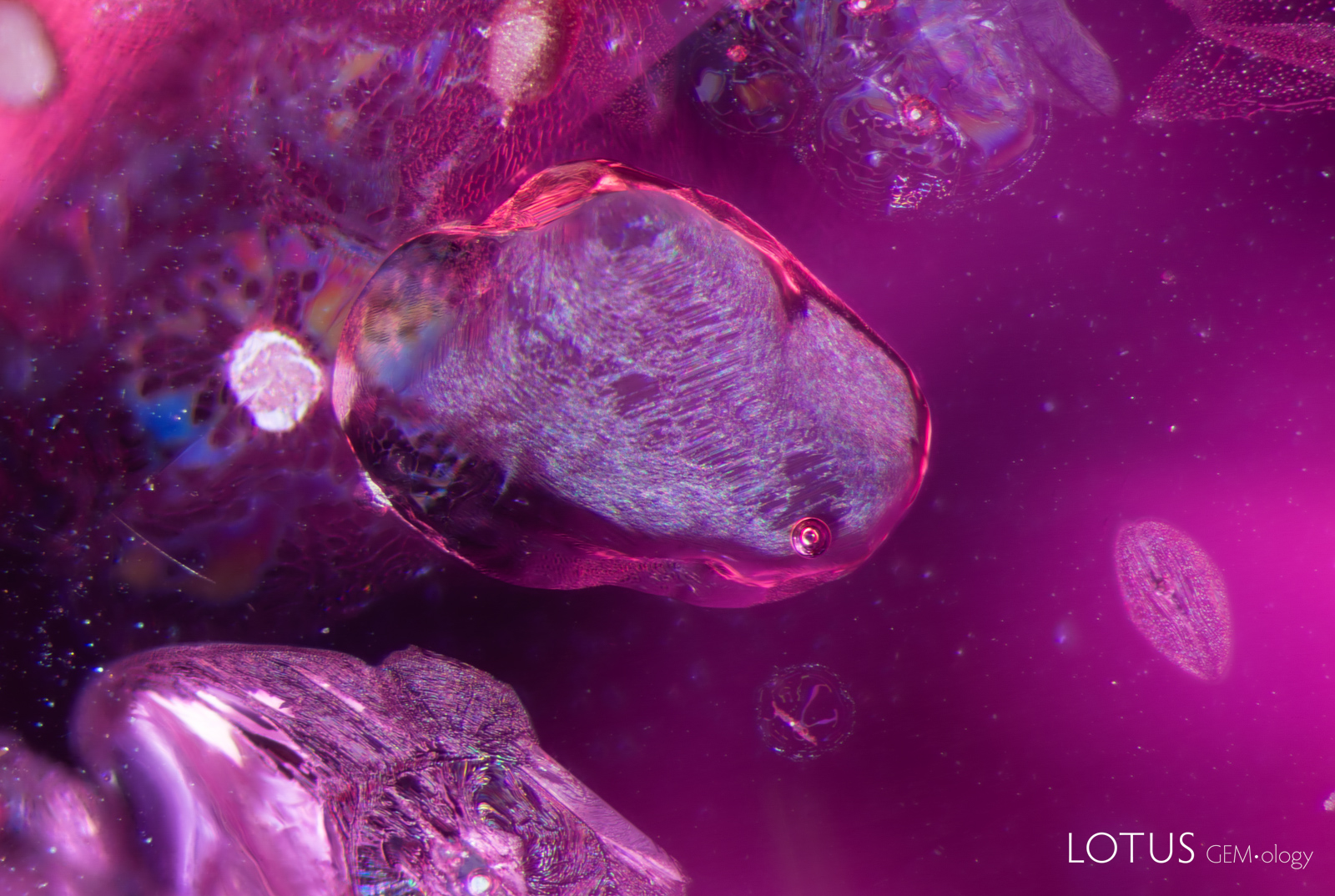
B. Dark-field illumination helps reveal internal features within fractures, such as the rounded gas bubble seen here, which indicates the presence of glass filler. Melted fingerprint-like inclusions in the background also provide clues that the ruby host has undergone heat treatment.
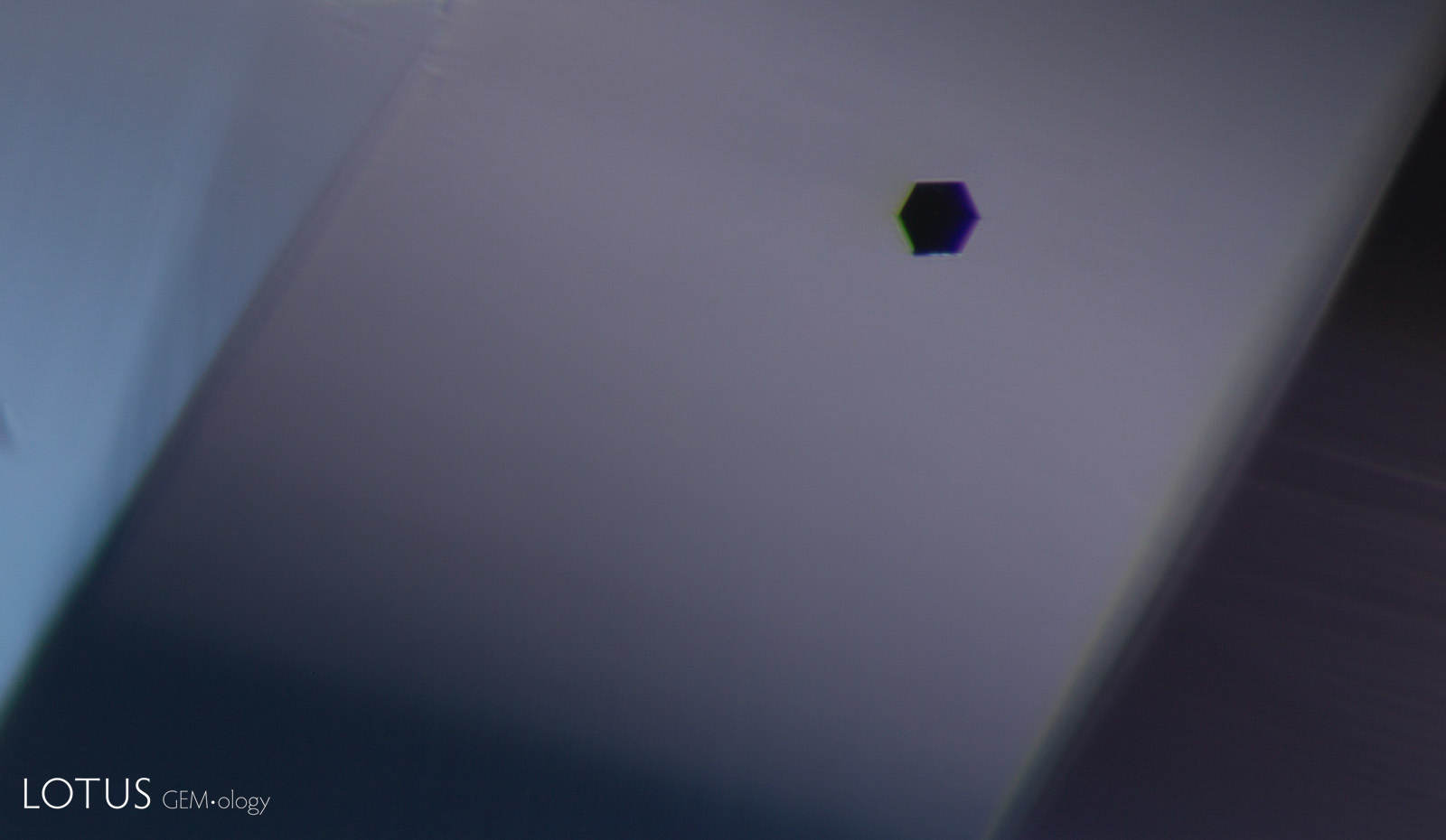
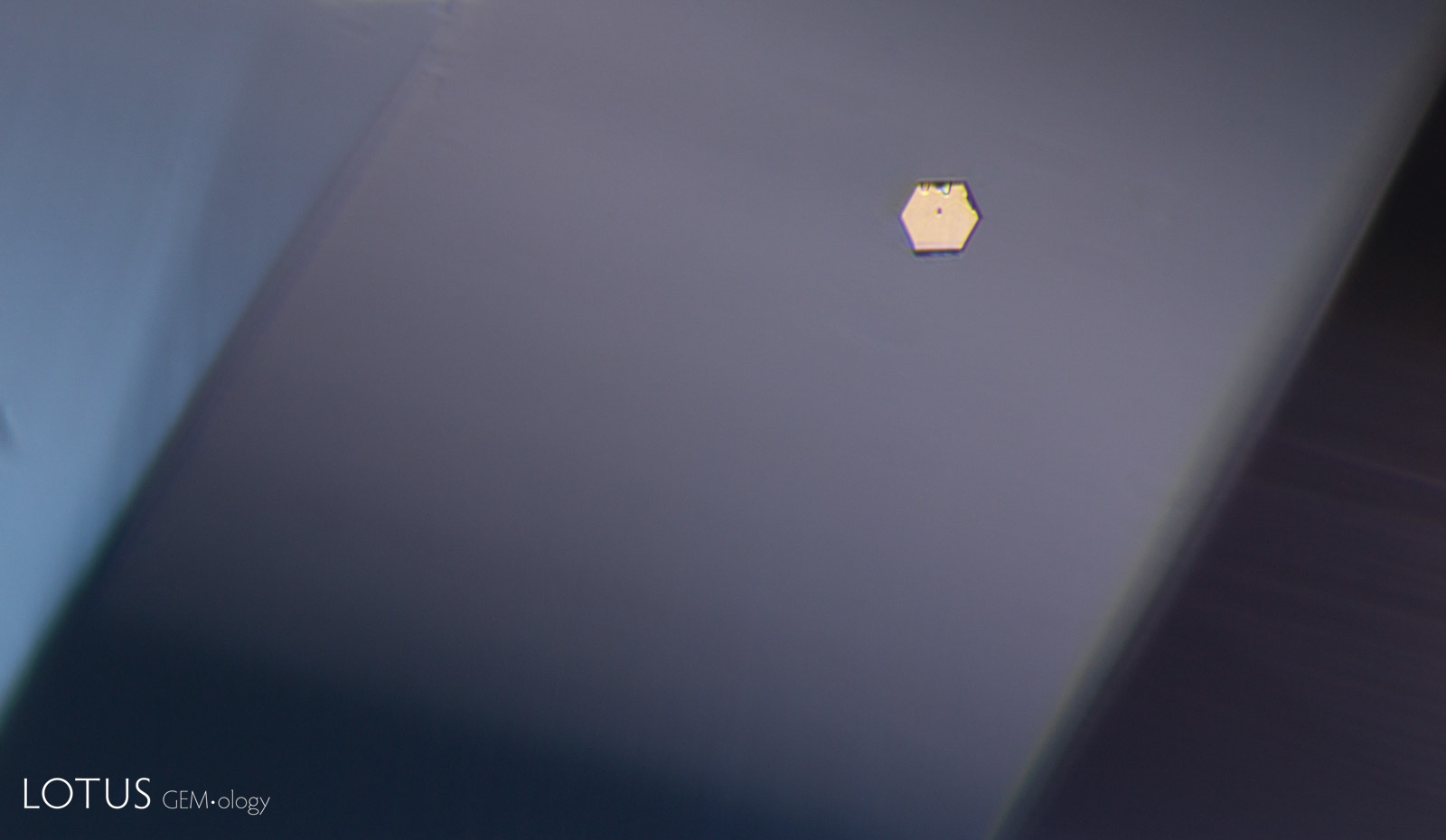
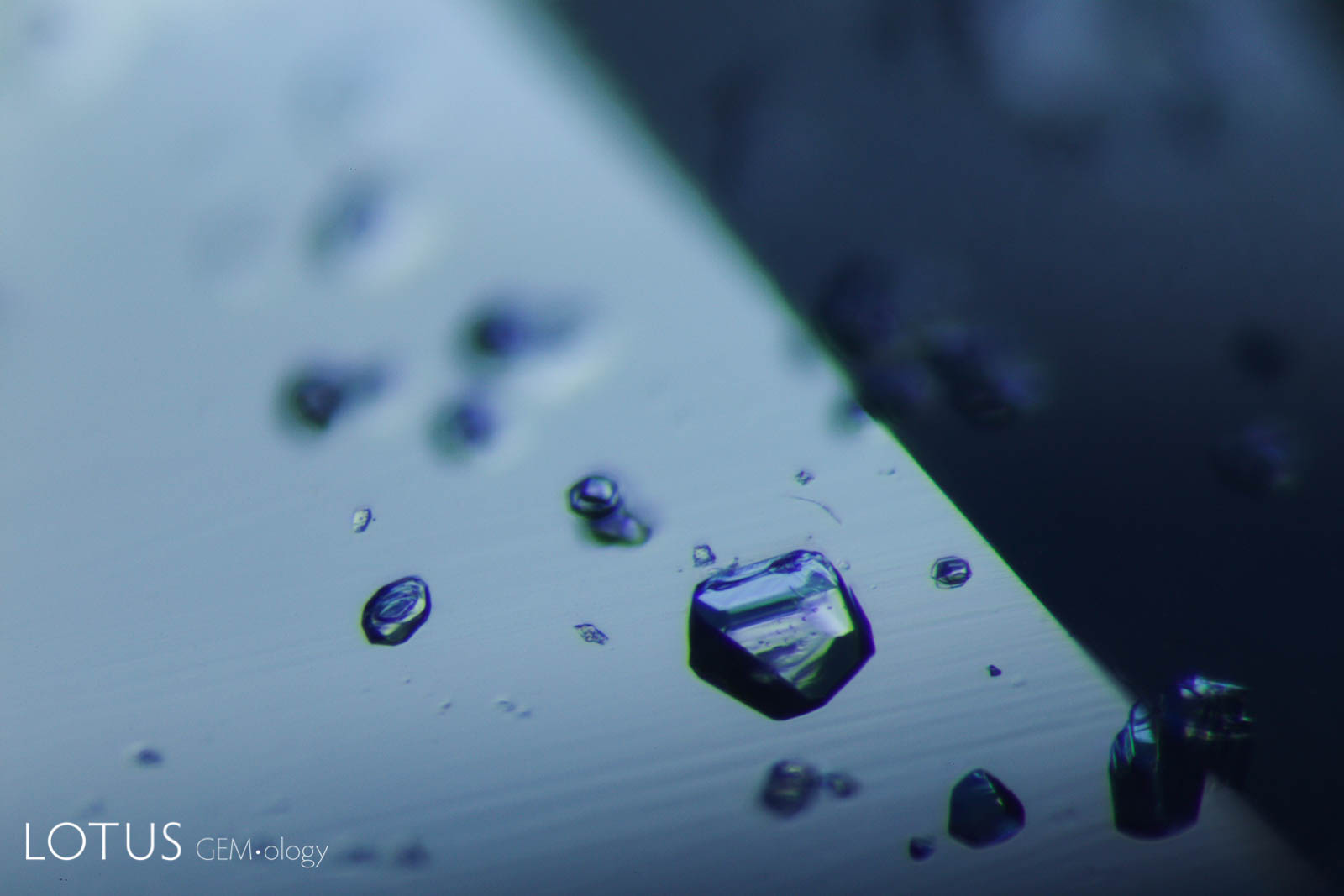
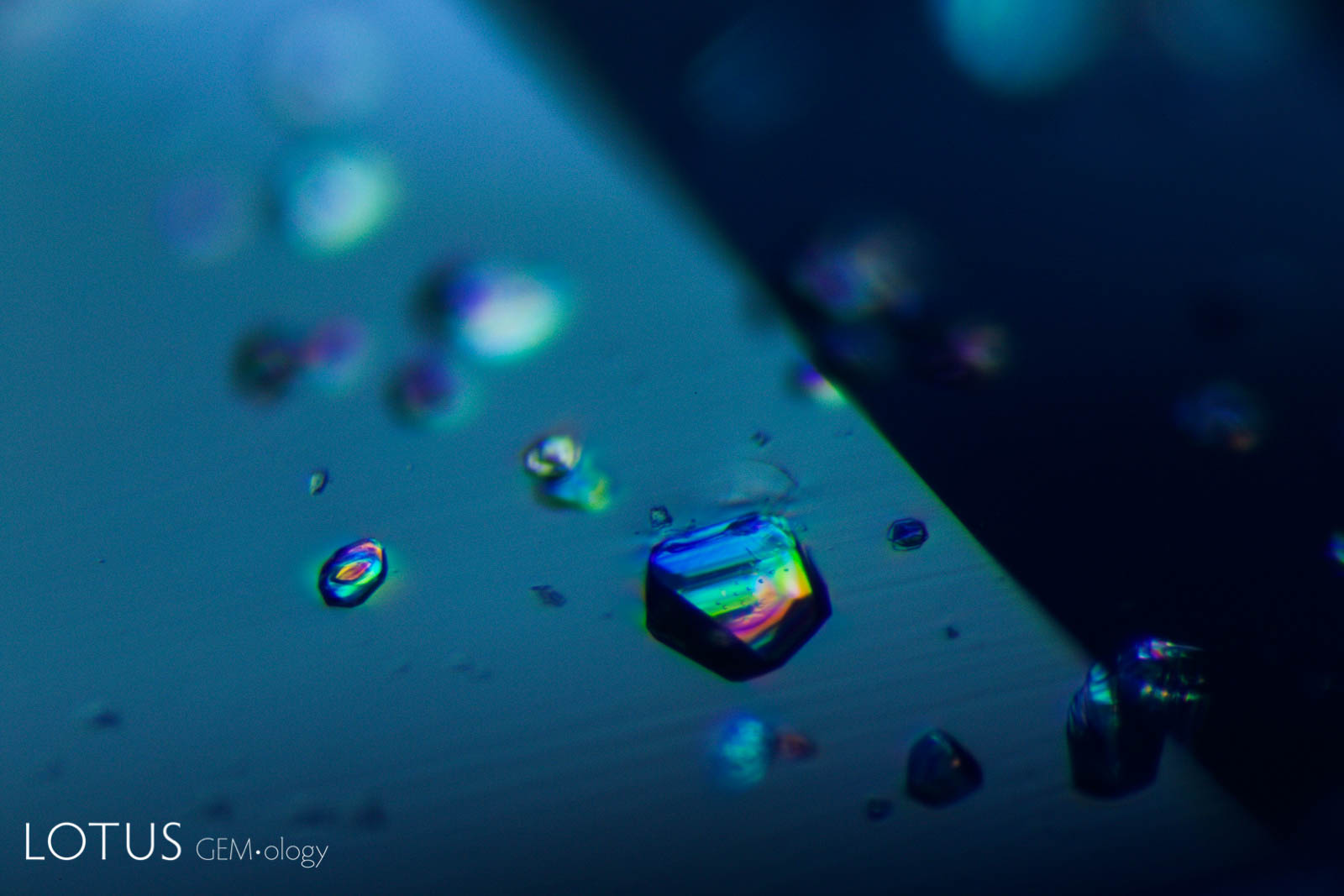
A. This tanzanite hosts a euhedral graphite inclusion, identified by micro-Raman spectroscopy. Its well-developed crystal habit is consistent with graphite's hexagonal crystal system. Under dark-field illumination, the inclusion appears black because its opaque nature does not permit the transmission of light.
B. With additional fiber-optic illumination from above, light reflected from the same graphite crystal reveals its distinctive submetallic luster. This lighting highlights the inclusion’s surface appearance, which is not apparent under dark-field illumination.
C. In contras to the previous two images, these crystals are transparent, allowing light to pass through from below.
D. When examined between crossed polars, the same transparent crystals reveal their doubly refractive nature by their display of interference colors. This provides another way to highlight the differences in optical properties between transparent and birefringent vs. opaque crystals.
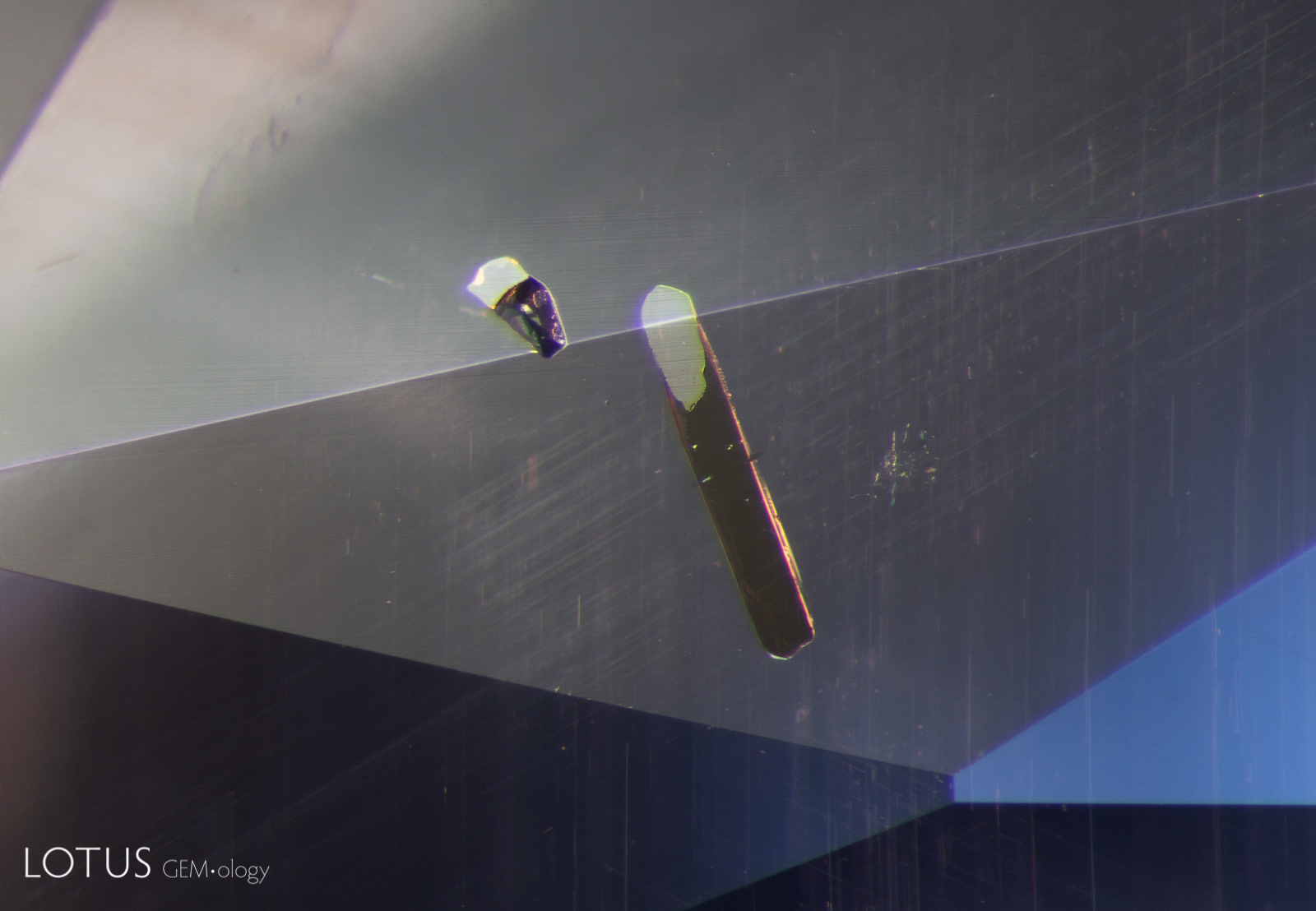
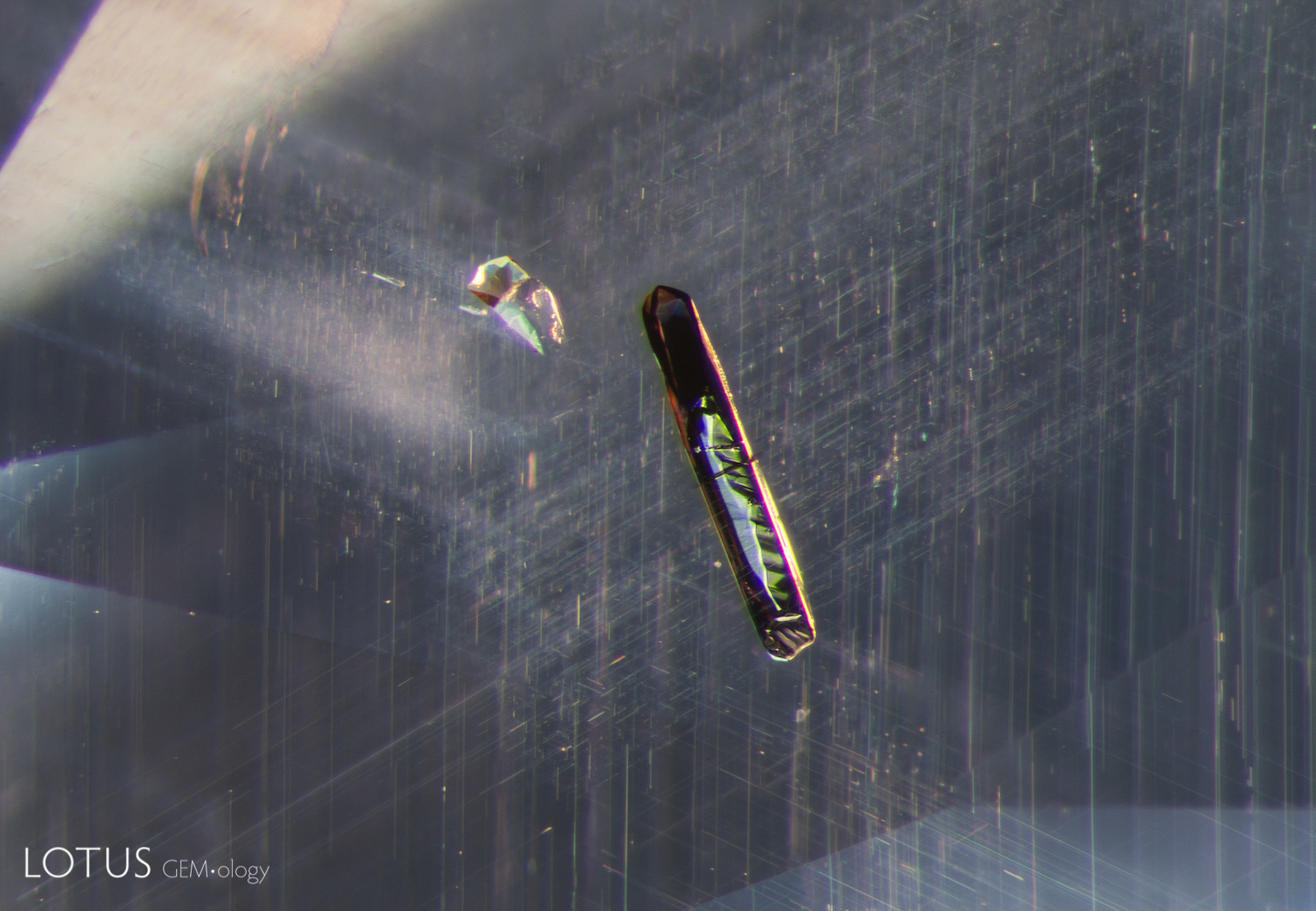
A. The brownish primary rutile crystal in this Ceylon sapphire shows extremely high luster where the crystal cut through the surface. This is due to the significant difference in reflective index between rutile (RI ≈ 2.75) and its corundum host (RI ≈ 1.77). The contrast is particularly noticeable under overhead fiber-optic illumination. The primary rutile was identified with micro Raman. Primary inclusions form before the host (protogenetic).
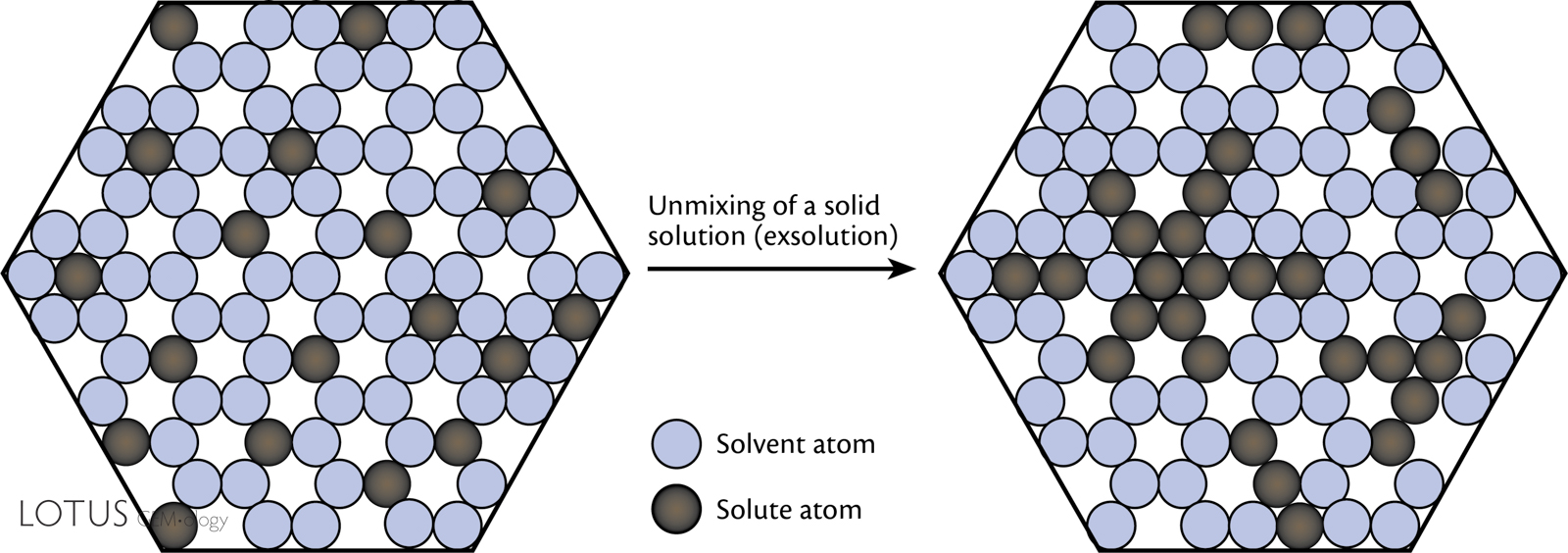
B. When the fiber-optic light is repositioned to illuminate the gem from the side, fine rutile “silk” needles also appear in the background. Rutile silk is a secondary inclusion (epigenetic—formed after the host) that forms through a process of exsolution (the unmixing of a solid solution). At high temperatures, titanium is more soluble in corundum, but as the stone cools, the solubility limit may be exceeded, forcing the titanium out of solution. Unlike a primary inclusion that grows freely in a liquid, exsolved inclusions are constrained by the surrounding solid host crystal. Thus the atomic migration is limited to the small spaces in the host structure. This is why rutile silk (and most other exsolved inclusions) forms tiny crystals with an alignment controlled by the host. Almost all star and chatoyant gems owe their optical effects to exsolution.
C. An exaggerated and simplified atomic view of exsolution in corundum showing how solute atoms separate from the host crystal structure and form tiny crystals of their own within the host. The host crystal structure controls how these new crystals are oriented, causing them to form in specific patterns. Silk exsolves along the basal plane, following the edges of the hexagonal prism in three directions within the same plane, intersecting at 60/120°. Rutile exsolves along the second-order hexagonal prism {11̄20} while hematite/ilmenite unmixes along the first-order prism {10̄10}. When both types of silk are present in the same stone, a 12-rayed star is possible.