
Four Treasures Reference Database
Record No. 1372
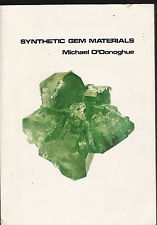
Synthetic Gem Materials
Book
O’Donoghue, M. (1976) Synthetic Gem Materials. London, The Worshipful Company of Goldsmiths, 215 pp.
ISBN/ISSN: 0 9501079 1 3 | Sinkankas/Born No.: 4833 / NIB | RWHL
corundum, synthetic corundum.7, assembled stones, gems
Michael O’Donoghue’s Synthetic Gem Materials (1976) is an extensive annotated bibliography of the scientific and gemological literature concerning synthetic gemstones, crystal growth, and related artificial materials. Rather than presenting a conventional textbook on gemstone identification or manufacturing techniques, the work brings together approximately 1,750–2,000 references to published investigations of substances used, or potentially usable, as gemstones. The entries are arranged alphabetically by material, extending from alums to zoisite, and provide information on colour, manufacturers, methods of crystal growth, physical properties, and original literature sources wherever such details are available. The compilation encompasses both historically significant experiments in crystal synthesis and more recent developments relevant to materials entering the jewellery trade during the 1970s. Synthetic ruby receives particularly extensive treatment, with nearly 100 references, reflecting the long history and commercial importance of synthetic corundum. Synthetic spinel and other crystalline materials are also represented, alongside substances developed principally for scientific and industrial applications. An introductory section identifies commercial trade names associated with synthetic gemstones and lists important journals and books containing information on crystal growth and the properties of manufactured materials. The individual records were assembled on reference cards and reproduced in the volume, approximately ten to a page, creating a compact reference tool intended primarily for specialists requiring access to otherwise scattered technical publications. Although primarily concerned with synthetic materials, the bibliography also includes references to gemstone imitations, composite stones, and doublets made entirely from natural materials, thereby extending beyond the strict meaning of its title. Contemporary reviewers noted several inconsistencies in terminology and classification, including the separate listing of beryllia and bromellite, both names for BeO, and differing descriptions of yttrium aluminium garnet (YAG), Y₃Al₅O₁₂. The coverage also extends to certain metals and water-soluble salts of questionable gemological relevance. Other criticisms concerned omissions from the bibliography, notably J.C. Brice’s The Growth of Crystals from Liquids (1973), and the absence of identifiable examples from Djevahiridian, a major European manufacturer of synthetic corundum and spinel. Despite these limitations, contemporary reviews regarded the work as an unusually comprehensive and valuable consolidation of technical literature, particularly because information on synthetic gemstones was dispersed among highly specialized scientific journals and often inaccessible to practicing gemologists. The volume contains few illustrations and is not designed as a practical identification manual, but its annotated references provide a foundation for investigating synthetic gemstone manufacture, material properties, commercial developments, and the history of crystal-growth technology. Published at a time when an increasing variety of synthetic materials was becoming available to the jewellery industry, it represents an important bibliographic resource for gemologists, mineralogists, crystallographers, and researchers concerned with distinguishing natural gemstones from their synthetic counterparts. A contemporary review also noted that supplementary entries were planned for publication in the Journal of Gemmology, extending the usefulness of the bibliography beyond its original publication date.