
Four Treasures Reference Database
Record No. 1471
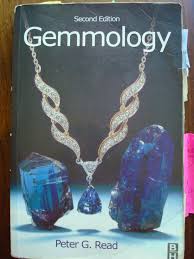
Gemmology
Book
Read, P.G. (1991) Gemmology. Oxford, Butterworth-Heinemann, 358 pp.
Sinkankas/Born No.: NIS / NIB | RWHL
corundum, synthetic corundum.7, gems, general gemology, beryl, emerald, garnet, topaz, tourmaline, chrysoberyl, alexandrite, diamond, gem testing
This introductory textbook presents the scientific foundations and practical techniques of gemmology for students preparing for the Gemmological Association’s Preliminary and Diploma examinations. Developed from the author’s earlier Beginner’s Guide to Gemmology and his experience tutoring correspondence students, it emphasizes the technical properties used to identify gem materials. An opening historical survey traces major developments over approximately 150 years, followed by explanations of gemstone formation, geological occurrence, chemical composition and crystal structure. Cleavage, fracture, hardness and durability are related to the behaviour of gems during mining, testing and fashioning. Specific gravity, colour, lustre, refraction, polarization, pleochroism and absorption spectra provide the framework for instrumental identification. The treatment of these properties introduces the associated apparatus and measurement methods, including hydrostatic weighing, heavy liquids, refractometers, polariscopes, dichroscopes and spectroscopes. Luminescent, electrical and thermal characteristics, together with hand-lens and microscope examination, extend the range of diagnostic observations. Later sections cover gemstone enhancement, synthetic production, simulants and composite stones, with attention to distinguishing natural materials from manufactured counterparts. Organic gems and their imitations receive separate treatment, while chapters on cutting, polishing and diamond grading connect optical and physical principles with lapidary practice. Descriptive information on individual gemstones is concentrated in appendices, alongside reference constants, colour theory, measurement units and examination material. A contemporary review identifies the integration of fundamental properties with testing instruments as a particular strength, while observing that the relative usefulness of alternative instruments and techniques is not consistently evaluated. It also notes that the descriptive gemstone appendix is concise and unillustrated, that the four pages of colour illustrations are well reproduced, and that some monochrome illustrations are less satisfactory. Several statements concerning diamond fluorescence, diamond colour classification and synthetic amethyst production are questioned by the reviewer. Despite these reservations, the work is regarded as a useful educational resource reflecting the breadth of knowledge required of the practising gemmologist.