
Four Treasures Reference Database
Record No. 1607
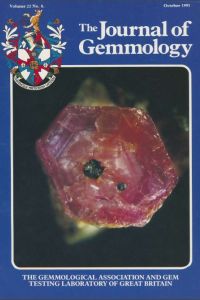
Contributions to a history of gemmology—Carl Peter Thunberg and Ceylon gemstones
Journal Article
Sinkankas, J. (1991) Contributions to a history of gemmology—Carl Peter Thunberg and Ceylon gemstones. Journal of Gemmology, Vol. 22, No. 8, October, pp. 463–470.
ISBN/ISSN: 221252 | Sinkankas/Born No.: NIS / NIB | RWHL
corundum, history.1, ruby, sapphire, Sri Lanka.12, gems
Carl Peter Thunberg’s eighteenth-century account of the gemstones of Ceylon, now Sri Lanka, is reassessed as an early contribution to scientific gemmology. A biographical sketch places the Swedish physician and naturalist within the intellectual tradition of Linnaeus and outlines his travels, collecting activities, and later academic career. Earlier descriptions of the island’s gem wealth, particularly those of Marco Polo and Jean-Baptiste Tavernier, provide historical context and illustrate the difficulty of interpreting old gemstone names. Thunberg acquired much of his information during a stay at Matara, where medical duties afforded opportunities for local excursions and the purchase of rough and cut stones. His observations include the role of Muslim lapidaries and the export of locally fashioned gems to India. Drawing on his travel narrative and related publications, Sinkankas reviews four non-gem minerals and twenty gemstone entries, recording historical names in several languages and comparing descriptions with modern mineral identities. Colour, crystal form, hardness, transparency, and alluvial wear provide the principal evidence for confirming or revising the identifications. Several stones described as ruby or as differently coloured tourmalines are interpreted as probable zircon, while other identifications remain uncertain because their descriptions are insufficient or contradictory. The discussion distinguishes rock crystal, milky quartz, citrine, smoky quartz, grossular garnet, and probable schorl, and identifies Thunberg’s “pseudo-opal” cat’s-eye as chatoyant quartz rather than chrysoberyl. Particular attention is given to colourless zircon sold as Matara diamond. Thunberg’s account of heating stones, then enveloping them in fine lime and firing them with rice chaff, constitutes early documentation of gemstone treatment intended to improve colour and clarity. The article also examines the limitations of eighteenth-century analytical methods. Assistance from Torbern Olof Bergman did not eliminate identification errors, whereas Martin Heinrich Klaproth’s improved chemical procedures helped establish the compositions and distinctions of corundum and zircon. Tourmaline’s electrical properties and the inconsistent application of its name receive separate consideration. Later observations by John Davy and other writers demonstrate the persistence of misleading trade terminology. The study presents Thunberg’s collection and descriptions as historically important evidence while emphasizing that early gem names require critical interpretation rather than direct equivalence with modern species.