
Four Treasures Reference Database
Record No. 16560
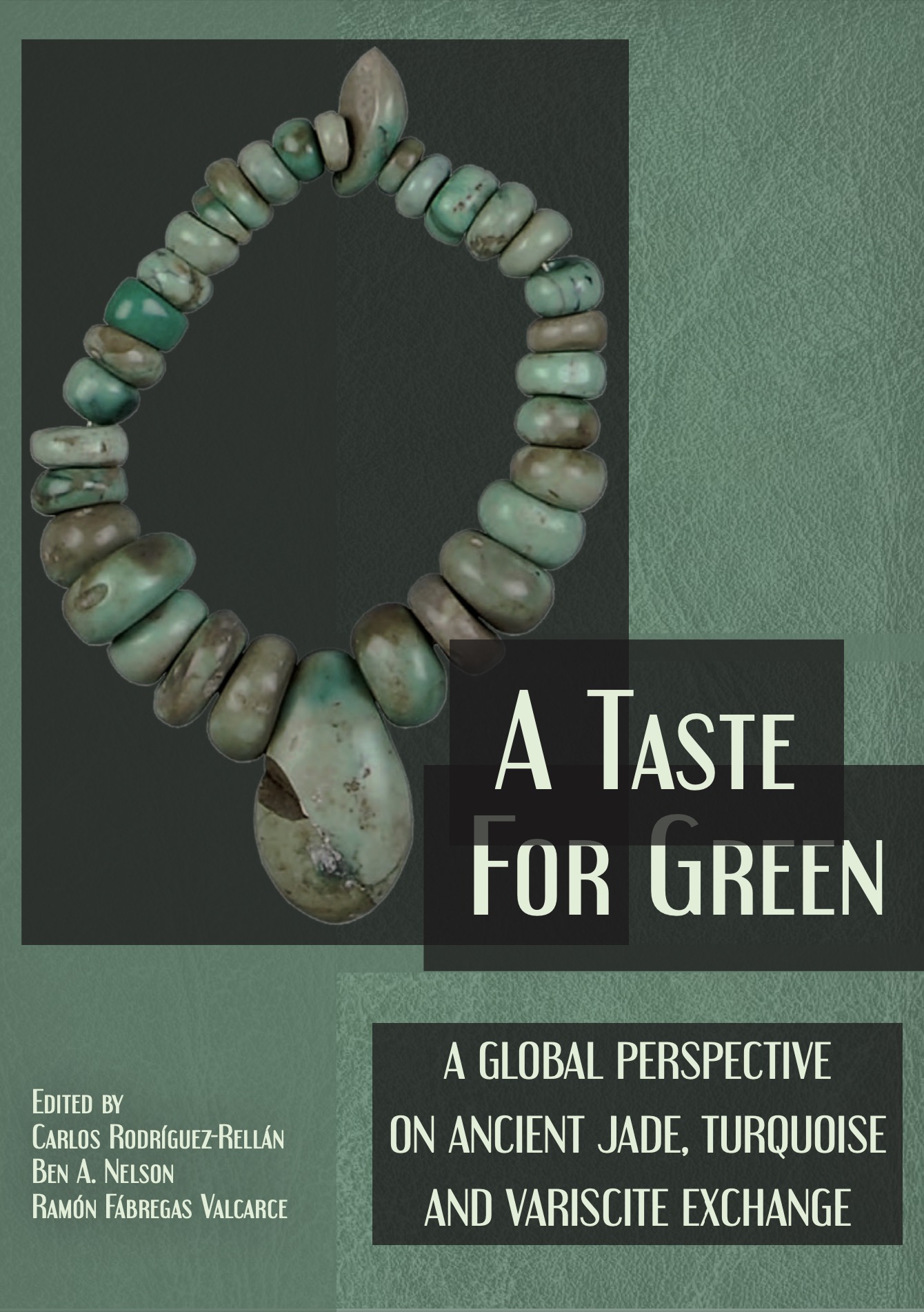
Spaces and signs for the transfer of jades and callaïs in the Neolithic of Western Europe
Book Section
Cassen, S., Pétrequin, P., Querré, G., Grimaud, V. and Rodríguez-Rellán, C. (2019) Spaces and signs for the transfer of jades and callaïs in the Neolithic of Western Europe. In: A Taste for Green | A Global Perspective on Ancient Jade, Turquoise and Variscite Exchange, Philadelphia: Oxbow
ISBN/ISSN: 9781790000000 | Sinkankas/Born No.: NIS/NIB | RWHL
gems, jade, variscite, turquoise, Europe, Italy, France, jadeite, fei cui, pyroxene jade, callaïs
Two distinct groups of green stones with distant origins are found together in the Neolithic tombs of the Carnac region (Brittany, France). Alpine jades (jadeitite, omphacitite, eclogite, nephrite) served as raw material for polished axes and disc-rings, while Iberian callaïs (variscite, turquoise) was used for pendants and beads. This paper examines how these materials were transferred, emphasizing the unique characteristics of each geographical source. To this end, the rows of steles and the iconographic programs inscribed on the standing stones in the study area are analyzed to compare their respective symbolic systems. While land routes from the Alps are increasingly well-traced for the 5th millennium BCE, sea routes connecting to the Iberian Peninsula remain largely theoretical but highly promising. Several arguments in support of this maritime hypothesis are presented.