
Four Treasures Reference Database
Record No. 16750
Jade and Myanmar Economy in the Colonial Period (1885–1948)
Thesis
Apiwong, T. (2005) Jade and Myanmar Economy in the Colonial Period (1885–1948)., Chiang Mai: Chiang Mai University, 261 pp.
Language: in Thai with English Abstract | RWHL
gems, jade, fei cui, pyroxene jade, history of fei cui, Myanmar, Burma, jade trade
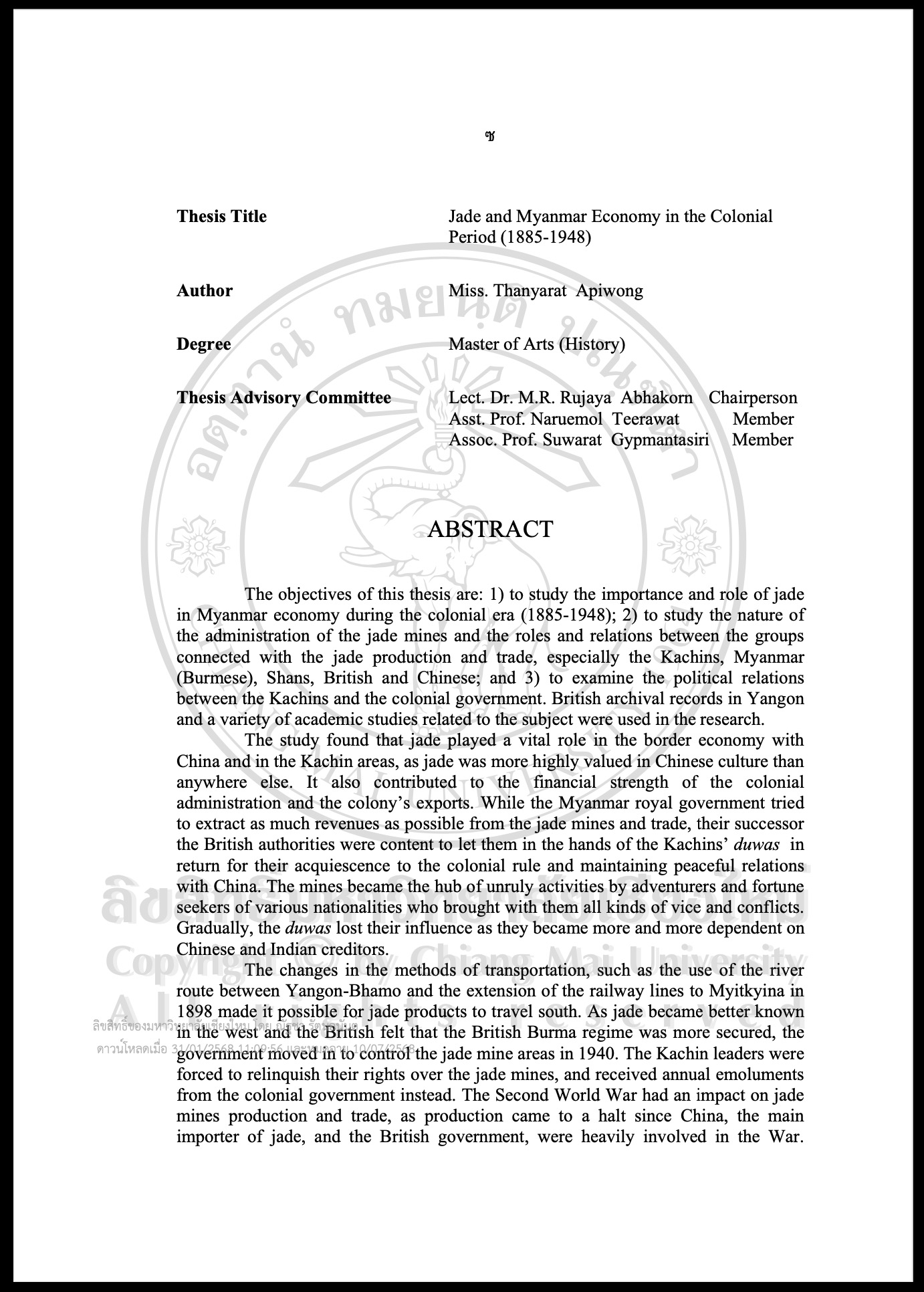
The objectives of this thesis are: 1) to study the importance and role of jade in Myanmar economy during the colonial era (1885–1948); 2) to study the nature of the administration of the jade mines and the roles and relations between the groups connected with the jade production and trade, especially the Kachins, Myanmar (Burmese), Shans, British and Chinese; and 3) to examine the political relations between the Kachins and the colonial government. British archival records in Yangon and a variety of academic studies related to the subject were used in the research. The study found that jade played a vital role in the border economy with China and in the Kachin areas, as jade was more highly valued in Chinese culture than anywhere else. It also contributed to the financial strength of the colonial administration and the colony’s exports. While the Myanmar royal government tried to extract as much revenues as possible from the jade mines and trade, their successor the British authorities were content to let them in the hands of the Kachins’ duwas in return for their acquiescence to the colonial rule and maintaining peaceful relations with China. The mines became the hub of unruly activities by adventurers and fortune seekers of various nationalities who brought with them all kinds of vice and conflicts. Gradually, the duwas lost their influence as they became more and more dependent onChinese and Indian creditors. The changes in the methods of transportation, such as the use of the river route between Yangon-Bhamo and the extension of the railway lines to Myitkyina in 1898 made it possible for jade products to travel south. As jade became better known in the west and the British felt that the British Burma regime was more secured, the government moved in to control the jade mine areas in 1940. The Kachin leaders were forced to relinquish their rights over the jade mines, and received annual emoluments from the colonial government instead. The Second World War had an impact on jade mines production and trade, as production came to a halt since China, the main importer of jade, and the British government, were heavily involved in the War. Production was revived again in 1947 but still met with problems from domestic unrest as Myanmar moved towards independence. Despite the fact that role of jade in Myanmar economy as a whole was rather small in comparison with the economy's other products such as rice and timber, its role in the local economy was found to be significant in terms of its contribution to local public finance, employment, and linkages to other economic activities.