
Four Treasures Reference Database
Record No. 1679
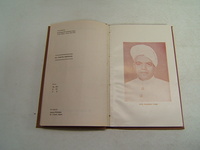
Indian Gemmology
Book
Tank, R.R. (1971) Indian Gemmology. Jaipur, Dulichand Tank, 171 pp.
Sinkankas/Born No.: 6484; NIB | RWHL
Close Abstract
Hide Keywords
Copy Reference
corundum, India.12, ruby, sapphire, history.1, gems, Indian lapidary
Sinkankas: Gemstones as viewed by an Indian author steeped in traditional lore presents a perspective deeply rooted in India’s enduring cultural relationship with gems, much of which remains seriously regarded today. As noted in a review in Gems & Gemology (Vol. 14, No. 2, 1972, pp. 61–63), the work is a unique combination of Indian culture and gemology." The lengthy and valuable introduction offers insights into Indian gem lore, tracing its origins to ancient texts as well as to more recent sources, many of which are cited by the author, Tank, along with the names of their authors. Topics discussed include the critical importance of imperfections in gems, distinctions between synthetics and naturals, and traditional Indian classifications, listing 84 gemstones in total. At the heart of the book is a focus on the nine traditional gems—emerald, diamond, pearl, coral, zircon, blue sapphire, sapphire, ruby, and cat’s-eye—shown on the color plate preceding the text. These are described using both traditional beliefs and modern scientific knowledge, with an emphasis on the qualities a gem must possess to be considered protective or influential. Tank also explores various gem varieties, their sources, and recommendations for when and where they should be worn for their protective powers. For instance, in the case of pearls, shape is crucial, and over 20 forms are illustrated with their Indian names. The book also includes synonyms for gems in different Indian languages and covers additional stones such as garnet, feldspar, quartz, opal, topaz, tourmaline, and beryl. It concludes with short notes on lapidary treatments and birthstones. Monochrome plates primarily depict cutting styles and one plate on inclusions. Unfortunately, and typically of much modern bookbinding in India, the physical binding is very poor—the spine is unrounded and the inner hinges tend to break upon opening. As noted in Rev/Gemm (Vol. 13, No. 6, 1973, p. 239), the book is not a scientific treatise."