
Four Treasures Reference Database
Record No. 16832
Qin gold and jade
Book Section
Michaelson, C. (2007) Qin gold and jade. In: The First Emperor, London: British Museum Press, pp. 94–103.
ISBN/ISSN: 9780710000000 | Sinkankas/Born No.: NIS/NIB | RWHL*
gems, jade, China, archaic jade, ancient China, nephrite, ampibole jade
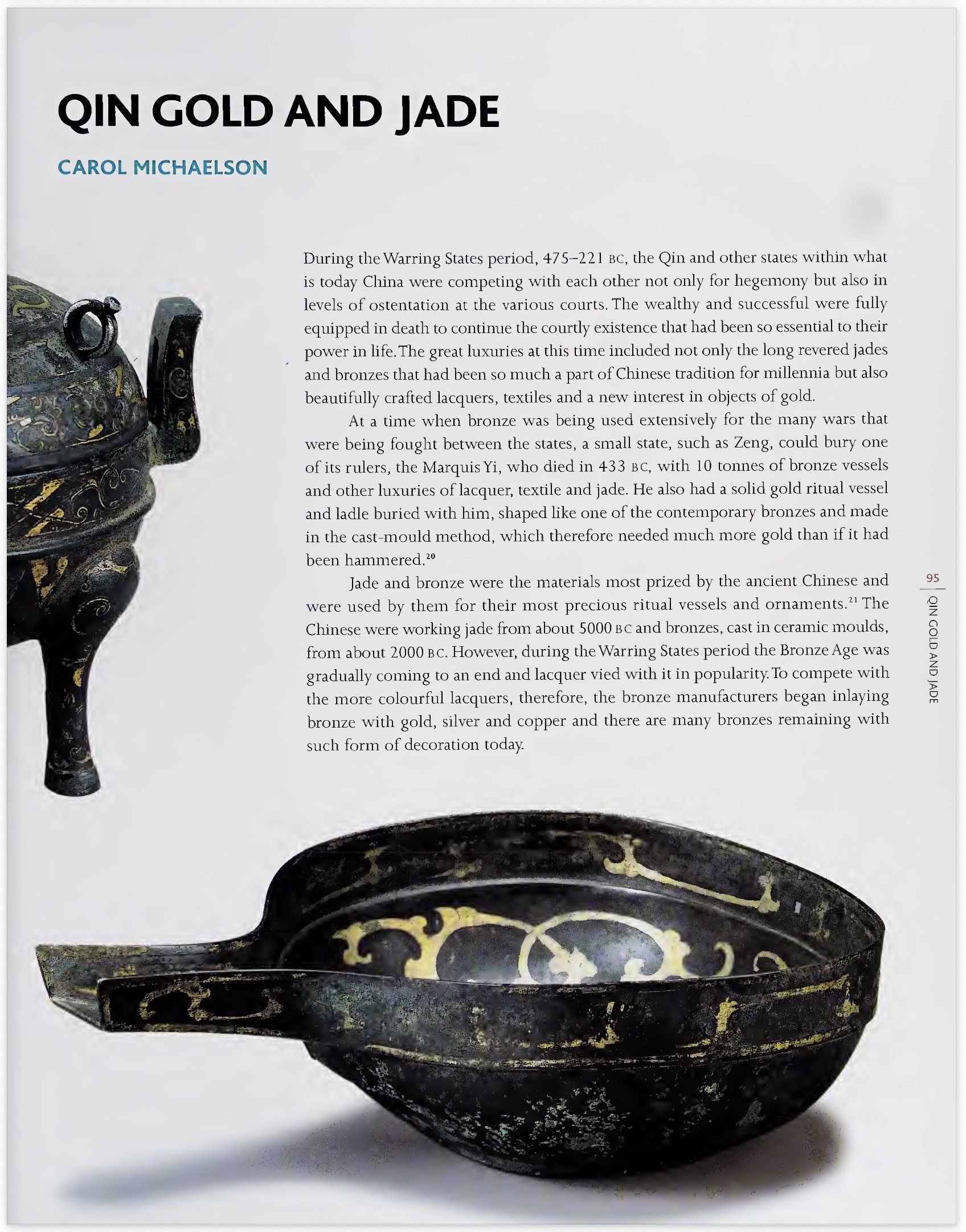
During the Warring States period, 475–221 BC, the Qin and other states within what is today China were competing with each other not only for hegemony but also in levels of ostentation at the various courts. The wealthy and successful were fully equipped in death to continue the courtly existence that had been so essential to their power in life. The great luxuries at this time included not only the long-revered jades and bronzes that had been so much a part of Chinese tradition for millennia but also beautifully crafted lacquers, textiles, and a new interest in objects of gold. At a time when bronze was being used extensively for the many wars that were being fought between the states, a small state, such as Zeng, could bury one of its rulers, the Marquis Yi, who died in 433 BC, with 10 tonnes of bronze vessels and other luxuries of lacquer, textile, and jade. He also had a solid gold ritual vessel and ladle buried with him, shaped like one of the contemporary bronzes and made in the cast-mould method, which therefore needed much more gold than if it had been hammered. Jade and bronze were the materials most prized by the ancient Chinese and were used by them for their most precious ritual vessels and ornaments. The Chinese were working jade from about 5000 BC and bronzes, cast in ceramic moulds, from about 2000 BC. However, during the Warring States period the Bronze Age was gradually coming to an end and lacquer vied with it in popularity. To compete with the more colourful lacquers, therefore, the bronze manufacturers began inlaying bronze with gold, silver, and copper, and there are many bronzes remaining with such form of decoration today.