
Four Treasures Reference Database
Record No. 17020
Precious stones
Book Section
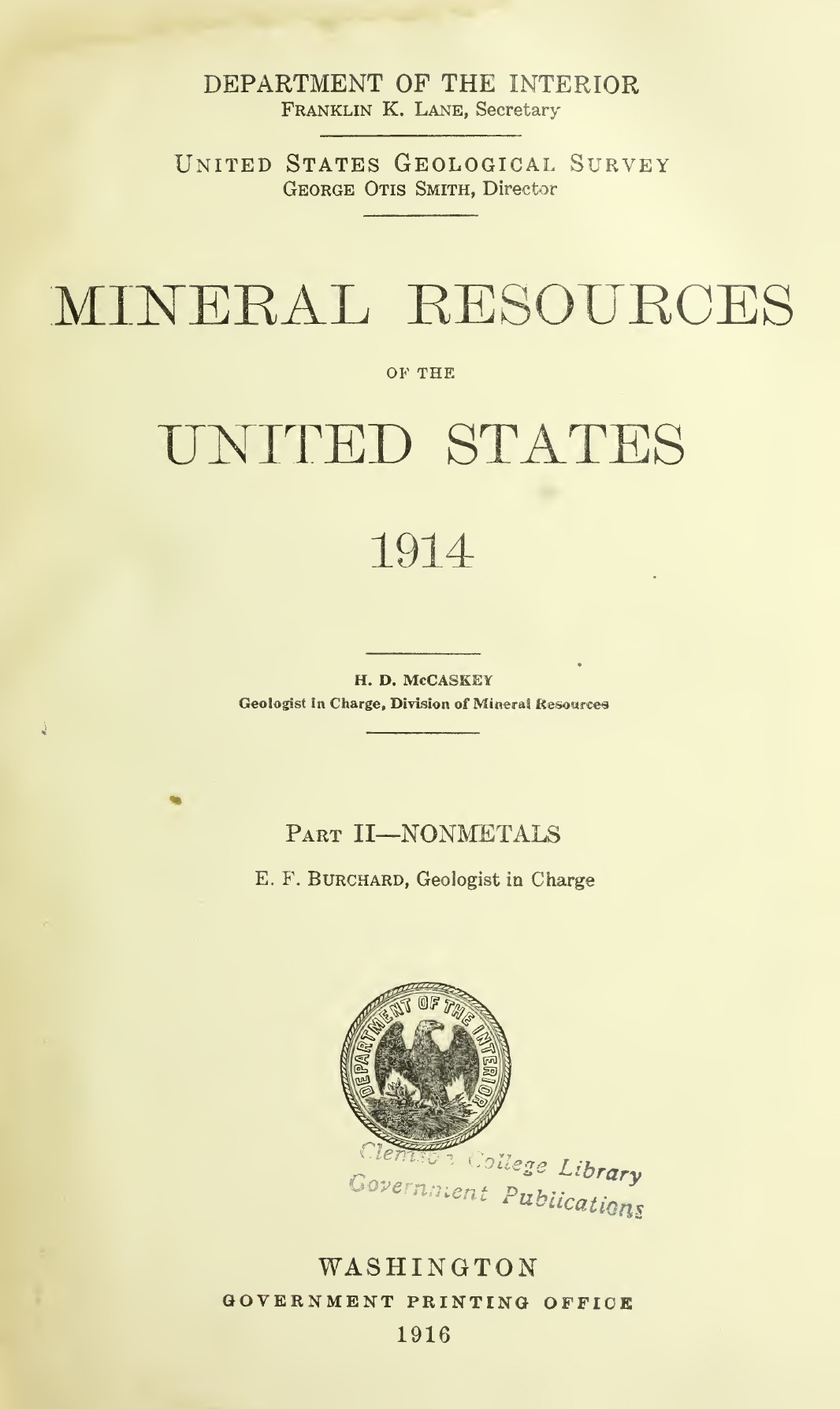
Sterrett, D.B. (1911) Precious stones. In: Mineral Resources of the United States | Calendar Year 1910, Part 2—Nonmetals , pp. 847–900.
Sinkankas/Born No.: 6345; NIB | RWHL
Close Abstract
Hide Keywords
Copy Reference
gems, gems general
A detailed review of gem production, mining, and discoveries in the United States and abroad during 1910. Sterrett records a substantial decline in U.S. precious-stone production, from $534,380 in 1909 to $295,797 in 1910, largely because of reduced output of tourmaline, turquoise, and chrysoprase. Particular attention is given to turquoise and the rapidly expanding use of variscite, with extensive descriptions of new deposits in Nevada and Utah, including their geology, mineralogy, color, and suitability for jewelry. Other American materials treated include agate and jasperized dinosaur bone from Colorado, amethyst deposits in North Carolina and Georgia, aquamarine and other beryls, opal, lapis lazuli, tourmaline, sapphire, and californite, a compact vesuvianite or garnet resembling jade and considered suitable as a substitute for nephrite or jadeite. Diamond sections discuss the Arkansas field, California placer diamonds, microscopic diamonds discovered in chromite-bearing peridotite in British Columbia, and the major South African mines. Sterrett also describes North Carolina emerald prospects, Montana sapphires, Burmese ruby, sapphire, and spinel production, and numerous newly reported gem localities. The report concludes with production statistics and U.S. import figures, noting a slight increase in precious-stone imports during 1910, particularly pearls and rough diamonds.