
Four Treasures Reference Database
Record No. 17120
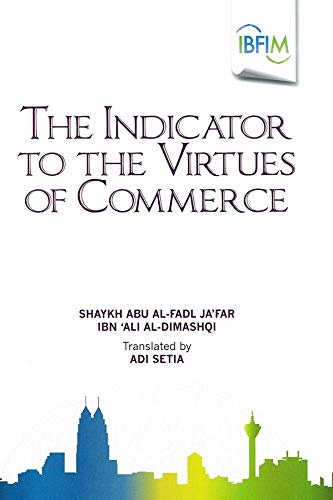
The Indicator to the Virtues of Commerce [Al-ishara ila mahasin al-tijara]
Al-ishara ila mahasin al-tijara
Book
al-Dimishqi, A.a.-F.J.i.ʿ. (2011) The Indicator to the Virtues of Commerce [Al-ishara ila mahasin al-tijara]. Kuala Lumpur, Islamic Banking and Finance Institute Malaysia, 172 pp.
ISBN/ISSN: 9789670000000 | Sinkankas/Born No.: NIS/NIB | Language: in Arabic | not seen
gems, Arabic mineralogy
The full title of the work is Kitāb al-Ishārah ilā Maḥāsin al-Tijārah wa-Maʿrifat Jayyid al-Aʿrāḍ wa-Kadīhā wa-Ghushūsh al-Mudallīsīn fīhā, which translates to A Guide to the Merits of Commerce and to Recognition of Both Fine and Defective Merchandise and the Swindles of Those Who Deal Dishonestly." It serves as a practical manual for merchants, detailing: Evaluation of various goods, including textiles, spices, metals, and foodstuffs. Identification of defective merchandise and fraudulent practices. Ethical guidelines for honest trade. Insights into market dynamics, such as supply and demand. The book emphasizes the importance of ethical conduct in commerce and provides detailed descriptions of merchandise and trade practices relevant to the medieval Islamic world. This work originally by a scholar-merchant of the 6th century of the Hijrah has been revived by Islamic scholar Adi Setia and presented as a crucial text to anyone interested in Islamic banking or finance. Covering the gamut of business transactions this book is still as relevant today as it was when written. Abū al-Faḍl Jaʿfar ibn ʿAlī al-Dimashqī was a 12th-century Muslim merchant from Damascus. While little is known about his personal life, his work reflects a deep understanding of commerce and economic principles. He was influenced by Greek sources, particularly the neo-Pythagorean Bryson of Heraclea. Al-Dimashqī's treatise is notable for its early articulation of concepts akin to modern price theory. He distinguished between normal market conditions, where prices are based on production costs, and periods of scarcity or oversupply, where speculative behavior affects pricing. He also emphasized the necessity of division of labor for economic development."