
Four Treasures Reference Database
Record No. 17204
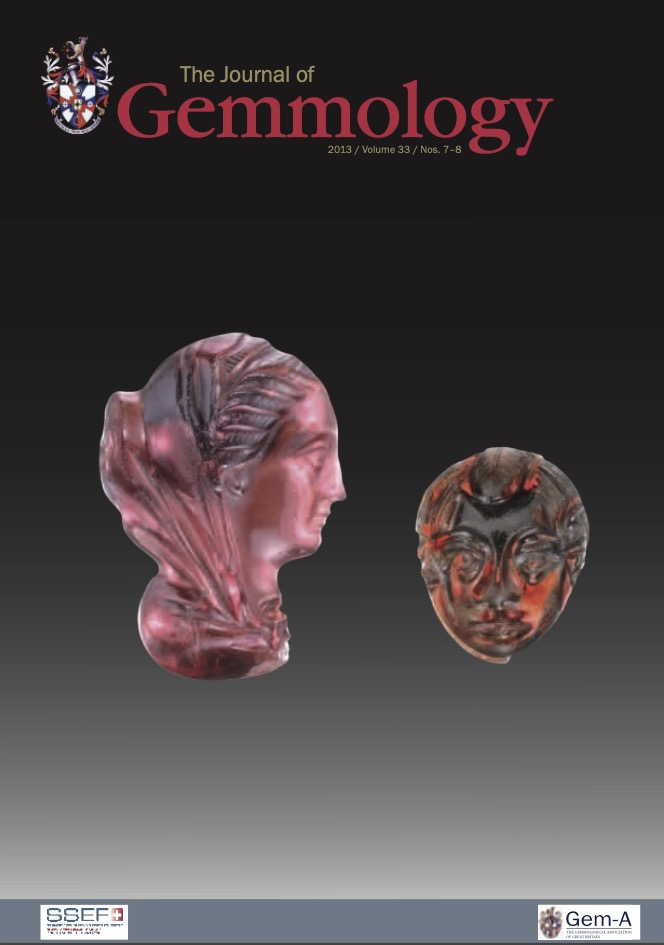
Greek, Etruscan and Roman garnets in the antiquities collection of the J. Paul Getty Museum
Journal Article
Thoresen, L. and Schmetzer, K. (2013) Greek, Etruscan and Roman garnets in the antiquities collection of the J. Paul Getty Museum. Journal of Gemmology, Vol. 33, No. 7–8, pp. 201–222.
ISBN/ISSN: 221252 | Sinkankas/Born No.: NIS/NIB | RWHL*
Close Abstract
Hide Keywords
Copy Reference
gems, glyptic, engraved gems, agate, cameo, intaglio, Getty Museum, locality, species, analytical, garnet
The results of quantitative electron microprobe analyses, along with observations of gemmological properties and microscopic features, are presented for 11 garnets of ancient Greek, Etruscan, and Roman origin. In addition to chemical data, the gemmological properties of the Getty Museum garnets are examined, including refractive index, density, and inclusions. Based on their chemical composition and gemmological properties, the 11 garnets are categorized into four groups: Cr-poor pyrope, Mn-rich almandine, Ca-rich almandine, and intermediate pyrope-almandine. When combined with published analyses of 26 Greek and Roman garnets from ancient jewelry and glyptics, the chemical distribution pattern of all 37 garnets expanded the boundaries of the established groups, introducing a fifth group consisting of Mn-poor almandine. The compositional fields for these five groups are compared with data from Early Medieval garnets, mostly from Merovingian cloisonné jewelry. The chemical composition and physical properties of the garnets provide insights into potential sources of rough gem material, trade and transmission networks in the ancient world, and associations between finished objects now dispersed across different collections.