
Four Treasures Reference Database
Record No. 17301
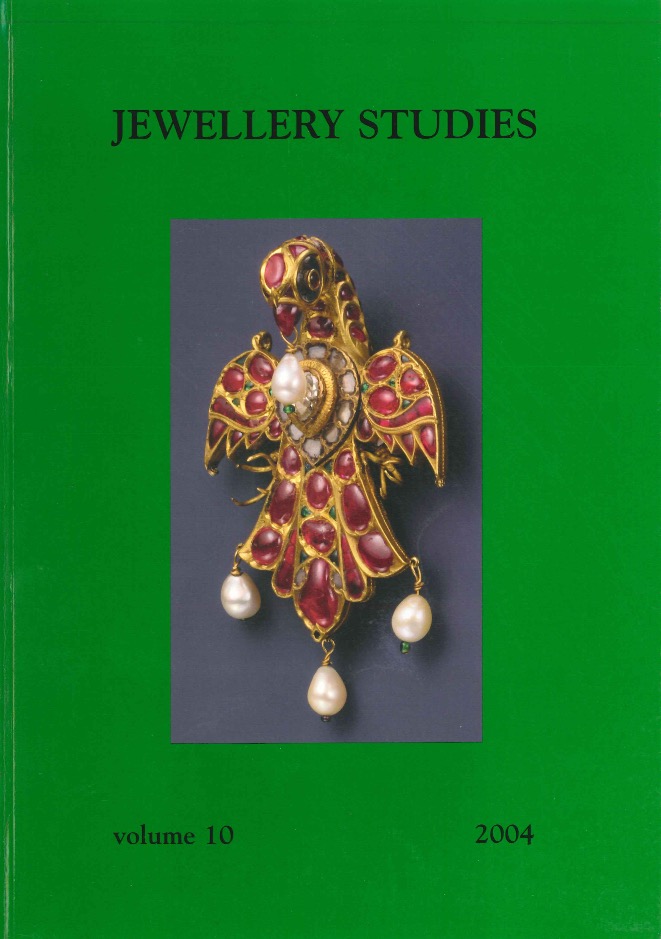
Jewels for the Great Mughal: Goa a centre of the gem trade in the Orient
Journal Article
Silva, N.V., e (2004) Jewels for the Great Mughal: Goa a centre of the gem trade in the Orient. Jewellery Studies, Vol. 10, pp. 41–51.
Sinkankas/Born No.: NIS/NIB | RWHL
Close Abstract
Hide Keywords
Copy Reference
gems, gem trade in Asia, gem business, trade between Europe and Asia, India, Goa, Indian lapidary
In 1575, during the governorship of Antonio Moniz Barreto (1573–1576) over the Portuguese State of India, Goa welcomed an embassy or “artistic mission” from Fatehpur Sikri, which stayed for two years with the aim of gathering the finest articles of India and bringing the “wonderful things” of the country to Goa for the pleasure of His Majesty. Emperor Akbar’s fascination with these “wonderful things,” associated with the Portuguese, had begun after his first contact with them in Diu in 1572. This interest was noted by Diogo do Couto, the chronicler of Portuguese expansion, who recorded that Akbar even adopted Portuguese-style clothing, complete with a sword and dagger. Akbar’s own chronicler, Abu’l-Fazl, described how the head of the mission, Haji Habibullah, brought many skilled craftsmen to Goa, aiming not only to acquire European and Goan goods but also to import rare crafts. The embassy’s two-year stay left a significant mark, being recorded in both Mughal and Portuguese sources, although the lasting impact on the artwork produced at Akbar’s court—a court deeply fascinated by European exoticism—has yet to be fully explored in historiography. This episode reflects a mirror image of the European courts’ simultaneous fascination with Oriental exoticism.