
Four Treasures Reference Database
Record No. 189
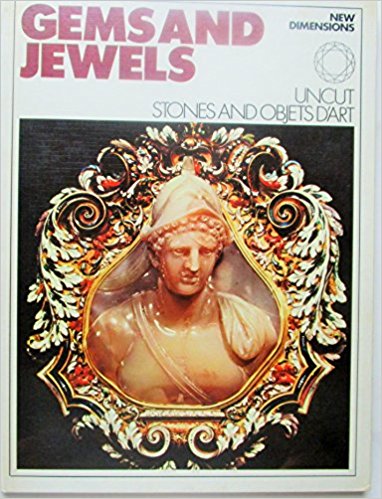
Gems and Jewels: Uncut Stones and Objets D’Art
Book
Schubnel, H.-J. (1971) Gems and Jewels: Uncut Stones and Objets D’Art. New York, Crescent Books, 64 pp.
Sinkankas/Born No.: 5887 | RWHL
gems, precious stones, general
This illustrated introduction brings together the mineralogical characteristics of gem materials and the history of their transformation into jewellery, engraved stones and decorative objects. Its central theme is the relationship between natural substances valued for beauty, durability and rarity and the changing symbolic, religious, social and monetary meanings attached to them. A historical survey follows stoneworking from prehistoric tools and polished implements through ancient seals, amulets, scarabs, cameos and intaglios to Renaissance carving and European diamond cutting. Examples from the ancient Near East, Egypt, Greece, Rome, China and the Americas illustrate the range of materials and craftsmanship involved. Trade, collecting and major discoveries of emeralds and diamonds provide a broader setting for the development of gem use. The principal descriptive section follows a mineralogical arrangement based on chemical composition and crystal structure, progressing through native elements, sulphides, halides, oxides, carbonates, phosphates and silicates, with separate treatment of natural glasses and organic gem materials. Entries outline appearance, colour varieties, geological occurrence, important sources and suitability for cutting, carving or ornament. Familiar materials such as diamond, corundum, beryl, quartz, garnet, tourmaline, turquoise, fei cui and nephrite are considered alongside less commonly encountered gems. Optical effects, including pleochroism, asterism, chatoyancy and iridescence, are related to the visual appeal and fashioning of particular stones. Diagrams illustrate a range of faceted cuts and the historical development of diamond cutting, while a comparative table summarizes specific gravity, hardness and refractive properties. A short section distinguishes glass imitations, synthetic gems and assembled doublets or triplets, discussing differences in structure, growth features and inclusions used in identification. The extensive photographic sequence juxtaposes crystals, rough specimens, cut gems and finished objects, linking mineral descriptions with their artistic applications. Historic crowns, celebrated jewels, carved vessels, seals, statuettes and modern jewellery demonstrate how contrasting colours, textures and optical properties have been exploited. The work presents gemmology as a field connecting mineral science with cultural history and decorative art, emphasizing both the natural character of the materials and the skill involved in fashioning them.