
Four Treasures Reference Database
Record No. 26459
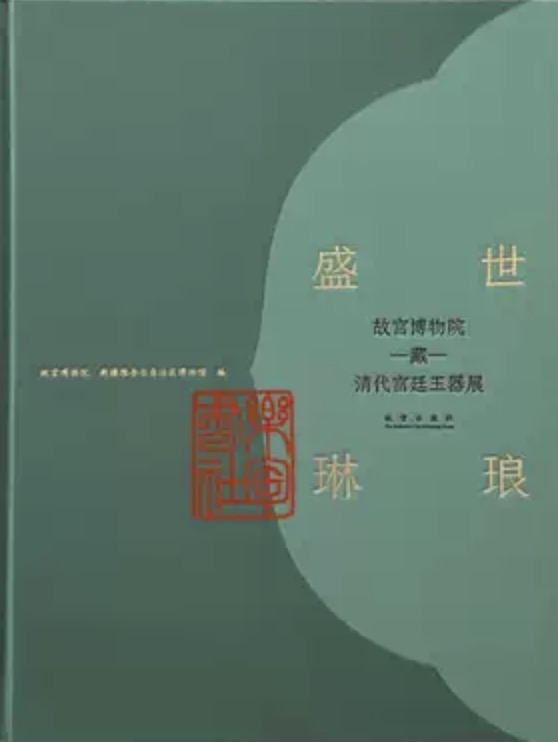
Radiant Treasures of a Flourishing Age: Exhibition of Qing Dynasty Imperial Jades from the Palace Museum
盛世琳琅 : 故宫博物院藏清代宫廷玉器展
Edited Book
Gugong Palace Museum, editor (2023) Radiant Treasures of a Flourishing Age: Exhibition of Qing Dynasty Imperial Jades from the Palace Museum. [盛世琳琅 : 故宫博物院藏清代宫廷玉器展]. Beijing, Palace Museum Press, 255 pp..
ISBN/ISSN: 9787510000000 | Sinkankas/Born No.: NIS/NIB | Language: in Chinese | RWHL*
gems, jade, archaic jade, nephrite, China, Chinese jade, fei cui, jadeite, pyroxene jade, amphibole jade, Chinese jade carving
Catalogue of a stunning exhibition showing 98 exhibits of superb Qing dynasty jades of the highest quality and workmanship made for the Chinese imperial court. Imperial seals, jade books and tablets, Buddhist ritual implements, an extensive and varied array of exquisite small objects, bowls, teapots and vases. All illustrated in colour and often in multiple views including close-up detail. An additional feature of this marvellous catalogue is that as many of the items as possible are illustrated life-size. Illustrated throughout in colour. Text in Chinese. Ancient Chinese jade culture has a long and continuous history, tracing back nearly ten thousand years to the Neolithic period. Among its many achievements, jade artifacts from the Qing dynasty—especially those from the reign of the Qianlong Emperor—represent the pinnacle of Chinese jade carving artistry. In the 24th year of Qianlong’s reign (1759), following the consolidation of China’s northern and southern frontiers, the government assumed control over the mining and distribution of jade from Xinjiang. This jade was sent in steady tribute to the imperial court. As a symbol of territorial expansion spanning 20,000 li, jade carving flourished under Qianlong’s personal patronage and advocacy. Jade production was entrusted to various royal institutions including the Imperial Workshop (Zaoban Chu), the Ruyi Hall (Ruyiguan), and departments under the Imperial Household such as the Three Weaving Offices, the Salt Administration, and Huai Customs. The Qianlong Emperor personally oversaw and participated in the entire process of jade design and manufacture, using his refinement, scholarship, and taste to guide artistic creation at court. This gave rise to a distinct and majestic style known as the “Respectfully Made in the Inner Court”—a style that stood apart from folk traditions. Qing dynasty jade works—particularly those from the Qianlong period—are renowned for their superb materials, harmonious forms, ingenious designs, refined aesthetic concepts, and exquisite craftsmanship. The continuous emergence of innovative pieces during this time surpassed the achievements of all previous dynasties. The Palace Museum houses the world’s largest and finest collection of Ming and Qing imperial jades. This exhibition presents 100 carefully selected masterpieces from nearly 19,000 Qing dynasty jade objects in the collection. Organized into six thematic sections—“Mandate of Heaven,” “Buddha Forms and Sacred Sounds,” “Jade Always at Hand,” “Elegant Companions of the Qing Court,” “Refined Leisure Moments,” and “Gathered Essence, Savored Beauty”—the exhibition uses the function of jade objects as its main thread, interwoven with considerations of material, technique, form, decoration, symbolism, and presentation. It offers a multidimensional view of the artistic heights achieved in Qing jade carving, while also inviting visitors to reflect on the deep origins and unbroken continuity of Chinese jade culture.