
Four Treasures Reference Database
Record No. 26509
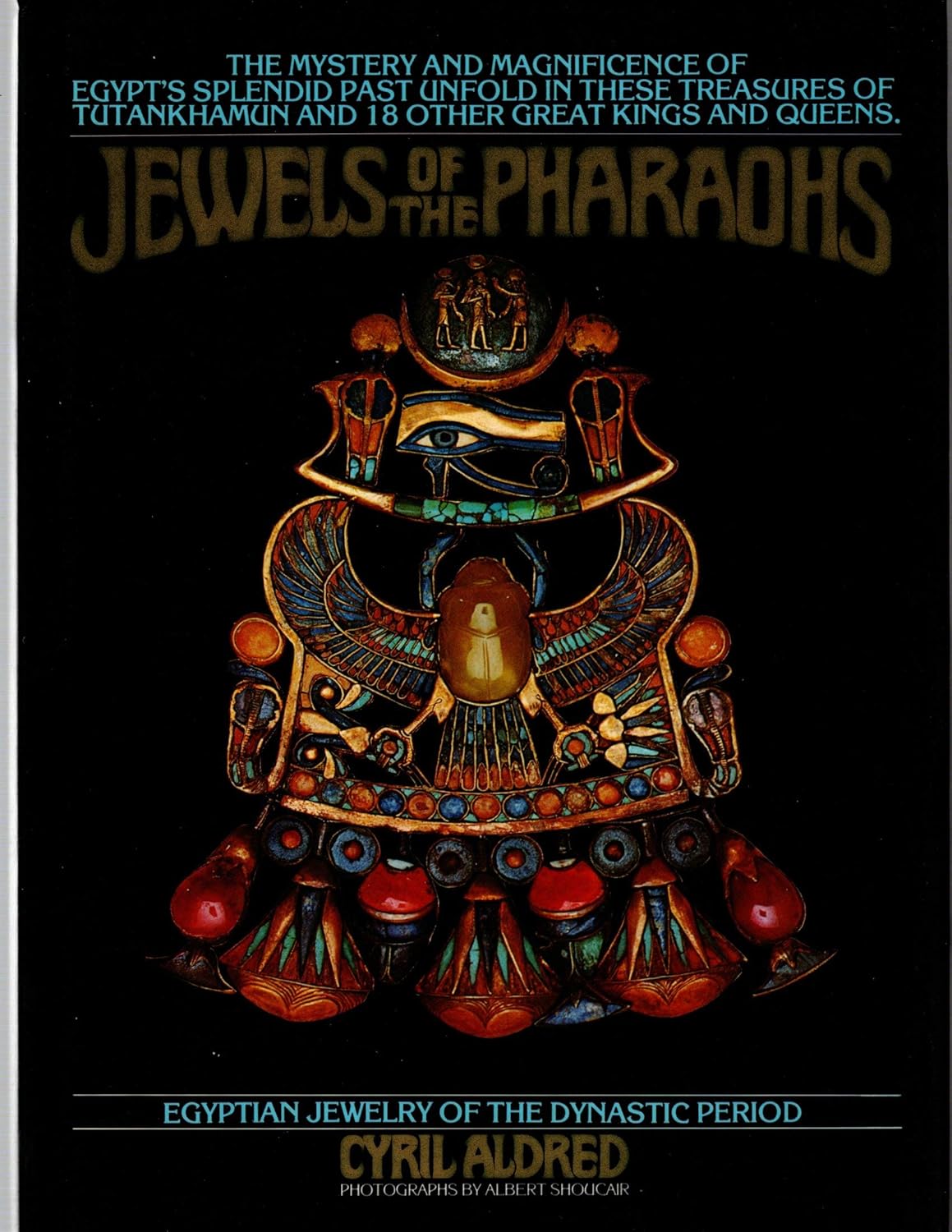
Jewels of the Pharoahs | Egyptian Jewelry of the Dynastic Period
Book
Aldred, C. (1971) Jewels of the Pharoahs | Egyptian Jewelry of the Dynastic Period. New York, Praeger Publishers, 256 pp., many plates in color
Sinkankas/Born No.: 69; NIB | not seen
gems, ancient gemology, ancient jewelry, Egypt, Egyptian jewelry, beryl, emerald, turquoise, malachite
Only a small amount of Egyptian jewelry has survived the ravages of time and the grave robbers, but the remnant is staggeringly beautiful. This book presents for the first time in a single volume nearly 200 priceless objects from collections all over the world. The best known example is the virtually intact tomb of the Pharaoh Tutankhamun, discovered in 1922, but there are many other colections and individual pieces extant: diadems, armlets, pendants, rings, bracelets, earrings, buckles, breastplates, necklaces, amulets – wrought in Nubian gold, lapis lazuli, brilliant colored faience and blood red carnelian. These opulent jeweled pieces, many modelled after organic forms such as vultures, cobras, falcons, lotus flowers, scarab beetles and winged half-human goddesses, are among the most splendid objects of Egyptian antiquity. Cyril Aldred’s lively text covers the enchanting story of each piece, including misdeeds and discoveries both ancient and modern. He explains the fascinating uses and significance of Egyptian jewels, the materials, and the techniques used to transform these materials into the exquisitely decorative trappings of wealth for kings and queens. Mr. Aldred’s text, which covers the finest pieces from every major find, is illustrated throughout with line drawings in addition to photographs, many in brilliant color, taken under special conditions in the Cairo Museum by Albert Shoucair. As one prominent Egyptologist noted, Jewels of the Pharaohs is unequalled in its comprehensiveness and destined to be a standard for generations. • Sinkankas: An interesting, authoritative, and well-balanced work, it begins with notes on the recovery of jewels from ancient hoards and burials, exploring the uses of jewelry, the materials employed, the craftsmen and their tools, and techniques used in working both metals and non-metals, as well as the various forms jewelry took. This is followed by a chronological table and extensive, detailed notes on the illustrations, which occupy nearly half the volume. Gemologists will find much of value here, as gemstones play a prominent role in the jewelry of the Egyptians.