
Four Treasures Reference Database
Record No. 26512
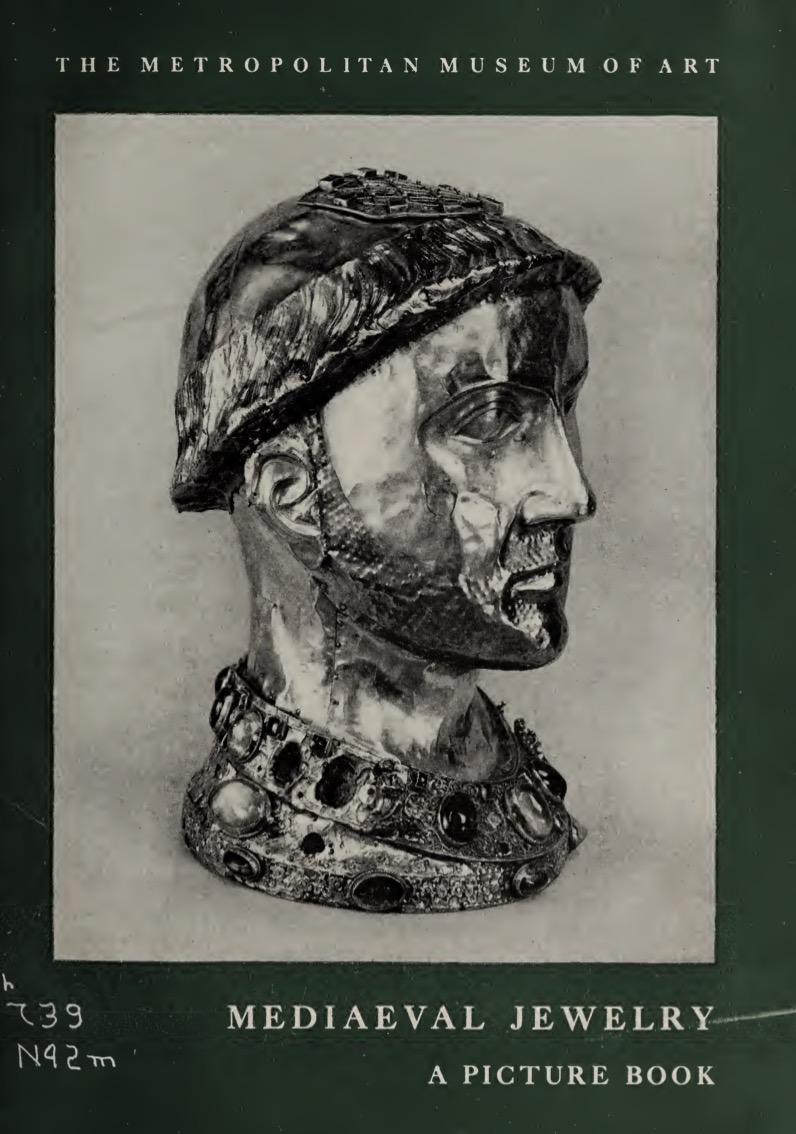
Mediaeval Jewelry | A Picture Book
Book
Metropolitan Museum of Art (1944) Mediaeval Jewelry | A Picture Book. New York, Metropolitan Museum of Art, 4 pp., 20 plates
Sinkankas/Born No.: NIS/NIB | RWHL
gems, jewelry, ancient jewelry, Egypt, gold, history of jewelry, history of rings
In the thousand or more years commonly referred to as the Middle Ages—a period marked by numerous crosscurrents—two distinctive types of culture emerged. One developed around the Church, with centers in Rome and Constantinople, while the other arose from the artistic endeavors of migrating barbarian tribes. The surviving jewelry from this era reflects these cultural phases unevenly. In the early Middle Ages, the widespread custom of burying personal ornaments with the deceased has allowed for the recovery of much jewelry through excavation. In later periods, however, as burial practices changed and objects were no longer interred, shifting fashions and the frequent return of old pieces to the melting pot greatly reduced the chances of preservation. Though inventories of princes and nobles, such as those of Charles V of France, mention vast quantities of dazzling jewelry—including twenty-five girdles worn by royalty of the House of Valois—such treasures, like many others, have not survived.