
Four Treasures Reference Database
Record No. 26624
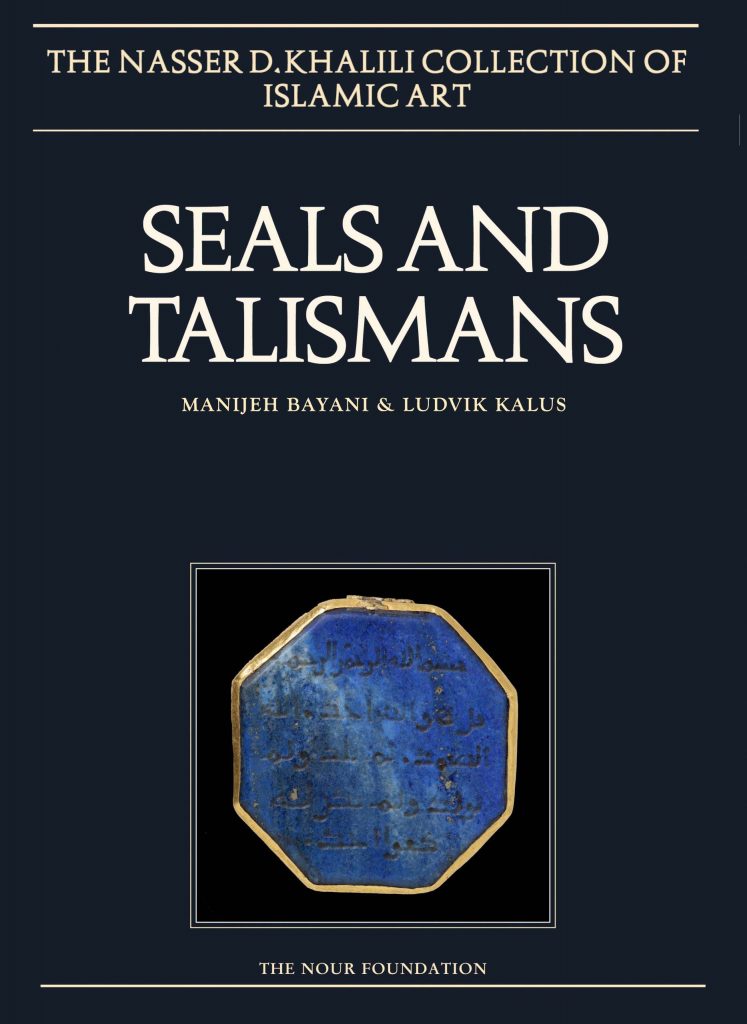
Seals and Talismans
Book
Bayani, M. and Kalus, L. (2025) Seals and Talismans. London, The Nour Foundation, Vol. 13 , 439 pp.
ISBN/ISSN: 97818700000000 | Sinkankas/Born No.: NIS/NIB | not seen
gems, ancient jewelry, Greece, Greek, Roman, Islamic jewelry, Arabic mineralogy, glyptic, Egypt, Persia, Iran, Syria, Morocco, Mughal jewelry, jade, nephrite, history of science, scientific instruments
There are more than 3500 seals and talismans of the Islamic era in the Collection, including a large number mounted in rings, set in varieties of bases and framed as pendants. It is the largest group in the world, by far outstripping its nearest rival, in the State Hermitage Museum, St Petersburg. Formed into numerous shapes – from oval, round, oblong and octagonal to others more unusual – and carved in a variety of materials – such as precious and semiprecious stones, metal and clay – they are inscribed in Arabic, Persian, Turkish, Hebrew and Latin. A representative selection of some 1000 of them are included in this volume. The styles of writing and the legends change from one period and geographic area to another and include quotations from the Qur’an, other religious quotations, invocations to God, varieties of phrases affirming the bearers’ Muslim faith, benedictory phrases, verses in Persian or Arabic, and for seals, the offices and officials credited with a title and posts. There is a noteworthy 9th-century lapis lazuli talisman in a gold mount with undotted Kufic. Later royal seals include those of the first Qara Qoyunlu ruler, Qara Muhammad, and the Safavid shahs Tahmasp and Sulayman. That of Tahmasp is rock crystal and the inscription can be read in positive from the back.