
Four Treasures Reference Database
Record No. 26660
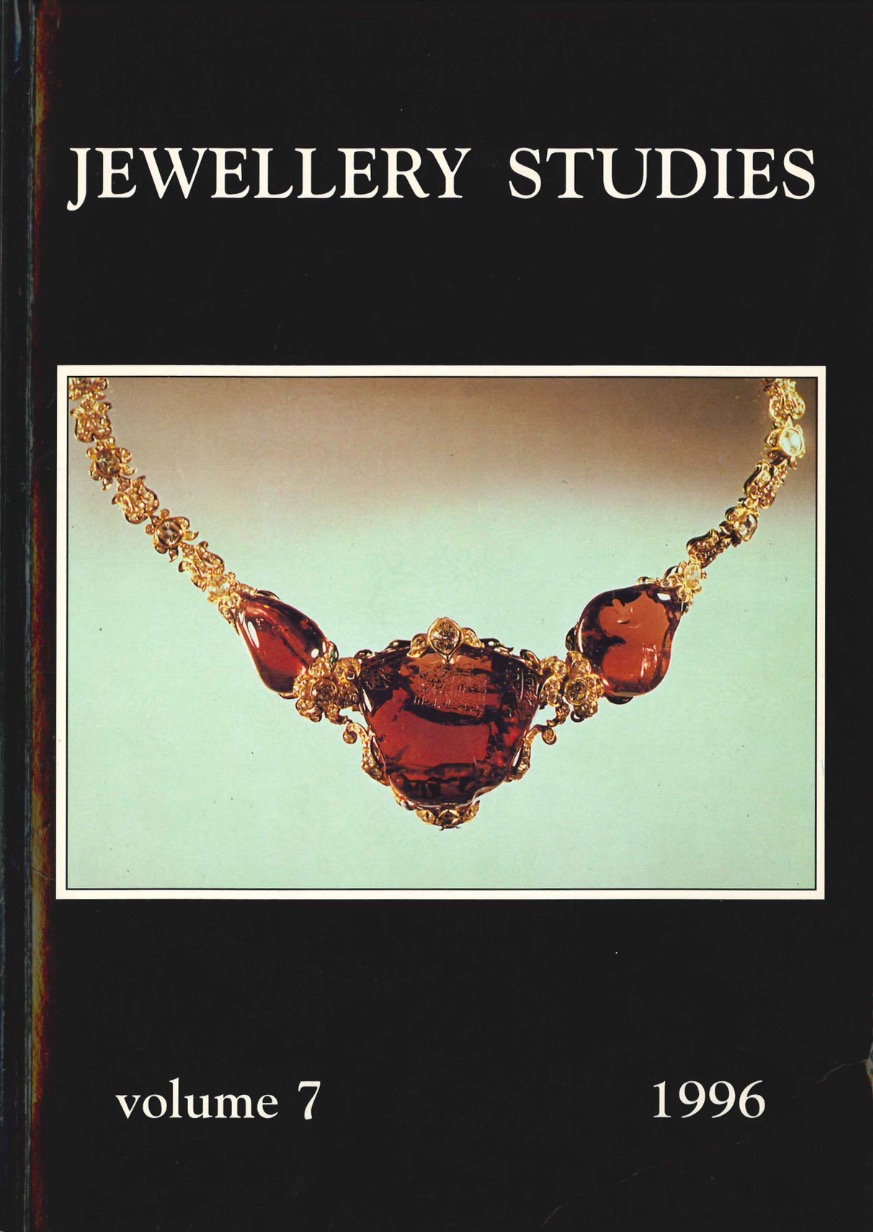
A rediscovered gem collection in Bath
Journal Article
Seidmann, G. (1996) A rediscovered gem collection in Bath. Jewellery Studies, Vol. 7, pp. 73–77.
Sinkankas/Born No.: NIS/NIB | RWHL
gems, glyptic, engraved gems, agate, cameo, intaglio, Holburne Museum, Bath, aquamarine, jacinth, topaz
When the Holburne Museum in Bath began preparing an exhibition to celebrate its centenary in 1993—coinciding with the bicentenary of Sir William Holburne’s birth (he died in 1874)—the curators ‘discovered’ a collection of engraved gems that had belonged to the museum’s founder. A drawer filled with neat plastic bags held rings, fob-seals, and some unmounted gems, fewer than one hundred in total, and it was decided to include a selection in the exhibition. The existence of this forgotten collection had once been known and was listed, albeit briefly, in W. Chaffers’ privately printed 1887 catalogue of the Holburne collections. By that time, Holburne’s fine paintings, silver, furniture, porcelain, and objets de vertu had passed by bequest to his sister, who eventually arranged for them to be housed in a dedicated museum, but it is quite possible that the gems had never before been publicly displayed. A selection is now on permanent exhibition. The first viewing of the gems brought some surprises. The numbering sequence recorded by Chaffers, beginning at 323, turned out to be meaningless: ancient and modern gems, intaglios and cameos, and a few glass pastes were all intermixed, sometimes grouped under a single number. Most striking was the composition of the collection: overwhelmingly dominated by intaglios, it includes only a handful of cameos—highly unusual for a group assembled by a nineteenth-century collector with no known scholarly engagement in the field.