
Four Treasures Reference Database
Record No. 26843
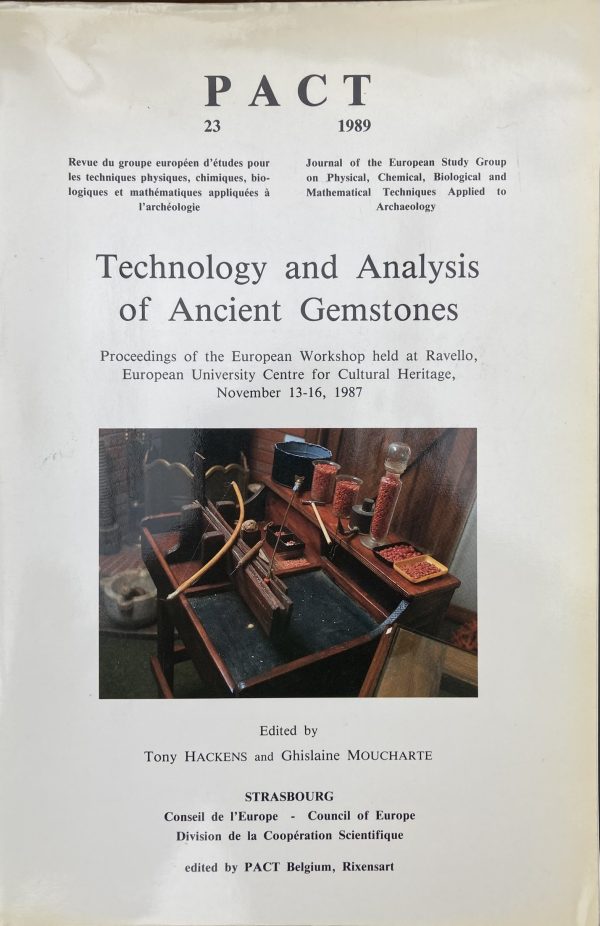
Opus et materia: Pietre, serie iconografiche e variazioni di gusto nella glittia di età romana
Work and material: Stone, iconographic series, and variations in taste in Roman-era glyptic
Book Section
Sena Chiesa, G. (1989) Opus et materia: Pietre, serie iconografiche e variazioni di gusto nella glittia di età romana. [Work and material: Stone, iconographic series, and variations in taste in Roman-era glyptic] In: PACT 23: Technology and Analysis of Ancient Gemstones, Strasbourg: Council of Europe, Vol. 23 , pp. 281–299.
Sinkankas/Born No.: NIS/NIB | Language: in Italian | RWHL
gems, collection, species, cylinder seals, Near East, Western Asiatic, calcite, gypsum, aragonite, coral, serpentine, chlorite, talc, iron, oxides, hematite, goethite, magnetite, quartz, chalcedony, carnelian, agate, jasper, rock crystal, amethyst, lapis lazuli, green, stone, diorite, amazonite, obsidian, grossular garnet,
Sena Chiesa examines the relationship between material, iconography and changing taste in Roman engraved gems, arguing that the choice of stone was an integral element of glyptic production rather than merely a support for the engraved image. She considers how particular stones and colors became associated with specific iconographic series and how these preferences changed through the Roman period. The study follows the development from the varied translucent stones favored in earlier Roman glyptic to increasingly standardized production and the growing use of opaque stones, particularly jasper, during the Imperial period. Changes in material, subject matter, technique and workmanship are related to shifts in clientele and function, as engraved gems moved from highly individual objects with important sealing and status functions toward more widely produced ornamental, protective and magical objects. The paper thus treats Roman gems as products in which opus (craftsmanship and imagery) and materia (the physical and visual qualities of the stone) jointly determined meaning, value and fashion. Later scholarship continues to cite the paper specifically for this relationship between the natural material and the artistic product.