
Four Treasures Reference Database
Record No. 26856
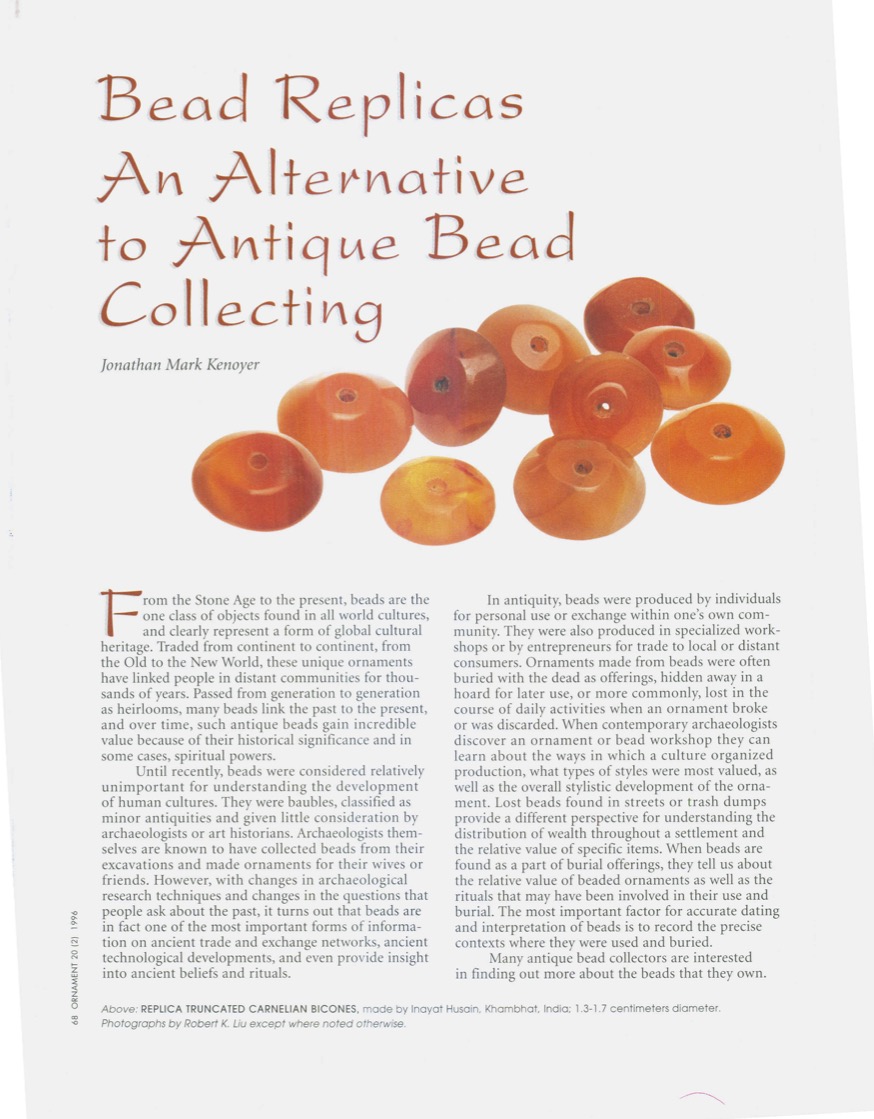
Bead replicas: An alternative to antique bead collecting
Journal Article
Kenoyer, J.M. (1996) Bead replicas: An alternative to antique bead collecting. Ornament, Vol. 20, No. 2, pp. 68–71.
Sinkankas/Born No.: NIS/NIB | RWHL
gems, beads, agate, carnelian, lapidary arts, cutting
From the Stone Age to the present, beads are the one class of objects found in all world cultures, and clearly represent a form of global cultural heritage. Traded from continent to continent, from the Old to the New World, these unique ornaments have linked people in distant communities for thousands of years. Passed from generation to generation as heirlooms, many beads link the past to the present, and over time, such antique beads gain incredible value because of their historical significance and in some cases, spiritual powers. Until recently, beads were considered relatively unimportant for understanding the development of human cultures. They were baubles, classified as minor antiquities and given little consideration by archaeologists or art historians. Archaeologists themselves are known to have collected beads from their excavations and made ornaments for their wives or friends. However, with changes in archaeological research techniques and changes in the questions that people ask about the past, it turns out that beads are in fact one of the most important forms of information on ancient trade and exchange networks, ancient technological developments, and even provide insight into ancient beliefs and rituals.