
Four Treasures Reference Database
Record No. 26873
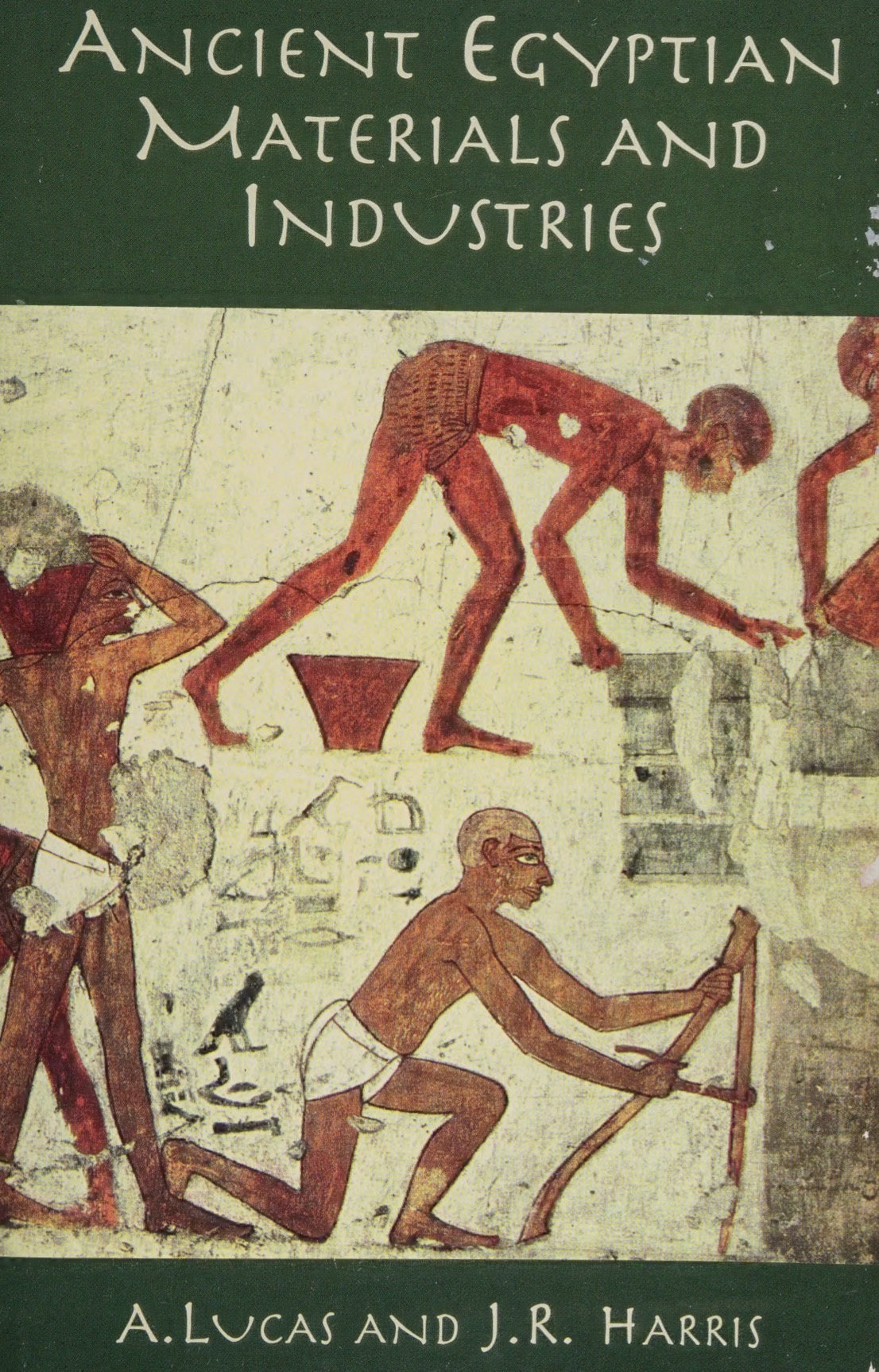
Ancient Egyptian Materials and Industries
Book
Lucas, A. and Harris, J.R. (1962) Ancient Egyptian Materials and Industries. Mineola, NY, Dover, 570 pp.
ISBN/ISSN: 486404463 | Sinkankas/Born No.: 4059 | RWHL
Close Abstract
Hide Keywords
Copy Reference
gems, ancient gemology, ancient jewelry, Egypt, Egyptian jewelry
The majesty and splendor of ancient Egypt were largely due to the remarkably advanced technological skills developed by its artisans and craftsmen. This comprehensive and detailed study of ancient Egyptian technology meticulously documents how these workers, along with other Egyptians, exploited the land’s abundant resources. First published in 1926 and later revised and enlarged, this monumental work became a standard reference, unmatched in any other field of archaeology. The present volume reprints the fourth edition, thoroughly revised in light of more recent research and archaeological discoveries. Topics covered include a wide range of materials and techniques central to Egyptian life: the use of animal products, building materials, cosmetics, perfumes, incense, fibers, glazed ware, glass and its production, metals and alloys, painting materials, pottery, woodworking, precious and semi-precious stones, distillation of alcoholic beverages, and substances used in mummification. Profoundly erudite and rich in detail, Ancient Egyptian Materials and Industries is an indispensable reference for students of Egyptology and classical civilizations, and a vital resource for anyone interested in the long and remarkable history of technological innovation. Sinkankas: Drastically revised, rearranged: the substances now include beverages, animal products, building materials, cosmetics, perfumes & incense, ceramics & glass, fibers, metals & alloys, mummification materials, oils, fats, waxes, painting materials, pottery & its manufacture, gemstones, other stones, woods & woodworking, and a historical analysis. Ch 12, [335–54], on gemstones, among which now additionally appear coral, amber, malachite, and jade, while horn, ivory, nacre and tortoiseshell are described in Ch 2. Ornamental stones are treated in Ch 13, [355–75]. The author notes that “diamond, opal, ruby and sapphire were not known to the ancient Egyptians.” In his preface, Harris notes the inclusion of information taken from recent studies, with references added to the list in the previous edition. Much technological information is also added, with an appendix of reliable chemical analyses. “The most consistent modification has, however, been in matters of lexicography, in order to eliminate invalid evidence derived from inaccurate or disputed translations of Egyptian texts.” In this connection, see also Harris’ Lexicographical Studies in Ancient Egyptian Materials, 1961. In this edition, the following places are of gemological interest: beads, Ch 4, [41–7] (includes gemstone materials); inlaid gemstone eyes, Ch 7, [98–127] (many types & examples); gemstones in general, Ch 16, [386–405]; other stones, Ch 17, [406–28]. Lucas should always be consulted whenever one writes or lectures about Egyptian jewelry.