
Four Treasures Reference Database
Record No. 26950
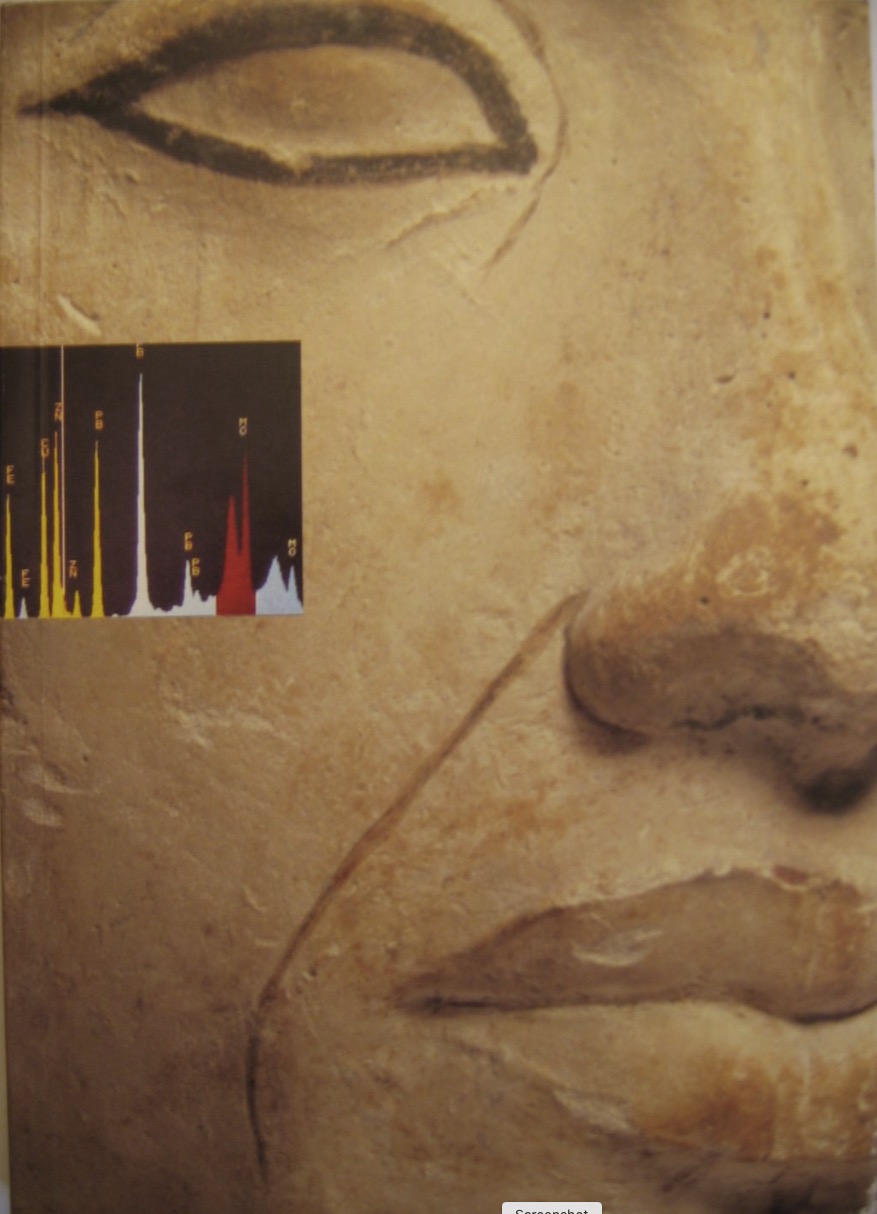
Archaologie und Chemie – Einblicke in die Vergangenheit
Archaeology and chemistry – Insights into the past
Book
Riederer, J. (1987) Archaologie und Chemie – Einblicke in die Vergangenheit. [Archaeology and chemistry – Insights into the past] Berlin, Staatliche Museen Preussischer Kulturbesitz, 276 pp.
ISBN/ISSN: 9783890000000 | Sinkankas/Born No.: NIS/NIB | Language: in German | RWHL
gems, archaeology, archaeogemology, Africa, Egypt, analytical, chemistry
As a contribution to the 750th anniversary of Berlin, the Association of the Chemical Industry, together with the State Museums of the Prussian Cultural Heritage, presents within the framework of the exhibition “Archaeology and Chemistry – Insights into the Past” an aspect of scientific work that has a special tradition in this city—namely, the contribution of chemistry to archaeological research. This field was founded in Berlin nearly 200 years ago, when Martin Heinrich Klaproth, in the late 18th century, began conducting chemical analyses on objects of cultural and historical significance. A second milestone in the collaboration between archaeologists and chemists was the establishment of the first chemical laboratory ever in a museum, namely at the Royal Museums in Berlin in 1888. This laboratory became a model for similar institutions that were established in other European capitals only decades later. Today, the Rathgen Research Laboratory of the State Museums of the Prussian Cultural Heritage in Berlin continues this tradition, providing archaeology with insights into the materials and techniques of earlier times through modern analytical methods. This enables a more comprehensive and precise representation of the historical context of a particular cultural-historical era. An important aspect of chemistry’s contribution to cultural-historical research—namely conservation and restoration, beginning with excavation recovery and continuing to the creation of suitable exhibition conditions in the museum—was already addressed in 1977 as part of the exhibition “Art and Chemistry”, initiated and funded by the Association of the Chemical Industry (VCI). The focus of that exhibition was to show that the careful safeguarding of a work of art’s material substance, from discovery to museum presentation, is a fundamental prerequisite for its scholarly interpretation, since even the most seemingly insignificant detail can be of crucial importance to the historian for reconstructing historical contexts. In the scholarly interpretation of our cultural heritage, methods of material analysis now play a key role.