
Four Treasures Reference Database
Record No. 26990
Myth revisited: The reuse of mythological cameos and intaglios in Late Antiquity and the Early Middle Ages
Book Section
Sena Chiesa, G. (2011) Myth revisited: The reuse of mythological cameos and intaglios in Late Antiquity and the Early Middle Ages. In: ‘Gems of Heaven’: Recent Research on Engraved Gemstones in Late Antiquity, c. AD 200–600, British Museum Research Publication No. 177, London: British Museum, pp. 229–238.
ISBN/ISSN: 9780860000000 | Sinkankas/Born No.: NIS/NIB | RWHL
gems, glyptic, engraved gems, agate, cameo, intaglio
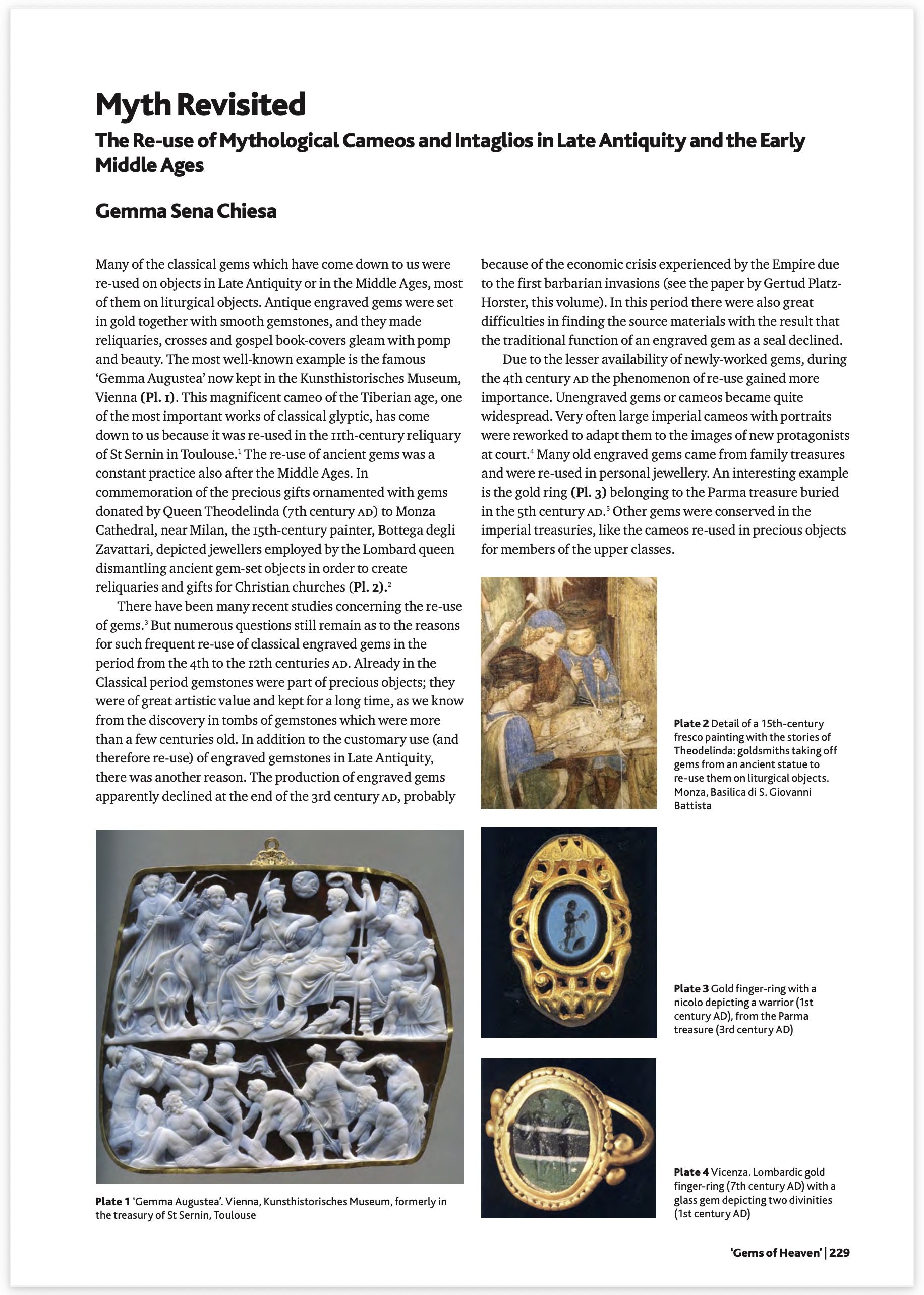
Many classical engraved gems have survived because they were repurposed in Late Antiquity and the Middle Ages, particularly in ecclesiastical contexts. Set in gold alongside polished stones, they adorned reliquaries, crosses, and gospel book-covers with splendor, as seen in the renowned Gemma Augustea, a Tiberian cameo now in the Kunsthistorisches Museum, Vienna, preserved through its reuse in an 11th-century reliquary at Saint Sernin, Toulouse. This practice continued beyond the Middle Ages; a 15th-century fresco by the Bottega degli Zavattari in Monza Cathedral shows Lombard goldsmiths dismantling antique jeweled items for Christian purposes, commemorating Queen Theodelinda’s 7th-century donations. Despite numerous recent studies on the reuse of gems, many questions remain about the motivations behind this widespread phenomenon from the 4th to 12th centuries AD. Gemstones had long been valued as both artistic and heirloom objects, sometimes buried centuries after their creation. Yet another factor was the marked decline in engraved gem production after the 3rd century, likely due to the empire’s economic crisis and early barbarian incursions, compounded by shortages of suitable materials, which led to a diminishing role for gems as seals.