
Four Treasures Reference Database
Record No. 27142
Masters and workshops of the jewellery and toreutics from fourth-century Scythian burial-mounds
Book Section
Treister, M.Y. (2005) Masters and workshops of the jewellery and toreutics from fourth-century Scythian burial-mounds. In: Scythians and Greeks: Cultural Interactions in Scythia, Athens and the Early Roman Empire (Sixth Century BC – First Century AD), Exeter: University of Exeter Press, pp. 56.
ISBN/ISSN: 9780860000000 | Sinkankas/Born No.: NIS/NIB | RWHL
gems, ancient gemology, ancient jewelry, early metallurgy, ancient jewelry manufacturing, Greek, Greece, Scythia
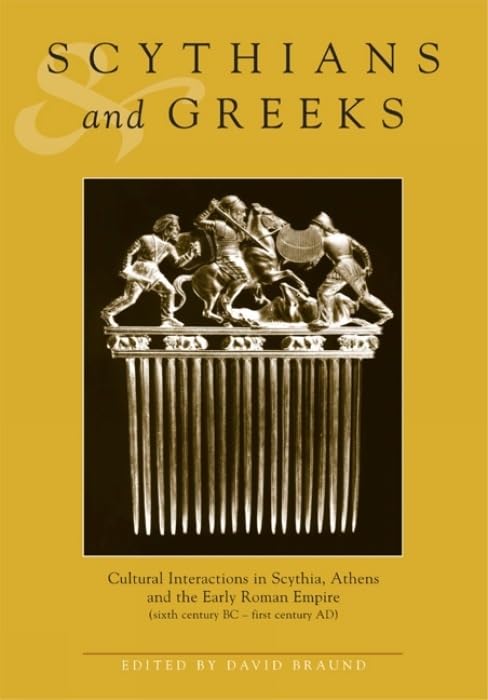
Here I propose to discuss several groups of precious metalwork from the fourth-century Scythian kurgans which belong to the so-called “Mix-Hellenic” or Graeco-Scythian style, or rather, the “objects of Scythian form but decorated by Greeks” with the emphasis on the hammered metalwork. In spite of the fact that masterpieces from Scythian barrows have attracted the attention of numerous scholars, attempts to identify the products of a certain workshop or craftsmen have not been undertaken until recently. According to Rudolph, the anonymous goldsmith named by him the “Chertomlyk Master” was the founder of a studio, the working period of which spans the years from c.350/340 to 300/290, leaving the possibility open that, in fact, the oeuvre represents more than one generation of goldsmiths, among whom the Chertomlyk Master was the most outstanding and independent. According to Williams and Ogden, there were relatively few major goldsmiths or workshops in the Bosporan region in the fourth century but among these they identified two immigrant Greek goldsmiths: the master of the Kul’-Oba sphinx bracelets and another whose masterpiece is the torc with terminals in the form of mounted Scythians. A further master goldsmith is recognizable amongst the jewellery from the Great Bliznitsa. Williams and Ogden suggest that it is possible that the Great Bliznitsa master and the master of the Kul’-Oba torcs are one and the same, and that he also produced the Solokha comb.