
Four Treasures Reference Database
Record No. 27147
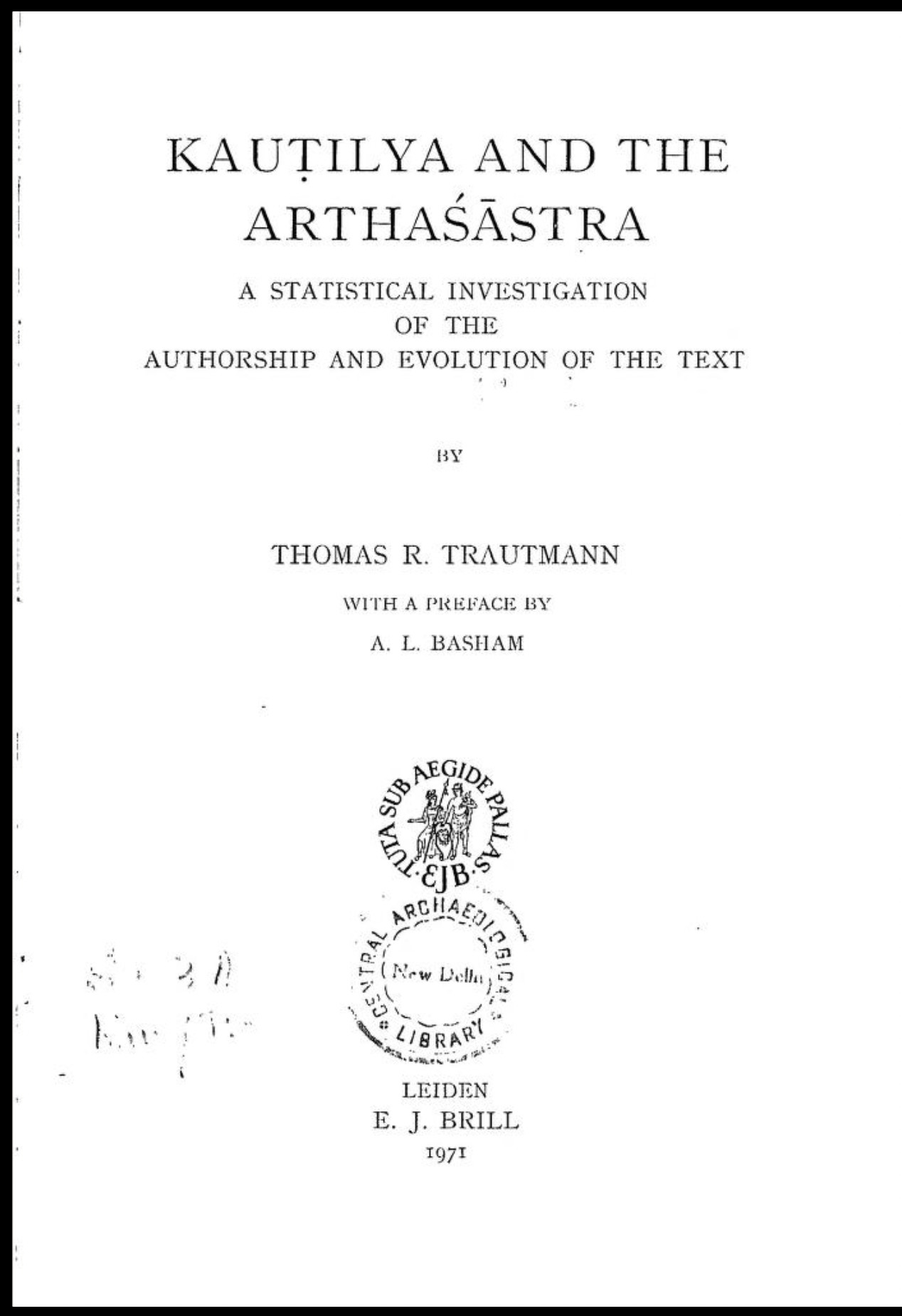
Kauṭilya and the Arthaśāstra: A Statistical Investigation of the Authorship and Evolution of the Text
Book
Trautmann, T.R. (1971) Kauṭilya and the Arthaśāstra: A Statistical Investigation of the Authorship and Evolution of the Text. Leiden, Brill, 227 pp.
Sinkankas/Born No.: NIS/NIB | RWHL
gems, corundum, History.1, Indian gemology, Indian mineralogy, history of gemology, history of mineralogy, Indian lapidary
The Arthashastra by Kautilya (Chanakya) provides detailed regulations concerning the trade in diamonds and other precious stones, including preferred trade routes, tolls, and systems of weights and measures. Land routes are favored over maritime ones for the transport of high-value, low-bulk goods like gems, as they allow for greater state oversight and reduce the risks associated with piracy. Merchants dealing in diamonds were subject to tolls at checkpoints, inspections by the Superintendent of Commerce, and penalties for fraud, evasion, or price manipulation. Diamonds were weighed using a precise metrological system based on the ratti (approximately 0.1215 grams), with larger units such as the masha and tola used for bulk. Pricing and taxation were determined per ratti, and gem quality was assessed based on clarity, shape, and provenance. The state often maintained control or oversight of the gem trade, especially for locally sourced stones, and imposed higher duties on foreign merchants.