
Four Treasures Reference Database
Record No. 27250
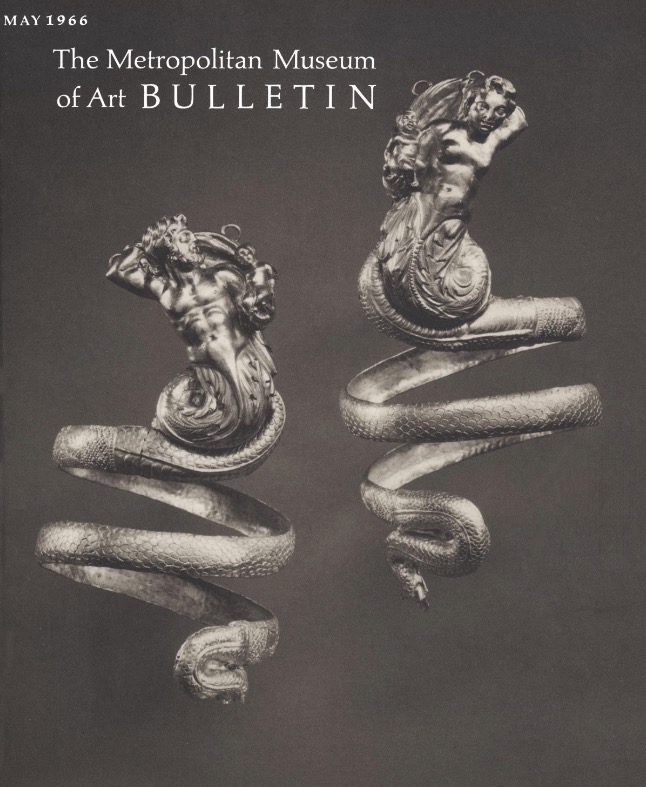
Greek, Roman, and Etruscan jewelry
Journal Article
Oliver, A., Jr. (1966) Greek, Roman, and Etruscan jewelry. Metropolitan Museum of Art Bulletin, Vol. 24, No. 9, pp. 269–284.
Sinkankas/Born No.: NIS/NIB | RWHL
Close Abstract
Hide Keywords
Copy Reference
gems, jewelry, ancient jewelry, Greek, Etruscan, Roman, gold, history of jewelry, history of rings, glyptic, engraved gems, collection, comaranda, catalog
Modern jewelry is prized for its pearls and precious stones—for the fine cutting of the stones and for their elaborate setting; this was not the case in antiquity, when diamonds and rubies were virtually unknown, and when emeralds and sapphires were extremely rare, and the pearls and the precious and semiprecious stones that were sparingly used in Hellenistic and Roman jewelry were usually left rough or, if cut, cut cabochon—that is, in a smooth rounded form; ancient jewelry was treasured for its gold and, to a much lesser extent, its silver, for gold had been valued since remote antiquity on account of its rarity and incorruptibility, and the survival of Greek and Roman gold coins and gold jewelry, as well as the reports of gold vessels and statues once deposited in ancient treasuries but now lost, reveal the value placed on this metal and the special uses to which it was put, whereas silver, though far more common than gold, corrodes, and the vast numbers of ancient silver coins and vessels that we have today owe their survival to their relatively substantial form, since delicate jewelry of that metal cannot be expected to have survived in quantity—and indeed, little has—but the real reason may be that little was made, as tarnishing would soon render it unsightly, and when in contact with skin for repeated periods, silver can cause infection, so the ancients surely discovered, for instance, that silver earrings were not suitable for pierced ears.