
Four Treasures Reference Database
Record No. 27330
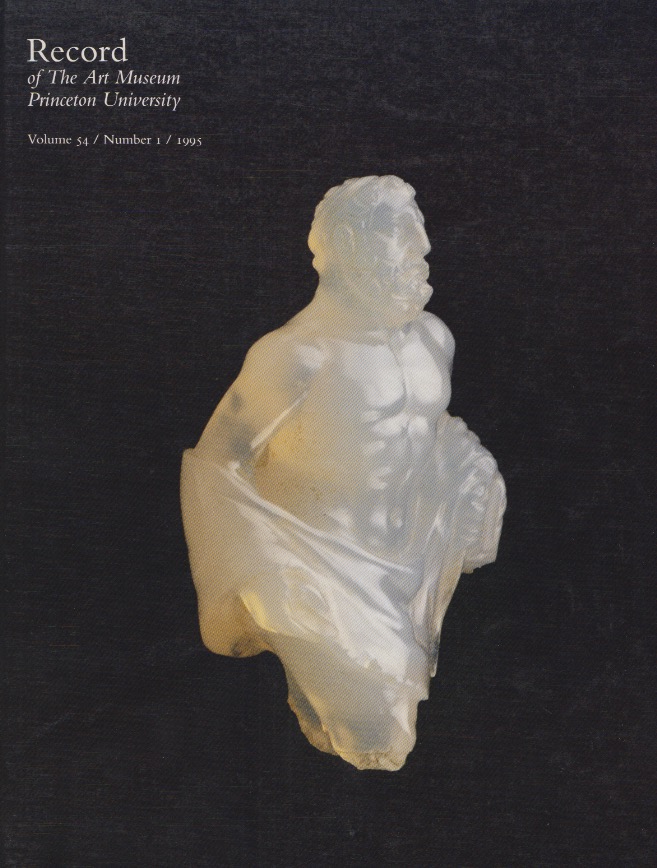
A chalcedony statuette of Herakles
Journal Article
Padgett, J.M. (1995) A chalcedony statuette of Herakles. Record of the Art Museum, Princeton University, pp. 3–22.
Sinkankas/Born No.: NIS/NIB | RWHL*
gems, collection, catalogue, quartz, carvings, figurines, chromian chalcedony statuette, quartz, microcrystalline quartz, chalcedony
Sculptures of bronze, marble, and terracotta are among the greatest legacies of ancient Greece and Rome, both for their individual qualities and for their profound impact on the subsequent development of Western art. In addition to these standard materials, however, classical sculptors also worked in a number of other mediums such as wood, ivory, gold, silver, and glass. Another group of materials, gemstones, was normally engraved as seals or cameos, but some artists had the skill to transform these small, hard stones into miniature sculptures worthy of comparison with the finest works of marble or bronze. The Art Museum recently acquired such a sculpture, a Roman statuette of Herakles in translucent, blue chalcedony (figs. I–4). The preserved height of the statuette is only 3.5 cm., but its beauty and sophistication belie its small stature. Herakles strides rapidly forward, his head raised slightly and turned to the left, his right leg advanced. His lower legs are missing, broken off just below the knees. His feet, which would have been far apart, were either attached separately to the base or, more likely, cut in one piece with it. The original height of the complete figure, without base, was about 4.6 cm., making it one of the smallest and yet one of the finest of all gemstone statuette.