
Four Treasures Reference Database
Record No. 27355
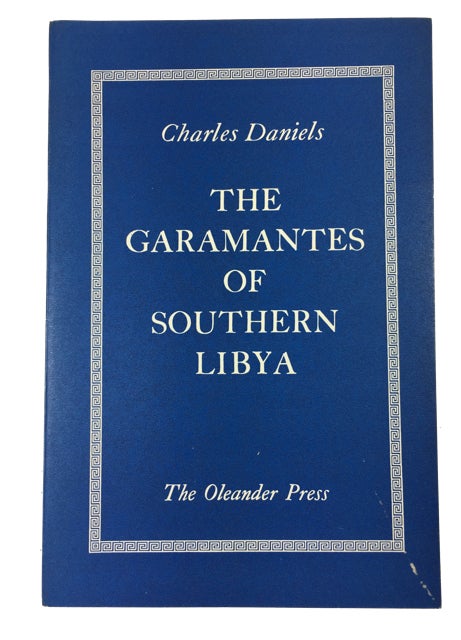
The Garamantes of Southern Libya
Book
Daniels, C. (1970) The Garamantes of Southern Libya. London, Oleander Press, 47 pp., 14 plates
Sinkankas/Born No.: NIS/NIB | not seen
gems, archaeology, archaeogemology, Libya, garnet
Daniels’s essay on the Garamantes, though brief, contains a remarkable amount of valuable information, much of it drawn from fieldwork at Germa and its environs in which he has been directly involved. While much of the material has appeared previously, it remains difficult to access, and the significance of the work at Germa lies in its major contribution to the broader understanding of “Rome beyond the Imperial Frontiers”—a field which, the reviewer suggests, offers more fruitful opportunities for archaeologists than continued focus on well-explored Roman provincial areas. The Romans themselves seem to have shown little interest in their North African neighbors; it is telling that almost nothing was added to Herodotus’s account between the fifth and first centuries BCE, and that Roman curiosity about the desert fringes was minimal. Daniels provides a concise and sensible overview of the region’s human geography, carefully avoiding speculative theories based on strained interpretations of Pliny and Ptolemy. He also cautions against equating archaeological finds with tribal names—highlighting, for example, the absence of chariot or horse-trapping remains in presumed Garamantian territory despite Herodotus’s famous descriptions, even as chariot imagery appears widely across Saharan rock art from Tibesti to southern Morocco. Overall, Daniels adopts a conservative approach to defining the Garamantes’ territorial range, anchoring their core in the Wadi el-Ajal with Garama/Germa as their capital, and noting that their relation to other Libyan groups remains unknown, particularly given the lack of inscriptions in the Libyan alphabet.