
Four Treasures Reference Database
Record No. 27386
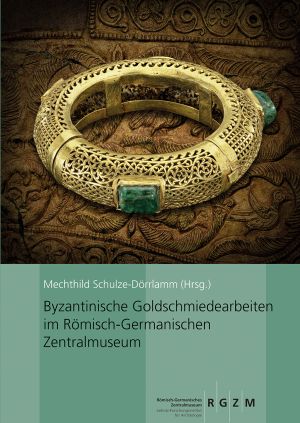
Funktion der Goldschmiedearbeiten
Function of goldsmith work
Book Section
Schulze-Dörrlamm, M. and Pülz, A.M. (2022) Funktion der Goldschmiedearbeiten. [Function of goldsmith work] In: Byzantinische Goldschmiedearbeiten im Römisch-Germanischen Zentralmuseum, Heidelberg: Propylaeum, 2022, Kataloge Vor- und Frühgeschichtlicher Altertümer, Band 42, Heidelberg: Römisch-Germanischen Zentralmuseum, pp. 7–154.
ISBN/ISSN: 9783970000000 | DOI: https://doi.org/10.11588/propylaeum.1109.c15234 | Sinkankas/Born No.: NIS/NIB | Language: in German | RWHL*
gems, ancient jewelry, early metallurgy, gold, Byzantine jewelry, garnet, amethyst, quartz
The dating of Byzantine goldsmithing is often difficult because most pieces in museums and private collections worldwide come from the art trade, so that their findspots and archaeological contexts are very often unknown. Further complicating matters is the fact that the Christian population of the Byzantine Empire—especially members of the wealthy upper class—almost always buried their dead without grave goods. Therefore, the proven archaeological and scientific methods for dating excavated material cannot be applied to the vast majority of cemeteries in the Byzantine Empire. For determining the age of Byzantine goldsmithing, only a few pieces from hoards (some dated by coins), occasional votive offerings from pilgrimage shrines, finds from well-dated settlement layers, depictions of jewelry, and ornamental motifs on datable sculptures, mosaics, or wall paintings can be used. Important clues can also be provided by monograms on rings, bracelets, earrings, belt buckles, or strap ends, since the so-called cross monograms were only used starting in the mid-6th century, and the so-called invocation monograms from the mid-7th century onward. Particularly helpful are Byzantine pieces from grave finds of “barbarians” outside the Byzantine Empire, since these can be dated more precisely. Concerns that such objects may have entered the graves only after a long delay—leading to significant misdating of Byzantine goldwork—have since proven unfounded. Even the central element of a Byzantine bracelet or diadem from the 6th century, found in grave 403 of Mengen (district of Sigmaringen, Germany) dating from the early 7th century, was not very old at the time of burial, even though it had been subsequently reworked into a rectangular brooch.