
Four Treasures Reference Database
Record No. 27426
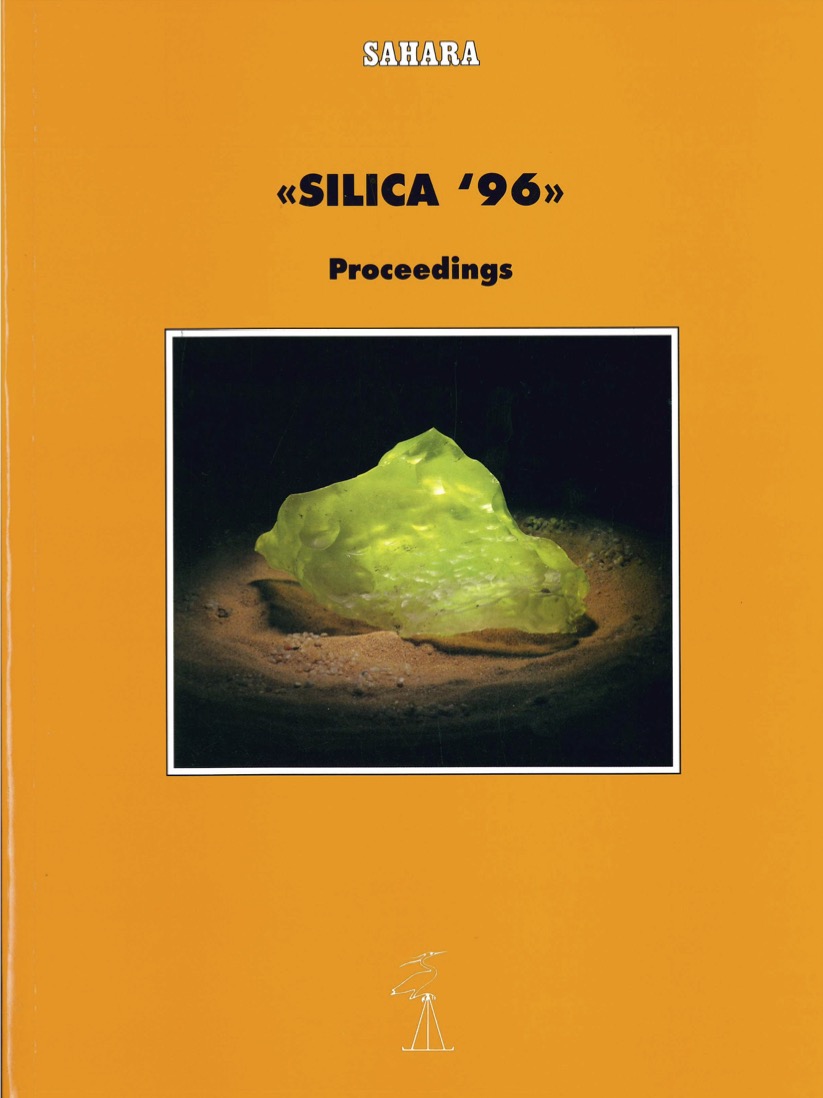
Libyan desert glass: Geochemical composition and origin
Book Section
Koeberl, C. (1997) Libyan desert glass: Geochemical composition and origin. In: Sahara: “Silica ’96” Proceedings – Meeting on Libyan Desert Glass and Related Desert Events, Milan: Pyramids, pp. 121–131, 157–158.
Sinkankas/Born No.: NIS/NIB | RWHL
gems, glass, natural glass, Libyan Desert Glass
Libyan Desert Glass (LDG) is very rich in silica, containing about 96.5–99 wt.% SiO₂, and shows limited variation in major and trace element abundances. Although the origin of LDG is still debated by some researchers, an origin by impact seems most likely. There are, however, some differences from “classical” impact glasses, which in most cases occur directly at or within an impact crater. Evidence for an impact origin includes the presence of schlieren and partly digested mineral phases, lechatelierite (a high-temperature melt product of quartz), and baddeleyite (a high-temperature breakdown product of zircon). In addition, the existence of a meteoritic component is very likely. Rare dark layers and streaks within LDG samples were studied in the course of this work, and enrichments in the siderophile elements, including Ir, were found. These enrichments indicate the admixture of up to about 0.5% of a chondritic component. The rare earth element abundance patterns are indicative of a sedimentary precursor rock. Although there is a general similarity in trace element composition between LDG and Nubian sandstone, there are some chemical differences between LDG and surface sands collected in the area of the LDG occurrences. Some preliminary comparisons of LDG compositions have also been made with material from either the BP or Oasis impact structures.