
Four Treasures Reference Database
Record No. 27456
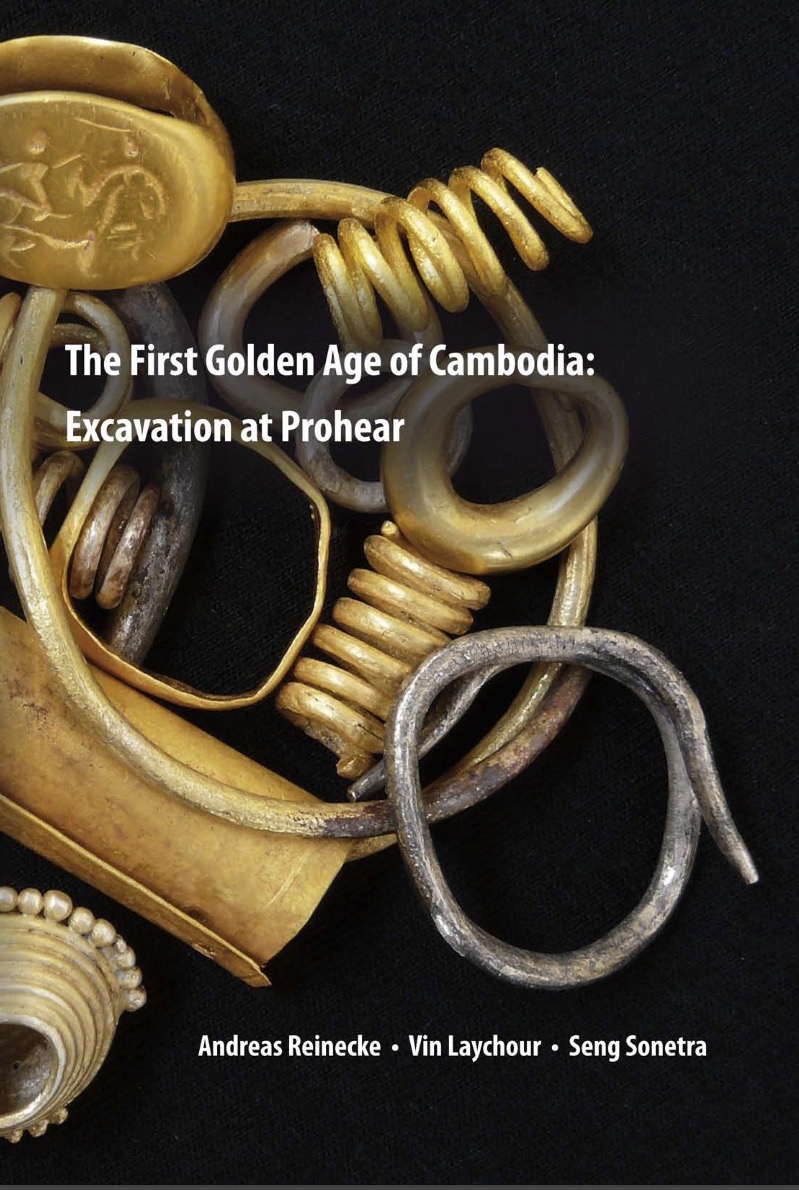
The First Golden Age of Cambodia: Excavation at Prohear
Book
Reinecke, A., Laychour, V. and Sonetra, S. (2009) The First Golden Age of Cambodia: Excavation at Prohear. Bonn, Thomas Müntzer, 225 pp., maps
ISBN/ISSN: 9783000000000 | Sinkankas/Born No.: NIS/NIB | RWHL
gems, archaeology, archaeogemology, Cambodia, Southeast Asia, Vietnam, Thailand, Laos, beads
Until recently, the temple of Angkor Wat, a prominent part of Cambodia’s World Heritage complex, was not only the icon but also central to Cambodia’s history. However, many questions remain about the roots of the Angkor Empire. What cultures, people, or historical events preceded the birth of the Khmer civilization of Angkor during the ninth century AD? In the past few years unexpected archaeological discoveries have changed our knowledge of the prehistoric period in Cambodia. Previously, early Iron Age sites in Cambodia were summed up as being part of the ‘Pre-Funan’ culture, a clumsy and prosaic term. This is in contrast to its more famous neighboring cultures of Dong Son or Sa Huynh in Vietnam, Dian in southern China, or Ban Chiang in Thailand. Readers who are familiar with the archaeology in this region know Funan as the name of a seminal polity in the Mekong Delta region, first mentioned by Chinese sources in the 3rd century AD. However, archaeologists working on Funan-period sites are confronted with many uncertainties. At present, no one knows for sure how far back its roots go, and which processes led to the formation of Funan. This story of discovery and research of a 2000-year-old cemetery at Prohear in Prey Veng province provides some surprising missing pieces that help fill the gaps in the emergence of Funan. Prey Veng is one of the poorest provinces in Cambodia, but today the name Prohear is associated with one of the richest prehistoric archaeological sites ever discovered in Southeast Asia. The cemetery was found in spring 2007 by the local people in the center of the village, but almost completely looted. In 2008 and 2009 a team from the German Archaeological Institute and the Memot Centre of the Ministry of Culture and Fine Arts in Phnom Penh undertook an excavation campaign directly under the main road of the village. The results surpassed all our expectations. This encouraged us to introduce to the wider public the highlights of the excavation, and a preliminary hypothesis for the historical background of this site. This book also gives an impression on the strange relationship between archaeologists and looters, who must work side-by-side to save important pieces of Cambodian heritage.