
Four Treasures Reference Database
Record No. 27486
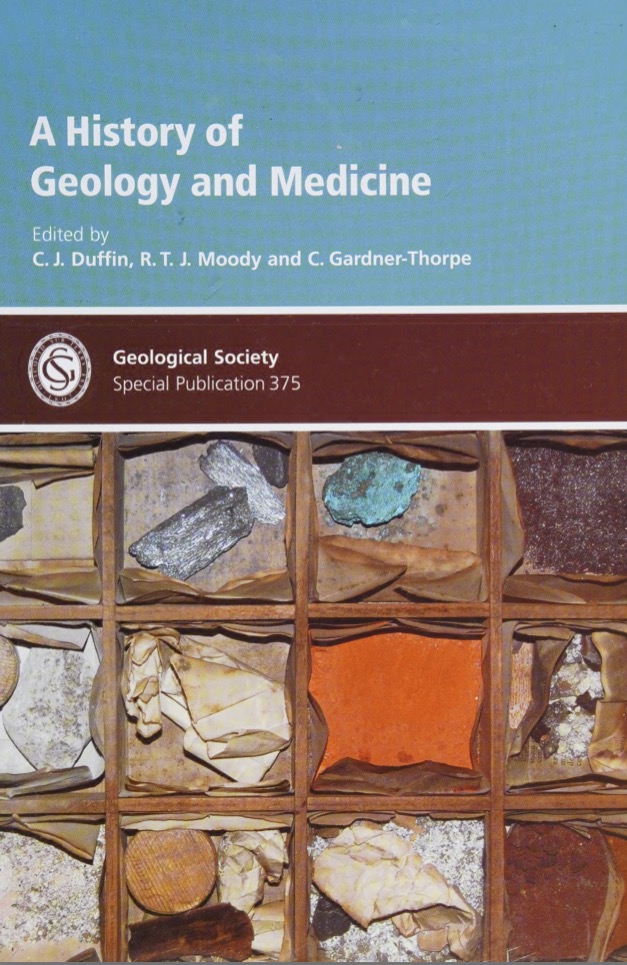
Lithotherapeutical research sources from antiquity to the mid-eighteenth century
Book Section
Duffin, C.J. (2013) Lithotherapeutical research sources from antiquity to the mid-eighteenth century. In: A History of Geology and Medicine: Geological Society of London, Special Publication 375 , pp. 7–44.
ISBN/ISSN: 9781860000000 | DOI: https://doi.org/10.1144/SP375.25 | Sinkankas/Born No.: NIS/NIB | RWHL*
gems, magical gems, history of gemology, ancient gems, gem lore, gems and healing, medicinal use
Geopharmaceuticals have a recorded history of use by a wide range of cultures for over 3000 years. The history of geological simples is written in the leaves of a diversity of literary sources, an overview of which is attempted for the first time. Egyptian medical papyri, Assyrian and Babylonian clay tablets, Indian Puranas, plus ancient Chinese, classical Greek and Roman writings all preserve a folk tradition of therapeutic earths, rocks, minerals and fossils. Anglo-Saxon Laeceboc, medieval Islamic writings, and Western medieval bestiaries all contain scattered references to geological simples. A surge of appreciation for geopharmaceuticals took place with the onset of the Western medieval lapidary tradition, which influenced the writings of the early encyclopaedists and writers of herbals. With the advent of printing, many classical and newly translated Islamic texts were made more readily available, stimulating a burst of scholarship by early modern scientists of the Renaissance. Increasingly detailed illustrations were used to embellish the catalogues of Renaissance Wunderkammern. By the late eighteenth century, the use of geological materials was declining, and being replaced by a more empirical approach to pharmacology.