
Four Treasures Reference Database
Record No. 27524
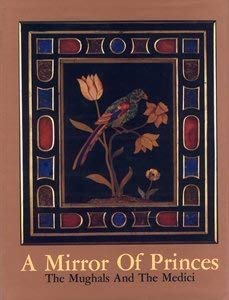
Pietre Dure and other artistic affinities between the court of the Mughals and that of the Medici
Book Section
Koch, E. (1987) Pietre Dure and other artistic affinities between the court of the Mughals and that of the Medici. In: A Mirror of Princes: The Mughals and the Medici, Bombay: Marg Publications, pp. 29–56.
ISBN/ISSN: 9788190000000 | Sinkankas/Born No.: NIS/NIB | RWHL
gems, India, Venice, Italy, ancient trade and commerce, Mughals
The juxtaposition of the artistic patronage of two dynasties belonging to such different cultural spheres as the Mughals and the Medici does need some explanation and if I propose to illustrate the issue from the Mughal point of view I do so not only because I am a student of Mughal art but also because there is more tangible evidence for an interest of the Mughals in Medici art than vice versa. Nobody would want to question the decisive role which Italy—as the main heir of classical antiquity—has played again and again for the development of the arts of the other European countries. But it is striking to note that 17th-century Mughal India also drew inspiration from this source and that Medici art was a contributory factor among the various heterogeneous artistic traditions which in their synthesis became the Mughal imperial style. Like the Medici, the Mughals were a young dynasty and thus felt a particularly strong need to legitimate their claims to sovereignty. The Mughals were keenly aware of their position because as Muslim rulers in a conquered country they had to come to terms not only with their own Timurid-Islamic background but also with the strong and ancient culture of their Hindu subjects. Furthermore they had to establish their status as rulers vis-à-vis the Muslim dynasties which ruled India before them and—of particular importance in our context—vis-à-vis the rulers of other countries. If we are to believe a letter which, as has been assumed on good grounds, was written by Akbar (1556–1605) to King Philip II of Spain in 1582, Akbar saw a kinship (nubat) among “the exalted group of rulers who enjoy the noblest of distinction in consequence of a greater share of divine favour” and, according to him, the claims of this kinship were “well established among mighty potentates, and acknowledged to be the chief conditions of amicable relations.” This interest in European rulers included also an interest in their arts. The arts, as Mughal court writers such as Muhammad Salih Kanbo tell us, were considered an important means of emphasising the status of the ruler in the eyes of his subjects and of demonstrating superiority over other rulers. Not surprisingly, the Mughal emperors were keen to know how their European counterparts handled this issue.